
Greg Woolf
Author of Rome: An Empire's Story
About the Author
Greg Woolf is the Ronald J. Mellor Chair in Ancient History at the University of California, Los Angeles, and the author of The Life and Death of Ancient Cities, Tales of the Barbarians, and Et Tu, Brute?.
Image credit: Author portrait from book cover
Works by Greg Woolf
Associated Works
War and Society in the Roman World (Leicester-Nottingham Studies in Ancient Society) (1993) — Contributor — 53 copies
Religion and Power: Divine Kingship in the Ancient World and Beyond (Oriental Institute Seminars) (2008) — Contributor — 18 copies
A Companion to the Archaeology of Religion in the Ancient World (Blackwell Companions to the Ancient World) (2015) — Contributor — 16 copies
Economies Beyond Agriculture in the Classical World (Leicester-Nottingham Studies in Ancient Society) (2001) — Contributor — 11 copies
Ritual Dynamics and Religious Change in the Roman Empire (Impact of Empire) (2009) — Contributor — 9 copies
Power, Politics and the Cults of Isis: Proceedings of the Vth International Conference of Isis Studies, Boulogne-sur-Mer, October 13-15, 2011 (Religions in the Graeco-Roman World) (2014) — Contributor — 9 copies
The impact of mobility and migration in the Roman empire : proceedings of the twelfth workshop of the International Network Impact of Empire (Rome, June 17-19, 2015) (2016) — Contributor — 6 copies
The Jewish Revolt Against Rome: Interdisciplinary Perspectives (Supplements to the Journal for the Study of Judaism) (2011) — Contributor — 5 copies
Mothers, Murderers and Mistresses: Empresses of Ancient Rome [2013 TV Series] (2013) — Self — 4 copies
Becoming Roman, Writing Latin? Literacy and Epigraphy in the Roman West (Journal of Roman Archaeology Supplementary Series, No. 48) (2002) — Contributor — 4 copies
Reflections on religious individuality Greco-Roman and Judaeo-Christian texts and practices (2012) — Contributor — 3 copies
Romanization and the City, Creation Transformations, and Failures: Proceedings of a Conference Held at the American Academy in Rome May 14-16 1998 (Journal of Roman Archaelogy… (2000) — Contributor — 2 copies
Integration in the early Roman west: The role of culture and ideology (Dossiers d'archéologie du Musée national d'hist (1997) — Contributor — 1 copy
Tagged
Common Knowledge
- Other names
- Woolf, Gregory D.
- Birthdate
- 1961
- Gender
- male
- Education
- Christ Church College, Oxford
Trinity College, Cambridge - Occupations
- historian
archaeologist - Organizations
- University of St Andrews
Brasenose College, Oxford
University of London
Magdalen College, Oxford - Nationality
- UK
- Places of residence
- London, England, UK
St. Andrews, Scotland, UK - Associated Place (for map)
- UK
Members
Reviews
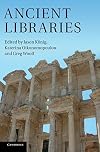
The collected proceedings from the Ancient Libraries conference held at St Andrews in September 2008. I was there, and without ostentatiously blowing my own horn, my modest contribution is one of the papers contained within. This is, however, a fantastic resource on ancient libraries, with all of the authorities in the field represented. Although academic in content and orientation, the layman who is interested in the subject will find all of them lucid, readable and informative. In fact show more anyone who is interested in the ancient world will find plenty worthwhile and fascinating to read here. show less
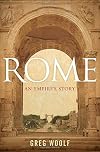
I liked the book, but hesitate to like it too much as I can't get behind historians that only recommend recent work. Surely of all the things said about Rome, some of what was written more than 30 years ago is still worth reading. That Gibbon isn't even in the bibliography breaks my heart.
This is an excellent overview of how Rome built and sustained an Empire.
Woolf considers a range of factors in turn - such as geography, climate, culture/religion, the economy, and the institutions they established - and describes how they contributed to the success of the Empire. His comparisons to other empires of similar scale were informative.
The 'further reading' sections at the end of each chapter are particularly helpful for those who want to explore a particular aspect of Roman show more history in more depth.
Partly because of its succinct breadth, the author sometimes favours dry details over the more interesting personalities or happenings. Occasionally a tantalisingly interesting fact is just left hanging, eg:
The book devotes far less time to the decline of the Empire, but does consider it in relation to the factors that had driven its establishment. show less
Woolf considers a range of factors in turn - such as geography, climate, culture/religion, the economy, and the institutions they established - and describes how they contributed to the success of the Empire. His comparisons to other empires of similar scale were informative.
The 'further reading' sections at the end of each chapter are particularly helpful for those who want to explore a particular aspect of Roman show more history in more depth.
Partly because of its succinct breadth, the author sometimes favours dry details over the more interesting personalities or happenings. Occasionally a tantalisingly interesting fact is just left hanging, eg:
Signs of the seriousness with which the Senate treated Hannibal's victory at Cannae in 216 included [...] the live burial of a Gallic couple and a Greek couple in the Roman fourm. p. 73.Why?? This is not footnoted, or explained.
The book devotes far less time to the decline of the Empire, but does consider it in relation to the factors that had driven its establishment. show less
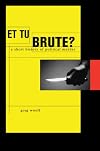
Terrible book. . . repetitive, lacking focus and thesis,
Caesar's murder described, analyzed, sources from Roman historians, versions of Caesar's death becomes grist for writers and historians ever since. Was his murder justified as tyranocide? or were Brutus and the others criminals? No real conclusions, and what's worse, no insight. And pub with the imprimatur of Harvard University Press! Amazing. . . .
Caesar's murder described, analyzed, sources from Roman historians, versions of Caesar's death becomes grist for writers and historians ever since. Was his murder justified as tyranocide? or were Brutus and the others criminals? No real conclusions, and what's worse, no insight. And pub with the imprimatur of Harvard University Press! Amazing. . . .
Lists
You May Also Like


Associated Authors
Statistics
- Works
- 19
- Also by
- 35
- Members
- 1,000
- Popularity
- #25,784
- Rating
- 3.8
- Reviews
- 9
- ISBNs
- 82
- Languages
- 7