
John Boardman (1) (1927–2024)
Author of The Oxford History of the Classical World
For other authors named John Boardman, see the disambiguation page.
About the Author
John Boardman is Emeritus Professor of Classical Archaeology and Art at the University of Oxford. He has published widely on various aspects of Greek art and archaeology, and on the archaeology of Greeks in the East and Asia. He has worked in the Beazley Archive (Classical Art Research Centre) show more since his retirement in 1994. show less
Works by John Boardman
The Oxford Illustrated History of Greece and the Hellenistic World (2001) — Editor — 139 copies, 1 review
The Cambridge Ancient History, Vol. 3 Pt. 3: The Expansion of the Greek World, Eighth to Sixth Centuries B.C. (1982) — Editor — 91 copies
The Cambridge Ancient History, Vol. 4: Persia, Greece and the Western Mediterranean, c.525–479 B.C. (1988) 90 copies
Greek Sculpture: The Late Classical Period and Sculpture in the Colonies and Overseas (1995) 88 copies
The Cambridge Ancient History, Vol. 3 Pt. 1: The Prehistory of the Balkans, the Middle East and the Aegean World, Tenth to Eighth Centuries B.C. (1982) — Editor — 82 copies
The Cambridge Ancient History, Vol. 3 Pt. 2: The Assyrian and Babylonian Empires and Other States of the Near East, from the Eighth to the Sixth Centuries B.C. (1992) — Editor — 75 copies, 3 reviews
The Archaeology of Nostalgia: How the Greeks Re-Created Their Mythical Past (2002) 45 copies, 1 review
Persia and the West: An Archaeological Investigation of the Genesis of Achaemenid Persian Art (2000) 27 copies
On the Fascination of Objects: Greek and Etruscan Art in the Shefton Collection (2016) — Editor — 8 copies
Ιστορία της αρχαίας Ελλάδας 1 copy
The Castle Ashby Vases. 1 copy
Natter’s Museum Britannicum: British gem collections and collectors of the mid-eighteenth century (2017) 1 copy
On the Knossos tablets 1 copy
Bernard Ashmole, 1894-1988 1 copy
Storia del mondo classico 1 copy
Associated Works
Greek Sculpture: Function, Materials, and Techniques in the Archaic and Classical Periods (2006) — Contributor — 12 copies
Periklean Athens and Its Legacy: Problems and Perspectives (2005) — Contributor — 11 copies, 1 review
Greek Identity in the Western Mediterranean: Papers in Honour of Brian Shefton (Mnemosyne Supplements) (2003) — Contributor — 10 copies
Greek Colonisation: An Account Of Greek Colonies and Other Settlements Overseas: Volume 1 (Mnemosyne, Bibliotheca Classica Batava Supplementum) (2006) — Contributor — 7 copies
Ancient Greeks West and East: Edited by Gocha R. Tsetskhladze (Mnemosyne, Bibliotheca Classica Batava Supplementum) (1999) — Contributor — 6 copies
Ancient Berezan: The Architecture, History and Culture of the First Greek Colony in the Northern Black Sea (Colloquia Po (1999) — Editor — 3 copies
The Eye of Greece : studies in the art of Athens; [Festschrift Martin Robertson] (1982) — Contributor — 2 copies
Greek settlements in the Eastern Mediterranean and the Black Sea. BAR-IS 1062 (2002) — Contributor — 2 copies
Tagged
Common Knowledge
- Canonical name
- Boardman, John
- Legal name
- Boardman, John
- Birthdate
- 1927-08-20
- Date of death
- 2024-05-23
- Gender
- male
- Education
- Magdalene College, University of Cambridge (BA|1948|MA|1951)
Chigwell School - Occupations
- intelligence officer
art historian
archaeologist
professor - Organizations
- University of Oxford
Royal Academy of Arts
British School at Athens
Ashmolean Museum
British Army Intelligence Corps - Awards and honors
- Cromer Greek Prize (1959)
Fellow, British Academy (1969)
Knight Bachelor (1989)
Kenyon Medal (1995)
Fellow of Lincoln College, Oxford University
Onassis Prize for Humanities (2009) (show all 9)
foreign member, Academi dei Lincei (1999)
Fellow, Society of Antiquaries of London (1957)
foreign member, American Philosophical Society (1999) - Relationships
- Cartledge, Paul (student)
Stanford, Sheila (spouse) - Nationality
- UK
- Birthplace
- Ilford, Essex, England, UK
- Places of residence
- Oxford, Oxfordshire, England, UK
Athens, Greece - Place of death
- Oxford, Oxfordshire, England, UK
- Map Location
- England, UK
Members
Reviews
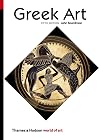
British art historian John Boardman published this book in 1964, but it remains the standard work on ancient Greek art. This is, of course, because it has been updated repeatedly over the decades. I read the fifth and final edition from 2016 (Boardman died in 2024), and of course, I didn't compare, but you can tell the revision was taken seriously. Only the bibliography reveals a much older origin.
Boardman focuses primarily on the Archaic (8th-6th century BCE) and Classical (5th-4th century show more BCE) periods, which is understandable. However, it is unfortunate that he covers the Hellenistic period only very briefly. Even though this book inevitably has a certain encyclopedic slant, Boardman has succeeded in delivering a readable and insightful overview.
More in my History account on Goodreads: https://www.goodreads.com/review/show/8386414495 show less
Boardman focuses primarily on the Archaic (8th-6th century BCE) and Classical (5th-4th century show more BCE) periods, which is understandable. However, it is unfortunate that he covers the Hellenistic period only very briefly. Even though this book inevitably has a certain encyclopedic slant, Boardman has succeeded in delivering a readable and insightful overview.
More in my History account on Goodreads: https://www.goodreads.com/review/show/8386414495 show less
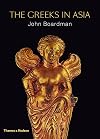
This is a fascinating look at the flickerings of Greek artistic influence in Central Asia and India. There are some astonishing artworks here showing how Greek imagery and mythology survived much longer and much farther to the east than one might have expected. It's a shame that these intriguing visuals are for the most part mute and that there is scant literary record of the Asian Hellenes.

This is mostly an examination of the physical culture associated with the hero cults of the classical Greeks. The relevant insight is that because of the near total loss of continuity with the Bronze Age Greeks and Minoans, Iron Age Greeks had to essentially create a history for the remnants they found of this culture, as opposed to the Egyptians and cultures of the Fertile Crescent, which did not lose contact with their Bronze Age roots to nearly the same degree. There's also the relevant show more aside that this was much more of a popular culture, as opposed to an ideology handed down from the center, making for a much more color and variation in how it was experienced. show less
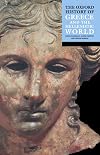
This is very much an introductory book where each chapter ends with a list of further reading, which meant that it didn't really tell me things I didn't already know, but it was a good refresher and kept me interested all the way through.
Lists
el (1)
Awards

You May Also Like


Associated Authors
Statistics
- Works
- 68
- Also by
- 17
- Members
- 6,572
- Popularity
- #3,734
- Rating
- 3.9
- Reviews
- 26
- ISBNs
- 197
- Languages
- 12
- Favorited
- 2