
M. I. Finley (1912–1986)
Author of The World of Odysseus
About the Author
M. I. Finley, FBA, (1912-1986), was a major scholar of classics and ancient history. He taught at Columbia University and the City College of New York, where he was influenced by exiled members of the Frankfurt School, before taking a position at Rutgers University. Finley moved to England in 1955, show more taught classics at Cambridge, and became a master at Darwin College. His numerous works include the classic texts Aspects of Antiquity and The Ancient Economy. Finley was knighted by the queen for his contributions to scholarship in 1979. show less
Series
Works by M. I. Finley
Studies in Roman Property: By the Cambridge University Research Seminar in Ancient History (1976) — Editor — 16 copies
The Trojan War. 1 copy
Rome in the late republic 1 copy
Grecy 1 copy
A Economia Antiga Livro 1 1 copy
Ancient Sicily: 2 1 copy
The Greeks 1 copy
The Greek historians 1 copy
Associated Works
The History of the Peloponnesian War (0400) — Introduction, some editions — 8,970 copies, 70 reviews
Fischer Weltgeschichte, Bd.3, Die Altorientalischen Reiche II, Das Ende des 2. Jahrtausends (1972) — Author — 71 copies
Fischer Weltgeschichte Bd.4 Die Altorientalischen Reiche III, Die erste Hälfte des 1. Jahrtausends (1965) — Author — 67 copies
Josephus: The Jewish War And Other Selections from Flavius Josephus. Translated by H. St J. Thackeray and Ralph Marcus / Edited and Abridged with an Introduction by Moses I.… (1966) — Introduction — 20 copies
Imperialism in the Ancient World: The Cambridge University Research Seminar in Ancient History (Cambridge Classical Studies) (1979) — Contributor — 16 copies
Tagged
Common Knowledge
- Canonical name
- Finley, M. I.
- Legal name
- Finkelstein, Moses Israel (birth name)
- Other names
- Finley, Moses I.
- Birthdate
- 1912-05-20
- Date of death
- 1986-06-23
- Gender
- male
- Education
- Columbia University (MA|1929|Ph.D|1950)
Syracuse University (BA|1927) - Occupations
- historian
author - Organizations
- Jesus College, Cambridge
Darwin College, Cambridge
Rutgers University
City College of New York
Columbia University - Awards and honors
- British Academy (Fellow, 1971)
Order of the British Empire (Commander)
Knight Bachelor (1979)
Royal Danish Academy (1975)
Accademia Nazionale dei Lincei (1982) - Cause of death
- cerebral hemorrhage
- Nationality
- USA (birth)
UK (naturalized 1962) - Birthplace
- New York, New York, USA
- Places of residence
- Cambridge, Cambridgeshire, England, UK
- Place of death
- Addenbrooke's Hospital, Cambridge
Members
Discussions
Folio Archives 376: The World of Odysseus by M. I. Finley - 2002 in Folio Society Devotees (May 2024)
Reviews

A fascinating book. Some of the per-se economics is wrong, or at least out of date. But, like everything Finley wrote, it's briliant, forcing intellectual daring and rigor on a discipline--at best--too accustomed to lazy, unreflective "common sense" reasoning.

And the difference between Ancient and Modern Slavery is... August 5, 2006
This is an important topic given the embarrassing fact of the modern return of Slavery in the midst of the European Enlightenment. Indeed, even the United States, the first nation produced by the Enlightenment, was a home to modern slavery. What was this 'enlightened' slavery, and how did it differ from the ancient variety? Hmmm... So, how do we go about distinguishing between ancient and modern slavery? Ancient show more slaveholders originally were masters and knew they were masters because they excelled at violence. They had won a war; the slaves had lost. When questioned more deeply about their amazing string of victories, the Romans would generally point to their pietas, which is a religious notion. Now, is this the difference between ancient and modern slave societies? That in modern times we try to give a 'scientific explanation' of events?
President Jefferson, a man renowned for his love of freedom, in the midst of a terrifyingly 'scientistic' discussion of "the real distinction that nature has made" informs us that blacks are "in reason much inferior" to whites, and "in imagination they are dull, tasteless, and anomalous." Mercifully, the man we remember every Fourth of July had the grace to concede the possibility, even the necessity, that "further observation will or will not verify the conjecture, that nature has been less bountiful to them in the endowments of the head", because "where our conclusion would degrade a whole race of men from the rank in the scale of beings which their Creator may perhaps have given them" we must indeed be cautious!
The Romans, of course, never dreamed of denying the humanity of their slaves. Obviously, this is cold comfort to those unfortunate enough to lose a war to Rome! Modern slaveholders, in contrast, would try to ground their slaveholding in science, not violence; in fact, not force. And it is this penchant for science that is both the difference between ancient and modern slavery, and, ironically, the beginning of modern racism. Now, this difference has consequences and causes.
To find one of the causes let's look at the practice of manumission, the freeing of slaves. Finley tells us that a freed Roman slave became "transformed from an object to a subject of rights, the most complete metamorphous one can imagine." How? How was it possible for people whose families had been slaves for generations to become free? Or rather, why, in 'enlightened' Virginia, did it not happen? Again Finley, "Freedmen in the New World carried an external sign of their slave origin in their skin color, even after many generations, with negative economic, social, political and psychological consequences of the gravest magnitude. Ancient freedman simply melted into the total population within one or at the most two generations."
Were ancient plebeians aware of this? - That former slaves worked, lived and (Gasp!) intermarried among them? Finley reminds us of stories in Tacitus and Pliny of plebeians rioting when local slaves were killed en masse, as Roman law required, for the assassination of a master. Not only does it appear the plebeians knew, but they also approved and identified with the slaves! The contrast with modern American slavery - the poor whites quasi-mystical belief in their 'superiority' to black slaves, and the certainty that this aligned them with the masters - is too obvious, and too depressing, to mention.
So, ancient slaves, upon manumission, were able to melt into the lowest Roman classes, while freed Blacks could never simply become part of society, however poor. What of it? Is this enough to explain the differences of modern and ancient slavery? No, of course not. To explain why ancient slavery never developed a crackpot ideology like racism to both justify and defend itself, and, on top of that, to create a horrid cultural pseudo-immortality for itself, we have to look elsewhere.
But first, what did our ancient slaves do, by and large, with their new found freedom? Finley shows us that, in the long run, being freed in the early empire was no great favor. He tells a depressing story of ever increasing taxes and barbarian invasions combining to force citizens to seek some sort of relief in service to either the empire or a great lord. "From the time of Augustus on, everything changed, [...] the state no longer permitted the peasant to vote or needed his fighting power, [however] it continued to need his money, in increasing quantities [...] by Justinian's reign the state took between one fourth and one third of the gross yield of the land". And elsewhere he mentions "the extent of the financial and material damage inflicted by [...] continuous civil war in the third century and by the persistent assaults thereafter of Germans, of Persians in the east..."
These combined to force the peasants and the urban poor into some form of debt service. In late antiquity one's poor cousins were always in danger of losing their freedom, whether selling it for protection to some lord or losing it in court for unpaid taxes. That is why the ancients, in the long run, could never base slavery or servitude on some pseudo-biological theory, the next slave could be a relative or, and this is really the heart of the matter, themselves. Slavery in antiquity could happen to almost anyone, while that was really never the case in eighteenth or nineteenth century America. That was the fundamental difference between ancient and modern slavery.
The consequences of this difference are revealed with terrifying clarity in the twentieth century. Modern 'scientific' racism, whether encountered in President Jefferson or Comte de Gobineau, comes to its ultimate fruition in Hitler, who is the cause of so many of our century's horrors. Among the consequences of the Enlightenment, many of which are indisputably good, is the notion that everything can, should and will eventually be explained by science. History is reeling under the weight of bigots and quacks who were able to 'justify' their manias 'scientifically'. When you have proven that your enemy is not fully human, by supposedly scientific means, all you have shown is that you no longer believe you have to behave humanely toward him. Some of the consequences of this pseudo-scientific ranting include the Holocaust and Bosnian ethnic cleansing.
Tocqueville, who was a friend of Gobineau, somewhere remarked to him, "I believe your theories are wrong, I know they are dangerous." Precisely. What gave poor Roman citizens the ability to accept freed slaves as their own, or allowed the Roman aristocracy the latitude to have their children educated by slaves is simply this: they never denied the humanity of their slaves. They had yet to come under the sway of modern 'enlightened' ideology. This is why, pace Messieurs Gobineau and Jefferson, ancient slaves (whether from Europe, Asia, or Africa) could teach the children of their masters or excel in the various sciences and arts. - No one had thought of a 'reason' to deny that they could. show less
This is an important topic given the embarrassing fact of the modern return of Slavery in the midst of the European Enlightenment. Indeed, even the United States, the first nation produced by the Enlightenment, was a home to modern slavery. What was this 'enlightened' slavery, and how did it differ from the ancient variety? Hmmm... So, how do we go about distinguishing between ancient and modern slavery? Ancient show more slaveholders originally were masters and knew they were masters because they excelled at violence. They had won a war; the slaves had lost. When questioned more deeply about their amazing string of victories, the Romans would generally point to their pietas, which is a religious notion. Now, is this the difference between ancient and modern slave societies? That in modern times we try to give a 'scientific explanation' of events?
President Jefferson, a man renowned for his love of freedom, in the midst of a terrifyingly 'scientistic' discussion of "the real distinction that nature has made" informs us that blacks are "in reason much inferior" to whites, and "in imagination they are dull, tasteless, and anomalous." Mercifully, the man we remember every Fourth of July had the grace to concede the possibility, even the necessity, that "further observation will or will not verify the conjecture, that nature has been less bountiful to them in the endowments of the head", because "where our conclusion would degrade a whole race of men from the rank in the scale of beings which their Creator may perhaps have given them" we must indeed be cautious!
The Romans, of course, never dreamed of denying the humanity of their slaves. Obviously, this is cold comfort to those unfortunate enough to lose a war to Rome! Modern slaveholders, in contrast, would try to ground their slaveholding in science, not violence; in fact, not force. And it is this penchant for science that is both the difference between ancient and modern slavery, and, ironically, the beginning of modern racism. Now, this difference has consequences and causes.
To find one of the causes let's look at the practice of manumission, the freeing of slaves. Finley tells us that a freed Roman slave became "transformed from an object to a subject of rights, the most complete metamorphous one can imagine." How? How was it possible for people whose families had been slaves for generations to become free? Or rather, why, in 'enlightened' Virginia, did it not happen? Again Finley, "Freedmen in the New World carried an external sign of their slave origin in their skin color, even after many generations, with negative economic, social, political and psychological consequences of the gravest magnitude. Ancient freedman simply melted into the total population within one or at the most two generations."
Were ancient plebeians aware of this? - That former slaves worked, lived and (Gasp!) intermarried among them? Finley reminds us of stories in Tacitus and Pliny of plebeians rioting when local slaves were killed en masse, as Roman law required, for the assassination of a master. Not only does it appear the plebeians knew, but they also approved and identified with the slaves! The contrast with modern American slavery - the poor whites quasi-mystical belief in their 'superiority' to black slaves, and the certainty that this aligned them with the masters - is too obvious, and too depressing, to mention.
So, ancient slaves, upon manumission, were able to melt into the lowest Roman classes, while freed Blacks could never simply become part of society, however poor. What of it? Is this enough to explain the differences of modern and ancient slavery? No, of course not. To explain why ancient slavery never developed a crackpot ideology like racism to both justify and defend itself, and, on top of that, to create a horrid cultural pseudo-immortality for itself, we have to look elsewhere.
But first, what did our ancient slaves do, by and large, with their new found freedom? Finley shows us that, in the long run, being freed in the early empire was no great favor. He tells a depressing story of ever increasing taxes and barbarian invasions combining to force citizens to seek some sort of relief in service to either the empire or a great lord. "From the time of Augustus on, everything changed, [...] the state no longer permitted the peasant to vote or needed his fighting power, [however] it continued to need his money, in increasing quantities [...] by Justinian's reign the state took between one fourth and one third of the gross yield of the land". And elsewhere he mentions "the extent of the financial and material damage inflicted by [...] continuous civil war in the third century and by the persistent assaults thereafter of Germans, of Persians in the east..."
These combined to force the peasants and the urban poor into some form of debt service. In late antiquity one's poor cousins were always in danger of losing their freedom, whether selling it for protection to some lord or losing it in court for unpaid taxes. That is why the ancients, in the long run, could never base slavery or servitude on some pseudo-biological theory, the next slave could be a relative or, and this is really the heart of the matter, themselves. Slavery in antiquity could happen to almost anyone, while that was really never the case in eighteenth or nineteenth century America. That was the fundamental difference between ancient and modern slavery.
The consequences of this difference are revealed with terrifying clarity in the twentieth century. Modern 'scientific' racism, whether encountered in President Jefferson or Comte de Gobineau, comes to its ultimate fruition in Hitler, who is the cause of so many of our century's horrors. Among the consequences of the Enlightenment, many of which are indisputably good, is the notion that everything can, should and will eventually be explained by science. History is reeling under the weight of bigots and quacks who were able to 'justify' their manias 'scientifically'. When you have proven that your enemy is not fully human, by supposedly scientific means, all you have shown is that you no longer believe you have to behave humanely toward him. Some of the consequences of this pseudo-scientific ranting include the Holocaust and Bosnian ethnic cleansing.
Tocqueville, who was a friend of Gobineau, somewhere remarked to him, "I believe your theories are wrong, I know they are dangerous." Precisely. What gave poor Roman citizens the ability to accept freed slaves as their own, or allowed the Roman aristocracy the latitude to have their children educated by slaves is simply this: they never denied the humanity of their slaves. They had yet to come under the sway of modern 'enlightened' ideology. This is why, pace Messieurs Gobineau and Jefferson, ancient slaves (whether from Europe, Asia, or Africa) could teach the children of their masters or excel in the various sciences and arts. - No one had thought of a 'reason' to deny that they could. show less
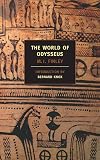
Ah, for the golden age of academic writing. Is it beautiful? No. But it is clear, concise and argumentative. No 'pointing out a problem' stuff here; Finley just gives you the answers as he sees them. You'll be in no doubt as to what he thinks at any stage in your reading. For instance, "the historian of ideas and values has no more Satanic seducer to guard against than the man on the Clapham omnibus." Love it.
But this isn't popular history by any means, for good and bad. There are no catchy show more anecdotes, no sex and murder stories. It's just a solid suggestion of what a world looked like, in this case, the 'Dark Ages' in the eastern Mediterranean, after the Mycenaeans and before the time the Homeric poems were coming together. Basically, not very attractive.
As a side note, I should say that I was biased in favor of liking this book after I found out some of Finley's life story. According to wikipedia:
"He taught at Columbia University and City College of New York, where he was influenced by members of the Frankfurt School who were working in exile in America. In 1952, during the Red Scare, Finley was fired from his teaching job at Rutgers University; in 1954, he was summoned by the United States Senate Internal Security Subcommittee and asked whether he had ever been a member of the Communist Party USA. He invoked the Fifth Amendment and refused to answer."
He was fired at the end of the year and could never work in the U.S. again. A political martyr who ended up becoming a British citizen and getting knighted, after hanging out with the Frankfurters in New York? That's my kind of man. show less
But this isn't popular history by any means, for good and bad. There are no catchy show more anecdotes, no sex and murder stories. It's just a solid suggestion of what a world looked like, in this case, the 'Dark Ages' in the eastern Mediterranean, after the Mycenaeans and before the time the Homeric poems were coming together. Basically, not very attractive.
As a side note, I should say that I was biased in favor of liking this book after I found out some of Finley's life story. According to wikipedia:
"He taught at Columbia University and City College of New York, where he was influenced by members of the Frankfurt School who were working in exile in America. In 1952, during the Red Scare, Finley was fired from his teaching job at Rutgers University; in 1954, he was summoned by the United States Senate Internal Security Subcommittee and asked whether he had ever been a member of the Communist Party USA. He invoked the Fifth Amendment and refused to answer."
He was fired at the end of the year and could never work in the U.S. again. A political martyr who ended up becoming a British citizen and getting knighted, after hanging out with the Frankfurters in New York? That's my kind of man. show less

Not too much to say here: no doubt this is slightly out of date, but Finley is so cautious--he's perfectly willing to say that we don't know this or that, rather than make uneducated guesses--that I doubt he steers us wrong too much. Otherwise, this is an ideal book on ancient Greece for me personally, since I can't handle the self-congratulatory liberal cheer-leading that goes on every time anyone talks about classical Greece. This book ends before classical Greece. Q.E.D.
Lists
Awards

You May Also Like


Associated Authors
Statistics
- Works
- 48
- Also by
- 11
- Members
- 5,101
- Popularity
- #4,901
- Rating
- 4.0
- Reviews
- 44
- ISBNs
- 253
- Languages
- 14
- Favorited
- 11