
Simon Hornblower
Author of The Oxford Classical Dictionary
About the Author
Simon Hornblower is a Senior Research Fellow at All Souls College, Oxford. He was previously Professor of Classics and Grote Professor of Ancient History at University College London. He is a Fellow of the British Academy. His many publications in Greek history and classical civilization include A show more Commentary on Thucydides in three volumes (1991-2008). He is now working on commentaries on Herodotus books 5 and 6, and on Lykophron's Alexandra. show less
Image credit: Simon Hornblower
Series
Works by Simon Hornblower
The Folio History of Ancient Greece : Four Volumes The Lyric Age, The Persian Wars, The Classical Age, The Hellenistic Age (2002) 104 copies
Corpus of Ptolemaic Inscriptions. Volume 1: Alexandria and the Delta, Nos. 1-206. Part I: Greek, Bilingual, and Trilingual Inscriptions from Egypt (2021) — Editor — 11 copies
Ritual, Finance, Politics: Athenian Democratic Accounts Presented to David Lewis (1994) — Editor — 6 copies
Pindar's Poetry, Patrons, and Festivals: From Archaic Greece to the Roman Empire (2007) — Editor — 5 copies
Records limited 1 copy
Classic treatments 1 copy
Associated Works
The Oxford History of Greece & the Hellenistic World (1986) — Contributor, some editions — 787 copies, 4 reviews
The Cambridge History of Greek and Roman Warfare (Volume 1) (2007) — Contributor — 73 copies, 1 review
Brill's Companion to Thucydides (Brill's Companions in Classical Studies) (2006) — Contributor — 22 copies
Onomatologos: Studies in Greek Personal Names Presented to Elaine Matthews (2010) — Contributor — 7 copies
Hellenisms: Culture, Identity, and Ethnicity from Antiquity to Modernity (2008) — Contributor — 7 copies
Reading Herodotus: A Study of the Logoi in Book 5 of Herodotus' Histories (2007) — Contributor — 7 copies
Greek Tragedy After the Fifth Century: A Survey from ca. 400 BC to ca. AD 400 (2018) — Contributor — 5 copies
Herodotus and His World: Essays from a Conference in Memory of George Forrest (2003) — Contributor — 5 copies
Tagged
Common Knowledge
- Canonical name
- Hornblower, Simon
- Birthdate
- 1949-05-29
- Gender
- male
- Education
- Eton College
University of Cambridge (1969)
University of Oxford (1971)
University of Oxford (Balliol College ∙ M.A.)
University of Oxford (1978) - Occupations
- professor
classicist
historian - Organizations
- All Souls College, Oxford University
Oriel College, Oxford
University College London - Awards and honors
- Fellow of the British Academy (2004)
- Nationality
- UK
- Associated Place (for map)
- UK
Members
Discussions
Folio Archives 336: The Oxford Classical Dictionary – LIMITED EDITION 2001 in Folio Society Devotees (September 2023)
Reviews
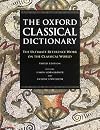
All things considered, a superb reference work, January 26, 2007
This edition (the third edition, 1996) has over 6200 entries on 1640 pages! And no, I haven't read them all... This is really wonderful for those times when you come across a new term (whether a person, place or thing) and need some idea as to who (what or where) is being discussed, indicated or alluded to. This Edition, published in 1996, was put together between 1991-1994 and contains matters (such as the Near East) that were show more barely touched on in earlier editions. But never fear! - The centrality of Greece and Rome has been quite correctly retained. There is, however, a much broader (and self-consciouss) inter-disciplinary focus to this edition. Older readers will likely be annoyed by long bows to feminism, Marxism and postmodernism in some of the essays. Occasionally, the tone and 'politically correct' point of view of some entries can be a bit over the top. If you are either old-fashioned or easily annoyed (and you know who you are) it might be wise NOT to toss out the second edition... But even they might find some of the new 'thematic' entries - on disease, ecology, economy, imperialism, literacy, motherhood, and technology, e.g. - more than occasionally useful. There is even good news for the under-educated - most Greek and Latin terms are translated! But I would prefer that the Greek or Latin and its translation both appear; this compromise would likely satisfy both novices and experts. Unfortunately, the cost of including the original term and the translation would likely cause the publisher to balk. Now, Roman names will probably continue to annoy everyone. If, for example, one looks up Caesar one finds 'See Iulius Caesar'. Now, as I hope we all know, the Romans had three names (using Caesar as an example): Gaius (praenomen), Iulius (nomen), Caesar (cogomen). Pretty much no one, besides Emperors and writers, is listed under the cogomen in this edition - they are almost all listed by nomen. (No, Caesar is not the exception, he was never officially Emperor.) The change of 'Julius' into 'Iulius' is also annoying - especially after being assured (Preface, viii) that "the more familiar form [...] should be preferred." But with a work of this scope and length there will always be a multitude of quibbles and annoyances. One of mine is that I wish the tiny bibliographies that follow some entries were less brief. But all things considered this is a first-rate OCD that will inevitably, after a generation and a half has passed, need to be revised. But such is the fate of all academic reference works. - They are all such slaves to fashion! That said, the general editors, Hornblower and Spawforth, and the area advisers have much to be proud of; 4.5 stars, 5 if the 'politically correct' gestures are toned down and the bibliographical data following some of the separate entries increased. show less
This edition (the third edition, 1996) has over 6200 entries on 1640 pages! And no, I haven't read them all... This is really wonderful for those times when you come across a new term (whether a person, place or thing) and need some idea as to who (what or where) is being discussed, indicated or alluded to. This Edition, published in 1996, was put together between 1991-1994 and contains matters (such as the Near East) that were show more barely touched on in earlier editions. But never fear! - The centrality of Greece and Rome has been quite correctly retained. There is, however, a much broader (and self-consciouss) inter-disciplinary focus to this edition. Older readers will likely be annoyed by long bows to feminism, Marxism and postmodernism in some of the essays. Occasionally, the tone and 'politically correct' point of view of some entries can be a bit over the top. If you are either old-fashioned or easily annoyed (and you know who you are) it might be wise NOT to toss out the second edition... But even they might find some of the new 'thematic' entries - on disease, ecology, economy, imperialism, literacy, motherhood, and technology, e.g. - more than occasionally useful. There is even good news for the under-educated - most Greek and Latin terms are translated! But I would prefer that the Greek or Latin and its translation both appear; this compromise would likely satisfy both novices and experts. Unfortunately, the cost of including the original term and the translation would likely cause the publisher to balk. Now, Roman names will probably continue to annoy everyone. If, for example, one looks up Caesar one finds 'See Iulius Caesar'. Now, as I hope we all know, the Romans had three names (using Caesar as an example): Gaius (praenomen), Iulius (nomen), Caesar (cogomen). Pretty much no one, besides Emperors and writers, is listed under the cogomen in this edition - they are almost all listed by nomen. (No, Caesar is not the exception, he was never officially Emperor.) The change of 'Julius' into 'Iulius' is also annoying - especially after being assured (Preface, viii) that "the more familiar form [...] should be preferred." But with a work of this scope and length there will always be a multitude of quibbles and annoyances. One of mine is that I wish the tiny bibliographies that follow some entries were less brief. But all things considered this is a first-rate OCD that will inevitably, after a generation and a half has passed, need to be revised. But such is the fate of all academic reference works. - They are all such slaves to fashion! That said, the general editors, Hornblower and Spawforth, and the area advisers have much to be proud of; 4.5 stars, 5 if the 'politically correct' gestures are toned down and the bibliographical data following some of the separate entries increased. show less

Here is an old school style compilation of information, a huge volume (two separate sections per page) of ancient civilization at your fingertips. In an age where we all go flying to Wikipedia for instant information, this was the printed version and quite handy to have if you are focusing on Greece or the Roman Republic/Empire. I particularly liked the *name connotations which act as an equivalent hashtag for printed paper hyperlinking. Neat.
...stepping into the same river, we find show more different waters constantly floating by us. - (referencing Heraclitus)
This took me a very long time to complete, but it was worth it. I have even gone back already to re-read some connections between emperors and poets. It's kind of like a LinkedIn for classical studies.
Book Season = Year Round show less
...stepping into the same river, we find show more different waters constantly floating by us. - (referencing Heraclitus)
This took me a very long time to complete, but it was worth it. I have even gone back already to re-read some connections between emperors and poets. It's kind of like a LinkedIn for classical studies.
Book Season = Year Round show less
This book should be on every classicist's book shelf. It contains clear, concise entries on nearly every subject and figure of antiquity, going all the way up to the 4th-5th centuries. It's the ultimate reference book to the Classical World.
This an amazing reference work, it has articles on everything in the ancient world, I will use this source for years
Lists
Awards

You May Also Like


Associated Authors
Statistics
- Works
- 32
- Also by
- 26
- Members
- 2,526
- Popularity
- #10,157
- Rating
- 4.1
- Reviews
- 13
- ISBNs
- 86
- Languages
- 3

