
Robin Lane Fox
Author of The Classical World: An Epic History from Homer to Hadrian
About the Author
Robin Lane Fox is a university reader in ancient history and an emeritus fellow of New College, Oxford. The author of The Classical World and Alexander the Great, Fox lives in Oxford, England.
Image credit: Robin James Lane Fox at Financial Times 125th Anniversary Party, London, in June 2013
Works by Robin Lane Fox
Brill's Companion to Ancient Macedon (Brill's Companions in Classical Studies Brill's Companions i) (2011) — Editor — 14 copies
Alexander of Macedonia: the World Conquered, 7 CDs [The Modern Scholar Series] (2010) 14 copies, 4 reviews
Pagans and Christians: Vol. II 3 copies
Pagans and Christians: Vol III 3 copies
Pagans and Christians: Volume I 3 copies
Alexandru cel Mare 1 copy
THE ALBAMBRA Easton Press 1 copy
Associated Works
The Oxford History of Greece & the Hellenistic World (1986) — Contributor, some editions — 777 copies, 4 reviews
Alternatives to Athens: Varieties of Political Organization and Community in Ancient Greece (2001) — Contributor — 24 copies
Responses to Oliver Stone's Alexander: Film, History, and Cultural Studies (2010) — Contributor — 21 copies, 2 reviews
Human Landscapes in Classical Antiquity: Environment and Culture (Leicester-Nottingham Studies in Ancient Society) (1996) — Contributor — 19 copies
Persian Responses: Political and Cultural Interaction with(in) the Achaemenid Empire (2007) — Contributor — 10 copies
Philosopher and Society in Late Antiquity: Essays in Honour of Peter Brown (2005) — Contributor — 8 copies
Ritual, Finance, Politics: Athenian Democratic Accounts Presented to David Lewis (1994) — Contributor — 6 copies
East and West in the World Empire of Alexander: Essays in Honour of Brian Bosworth (2015) — Contributor — 4 copies
Crux : essays in Greek history presented to G.E.M. de Ste. Croix on his 75th birthday (1985) — Contributor — 4 copies
Portraits: Biographical Representation in the Greek and Latin Literature of the Roman Empire (1997) — Contributor — 3 copies
The Returning Hero: nostoi and Traditions of Mediterranean Settlement (2018) — Contributor — 2 copies
Tagged
Common Knowledge
- Canonical name
- Lane Fox, Robin
- Legal name
- Lane-Fox, Robin James
- Birthdate
- 1946-10-05
- Gender
- male
- Education
- Magdalen College, University of Oxford (BA|1969)
Eton College, Eton, Berkshire, England, UK - Occupations
- historian
lecturer
tutor
historical advisor
gardening writer
classicist - Organizations
- University of Oxford (Reader in Ancient History)
University of Oxford (Fellow, New College)
BBC
Beefsteak Club - Awards and honors
- Royal Society of Literature (Fellow, 1974)
Wolfson History Prize (2016)
Heinemann Award (1973)
Runciman Award (2006)
British Press Award for leisure journalist of the year (1988) - Nationality
- UK
- Places of residence
- Oxford, Oxfordshire, England, UK
- Map Location
- England, UK
Members
Discussions
Pagans and Christians in Ancient History (November 2012)
sibyx and ronincats tackle Pagans and Christians in 75 Books Challenge for 2011 (January 2012)
Reviews
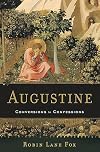
An excellent supplement to Peter Brown's “Augustine of Hippo,” focusing more narrowly than Brown's book on the period of Augustine's “conversions,” from approximately 372, when he “became fired with the love of 'wisdom' on encountering Cicero's Hortensius to his final conversion (according to Fox) to celibacy and renunciation of earthly ambition in 386 in the garden in Milan. (Fox clarifies his use of the word “conversion” as follows...
Actually, Augustine's final conversion only takes us up to page 294, with the remaining 268 pages concerned with his conversions of others, and the experiences and developments in his thought that led the writing of his Confessions. In addition to Augustine and Christianity and its competition in the Roman world, Fox broadens the picture by looking at the lives of two other men, comparable to Augustine in education and experience, who help place Augustine's words and actions in the context of his world.
“Modern readers find it hard to remember that much of it [the vividness with which Augustine lays his past before God] may have been less startling in the context of its time. I will therefore present it against two near-contemporaries' lives. My aim is not to write a biography of all three persons, but to place Augustine, with the Confessions in his hand, as the central panel in a triple set of sketches, like a triptych on a medieval Christian altar. On the left side stands a sketch of his older contemporary Libanius, casting a look of profound disapproval up at Augustine, not least because he himself was a pagan and a committed Greek teacher, one who detested Latin and the technical skill of shorthand. On the right side, looking up with tempered adoration, is a sketch of his younger Greek-speaking contemporary Synesius, a Christian, a bishop and a fellow lover of philosophy.
The lives of Libanius and Synesius do not overlap with all of Augustine's early career, but they help to bring out aspects of it, his social class and the demands which it imposed on him, the pressures of his schooling and his worldly ambitions, his relations with close family members and the ideals of friendship which he projected onto those around him. Like Augustine, Libanius and Synesius wrote about ascents to a divine presence. More mundanely, they illustrate the social perils of travel abroad to great cities, followed by a return, like Augustine's, to a home town. They address their own and others' sexual lives in ways which contrast with Augustine's. They also illumine the bitterness which appointments to prominent jobs could ignite, especially, as ever, in a Christian church.”
Fox does not spend a huge amount of time with these two, bringing them in periodically to cast light on Augustine's experiences and choices, but I found their presence helpful.
Fox's non-Christian perspective adds a useful objectivity to this narrative. He doesn't feel obliged to point out where Augustine is headed in the right direction and where he's not, and his expertise on pagan religion and Manichaeism adds tremendously to his presentation of how Augustine's thought differed from and built on other ideas current in his time. Also, if you've ever wondered exactly how Manichaeism differed from catholic Christianity, look no further! Fox explores this in great, great detail. Speaking of detail, this is probably the place for me to mention that this is a very detail-oriented book. Shadings of belief, minutiae of theological quarrels, in-depth consideration of Manichaean practices, etc. did occasionally become a bit much for me, but, in fairness to Fox, I “read” this with my ears (thanks to my friend Nicole for this expression!) while walking a lively young golden retriever, so readers who are better focused might well not have this issue. Anyway, given the length of the book and the ideas under discussion, Fox really does an excellent job. His explanation of the development of Augustine's ideas on free will, grace, and predestination is notably clear, and, while recognizing how disconcerting and unattractive some of Augustine's views on celibacy and perfectionism will be to modern readers, Fox nevertheless manages to render him, on the whole, an admirable and appealing figure.
I'll conclude with Fox's transition, in Chapter 21, from focusing on Augustine's conversions to examining his confessions, as this encapsulates his themes far better than my words could.
Four and a half stars, recommended for readers with a real interest in early Christianity, and especially those who have already read Peter Brown's book on Augustine and want to dig a bit deeper. show less
“a conversion requires a decisiveshow more
change whereby we abandon a previous practice or belief and adopt exclusively a new one. It involves a 'turning which implies a consciousness that the old way was wrong and the new is right'.... I do not restrict conversions to changes from one religion to another. Conversions are possible within one and the same religious commitment, as historians of early and medieval Christianity recognize.”
Actually, Augustine's final conversion only takes us up to page 294, with the remaining 268 pages concerned with his conversions of others, and the experiences and developments in his thought that led the writing of his Confessions. In addition to Augustine and Christianity and its competition in the Roman world, Fox broadens the picture by looking at the lives of two other men, comparable to Augustine in education and experience, who help place Augustine's words and actions in the context of his world.
“Modern readers find it hard to remember that much of it [the vividness with which Augustine lays his past before God] may have been less startling in the context of its time. I will therefore present it against two near-contemporaries' lives. My aim is not to write a biography of all three persons, but to place Augustine, with the Confessions in his hand, as the central panel in a triple set of sketches, like a triptych on a medieval Christian altar. On the left side stands a sketch of his older contemporary Libanius, casting a look of profound disapproval up at Augustine, not least because he himself was a pagan and a committed Greek teacher, one who detested Latin and the technical skill of shorthand. On the right side, looking up with tempered adoration, is a sketch of his younger Greek-speaking contemporary Synesius, a Christian, a bishop and a fellow lover of philosophy.
The lives of Libanius and Synesius do not overlap with all of Augustine's early career, but they help to bring out aspects of it, his social class and the demands which it imposed on him, the pressures of his schooling and his worldly ambitions, his relations with close family members and the ideals of friendship which he projected onto those around him. Like Augustine, Libanius and Synesius wrote about ascents to a divine presence. More mundanely, they illustrate the social perils of travel abroad to great cities, followed by a return, like Augustine's, to a home town. They address their own and others' sexual lives in ways which contrast with Augustine's. They also illumine the bitterness which appointments to prominent jobs could ignite, especially, as ever, in a Christian church.”
Fox does not spend a huge amount of time with these two, bringing them in periodically to cast light on Augustine's experiences and choices, but I found their presence helpful.
Fox's non-Christian perspective adds a useful objectivity to this narrative. He doesn't feel obliged to point out where Augustine is headed in the right direction and where he's not, and his expertise on pagan religion and Manichaeism adds tremendously to his presentation of how Augustine's thought differed from and built on other ideas current in his time. Also, if you've ever wondered exactly how Manichaeism differed from catholic Christianity, look no further! Fox explores this in great, great detail. Speaking of detail, this is probably the place for me to mention that this is a very detail-oriented book. Shadings of belief, minutiae of theological quarrels, in-depth consideration of Manichaean practices, etc. did occasionally become a bit much for me, but, in fairness to Fox, I “read” this with my ears (thanks to my friend Nicole for this expression!) while walking a lively young golden retriever, so readers who are better focused might well not have this issue. Anyway, given the length of the book and the ideas under discussion, Fox really does an excellent job. His explanation of the development of Augustine's ideas on free will, grace, and predestination is notably clear, and, while recognizing how disconcerting and unattractive some of Augustine's views on celibacy and perfectionism will be to modern readers, Fox nevertheless manages to render him, on the whole, an admirable and appealing figure.
I'll conclude with Fox's transition, in Chapter 21, from focusing on Augustine's conversions to examining his confessions, as this encapsulates his themes far better than my words could.
”So far, we have followed Augustine's memories with a constant eye on his conversions. There have been three, to philosophy, to celibacy and within Christianity to the supposedly 'true Christianity' preached by Mani. Conversion has been the obvious theme to pursue in his early life because he himself looks back on it in terms of a turning from and towards God. It is also the theme which makes him special for modern historians. He is the only early Christian who has told us in detail about his conversions. They are not conversions to Christianity from non-Christian belief. They have emerged as conversions away from rhetoric, worldly ambition, and sex.
After his decision in the garden many modern scholars continue to look for yet more conversions and make them a guiding theme in their accounts of the following years. Augustine continued to try to convert others, but in my view he underwent no more conversions himself. However, he is also special for being the author of a masterpiece, the Confessions. Confessing, therefore, is the thread which I will trace in the next eleven years until this masterpiece's beginning. Gradually, he will assemble in his mind the pieces which enable him to confess in a novel way. If he had confessed his sins to God after coming indoors from the garden, his prayer would have sounded very different. Eleven years later, he had written on deep questions of free will and grace, sin, faith and predestination, questions which were to become central parts of his legacy to Christian thinking. They are also the themes with which Luther, Calvin, and many others would engage through knowledge of his writings and which would earn him his status as a Doctor of the Catholic Church. They are a far cry from his days as Milan's Libanius, 'selling lies for a living.'”
Four and a half stars, recommended for readers with a real interest in early Christianity, and especially those who have already read Peter Brown's book on Augustine and want to dig a bit deeper. show less
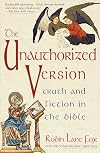
I was first introduced to Oxford historian Robin Lane Fox when I read his book, Pagans and Christians. In addition to authoring many scholarly works, Lane Fox has written on a variety of topics for the general public. What I enjoy most about his writing style is that he occasionally breaks the fourth wall and writes directly to you, the reader. He shares his intentions so that you can follow his train of thought throughout the work. This puts the reader on the lookout and because you show more understand what he is trying to achieve, you have the luxury of deciding if you agree with his approach while you read rather than react to it after the fact.
I’ve read other reviews of Lane Fox’s book and several of them refer to his dry style and the sloggish nature of the book. I wholeheartedly disagree. I found The Oxford History of the Biblical World to be more dry because of its more formal style. No breaking of the fourth wall there. Lane Fox not only speaks directly to his dear reader, he throws in little bits of dry English humor that bring you up from the slog to laugh a bit. My favorite is this: “There were ancient prophesies of a future king, the ‘stem of Jesse’, chosen by the Lord: many of the most explicit texts about him had been invented under foreign domination during the years of exile in Babylon. Ideas of this future super-star had multiplied freely…”
In writing The Unauthorized Version, Lane Fox, an atheist, set out to explain for himself and others what he meant when he once told a friend, “I believe in the Bible but not in God.” He starts by considering a question. “In John’s Gospel, Jesus tells Pilate, ‘To this end was I born, and for this cause came I into the world, that I should bear witness unto the truth. Every one that is of the truth hearest my voice.’ ‘What is truth?’ asks Pilate and does not receive a reply.” (pp 13)
Lane Fox then explains what he intends to achieve with his book: “I intend to take Pilate’s question and turn it back on the Bible itself. First, I will explore the view that the Bible’s very nature and origin give it a coherence which answers Pilate’s question. Then I will explore its narrative to see if there is a level at which it corresponds to fact.” (pp 14)
I won’t give away Lane Fox’s plot. You’ll have to read the book if you want to learn what he concludes. I will say, however, that there’s a fascinating plot twist in his final conclusion that is moving whether you’re a believer or not. show less
I’ve read other reviews of Lane Fox’s book and several of them refer to his dry style and the sloggish nature of the book. I wholeheartedly disagree. I found The Oxford History of the Biblical World to be more dry because of its more formal style. No breaking of the fourth wall there. Lane Fox not only speaks directly to his dear reader, he throws in little bits of dry English humor that bring you up from the slog to laugh a bit. My favorite is this: “There were ancient prophesies of a future king, the ‘stem of Jesse’, chosen by the Lord: many of the most explicit texts about him had been invented under foreign domination during the years of exile in Babylon. Ideas of this future super-star had multiplied freely…”
In writing The Unauthorized Version, Lane Fox, an atheist, set out to explain for himself and others what he meant when he once told a friend, “I believe in the Bible but not in God.” He starts by considering a question. “In John’s Gospel, Jesus tells Pilate, ‘To this end was I born, and for this cause came I into the world, that I should bear witness unto the truth. Every one that is of the truth hearest my voice.’ ‘What is truth?’ asks Pilate and does not receive a reply.” (pp 13)
Lane Fox then explains what he intends to achieve with his book: “I intend to take Pilate’s question and turn it back on the Bible itself. First, I will explore the view that the Bible’s very nature and origin give it a coherence which answers Pilate’s question. Then I will explore its narrative to see if there is a level at which it corresponds to fact.” (pp 14)
I won’t give away Lane Fox’s plot. You’ll have to read the book if you want to learn what he concludes. I will say, however, that there’s a fascinating plot twist in his final conclusion that is moving whether you’re a believer or not. show less
Faced with a jumble of bewildering ruins, modern visitors to Hisarlik in northwest Turkey, the site of ancient Troy, may find themselves perplexed and sometimes disappointed. The wide bay where the Greeks so famously beached 1,000 ships is gone, buried in silt from a local river, while beyond the fine sloping walls, a palimpsest of settlements spanning 4,000 years lies scarred and disfigured by the deep trench gouged by Heinrich Schliemann, its first archaeologist, during two decades of show more digging in the 19th century. Schliemann had been drawn to Hisarlik, and also to mainland Greece, by his passion for the Homeric poems, the Iliad and Odyssey, and his conviction that they described or reflected real societies and events, not least the decade-long Trojan War. So enthusiastic was he that when (in controversial circumstances) he ‘found’ a cache of jewellery at Troy, he proclaimed it had belonged to Helen. At Mycenae, excavating a royal grave, he lifted a gold mask and, swearing that the features beneath it had survived for an instant before crumbling to dust, informed the king of Greece by telegram: ‘I have gazed on the face of Agamemnon.’ In fact, both artefacts were earlier than the presumed date of the Trojan War: the mask by some centuries; the jewels by more than a millennium. In a sense, however, this did not matter. Schliemann had achieved what he set out to do. He had discovered key Homeric sites and shown that the poems were grounded in reality.
But what of those poems themselves, specifically the Iliad, which takes its title from Troy’s alternative name, Ilion (itself derived from the Hittite Wilusa)? Since antiquity, scholars have debated but never agreed on how it came to be written. Multi-layered Hisarlik might well serve as a metaphor for their often-contorted arguments. Most accept that the Iliad has its roots in oral poetry performed at gatherings held in the Greek ‘Dark Ages’ and perhaps earlier; some suggest that it is an amalgam, a ‘stitching together’ of shorter works made over many years; others that it is a ‘snowball’ with a core of original material expanded over generations by different hands. While classical authors believed that it was the product of one man, sometimes imagined as a blind poet from Samos, few in modern times have felt compelled to try to track down who that man might have been. Enter Robin Lane Fox. Having used topographic and literary detective work to ‘find’ Hippocrates on the island of Thasos (in his recent and brilliant book, The Invention of Medicine), he now uses his sleuthing skills to try to discover Homer, the man who he believes authored most of the Iliad.
‘Authored’, not ‘wrote’. Homer was, Lane Fox maintains, an oral poet, taught by great masters, part of a long tradition which may have stretched back to the Bronze Age. But whereas previous reciters were content to link together existing free-standing episodes to form a linear narrative, the Iliad is different, its details interlinked throughout the text, which ‘only make sense in the light of the whole’. It is partly this structure which reveals the genius of a single author who dictated his rehearsed, perfected composition to scribes versed in the newly honed Greek alphabet (which may even have been invented for this purpose). Already well known, his oral Iliad (Lane Fox’s ‘preferred guess’ is that Homer ‘first performed a version for troops who were out at war’) was the product of autopsy and experience. Based on the west coast of Asia Minor, somewhere between Ephesus and Miletus, he travelled south to Lycia and north to Troy to garner detail. But according to Lane Fox he was not simply a poet. He may have been a charioteer – ‘I like to believe he drove a racing team himself’ – a hunter, even a ‘putative gardener’. In fact, as he sharpens into focus, this Homer increasingly becomes a mirror image of Lane Fox, himself a great horseman, who once declared: ‘On my deathbed I will think of Homer, then gardens, the great women I know, and lastly my best days fox hunting. And then I’ll die.’
Read the rest of the review at HistoryToday.com.
David Stuttard is the author of Phoenix: A Father, a Son and the Rise of Athens (Harvard University Press, 2021). show less
But what of those poems themselves, specifically the Iliad, which takes its title from Troy’s alternative name, Ilion (itself derived from the Hittite Wilusa)? Since antiquity, scholars have debated but never agreed on how it came to be written. Multi-layered Hisarlik might well serve as a metaphor for their often-contorted arguments. Most accept that the Iliad has its roots in oral poetry performed at gatherings held in the Greek ‘Dark Ages’ and perhaps earlier; some suggest that it is an amalgam, a ‘stitching together’ of shorter works made over many years; others that it is a ‘snowball’ with a core of original material expanded over generations by different hands. While classical authors believed that it was the product of one man, sometimes imagined as a blind poet from Samos, few in modern times have felt compelled to try to track down who that man might have been. Enter Robin Lane Fox. Having used topographic and literary detective work to ‘find’ Hippocrates on the island of Thasos (in his recent and brilliant book, The Invention of Medicine), he now uses his sleuthing skills to try to discover Homer, the man who he believes authored most of the Iliad.
‘Authored’, not ‘wrote’. Homer was, Lane Fox maintains, an oral poet, taught by great masters, part of a long tradition which may have stretched back to the Bronze Age. But whereas previous reciters were content to link together existing free-standing episodes to form a linear narrative, the Iliad is different, its details interlinked throughout the text, which ‘only make sense in the light of the whole’. It is partly this structure which reveals the genius of a single author who dictated his rehearsed, perfected composition to scribes versed in the newly honed Greek alphabet (which may even have been invented for this purpose). Already well known, his oral Iliad (Lane Fox’s ‘preferred guess’ is that Homer ‘first performed a version for troops who were out at war’) was the product of autopsy and experience. Based on the west coast of Asia Minor, somewhere between Ephesus and Miletus, he travelled south to Lycia and north to Troy to garner detail. But according to Lane Fox he was not simply a poet. He may have been a charioteer – ‘I like to believe he drove a racing team himself’ – a hunter, even a ‘putative gardener’. In fact, as he sharpens into focus, this Homer increasingly becomes a mirror image of Lane Fox, himself a great horseman, who once declared: ‘On my deathbed I will think of Homer, then gardens, the great women I know, and lastly my best days fox hunting. And then I’ll die.’
Read the rest of the review at HistoryToday.com.
David Stuttard is the author of Phoenix: A Father, a Son and the Rise of Athens (Harvard University Press, 2021). show less
t's well worth the read; very well-written and engaging, it functions well as both an introduction to Alexander's life, and a thoughtful read for people who've already studied the era a little. His psychological analysis of Alexander was considered and logical, and for the most part, I would agree with him; the same can be said of his analysis of the political intrigues of the time, especially of the politics of the former Persian Empire. I also greatly enjoyed the fact that he branched out show more to describe the peoples and culture and economy of these regions as well, since its an area about which I know little.
There is one enormous caveat attached to the book, however. Due to the fact that I am naught but a poor wee student, I had to pick up a bargain bin copy of the book, complete with movie tie-in cover. Perhaps it was because they were rushing to get it out in order to coincide with the movie's release; but haste or not, this was one of the worst formatted books I've ever read. The maps are such bad quality as to be frequently unintelligible; the layout of the footnotes is hard to follow, especially given the size of the type; and the illustrations are few, dated, and in blurry black-and-white. The typesetting itself, though, was what gave me an enormous headache. There are frequent typos - Alexander faces a possible 'munity' by his troops at one point, while a people called the 'Ews' now seem to have been living in Judaea at the time. Whole lines were transposed in the text at one point. It was irritating, and made the whole book seem a bit amateurish at times, which was a shame show less
There is one enormous caveat attached to the book, however. Due to the fact that I am naught but a poor wee student, I had to pick up a bargain bin copy of the book, complete with movie tie-in cover. Perhaps it was because they were rushing to get it out in order to coincide with the movie's release; but haste or not, this was one of the worst formatted books I've ever read. The maps are such bad quality as to be frequently unintelligible; the layout of the footnotes is hard to follow, especially given the size of the type; and the illustrations are few, dated, and in blurry black-and-white. The typesetting itself, though, was what gave me an enormous headache. There are frequent typos - Alexander faces a possible 'munity' by his troops at one point, while a people called the 'Ews' now seem to have been living in Judaea at the time. Whole lines were transposed in the text at one point. It was irritating, and made the whole book seem a bit amateurish at times, which was a shame show less
Lists
Folio Society (1)
Favourite Books (1)
Awards


You May Also Like


Associated Authors
Statistics
- Works
- 29
- Also by
- 20
- Members
- 7,318
- Popularity
- #3,341
- Rating
- 3.8
- Reviews
- 90
- ISBNs
- 149
- Languages
- 8
- Favorited
- 14
