
Peter Green (1) (1924–2024)
Author of Alexander of Macedon 356-323 B.C.: A Historical Biography
For other authors named Peter Green, see the disambiguation page.
About the Author
Peter Green is Dougherty Centennial Professor Emeritus of Classics at the University of Texas at Austin and Adjunct Professor of Classics at the University of Iowa. He is the author of many books and translations, including Alexander to Actium, the poems of Catullus, and Apollonios Rhodios's The show more Argonautika, all published by UC Press. show less
Works by Peter Green
Beyond the Wild Wood: The World of Kenneth Grahame, Author of the Wind in the Willows (1982) 65 copies, 1 review
The Sword of Pleasure: Being the Memoirs of the Most Illustrious Lucius Cornelius Sulla (1957) 39 copies, 2 reviews
The House-Hunters 1 copy
Sixteen Satires 1 copy
Associated Works
The Satires of Juvenal (0127) — Translator, some editions; Introduction, some editions — 1,978 copies, 15 reviews
Amores + Ars amatoria + Medicamina faciei femineae + Remedia amoris [in translation] (1990) — Translator, some editions — 1,234 copies, 5 reviews
Massacre at Montsegur: A History of the Albigensian Crusade (1959) — Translator, some editions — 393 copies, 6 reviews
Daily Life in Greece at the Time of Pericles (1965) — Translator, some editions — 293 copies, 1 review
Diodorus Siculus, The Persian Wars to the Fall of Athens: Books 11-14.34 (480-401 BCE) (2010) — Translator, some editions — 23 copies
Transitions to Empire: Essays in Greco-Roman History, 360-146 B.C., in Honor of E. Badian (Oklahoma Series in Classical (1996) — Contributor — 17 copies
Hellenistic Constructs: Essays in Culture, History, and Historiography (1997) — Contributor — 17 copies
Tagged
Common Knowledge
- Canonical name
- Green, Peter
- Legal name
- Green, Peter Morris
- Other names
- Delaney, Denis (pseudonym)
- Birthdate
- 1924-12-22
- Date of death
- 2024-09-16
- Gender
- male
- Education
- Charterhouse School
Trinity College, Cambridge (BA|1950|MA|1954|Ph.D|1954|classics) - Occupations
- professor
classicist
historian
writer
translator
literary journalist (show all 8)
editor
soldier - Organizations
- University of Iowa
University of Texas, Austin
Tulane University
College Year in Athens
John O'London's
The Listener (show all 9)
Yorkshire Post
Daily Telegraph
Royal Air Force (WWII) - Awards and honors
- Royal Society of Literature (Fellow, 1956)
- Agent
- David Higham Associates
- Relationships
- Green, Carin (wife)
- Nationality
- UK
- Birthplace
- London, England, UK
- Places of residence
- Burma
Cambridge, Cambridgeshire, England, UK
Chelsea, London, England, UK
Lesbos, Greece
Athens, Greece
Austin, Texas, USA (show all 7)
Iowa City, Iowa, USA - Place of death
- Iowa City, Iowa, USA
- Map Location
- England, UK
Members
Reviews

This is a nearly half a century old biography of a relatively minor literary figure of the late Victorian and Edwardian era and yet it is still well worth reading.
The subject is Kenneth Grahame who wrote two works of note - the first is the now largely forgotten The Golden Age (1895) and the second, of course, is The Wind in the Willows.
The Golden Age is notable for a curious askance perspective on late Victorian normality, using children (perhaps not particularly realistically) to criticise show more the closed minds of the Olympians (adults).
The book is complex and should be studied and reviewed separately but Grahame is culturally interesting as part of a particular quasi-pagan attempt to resist reality that ended for most with the Wilde Trial.
The book might even be an unintended punctuation point for a wider fantastic reaction to conformity represented by so many aesthetic, gay and romantic traditionalist writers who emerged at this period.
The more significant book is another indirect satire, offering a dream of another reality, which substituted animals for children and has established mythic status. This work alone makes the man interesting.
Ratty, Mole and Toad now exist in the minds of Anglo-American middle class children as part of their own Canon but The Wind in the Willows is really an adult cri de coeur.
This was written by a man nearly fifty who was not particularly comfortable around children and who was really encoding his own discomfort at social changes that were unravelling his mental world.
There are two excellent chapters analysing the book through the origins of the themes and characters. These alone make the book worth reading.
This fantasy is a form of displaced sentimental nostalgia and that is why we love it. It is about a world that we wish had existed and so is invented as if it had existed - very much the Golden Age mentality.
Equally interesting is that the biography is a well-judged and very humane analysis of a man - a sensitive boy forced into Anglo-Saxon conformity at every turn and reacting creatively through the fantastic.
Perhaps we have all been there - the obligations of society, formal morality, expectation, the need to make money have all conspired to make us repress or sublimate our real natures and dreams.
We are several decades before Sigmund Freud enabled a discussion of the Unconscious and even more from an easier public acceptance of Crowleian transgression and Wildean sexuality.
In Grahame's case, this meant a relatively easy but dull job near the top of the Bank of England, a disappointing marriage and a lonely and depressed child who probably killed himself at 20.
The early writing (of little interest to us now) was clearly a pleasure and a joy with the Pagan Papers (1893/4) and The Golden Age being almost manifestos of pre-marital male freedom.
The Wind in the Willows looks increasingly like a last fling at the inner life in response to a much-loved child, Alastair, who grew up too quickly - much as Grahame never wanted to grow up.
Once that supremely creative mythic work had been written, Grahame lapsed into laziness. The simple pleasures of Italy, food and drink look like ticking the boxes before death. The heart had gone out of him.
The story of minor literary output in an era, often flaccidly characterised as Golden before the First World War, is interesting enough but what is far more interesting is the psychic story.
What we get is a sort of morality tale about the man of feeling and his relationship to the harsh reality of social obligation to which his feelings are ambivalent to say the least.
Grahame wanted his cake and to eat it - the life of the bourgeois gentleman in which the workers could be characterised as weasels, stoats and ferrets and yet to be more free than that status permitted.
He wanted the aesthetic pleasures of pagan morality (though a curiously asexual man), childhood freedom and irresponsibility and yet was a central banker in a dull marriage with traditionalist Tory views.
The genius of The Wind in the Willows arises entirely out of the creative literary and non-real resolution of these tensions and contradictions. Once written, the job is done. Harsh reality wins out. show less
The subject is Kenneth Grahame who wrote two works of note - the first is the now largely forgotten The Golden Age (1895) and the second, of course, is The Wind in the Willows.
The Golden Age is notable for a curious askance perspective on late Victorian normality, using children (perhaps not particularly realistically) to criticise show more the closed minds of the Olympians (adults).
The book is complex and should be studied and reviewed separately but Grahame is culturally interesting as part of a particular quasi-pagan attempt to resist reality that ended for most with the Wilde Trial.
The book might even be an unintended punctuation point for a wider fantastic reaction to conformity represented by so many aesthetic, gay and romantic traditionalist writers who emerged at this period.
The more significant book is another indirect satire, offering a dream of another reality, which substituted animals for children and has established mythic status. This work alone makes the man interesting.
Ratty, Mole and Toad now exist in the minds of Anglo-American middle class children as part of their own Canon but The Wind in the Willows is really an adult cri de coeur.
This was written by a man nearly fifty who was not particularly comfortable around children and who was really encoding his own discomfort at social changes that were unravelling his mental world.
There are two excellent chapters analysing the book through the origins of the themes and characters. These alone make the book worth reading.
This fantasy is a form of displaced sentimental nostalgia and that is why we love it. It is about a world that we wish had existed and so is invented as if it had existed - very much the Golden Age mentality.
Equally interesting is that the biography is a well-judged and very humane analysis of a man - a sensitive boy forced into Anglo-Saxon conformity at every turn and reacting creatively through the fantastic.
Perhaps we have all been there - the obligations of society, formal morality, expectation, the need to make money have all conspired to make us repress or sublimate our real natures and dreams.
We are several decades before Sigmund Freud enabled a discussion of the Unconscious and even more from an easier public acceptance of Crowleian transgression and Wildean sexuality.
In Grahame's case, this meant a relatively easy but dull job near the top of the Bank of England, a disappointing marriage and a lonely and depressed child who probably killed himself at 20.
The early writing (of little interest to us now) was clearly a pleasure and a joy with the Pagan Papers (1893/4) and The Golden Age being almost manifestos of pre-marital male freedom.
The Wind in the Willows looks increasingly like a last fling at the inner life in response to a much-loved child, Alastair, who grew up too quickly - much as Grahame never wanted to grow up.
Once that supremely creative mythic work had been written, Grahame lapsed into laziness. The simple pleasures of Italy, food and drink look like ticking the boxes before death. The heart had gone out of him.
The story of minor literary output in an era, often flaccidly characterised as Golden before the First World War, is interesting enough but what is far more interesting is the psychic story.
What we get is a sort of morality tale about the man of feeling and his relationship to the harsh reality of social obligation to which his feelings are ambivalent to say the least.
Grahame wanted his cake and to eat it - the life of the bourgeois gentleman in which the workers could be characterised as weasels, stoats and ferrets and yet to be more free than that status permitted.
He wanted the aesthetic pleasures of pagan morality (though a curiously asexual man), childhood freedom and irresponsibility and yet was a central banker in a dull marriage with traditionalist Tory views.
The genius of The Wind in the Willows arises entirely out of the creative literary and non-real resolution of these tensions and contradictions. Once written, the job is done. Harsh reality wins out. show less

It wasn't until I was well into reading this book that I realised that I had actually read it about 45 years ago....more or less when the first edition was published. Nevertheless, it has repaid the re-reading. Tellingly, the biography is not titled "Alexander the Great"...which rather reflects Peter Green's take on Alexander as increasingly paranoid and megalomaniac but with undeniable energy, drive, inventiveness and charisma.
Green has written almost a "Boys Own" story about Alexander and show more I found it irresistible. Having just worked my way through a tedious history of the Ancient Near East (pre- Alexander), I was surprised at how good a story-teller Green is. (I guess that I should not be too surprised because I have similarly been impressed with his book...the Graeco Persian Wars......(or, when I first read it, it was titled "The year of Salamis").
I hadn't fully appreciated the tensions that existed between Macedon and the southern Greek States and the massive achievements of Phillip....first of all in unifying the Macedonians and second in neutralising the Greeks. Nor had I appreciated that the "Greeks" rather regarded the Macedonians as uncouth barbarians. Nor did these tensions vanish overnight when Alexander embarked on his invasion of Asia....they continued for the whole of the 11 years that Alexander spent campaigning in Asia. And one has to admire Antipater, the loyal regent remaining behind in Macedonia.....though Alexander seemed prepared to dispose of him right at the end of his campaigns. But things were more or less set up for Alexander to just take up the reins on Phillip's death and launch into the invasion of Asia.
I was impressed with the detail Green provides about the economics of Alexander's military adventures. Clearly, an invasion doesn't come cheap and Alexander seemed to be teetering on the brink of bankruptcy almost until they reached Persepolis. Clearly he was not a good money manager and those of his staff who were, seemed basically to be corrupt or corruptible. Alexander himself (according to Green) didn't place too much stock on the trappings of wealth...his idea of a good time seemed to be a successful invasion and subduing of another kingdom or satrapy.
One cannot help but be impressed with the physicality of both Alexander and his men. The number of forced marches ...and marches overnight and marches in appalling weather conditions where they covered 50 miles or more in a day ...for days on end. I once walked 50 miles in about 13 hours ...and I don't think I ever quite recovered from it. But these guys were doing it with weapons and at the end of the march they could look forward to being in the front lines of a major battle with their lives at stake. Again and again, it seems Alexander was able to pull a rabbit out of the hat in terms of his military engagements. Never, doing the obvious. Always being able to inject the element of surprise into the battle..and always being able to rely on his Macedonians. They must have been formidable fighting force but one has to empathise with them once they had reached Persepolis and felt they had had enough. I'm amazed that any of them survived the whole journey given the number of battles they had to fight...let alone having to march for thousands of km carrying arms and other supplies. At least Alexander had his horse.
Green is not afraid to differ in his description of how some of the major battles were actually fought from the traditional descriptions: Granicus and Hydaspes for example. Though I notice modern Archeologists differ from Green about Alexander's education by Aristotle at the gardens of Mieza. Current scholarship (Smithsonian June 2020) puts the location of Alexander's education in a fighting and wresting gymnasium 10 km away. And more emphasis on learning to fight than on the finer points of philosophy.
Green gives us an interesting psychological portrait of Alexander: Told by his rather witch-like mother (Olympias) that he was sired by a god, believing that he had a destiny as a god ...reinforced apparently by a few oracles along the way. Combine this with a healthy does of (justifiable) paranoia.....after all, there was a lot of assassination "going around" ....including his own father .....and plenty of contenders for a power grab, plenty of potential enemies, hard to know who were your friends...and friends were always ready to be bought, plenty of people who's families or livelihoods Alexander had quashed.......and add to this his increasing megalomania as he became recognised as a god....and you have somebody who might be regarded as "complex".
Alexander was not a person to forget or forgive a slight .....had a formidable temper....increasingly over-consuming wine and adopted similar operating procedures to Ghengis Khan......relatively mild terms if a city surrendered immediately but ruthless and wanton destruction if they opposed him. Also prepared to go to enormous lengths to eliminate potential foes.....Such as the city of Tyre or some of the tribes in Iraq/Afghanistan who retreated to their impregnable rock fortresses.
Green also draws attention to Alexander's PR department who were busy putting "spin" on all the tales about Alexander and his achievements. In addition he was accompanies by a team of scholars who measured distances, recorded the plants and animals, translated books, acquired astronomical knowledge and provided an intelligence service that briefed Alexander in person.
At one point in the narrative, it becomes clear that there is a clear divide between what the troops thought they had signed on for: ....a punitive expedition into Asia ...a bit of killing, plunder, and rape.....then back home to retire and enjoy the spoils of war.......And what Alexander had in mind. His idea was that this peripatetic war would be carried on as a permanent condition and the soldiers families would accompany the troops wherever they went. Just before his death he was planning on invading Arabia and then moving west to North Africa and Spain. Obviously a significant element in his success was momentum. He just kept rolling forward before opposition had the chance to get organised and oppose him in any serious way. He laid out the elements of subjugation and control by allocating Satrapies as he went ...backed up by Macedonian garrisons...and established cities but apparently most of this fell into a heap as soon as Alexander's juggernaught had departed. Though I must admit that the Indian campaign details seemed a bit truncated and I would have liked a bit more detail on what happened after Alexander's death. (But I guess one has to draw the line somewhere and this could be the basis of another book....hmm just checked and, sure enough, Peter Green has already written one about what happened after Alexander's death).
Alexander certainly created legends about himself. (Of course he had his own propaganda machine to help this along in the form of Callisthenes, Aristotle's nephew). Somewhere I have a whole book about "Legends of Alexander"...which is full of stories of all sorts of miraculous happenings attributed to him.
Just found that Peter Green's "day job" is something like a head hunter and he's written lots of manuals for military purposes etc.....somehow I assumed he was an academic. He has certainly written a lot of books. And this is one I would be happy to recommend. Five stars from me. show less
Green has written almost a "Boys Own" story about Alexander and show more I found it irresistible. Having just worked my way through a tedious history of the Ancient Near East (pre- Alexander), I was surprised at how good a story-teller Green is. (I guess that I should not be too surprised because I have similarly been impressed with his book...the Graeco Persian Wars......(or, when I first read it, it was titled "The year of Salamis").
I hadn't fully appreciated the tensions that existed between Macedon and the southern Greek States and the massive achievements of Phillip....first of all in unifying the Macedonians and second in neutralising the Greeks. Nor had I appreciated that the "Greeks" rather regarded the Macedonians as uncouth barbarians. Nor did these tensions vanish overnight when Alexander embarked on his invasion of Asia....they continued for the whole of the 11 years that Alexander spent campaigning in Asia. And one has to admire Antipater, the loyal regent remaining behind in Macedonia.....though Alexander seemed prepared to dispose of him right at the end of his campaigns. But things were more or less set up for Alexander to just take up the reins on Phillip's death and launch into the invasion of Asia.
I was impressed with the detail Green provides about the economics of Alexander's military adventures. Clearly, an invasion doesn't come cheap and Alexander seemed to be teetering on the brink of bankruptcy almost until they reached Persepolis. Clearly he was not a good money manager and those of his staff who were, seemed basically to be corrupt or corruptible. Alexander himself (according to Green) didn't place too much stock on the trappings of wealth...his idea of a good time seemed to be a successful invasion and subduing of another kingdom or satrapy.
One cannot help but be impressed with the physicality of both Alexander and his men. The number of forced marches ...and marches overnight and marches in appalling weather conditions where they covered 50 miles or more in a day ...for days on end. I once walked 50 miles in about 13 hours ...and I don't think I ever quite recovered from it. But these guys were doing it with weapons and at the end of the march they could look forward to being in the front lines of a major battle with their lives at stake. Again and again, it seems Alexander was able to pull a rabbit out of the hat in terms of his military engagements. Never, doing the obvious. Always being able to inject the element of surprise into the battle..and always being able to rely on his Macedonians. They must have been formidable fighting force but one has to empathise with them once they had reached Persepolis and felt they had had enough. I'm amazed that any of them survived the whole journey given the number of battles they had to fight...let alone having to march for thousands of km carrying arms and other supplies. At least Alexander had his horse.
Green is not afraid to differ in his description of how some of the major battles were actually fought from the traditional descriptions: Granicus and Hydaspes for example. Though I notice modern Archeologists differ from Green about Alexander's education by Aristotle at the gardens of Mieza. Current scholarship (Smithsonian June 2020) puts the location of Alexander's education in a fighting and wresting gymnasium 10 km away. And more emphasis on learning to fight than on the finer points of philosophy.
Green gives us an interesting psychological portrait of Alexander: Told by his rather witch-like mother (Olympias) that he was sired by a god, believing that he had a destiny as a god ...reinforced apparently by a few oracles along the way. Combine this with a healthy does of (justifiable) paranoia.....after all, there was a lot of assassination "going around" ....including his own father .....and plenty of contenders for a power grab, plenty of potential enemies, hard to know who were your friends...and friends were always ready to be bought, plenty of people who's families or livelihoods Alexander had quashed.......and add to this his increasing megalomania as he became recognised as a god....and you have somebody who might be regarded as "complex".
Alexander was not a person to forget or forgive a slight .....had a formidable temper....increasingly over-consuming wine and adopted similar operating procedures to Ghengis Khan......relatively mild terms if a city surrendered immediately but ruthless and wanton destruction if they opposed him. Also prepared to go to enormous lengths to eliminate potential foes.....Such as the city of Tyre or some of the tribes in Iraq/Afghanistan who retreated to their impregnable rock fortresses.
Green also draws attention to Alexander's PR department who were busy putting "spin" on all the tales about Alexander and his achievements. In addition he was accompanies by a team of scholars who measured distances, recorded the plants and animals, translated books, acquired astronomical knowledge and provided an intelligence service that briefed Alexander in person.
At one point in the narrative, it becomes clear that there is a clear divide between what the troops thought they had signed on for: ....a punitive expedition into Asia ...a bit of killing, plunder, and rape.....then back home to retire and enjoy the spoils of war.......And what Alexander had in mind. His idea was that this peripatetic war would be carried on as a permanent condition and the soldiers families would accompany the troops wherever they went. Just before his death he was planning on invading Arabia and then moving west to North Africa and Spain. Obviously a significant element in his success was momentum. He just kept rolling forward before opposition had the chance to get organised and oppose him in any serious way. He laid out the elements of subjugation and control by allocating Satrapies as he went ...backed up by Macedonian garrisons...and established cities but apparently most of this fell into a heap as soon as Alexander's juggernaught had departed. Though I must admit that the Indian campaign details seemed a bit truncated and I would have liked a bit more detail on what happened after Alexander's death. (But I guess one has to draw the line somewhere and this could be the basis of another book....hmm just checked and, sure enough, Peter Green has already written one about what happened after Alexander's death).
Alexander certainly created legends about himself. (Of course he had his own propaganda machine to help this along in the form of Callisthenes, Aristotle's nephew). Somewhere I have a whole book about "Legends of Alexander"...which is full of stories of all sorts of miraculous happenings attributed to him.
Just found that Peter Green's "day job" is something like a head hunter and he's written lots of manuals for military purposes etc.....somehow I assumed he was an academic. He has certainly written a lot of books. And this is one I would be happy to recommend. Five stars from me. show less
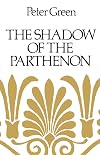
This is my Amazon review of 'Shadow of the Parthenon' (Hardcover)
I am disposed to like anything written by Peter Green, and these essays on ancient Greek and Roman literature and history did not disappoint. His writing sparkles with his characteristic perception and dynamic approach and, as with his 'Classical Bearings', and 'Essays in Antiquity' (this is a companion volume to the latter title) there is much to enhance a general reader's vision of the ancient world as well as the classical show more student's - and differs in many respects from more orthodox academic reading. The conventional objects of veneration, i.e., Perikles' Athens, and what is termed 'the Parthenon myth', do not win unqualified endorsement from Dr Green, but he has a great regard for the true merits of antiquity, and for those who 'spoke with an individual voice' like Sappho & Archilochus.
The chapter on myths & symbols I found particularly effective - this being an area of personal study - and had a laugh at the description of Hawthorne's anxious Nineteenth century reduction of the Centaur Chiron. Even if for many of us 'Tanglewood Tales' may well have been our first introduction to ancient Greek myths, Green's cool, clear and concise prose dispels such Victoriana along with the patronizing beliefs of Charles Kingsley. The study entitled 'Clio Reviewed' (part II, on Thucydides) is a salient reminder of how classical history can too easily be a means of expression for historians' own political views. The ancient world does not touch our own times exclusively through the reception medium of 'swords & sandals' novels, TV and film - it has far more relevance than we are sometimes willing to recognise. show less
I am disposed to like anything written by Peter Green, and these essays on ancient Greek and Roman literature and history did not disappoint. His writing sparkles with his characteristic perception and dynamic approach and, as with his 'Classical Bearings', and 'Essays in Antiquity' (this is a companion volume to the latter title) there is much to enhance a general reader's vision of the ancient world as well as the classical show more student's - and differs in many respects from more orthodox academic reading. The conventional objects of veneration, i.e., Perikles' Athens, and what is termed 'the Parthenon myth', do not win unqualified endorsement from Dr Green, but he has a great regard for the true merits of antiquity, and for those who 'spoke with an individual voice' like Sappho & Archilochus.
The chapter on myths & symbols I found particularly effective - this being an area of personal study - and had a laugh at the description of Hawthorne's anxious Nineteenth century reduction of the Centaur Chiron. Even if for many of us 'Tanglewood Tales' may well have been our first introduction to ancient Greek myths, Green's cool, clear and concise prose dispels such Victoriana along with the patronizing beliefs of Charles Kingsley. The study entitled 'Clio Reviewed' (part II, on Thucydides) is a salient reminder of how classical history can too easily be a means of expression for historians' own political views. The ancient world does not touch our own times exclusively through the reception medium of 'swords & sandals' novels, TV and film - it has far more relevance than we are sometimes willing to recognise. show less

My books do not live in isolation from each other, but as counterpoint or coincidence. They are always holding conversations behind my back. A recent contretemps between two books in my pile has forced me to resort to a double review, pairing two seemingly disparate works that together had a keen point to make on the writing of History. As I was reading Peter Green’s Xerxes at Salamis and Scorpions by Noah Feldman, I kept overhearing grunts and harrumphs and decided to pay closer attention show more to what was going on between the books.
Feldman’s excellent history of mid-20th c. American constitutionalism, framed as an examination of the experiences of four Supreme Court justices appointed by Franklin Roosevelt, shines a light on everything from racial profiling and segregation to executive power during wartime to the tension between civil liberties and national security, and illuminates far beyond the topics treated in the book. Feldman expertly situates his case studies in context, but in such a way that the reader may ponder the links between the particular and the universal. He knows that, in the real world, principle and ideology always submit to complexity and ambiguity, law-making is seldom rational (as apart from partisan interests or individual motives), and thinking people sometimes change their minds.
Green’s book is an extrapolation from scant material and will appeal to those who like their Ancient History told as a story with kings and warriors as dramatis personae. Lines from Aeschylus and passages from Herodotus or Plutarch are analyzed, supported or corrected with fragments of archaeology. Persian kings are posed as oriental despots, and three decades of 5th-c. Athenian life stand in for the roots of Western Civilization. A single battle in a long war between regional powers almost 3000 years ago becomes the Hinge of History, though this point is to be taken as a matter of faith. Moses Finley warned against treating ancient sources at face value, against supposing that we can know ‘how things really were,’ and against psychologizing the causes of ancient warfare. Would that Green had a copy of Ancient History: Evidence and Models.
Perhaps Aeschylus was able to do what even Shakespeare could not: embody the whole of a cultural mindset in a few lines of a dramatic script. But there is no way to know. Still, many strain to believe that—like good, real Americans—the classical Greeks ‘believed in freedom,’ and without their efforts on our behalf the History of Freedom in the World would have been smothered in the crib. Works like Xerxes at Salamis are stimulating of the imagination, but must be taken with lots of salt.
This is what I think my books were talking about: that Historiography is not just an academic exercise. It is the deployment of critical thinking in the judgment of evidence, assumptions, arguments and conclusions about the past. In disputes about the sources and bases and meanings of ‘freedom’ in American political discourse of the 21st c., for instance, the ‘lessons of history’ are frequently cited to bolster one side or another. The problem is that not everyone learns the same lessons.
One of the lessons from the classical Greeks, assumed by many and reaffirmed by Green, is that the History of the World is the story of the West v. the Rest, and that war makes us free. The evidence from Xerxes at Salamis and Scorpions suggests that the freedoms enjoyed by people in 'the West' are less the consequence of warfare (or strict adherence to ideology, or divine intervention) than the product of a flexible, pragmatic jurisprudence developed over the past one hundred and fifty years—and the gravest threat to those liberties are politicians and our fellow citizens, not foreigners. show less
Feldman’s excellent history of mid-20th c. American constitutionalism, framed as an examination of the experiences of four Supreme Court justices appointed by Franklin Roosevelt, shines a light on everything from racial profiling and segregation to executive power during wartime to the tension between civil liberties and national security, and illuminates far beyond the topics treated in the book. Feldman expertly situates his case studies in context, but in such a way that the reader may ponder the links between the particular and the universal. He knows that, in the real world, principle and ideology always submit to complexity and ambiguity, law-making is seldom rational (as apart from partisan interests or individual motives), and thinking people sometimes change their minds.
Green’s book is an extrapolation from scant material and will appeal to those who like their Ancient History told as a story with kings and warriors as dramatis personae. Lines from Aeschylus and passages from Herodotus or Plutarch are analyzed, supported or corrected with fragments of archaeology. Persian kings are posed as oriental despots, and three decades of 5th-c. Athenian life stand in for the roots of Western Civilization. A single battle in a long war between regional powers almost 3000 years ago becomes the Hinge of History, though this point is to be taken as a matter of faith. Moses Finley warned against treating ancient sources at face value, against supposing that we can know ‘how things really were,’ and against psychologizing the causes of ancient warfare. Would that Green had a copy of Ancient History: Evidence and Models.
Perhaps Aeschylus was able to do what even Shakespeare could not: embody the whole of a cultural mindset in a few lines of a dramatic script. But there is no way to know. Still, many strain to believe that—like good, real Americans—the classical Greeks ‘believed in freedom,’ and without their efforts on our behalf the History of Freedom in the World would have been smothered in the crib. Works like Xerxes at Salamis are stimulating of the imagination, but must be taken with lots of salt.
This is what I think my books were talking about: that Historiography is not just an academic exercise. It is the deployment of critical thinking in the judgment of evidence, assumptions, arguments and conclusions about the past. In disputes about the sources and bases and meanings of ‘freedom’ in American political discourse of the 21st c., for instance, the ‘lessons of history’ are frequently cited to bolster one side or another. The problem is that not everyone learns the same lessons.
One of the lessons from the classical Greeks, assumed by many and reaffirmed by Green, is that the History of the World is the story of the West v. the Rest, and that war makes us free. The evidence from Xerxes at Salamis and Scorpions suggests that the freedoms enjoyed by people in 'the West' are less the consequence of warfare (or strict adherence to ideology, or divine intervention) than the product of a flexible, pragmatic jurisprudence developed over the past one hundred and fifty years—and the gravest threat to those liberties are politicians and our fellow citizens, not foreigners. show less
Lists
Awards

You May Also Like


Associated Authors
Statistics
- Works
- 39
- Also by
- 14
- Members
- 2,986
- Popularity
- #8,547
- Rating
- 3.9
- Reviews
- 55
- ISBNs
- 119
- Languages
- 7
- Favorited
- 4

