
Oswyn Murray
Author of The Oxford History of the Classical World
About the Author
Image credit: via author's website
Works by Oswyn Murray
The Oxford Illustrated History of Greece and the Hellenistic World (2001) — Editor — 139 copies, 1 review
Latin Poetry and the Classical Tradition: Essays in Medieval and Renaissance Literature (1990) — Editor — 7 copies
Associated Works
Memory and the Mediterranean / The Mediterranean in the Ancient World (1988) — Introduction, some editions — 586 copies, 2 reviews
Bread and Circuses: Historical Sociology and Political Pluralism (1976) — Introduction, some editions — 137 copies
The western time of ancient history historiographical encounters with the Greek and Roman pasts (2011) — Contributor — 8 copies
Knowing Future Time In and Through Greek Historiography (Trends in Classics - Supplementary Volumes) (2016) — Contributor — 6 copies
Performance, Iconography, Reception: Studies in Honour of Oliver Taplin (2008) — Contributor — 5 copies
Tagged
Common Knowledge
- Canonical name
- Murray, Oswyn
- Birthdate
- 1937-03-26
- Gender
- male
- Education
- Exeter College, Oxford Univesity (BA|D.Phil)
- Occupations
- classicist
editor
historian
professor - Organizations
- Balliol College, Oxford University
- Awards and honors
- Fellow, Society of Antiquaries of London
Foreign Member, Royal Danish Academy - Nationality
- UK
- Birthplace
- Surrey, England, UK
- Places of residence
- Oxford, Oxfordshire, England, UK
- Associated Place (for map)
- England, UK
Members
Reviews
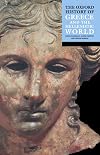
This is very much an introductory book where each chapter ends with a list of further reading, which meant that it didn't really tell me things I didn't already know, but it was a good refresher and kept me interested all the way through.
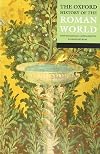
Solid enough introduction to the Roman world, tracing its history from its origins as a cluster of villages to the foundation of the Empire and its growth in the first two centuries. I used it as a primer during my course on the Roman Empire, and though rather uninspiring, it does lay out the basic facts which one needs to grasp.
The Oxford History of the Classical World: Greece and the Hellenistic World (The Oxford History of the Classical Wo by John Boardman
Striking coverage of the details of "life" history, not just the
"wars". Nice treatment of the "Dark Ages" of Greece, clearly being
re-appraised. (All "Dark Ages" should be re-appraised.)
"wars". Nice treatment of the "Dark Ages" of Greece, clearly being
re-appraised. (All "Dark Ages" should be re-appraised.)
In the words of the Roman poet Horace, "Greece though conquered took her fearce conquerer captive, and brought in the arts to the uncivilized Latin peoples."
These words are indicative of this work which is the legacy of the Hellenistic era. The Hellenistic world ranges from architecture, philosophy, literature, and the visual arts, to military strategy and science. The study begins with the eighth century BC, witnessing the emergence of the Greek city states, and extends to the conquest of show more Alexander the Great and the establishment of the Greek monarchy some five centuries later. Chapters dealing with political and social history are interspersed with chapters on philosophy in the arts, including Homer, Greek myth, Aristotle, and Plato, as well as Greek dramatists such as Sophocles and Aristophanes, and the flourishing of the visual and plastic arts.
Chapters include the history of the archaic period, Homer, Greek myth and Hesiod, lyric and elegiac poetry, early Greek philosophy, the history of the classical period, Greek drama, Greek historians, life and society in classical Greece, classical Greek philosophy, Greek religion, Greek art and architecture, the history of the Hellenistic period, Hellenistic culture and literature, Hellenistic philosophy and science, and Hellenistic and Graeco- Roman art.
Shared blood, shared language, shared religion, and shared customs. These, according to Herodotus, were the ingredients of Greekness (p. 144).
This volume is extraordinarily helpful on many aspects of Greece and the Hellenistic world. show less
These words are indicative of this work which is the legacy of the Hellenistic era. The Hellenistic world ranges from architecture, philosophy, literature, and the visual arts, to military strategy and science. The study begins with the eighth century BC, witnessing the emergence of the Greek city states, and extends to the conquest of show more Alexander the Great and the establishment of the Greek monarchy some five centuries later. Chapters dealing with political and social history are interspersed with chapters on philosophy in the arts, including Homer, Greek myth, Aristotle, and Plato, as well as Greek dramatists such as Sophocles and Aristophanes, and the flourishing of the visual and plastic arts.
Chapters include the history of the archaic period, Homer, Greek myth and Hesiod, lyric and elegiac poetry, early Greek philosophy, the history of the classical period, Greek drama, Greek historians, life and society in classical Greece, classical Greek philosophy, Greek religion, Greek art and architecture, the history of the Hellenistic period, Hellenistic culture and literature, Hellenistic philosophy and science, and Hellenistic and Graeco- Roman art.
Shared blood, shared language, shared religion, and shared customs. These, according to Herodotus, were the ingredients of Greekness (p. 144).
This volume is extraordinarily helpful on many aspects of Greece and the Hellenistic world. show less
You May Also Like


Associated Authors
Statistics
- Works
- 21
- Also by
- 24
- Members
- 3,585
- Popularity
- #7,071
- Rating
- 3.8
- Reviews
- 12
- ISBNs
- 51
- Languages
- 4