
Catherine Barnett
Author of The Game of Boxes: Poems
About the Author
Catherine Barnett is the author of two previous poetry collections, Into Perfect Spheres Such Holes Are Pierced and The Game of Boxes, winner of the Jams Laughlin Award of the Academy of American Poets. Her honors include a Whiting Award and a Guggenheim Fellowship. She is a member of the core show more faculty of New York University's Creative Writing Program, a Distinguished Lecturer at Hunter College, and an independent edition in New York City. show less
Image credit: Jacqueline Mia Foster
Works by Catherine Barnett
Another English: Anglophone Poems from Around the World (Poets in the World) (2014) — Editor — 11 copies
Human House 1 copy
2018 year in pictures 1 copy
Associated Works
Picturing Tolkien: Essays on Peter Jackson's the Lord of the Rings Film Trilogy (2011) — Contributor — 33 copies
Tagged
Common Knowledge
- Birthdate
- 1960
- Gender
- female
- Education
- Princeton University
Warren Wilson College MFA Program for Writers. - Awards and honors
- Whiting Writers' Award (2004)
- Nationality
- USA
- Birthplace
- San Francisco, California, USA
- Map Location
- USA
Members
Reviews
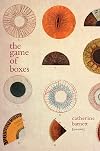
Receiving this turned out to be pleasant surprise.
Barnett seems to find the sublime in the subway, in a discussion of religion, alone, or in a simple game played with the speaker's son. In addition to the slice of life moments, Barnett has 14 poems each titled "Chorus," which switch to third person and give these poems the feel of a Greek drama, the chorus being the collective refrain of the play.
I think the collective feel keeps each from staying pigeonholed as 'confessional' poetry -- show more we're challenged to see where we have had our feet in those shoes:
Chorus (Everyone asks)
Everyone asks what we're afraid of
but we aren't supposed to say.
We could put loneliness on the list.
We could put this list on the list,
its infinity. We could put infinity down.
Who knows why we're here, it's a "mystery."
We're getting older,
and when no one's watching
we climb right into it.
One that struck me, perhaps because of the ease with which she combines the daily and the eternal, not being mystical, not being trite. This is the last poem in the collection and seems to underscore the underlying theme.
Providence
This evening I shared a cab with a priest
who said it was a fine day to ride cross town
with a writer. But I can't
finish the play I said,
it's full of snow.
The jaywalkers
walked slowly, a cigarette warmed
someone's hand.
Some of the best sermons
don't have endings, he said
while the tires rotated unceasingly
beneath us.
All over town people were waiting
and doubleparked and
making love and waiting.
The temperature dropped
until the shiverers zipped their jackets
and all manner of things started up again.
I'm not sure this is a collection I would have picked out on my own, but the aha moments grow with additional readings. I will be reading more of the poet's work. show less
Barnett seems to find the sublime in the subway, in a discussion of religion, alone, or in a simple game played with the speaker's son. In addition to the slice of life moments, Barnett has 14 poems each titled "Chorus," which switch to third person and give these poems the feel of a Greek drama, the chorus being the collective refrain of the play.
I think the collective feel keeps each from staying pigeonholed as 'confessional' poetry -- show more we're challenged to see where we have had our feet in those shoes:
Chorus (Everyone asks)
Everyone asks what we're afraid of
but we aren't supposed to say.
We could put loneliness on the list.
We could put this list on the list,
its infinity. We could put infinity down.
Who knows why we're here, it's a "mystery."
We're getting older,
and when no one's watching
we climb right into it.
One that struck me, perhaps because of the ease with which she combines the daily and the eternal, not being mystical, not being trite. This is the last poem in the collection and seems to underscore the underlying theme.
Providence
This evening I shared a cab with a priest
who said it was a fine day to ride cross town
with a writer. But I can't
finish the play I said,
it's full of snow.
The jaywalkers
walked slowly, a cigarette warmed
someone's hand.
Some of the best sermons
don't have endings, he said
while the tires rotated unceasingly
beneath us.
All over town people were waiting
and doubleparked and
making love and waiting.
The temperature dropped
until the shiverers zipped their jackets
and all manner of things started up again.
I'm not sure this is a collection I would have picked out on my own, but the aha moments grow with additional readings. I will be reading more of the poet's work. show less
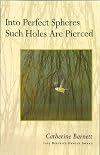
The Return, II
My brother thinks it's best to distract my sister,
not ask her about longing and its dirty tricks,
its flirty tricks, her girls
oh, hiding under the sheet waiting to be found,
digging ditches in the dirt,
blowing out the candles -
He holds her up, his arm over her shoulders
so she won't see the eyelashes they leave there,
for luck, like she taught them,
for making wishes that can't be spoken aloud
but I know he hears them,
as she does,
asking the same thing again -
come with us-- come with show more us-- show less
My brother thinks it's best to distract my sister,
not ask her about longing and its dirty tricks,
its flirty tricks, her girls
oh, hiding under the sheet waiting to be found,
digging ditches in the dirt,
blowing out the candles -
He holds her up, his arm over her shoulders
so she won't see the eyelashes they leave there,
for luck, like she taught them,
for making wishes that can't be spoken aloud
but I know he hears them,
as she does,
asking the same thing again -
come with us-- come with show more us-- show less
It took me a while to connect with the poems in this collection. Some poems I had to reread several times until they began to click (though I think the distance had more to do with my headspace than with the poetry. Once it did click, though, I discovered poetry that took the everyday and commonplace and didn't so much as elevate it, as roll around in it, feeling the sharp and soft edges and appreciating them for what they are.
The collection is split in three sections.
The first, "Endless show more Forms Most Beautiful," features a dozen or so poems named "Chorus," which alternate with other poems with individual titles. The titled poems all deal with an "I" narrator, an individual, who could be the same individual in each case, while the Chorus poems all focus on a "We" narrator that takes up the song of the populace that circles the individual. Sometimes, while driving or walking down the street, I'll break out of my own personal narrative and be stunned by how many lives are going on around me, each with their own stories, their own internal monologues — reading "Endless Forms Most Beautiful" reminded me of that experience.
The second section, "Of All Faces," is comprised of a single long poems, called "Sweet Double, Talk Talk," a modern love story, full of sex and intimacy and distancing and coming round again. It's beautiful and subtle and bitter sweet, like love often is. I read this through a couple of times and connected deeper with it on the second reading.
The last section, called "The Modern Period," is a series of poems that approach everyday moments, such as visiting a doctor, and finds deeper resonance in each moment. show less
The collection is split in three sections.
The first, "Endless show more Forms Most Beautiful," features a dozen or so poems named "Chorus," which alternate with other poems with individual titles. The titled poems all deal with an "I" narrator, an individual, who could be the same individual in each case, while the Chorus poems all focus on a "We" narrator that takes up the song of the populace that circles the individual. Sometimes, while driving or walking down the street, I'll break out of my own personal narrative and be stunned by how many lives are going on around me, each with their own stories, their own internal monologues — reading "Endless Forms Most Beautiful" reminded me of that experience.
The second section, "Of All Faces," is comprised of a single long poems, called "Sweet Double, Talk Talk," a modern love story, full of sex and intimacy and distancing and coming round again. It's beautiful and subtle and bitter sweet, like love often is. I read this through a couple of times and connected deeper with it on the second reading.
The last section, called "The Modern Period," is a series of poems that approach everyday moments, such as visiting a doctor, and finds deeper resonance in each moment. show less
Seemingly simple verse that explodes in meaning and emotion.
Awards


You May Also Like
Associated Authors
Statistics
- Works
- 8
- Also by
- 6
- Members
- 196
- Popularity
- #111,884
- Rating
- 3.8
- Reviews
- 6
- ISBNs
- 8