

Douglas C. Waller
Author of Wild Bill Donovan: The Spymaster Who Created the OSS and Modern American Espionage
About the Author
Douglas Waller is a former correspondent for Newsweek and Time. He has authored six books on the U.S. military and' intelligence, including the bestsellers Wild Bill Donovan, Big Red, and The Commandos.
Image credit: http://douglascwaller.com/
Works by Douglas C. Waller
Wild Bill Donovan: The Spymaster Who Created the OSS and Modern American Espionage (2011) 423 copies, 9 reviews
A Question of Loyalty: Gen. Billy Mitchell and the Court-Martial That Gripped the Nation (2004) 165 copies, 4 reviews
Disciples: The World War II Missions of the CIA Directors Who Fought for Wild Bill Donovan (2015) 119 copies, 3 reviews
Associated Works
American Soldier: Stories of Special Forces from Iraq to Afghanistan (Adrenaline) (2002) — Contributor — 22 copies
Tagged
Common Knowledge
- Birthdate
- 1949-06-30
- Gender
- male
- Education
- Wake Forest University
University of North Carolina, Charlotte - Occupations
- writer
journalist - Nationality
- USA
- Birthplace
- Norfolk, Virginia, USA
- Places of residence
- Raleigh, North Carolina, USA
- Associated Place (for map)
- USA
Members
Reviews
A Question of Loyalty: Gen. Billy Mitchell and the Court-Martial that Gripped the Nation by Douglas C. Waller

Brigadier General William “Billy” Mitchell returned from World War I passionately committed to the idea that long-range bombers – used offensively to strike the enemy’s “vital centers” – would be the decisive weapon in future wars, and became a tireless advocate of “air power.” A relentless and often strident advocate for the expansion of American military aviation and the establishment of an independent Air Force, he endeared himself neither to his own service nor to the show more Navy. The already thin professional ice beneath his feet broke when, in September 1925, he publicly accused the War and Navy Departments of “incompetency, criminal negligence and almost treasonable administration of the national defense.” Promptly charged with insubordination and “conduct of a nature to bring discredit upon the military service,” he stood trial before a court-martial in Washington, DC that fall.
Mitchell’s fellow air-power advocates spent the decades after his death in 1936 painting him as a visionary and a martyr: a “prophet without honor” who was vindicated by “the verdict of history.” The 1955 film The Court Martial of Billy Mitchell enshrined that view for subsequent generations. Military historians have long since demolished it, however, and Douglas C. Waller -- working with meticulous care from court records, contemporary newspaper accounts, and Mitchell’s personal papers -- confirms their judgment. He paints Mitchell as brilliant, driven, and toweringly ambitious: a man who reveled in grand concepts but was impatient with practical details. He loved the idea of a literal “day in court,” but – wildly overconfident, and defended by an equally ambitious but ill-prepared civilian attorney – bungled the execution. There were, Waller makes clear, no “Hollywood moments” in the trial, only factual testimony about the state of military aviation and Mitchell’s conduct, leavened with feints and jabs over legal procedure and the blatant bias exhibited by Mitchell’s enemies on the court.
Waller paints a detailed, well-rounded picture of Mitchell – interspersing biographical chapters with the trial narrative – and explains aviation, military law, and court-martial procedures with superb clarity. The result is a superb narrative history that is simultaneously accessible and scholarly. A Question of Loyalty is, however, a portrait of Mitchell as he really was – a man felled by arrogance, overconfidence, and a fatal lack of judgment – rather than as we might like him to be. If you want the stirring tale of a martyred prophet, well . . . Hollywood has a movie for you. show less
Mitchell’s fellow air-power advocates spent the decades after his death in 1936 painting him as a visionary and a martyr: a “prophet without honor” who was vindicated by “the verdict of history.” The 1955 film The Court Martial of Billy Mitchell enshrined that view for subsequent generations. Military historians have long since demolished it, however, and Douglas C. Waller -- working with meticulous care from court records, contemporary newspaper accounts, and Mitchell’s personal papers -- confirms their judgment. He paints Mitchell as brilliant, driven, and toweringly ambitious: a man who reveled in grand concepts but was impatient with practical details. He loved the idea of a literal “day in court,” but – wildly overconfident, and defended by an equally ambitious but ill-prepared civilian attorney – bungled the execution. There were, Waller makes clear, no “Hollywood moments” in the trial, only factual testimony about the state of military aviation and Mitchell’s conduct, leavened with feints and jabs over legal procedure and the blatant bias exhibited by Mitchell’s enemies on the court.
Waller paints a detailed, well-rounded picture of Mitchell – interspersing biographical chapters with the trial narrative – and explains aviation, military law, and court-martial procedures with superb clarity. The result is a superb narrative history that is simultaneously accessible and scholarly. A Question of Loyalty is, however, a portrait of Mitchell as he really was – a man felled by arrogance, overconfidence, and a fatal lack of judgment – rather than as we might like him to be. If you want the stirring tale of a martyred prophet, well . . . Hollywood has a movie for you. show less
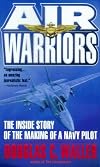
Talk about your Walter Mittys. Waller has a heck of a deal going here. He has written books about commandos, submariners and now navy pilots. As a writer for first Newsweek and now Time, it's no wonder he got to fly with the boys and girls in the back seat of F-18s and dive in nuclear subs. OK, so maybe I'm just a teensy-weensy bit jealous. Waller, who wrote The Commandos after observing the training of special forces soldiers, reports on his intimate experience with the training program for show more navy pilots in this latest book. He was granted permission to participate in the pilots' grueling training regime in order to produce this absorbing behind-the-scenes account of the physical, academic and psychological tests endured by pilot wannabees. It's almost as good as being there as Waller takes us through the grueling "Helo-Dunk" test where students are dumped in a pool in a helicopter body. Because helicopters are top-heavy, they flip immediately when forced to ditch in the ocean, and the navy discovered that if pilots were prepared for the fear and darkness they had a much better survival rate - of course, almost anything was better than the close to zero survivor rate they had had before. Students wear blindfolds and lose points if they try to shove anyone out of the way in their haste to make the exits.
Grading of all their tests is excruciating. Everything is graded on a curve that is generated against their fellow students to compute the average. "Students were graded not on how well they did, but rather on how well they did compared to other students. The numerical scores a student made on each test were totaled up, divided by 1,000, then plotted on a bell curve against the scores of the past 300 students who took the test. Competition between recruits is thus intense and just one bad day can ruin a recruit's chances. The difference between the trainee who was number one in one of the classes and the trainee who was number fifty in class rank was a mere two points."
Air combat is vastly different than it was just thirty years ago. Today everything is done at vast distances, and the rule is that if a pilot hasn't eliminated the enemy plane within sixty seconds, he should run away because his odds of survival fall drastically. The systems on an F-18 require the sensitivity of a piano player, and landing on an aircraft carrier at night - read the chapter "Practice Bleeding" for a very realistic account of the fear and skill involved - commands minute movements of the hands and eyes to constantly detect changes in altitude, angle of attack, and speed. For the first landing on a carrier, there is no instructor in the back seat. It's "too nerve-wracking. The instructor would be too tempted to grab the controls and pilot the aircraft himself." It is just too dangerous. The students have to concentrate so hard on what they are doing that many forget their names and plane numbers.
Despite the dangers, the navy has drastically reduced the number of accidents by emphasizing safety. Hot-rod pilots get thrown out immediately for stupid stunts. Nevertheless, the most extreme strains can come from stress on family relationships when the pilots are gone at sea for long periods. Two of the students Waller followed were married to each other. Both became F-18 pilots, but navy regulations prevented them from being assigned to the same squadron, so they would be lucky to see each other for more than six months every twenty-four. Waller also discusses the changes in the navy after Tailhook. The older sailors hate what they consider the PC mentality while the younger ones seem to have adjusted well, but it has made dating in bars really difficult because of the ban on officer-enlisted personnel fraternization. Unless in uniform, many officers won't go near an on-base, mixed enlisted/officer club for fear of asking out an enlisted woman and risky severe censure.
This is a really stunning book. Absolutely fascinating. show less
Grading of all their tests is excruciating. Everything is graded on a curve that is generated against their fellow students to compute the average. "Students were graded not on how well they did, but rather on how well they did compared to other students. The numerical scores a student made on each test were totaled up, divided by 1,000, then plotted on a bell curve against the scores of the past 300 students who took the test. Competition between recruits is thus intense and just one bad day can ruin a recruit's chances. The difference between the trainee who was number one in one of the classes and the trainee who was number fifty in class rank was a mere two points."
Air combat is vastly different than it was just thirty years ago. Today everything is done at vast distances, and the rule is that if a pilot hasn't eliminated the enemy plane within sixty seconds, he should run away because his odds of survival fall drastically. The systems on an F-18 require the sensitivity of a piano player, and landing on an aircraft carrier at night - read the chapter "Practice Bleeding" for a very realistic account of the fear and skill involved - commands minute movements of the hands and eyes to constantly detect changes in altitude, angle of attack, and speed. For the first landing on a carrier, there is no instructor in the back seat. It's "too nerve-wracking. The instructor would be too tempted to grab the controls and pilot the aircraft himself." It is just too dangerous. The students have to concentrate so hard on what they are doing that many forget their names and plane numbers.
Despite the dangers, the navy has drastically reduced the number of accidents by emphasizing safety. Hot-rod pilots get thrown out immediately for stupid stunts. Nevertheless, the most extreme strains can come from stress on family relationships when the pilots are gone at sea for long periods. Two of the students Waller followed were married to each other. Both became F-18 pilots, but navy regulations prevented them from being assigned to the same squadron, so they would be lucky to see each other for more than six months every twenty-four. Waller also discusses the changes in the navy after Tailhook. The older sailors hate what they consider the PC mentality while the younger ones seem to have adjusted well, but it has made dating in bars really difficult because of the ban on officer-enlisted personnel fraternization. Unless in uniform, many officers won't go near an on-base, mixed enlisted/officer club for fear of asking out an enlisted woman and risky severe censure.
This is a really stunning book. Absolutely fascinating. show less
Wild Bill Donovan: The Spymaster Who Created the OSS and Modern American Espionage by Douglas Waller
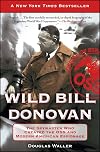
Bill Donovan was the founder of the OSS (Office of Strategic Services) which was the World War II forerunner of today's CIA (Central Intelligence Agency).
Waller traces Donovan's life from childhood to death, but the majority of the book focuses on the OSS and World War II. He relates Donovan's childhood in Buffalo, NY and shows it shaped him as an adult. He then details Donovan's business, military, and political career showing the connections he made and networking he developed that would show more be important later on.
Alongside this is the tale of Donovan's family life, one of almost constant separation, absent parenthood, and tragedy.
Waller details Donovan's skills and shortcomings as a leader and how both pushed the OSS ahead and held it back, leading to mistakes. At the same time, the book also shows just how fragmented and chaotic US intelligence efforts during World War II were; it also details the political and personal conflicts that kept intelligence efforts divided. show less
Waller traces Donovan's life from childhood to death, but the majority of the book focuses on the OSS and World War II. He relates Donovan's childhood in Buffalo, NY and shows it shaped him as an adult. He then details Donovan's business, military, and political career showing the connections he made and networking he developed that would show more be important later on.
Alongside this is the tale of Donovan's family life, one of almost constant separation, absent parenthood, and tragedy.
Waller details Donovan's skills and shortcomings as a leader and how both pushed the OSS ahead and held it back, leading to mistakes. At the same time, the book also shows just how fragmented and chaotic US intelligence efforts during World War II were; it also details the political and personal conflicts that kept intelligence efforts divided. show less
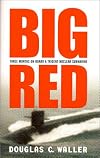
Unless you had experience on one of these submarines it would be impossible to say how accurately Waller had relayed the operational and technical details of a Trident submarine tour, but this is arguably as close as you'll ever get to knowing. Waller weaves biography and technology together in a way that reminds me of Tracy Kidder's "The Soul of a New Machine". Which is a way of saying that this is a small masterpiece that has as much to say about men and command, as it has about the show more technology they work with. A must read for those interested in submarines, but also highly recommended as a text for anyone who aspires to management, or who finds themselves 'accidentally' there and is wondering how it works. And I might add, essential reading for anyone interested in journalism as a career.
As always, the only complaint that can be made about a great story is the shortage of illustrations. The Wikipedia entry for the USS Nebraska is helpful, particularly in giving a link to the Navsource Online's photo gallery. show less
As always, the only complaint that can be made about a great story is the shortage of illustrations. The Wikipedia entry for the USS Nebraska is helpful, particularly in giving a link to the Navsource Online's photo gallery. show less
Lists
Awards

You May Also Like


Associated Authors
Statistics
- Works
- 10
- Also by
- 2
- Members
- 1,383
- Popularity
- #18,590
- Rating
- 3.6
- Reviews
- 26
- ISBNs
- 50
- Languages
- 1