
Donald Rumsfeld (1932–2021)
Author of Known and Unknown: A Memoir
About the Author
Donald Rumsfeld served as a member of Congress, U.S. Ambassador to NATO, White House Chief of Staff, Middle East Envoy, and CEO of two Fortune 500 companies, and was the thirteenth and twenty-first United States Secretary of Defense. He currently chairs the Rumsfeld Foundation and is the author of show more two New York Times bestsellers, Known and Unknown and Rumsfeld's Rules. He and his wife, Joyce, have three children, seven grandchildren, and three great-grandchildren. Donald Rumsfeld is donating his profits from the sales of When the Center Held to the Rumsfeld Foundation's Graduate Fellowship Program, which provides grants to exceptional graduate-level scholars who have an interest in serving the nation. show less
Image credit: Official photograph as Secretary of Defense
Works by Donald Rumsfeld
Rumsfeld's Rules: Leadership Lessons in Business, Politics, War, and Life (2013) 124 copies, 2 reviews
When the Center Held: Gerald Ford and the Rescue of the American Presidency (2018) 66 copies, 1 review
Associated Works
Tagged
Common Knowledge
- Legal name
- Rumsfeld, Donald Henry
- Birthdate
- 1932-07-09
- Date of death
- 2021-06-30
- Gender
- male
- Education
- Princeton University (AB - Political Science)
New Trier High School - Occupations
- politician
United States Secretary of Defense (2001-2006) - Organizations
- U.S. Navy
U.S. Naval Reserve
U.S. House of Representatives
U.S. Department of Defense
Center for Security Policy
Hoover Institution (show all 31)
Project for the New American Century
Freedom House
RAND Corporation
Committee for the Free World
Bohemian Club
Eastern Air Lines
Gilead Sciences
General Instrument Corporation
G.D. Searle
Bechtel Corporation
Gulfstream Aerospace
Tribune Company
Metricom, Inc.
Sears, Roebuck and Co.
Kellogg Company
National Academy of Public Administration
Gerald R. Ford Foundation
Eisenhower Exchange Fellowships
National Park Foundation
United Way
U.S. Department of State
Asea Brown Boveri
Richard Nixon administration
Gerald R. Ford admiistration
George W. Bush administration - Awards and honors
- Eagle Scout
Royal Order of the Intare, King Kigeli V of Rwanda
Order of Anthony Wayne, Valley Forge Military Academy
George C. Marshall Medal, Association of the U.S. Army (1984)
Woodrow Wilson Medal, Princeton University (1985)
Dwight D. Eisenhower Medal (1993) (show all 14)
Lone Sailor Award, U.S. Navy Memorial Foundation (2002)
James H. Doolittle Award, Hudson Institute (2003)
Plain English Campaign 'Foot in Mouth' award (2003)
Gerald R. Ford Medal (2004)
Grand Cross of the Order of Merit of the Republic of Poland (2005)
Gold Medal for Citizenship, Union League of Philadelphia (2006)
Victory of Freedom Award, Nixon Foundation (2010)
Special Grand Cordon of the Order of Brilliant Star, Republic of China (2011) - Cause of death
- multiple myeloma
- Nationality
- USA
- Birthplace
- Evanston, Illinois, USA
- Places of residence
- Washington, D.C., USA
Winnetka, Illinois, USA
Coronado, California, USA
Princeton, New Jersey, USA
St. Michaels, Maryland, USA - Place of death
- Taos, New Mexico, USA
- Associated Place (for map)
- USA
Members
Reviews
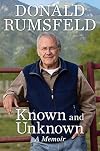
Given the unmitigated disaster that was the Bush administration, it is a difficult task for those in positions of responsibility to write a memoir. Condi Rice took the Wittgenstein approach of not writing about her years in office. George W. Bush followed the Peter Pan strategy of having authored a work of fiction. Donald Rumsfeld chose the "Communist revolution can only be failed" model of the good Republican foot soldier: Mistakes were made, if one can call them mistakes - and the US show more Democrats would have made them too and anyone who disagrees with me wants the terrorists to win.
The most curious aspect is Rumsfeld positioning himself as a (passive) bystander (known as the "only his horse was in the SA" defense in the case of Austrian Nazi and UN secretary general Waldheim). Time and again, in contrast to the corroborated narrative Rumsfeld says to have had only a marginal input in the decision-making such as the troop level for the Iraq invasion. He assumes that his readers won't have the knowledge to see through the deliberate misrepresentations in this memoir. Some people can be fooled again and again. Rumsfeld banks heavily on the truth about Mill's famous quip about conservatives and stupidity.
I found Rumsfeld's message of his memoir best summed up in the following phrase of his: "President Obama’s latter-day support of these decisions is evidence that on most of the big questions regarding our enemies, George W. Bush and his administration got it right." This a very dangerous message. Firstly, the Bush administration did not get it right. In a reality-based world, it got it outrageously wrong in practically all fields of government and the world will suffer from their hidden time bombs for years to come. Pelosi's and Obama's refusal to investigate these crimes and scandals as well as to prosecute the perpetrators does in no way diminish the fact that crimes were committed. Secondly, the policy of the Obama administration of continuing these failed policies not only makes them junior partners in crime, it perpetuates and normalizes illegal behavior. As the Bradley Manning case shows, a bit of torture is the new modus operandi of the Corporate States of America.
In contrast to George W. Bush, who has no compunction to lie, Donald Rumsfeld uses an indirect strategy to present a dishonest picture of his actions. Most of the time, he fails to include relevant and pertinent information. As a typical example for his technique, Rumsfeld writes "In 2010, Iraq had the twelfth fastest growing economy in the world." His source for that statement is a forecast by a website called economywatch.com, in whose own table of sources the growth rate of Iraq is conspicuously missing while its blog post placing Iraq on the pedestal still stands.The CIA World Factbook, not exactly known for deviating from the Washington consensus, lists Iraq at the 44th position (The truth is that 2010 was a miserable year for most market economies.). As in the quest for WMD, cherry-picking data to dress up a rotten case is still Rumsfeld's game. Perhaps Nixon's request to Rumsfeld to run CREEP was not so far off the mark.
Rumsfeld also likes to call on erroneous witnesses, rat on co-defendants ("Powell/Rice/Clinton did/believed it too") and to present false dichotomies. There are a vast number of very ugly sentences in this book, in which Rumsfeld accuses people who disagree with him to root for the terrorists. Rumsfeld displays a penchant for dictators and strongmen who share his goals and a distaste for the discussion that is normal in vibrant democracies.
Unfortunately, only a visit to the Hague will force Donald Rumsfeld to truly examine and acknowledge the devastation his actions and inactions have caused. It is quite strange that Rumsfeld mentions, for instance, that the US suffered from a shortage of Vietnamese speakers in the Vietnam War but is somehow unable to acknowledge that the lack of Arabic speakers crippled the Iraqi occupation (made worse by the DADT folly of firing countless gay translators).
Overall, a highly biased and dishonest personal account of one of the main culprits for torture and war crimes in Bagram, Abu Grhaib, Guantanamo Bay, for the quagmires in Afghanistan and Iraq, for the tardiness faced with the human suffering of Katrina, as well as for the waste, crime and corruption of countless contractors. As more and more facts emerge, history will not be kind to Donald Rumsfeld. show less
The most curious aspect is Rumsfeld positioning himself as a (passive) bystander (known as the "only his horse was in the SA" defense in the case of Austrian Nazi and UN secretary general Waldheim). Time and again, in contrast to the corroborated narrative Rumsfeld says to have had only a marginal input in the decision-making such as the troop level for the Iraq invasion. He assumes that his readers won't have the knowledge to see through the deliberate misrepresentations in this memoir. Some people can be fooled again and again. Rumsfeld banks heavily on the truth about Mill's famous quip about conservatives and stupidity.
I found Rumsfeld's message of his memoir best summed up in the following phrase of his: "President Obama’s latter-day support of these decisions is evidence that on most of the big questions regarding our enemies, George W. Bush and his administration got it right." This a very dangerous message. Firstly, the Bush administration did not get it right. In a reality-based world, it got it outrageously wrong in practically all fields of government and the world will suffer from their hidden time bombs for years to come. Pelosi's and Obama's refusal to investigate these crimes and scandals as well as to prosecute the perpetrators does in no way diminish the fact that crimes were committed. Secondly, the policy of the Obama administration of continuing these failed policies not only makes them junior partners in crime, it perpetuates and normalizes illegal behavior. As the Bradley Manning case shows, a bit of torture is the new modus operandi of the Corporate States of America.
In contrast to George W. Bush, who has no compunction to lie, Donald Rumsfeld uses an indirect strategy to present a dishonest picture of his actions. Most of the time, he fails to include relevant and pertinent information. As a typical example for his technique, Rumsfeld writes "In 2010, Iraq had the twelfth fastest growing economy in the world." His source for that statement is a forecast by a website called economywatch.com, in whose own table of sources the growth rate of Iraq is conspicuously missing while its blog post placing Iraq on the pedestal still stands.The CIA World Factbook, not exactly known for deviating from the Washington consensus, lists Iraq at the 44th position (The truth is that 2010 was a miserable year for most market economies.). As in the quest for WMD, cherry-picking data to dress up a rotten case is still Rumsfeld's game. Perhaps Nixon's request to Rumsfeld to run CREEP was not so far off the mark.
Rumsfeld also likes to call on erroneous witnesses, rat on co-defendants ("Powell/Rice/Clinton did/believed it too") and to present false dichotomies. There are a vast number of very ugly sentences in this book, in which Rumsfeld accuses people who disagree with him to root for the terrorists. Rumsfeld displays a penchant for dictators and strongmen who share his goals and a distaste for the discussion that is normal in vibrant democracies.
Unfortunately, only a visit to the Hague will force Donald Rumsfeld to truly examine and acknowledge the devastation his actions and inactions have caused. It is quite strange that Rumsfeld mentions, for instance, that the US suffered from a shortage of Vietnamese speakers in the Vietnam War but is somehow unable to acknowledge that the lack of Arabic speakers crippled the Iraqi occupation (made worse by the DADT folly of firing countless gay translators).
Overall, a highly biased and dishonest personal account of one of the main culprits for torture and war crimes in Bagram, Abu Grhaib, Guantanamo Bay, for the quagmires in Afghanistan and Iraq, for the tardiness faced with the human suffering of Katrina, as well as for the waste, crime and corruption of countless contractors. As more and more facts emerge, history will not be kind to Donald Rumsfeld. show less
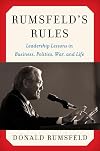
If we remember Rumsfeld at all, former Secretary of Defense under George W. Bush, it's as the guy who gave a press conference and spoke of the known knowns, the known unknowns, and the unknown unknowns. Well it turns out the man has spent a life-time collecting words of wisdom of this type and he's collected these here on this new primer on leadership and career development. You don't have to be a Republican or a conservative to benefit from his advice, culled from a life-time spent in both show more the public and private sectors. He has many good and worthwhile pointers and the book contains a lot of wisdom and practical tips. The book is largely apolitical, however, he reserves most of his policy praise for Republican presidents and his chapter on the virtues of capitalism struck me as a bit polemical. This book was good subway reading and I'd recommend it to those looking to sharpen their management and leadership skills. show less
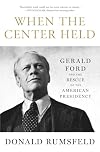
Boring in a soothing kind of way, rather like Ford himself (apparently). While I appreciated this as primary history since Rumsfeld was there for these historical events, he is a shit writer and his modifiers are more than misplaced ("importantly" is not a word to be inserted willy-nilly into a sentence).
This book is way, way too long and too detailed. Getting close to finishing it off after weeks and weeks. I keep paging towards the final pages to see how much longer I have to read before I am finally done. I'm waiting for Rumsfeld to start listing out the contents of his master bathroom's cabinet and how he decided on each item...
Good book. Lets us groundlings see how politics isn't a perfect science, especially when everyone doesn't see eye to eye. Also reveals some commonly accepted show more 'Major Media' (DeMedia) 'facts' that are just plain not true.
What Rumsfeld wrote aligns with what G.W. Bush wrote in his book, 'Decision Points.' If I had to chose which book to leave unread, I'd chose 'Known and Unknown.' show less
Good book. Lets us groundlings see how politics isn't a perfect science, especially when everyone doesn't see eye to eye. Also reveals some commonly accepted show more 'Major Media' (DeMedia) 'facts' that are just plain not true.
What Rumsfeld wrote aligns with what G.W. Bush wrote in his book, 'Decision Points.' If I had to chose which book to leave unread, I'd chose 'Known and Unknown.' show less
Lists
Awards

You May Also Like


Associated Authors
Statistics
- Works
- 9
- Also by
- 2
- Members
- 742
- Popularity
- #34,227
- Rating
- 3.6
- Reviews
- 13
- ISBNs
- 30


