
Dick Cheney (1941–2025)
Author of In My Time: A Personal and Political Memoir
About the Author
Dick Cheney is a former vice president of the United States and co-author with daughter Liz of the New York Times bestseller Exceptional: Why the World Needs a Powerful America. (Bowker Author Biography)
Image credit: Official U.S. Government Portrait
Works by Dick Cheney
Associated Works
Tagged
Common Knowledge
- Birthdate
- 1941-01-30
- Date of death
- 2025-11-03
- Gender
- male
- Education
- University of Wyoming (B.A. ∙ Political Science)
University of Wyoming (M.A. ∙ Political Science) - Occupations
- politician
businessman - Organizations
- Halliburton Company
United States Department of Defense
United States House of Representatives (1979-1989)
Gerald R. Ford administration (1974-1977)
George H. W. Bush's administration (1989-1993)
George H. W. Bush administration (1989-1993) (show all 7)
George W. Bush administration (2001-2009) - Awards and honors
- Presidential Medal of Freedom (1991)
Francis Boyer Award (1993) - Relationships
- Cheney, Lynne (wife)
Cheney, Mary (daughter) - Cause of death
- pneumonia (complications)
cardiovascular disease (complications) - Nationality
- USA
- Birthplace
- Lincoln, Nebraska, USA
- Places of residence
- Lincoln, Nebraska, USA
Casper, Wyoming, USA
Madison, Wisconsin, USA
Washington, D.C., USA - Associated Place (for map)
- USA
Members
Discussions
War Criminal in Pro and Con (September 2014)
Liver transplants for 71 year old rock stars in Pro and Con (November 2013)
Ghoul Pool: Dick Cheney Edition in Pro and Con (December 2010)
Fein points of law: in Pro and Con (September 2008)
Fascinating new bio of Cheney in Pro and Con (September 2008)
Reviews

The American vice presidency has been a true crook magnet, justifying the double meaning of "vice". Concerning the reach of their misbehavior, Richard "Dick" Cheney ranks easily amongst the most criminal and corrupt. Reading his memoir is not a pleasant task. It is an almost uninterrupted chain of lies and omissions. Simon & Schuster should feel ashamed for this almost North Korean publishing venture. Most autobiographies have elements where the story's hero is ecumenical with the truth. show more Donald Rumsfeld at least had the courtesy of quoting fake outside sources to cover his lies, Cheney feels no such compunction. He just repeats his old lies.
"By the time we left office, the detainees still remaining in the (Guantanamo) camp were among the worst of the worst—those too dangerous to be allowed to leave and those whose home countries would not take them back." Thanks to the Wikileaks Guantanamo Docket, we can easily check Cheney's words. Looking at the nifty New York Times tool, only 16 out of the 241 persons still in custody were labeled "high-value detainees". In an act of boundless incompetence, the US imprisoned a motley crew of innocents, bystanders and low-level fighters. Many of these unfortunates continue to be imprisoned due to the pig-headed inability to admit mistakes. One of the key functions of crimes against humanity trials is to confront the perpetrators with the irrefutable evidence of their wrong-doing. Not holding Dick Cheney accountable for his crimes will spawn a new generation of criminals. Public amnesia is already hard at work in the United States; Dick Cheney's unfavorability ratings are dropping fast.
The best but also most tragic chapter of the book is chapter 1 which tells the history of the Cheney family. Among them, Cheney's great grandfather, Captain Samuel Fletcher Cheney of the 21st Ohio whose brave stand, armed with Colt repeating rifles, during the battle of Chickamauga saved the Union forces from complete disaster (look at the cover of Peter Cozzens' Chickaumaga book to see Keith Rocco's illustration of this dramatic encounter). Cheney's grandfather was forced to close his bank during the Great Depression. Cheney's father worked for decades in public service fighting for soil preservation. In stark contrast to these decent, hard working Americans, Dick Cheney sold out. A true life Anakin Skywalker, trading his heart for riches, he worked to undo what his ancestors struggled for. Cheney made America and the world a worse place, for which he was richly rewarded by the 1% (Bush's base).
The book shows in multiple instances how Cheney's modus operandi set the Bush administration up for failure. Cheney's presidential vice presidency interfered with the usual division of labor among cabinet officers. Cheney established parallel structures and made decisions in a small circle which excluded those actually responsible and knowledgeable from the decision-making process (e.g. Colin Powell and the state department, later on Rumsfeld and the defense department). A disinterested president and multiple chains of command often meant that nobody felt responsible. The horrible inaction of the Bush administration in Iraq and Katrina is a consequence of Cheney's meddling but not taking responsibility. One pernicious power-play he often used was the post-decision co-optation: Powell and Democratic politicians were given just enough information and involvement to make them complicit in Cheney's crimes without having the means to influence or stop him. It is a tragic aspect that the leadership of the Democratic party failed in opposition. They meekly signed on to all criminal adventures of the Bush administration. This complicity makes any look back uncomfortable to all in Washington. In a strange tragic twist, Barack Obama copied the Bush/Cheney model of governing, continuing their failed policies. No wonder Cheney feels vindicated. His memoir is filled with him gloating over Democrats continuing his disastrous decisions.
While "In my Time" will soon join the vain oeuvres of Slobodan Milosevic and Saddam Huseein, Dick Cheney will remain the poster child of the abuses of the Reagan revolution. show less
"By the time we left office, the detainees still remaining in the (Guantanamo) camp were among the worst of the worst—those too dangerous to be allowed to leave and those whose home countries would not take them back." Thanks to the Wikileaks Guantanamo Docket, we can easily check Cheney's words. Looking at the nifty New York Times tool, only 16 out of the 241 persons still in custody were labeled "high-value detainees". In an act of boundless incompetence, the US imprisoned a motley crew of innocents, bystanders and low-level fighters. Many of these unfortunates continue to be imprisoned due to the pig-headed inability to admit mistakes. One of the key functions of crimes against humanity trials is to confront the perpetrators with the irrefutable evidence of their wrong-doing. Not holding Dick Cheney accountable for his crimes will spawn a new generation of criminals. Public amnesia is already hard at work in the United States; Dick Cheney's unfavorability ratings are dropping fast.
The best but also most tragic chapter of the book is chapter 1 which tells the history of the Cheney family. Among them, Cheney's great grandfather, Captain Samuel Fletcher Cheney of the 21st Ohio whose brave stand, armed with Colt repeating rifles, during the battle of Chickamauga saved the Union forces from complete disaster (look at the cover of Peter Cozzens' Chickaumaga book to see Keith Rocco's illustration of this dramatic encounter). Cheney's grandfather was forced to close his bank during the Great Depression. Cheney's father worked for decades in public service fighting for soil preservation. In stark contrast to these decent, hard working Americans, Dick Cheney sold out. A true life Anakin Skywalker, trading his heart for riches, he worked to undo what his ancestors struggled for. Cheney made America and the world a worse place, for which he was richly rewarded by the 1% (Bush's base).
The book shows in multiple instances how Cheney's modus operandi set the Bush administration up for failure. Cheney's presidential vice presidency interfered with the usual division of labor among cabinet officers. Cheney established parallel structures and made decisions in a small circle which excluded those actually responsible and knowledgeable from the decision-making process (e.g. Colin Powell and the state department, later on Rumsfeld and the defense department). A disinterested president and multiple chains of command often meant that nobody felt responsible. The horrible inaction of the Bush administration in Iraq and Katrina is a consequence of Cheney's meddling but not taking responsibility. One pernicious power-play he often used was the post-decision co-optation: Powell and Democratic politicians were given just enough information and involvement to make them complicit in Cheney's crimes without having the means to influence or stop him. It is a tragic aspect that the leadership of the Democratic party failed in opposition. They meekly signed on to all criminal adventures of the Bush administration. This complicity makes any look back uncomfortable to all in Washington. In a strange tragic twist, Barack Obama copied the Bush/Cheney model of governing, continuing their failed policies. No wonder Cheney feels vindicated. His memoir is filled with him gloating over Democrats continuing his disastrous decisions.
While "In my Time" will soon join the vain oeuvres of Slobodan Milosevic and Saddam Huseein, Dick Cheney will remain the poster child of the abuses of the Reagan revolution. show less
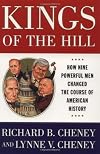
"As Sam Rayburn observed, the House is high drama, and part of its fascination lies in the continuing mystery of its denouement."
In my early teens, I was taught one central tenet when it comes to literature. That a sign of culture and intellect is to be able to read and appreciate works written by authors you do not agree with in other matters. Some might find it a bit naïve, but I've always used it as a rule of thumb.
In this case, it stood me in good stead. I came across this book in a show more Swedish thrift shop, and found the title interesting - I've always had an interest in American history and politics - and it was only when I brought it home that I noticed who the author was. And as a politician, I disagree with Richard B. "Dick" Cheney in just about every regard. But I have to hand it to him and his wife - they did a solid job with this one. Through biographies of nine men who held the position of Speaker of the House, you get a thorough idea of how the prerogatives, powers - and challenges - of the position has developed and changed over the years.
The biographies are thorough, surprisingly partisan, and well-researched. Although the final biography of Newt Gingrich veers into the territory of a hagiography, which kind of spoils the general impression. Apart from that, however, it is a genuinely enlightening and enjoyable read, particularly if you have an interest in US politics. show less
In my early teens, I was taught one central tenet when it comes to literature. That a sign of culture and intellect is to be able to read and appreciate works written by authors you do not agree with in other matters. Some might find it a bit naïve, but I've always used it as a rule of thumb.
In this case, it stood me in good stead. I came across this book in a show more Swedish thrift shop, and found the title interesting - I've always had an interest in American history and politics - and it was only when I brought it home that I noticed who the author was. And as a politician, I disagree with Richard B. "Dick" Cheney in just about every regard. But I have to hand it to him and his wife - they did a solid job with this one. Through biographies of nine men who held the position of Speaker of the House, you get a thorough idea of how the prerogatives, powers - and challenges - of the position has developed and changed over the years.
The biographies are thorough, surprisingly partisan, and well-researched. Although the final biography of Newt Gingrich veers into the territory of a hagiography, which kind of spoils the general impression. Apart from that, however, it is a genuinely enlightening and enjoyable read, particularly if you have an interest in US politics. show less
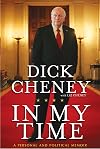
I have read some vice-presidential memoirs (see my reviews of “The Education of a Public Man” by Hubert Humphrey and “The good Fight” by Walter Mondale) recently and “In My Time” is among the best. This may be explained by its author’s extensive career as White House Chief of Staff under President Ford, Member of the House of Representatives from Wyoming and minority whip, Secretary of Defense under President George H. W. Bush and vice-president under President George W. Bush show more as well as the skilled writing style of both Dick and Liz Cheney.
The tale begins with probably the most intense day of his career, September 11, 2001. Working in the White House while the President was traveling around the country, the Vice-President became the nerve center connecting the President with the other agencies of the government.
Cheney then steps back to his family and youth, education and series of jobs in the private and government sectors that prepared him for service. After abandoning his plans for a career in academia, he held responsible position in the government during highly significant periods in our recent history. As White House Chief of Staff he was at the core of the recovery from the Nixon resignation. His rise in the House leadership gave him influence beyond that of a routine Representative and made him a partner with the Reagan Administration in advancing his program. As Secretary of Defense during Desert Storm he is able to introduce the reader to the diplomatic and military challenges and accomplishments of the Liberation of Kuwait. As Vice-President he was at the heart of the formulation and execution of administration policy.
I appreciate the Cheney’s openness about his life and outlook. He discusses his hobbies (fishing), tastes in music, heart problems and acknowledges his failure and Yale and DUI incidents and the hunting accident in which he shot his friend. His wife, Lynne, and daughters Mary and Liz and grandchildren are presented as delights of his life. Like Hubert Humphrey in his memoirs, and perhaps even to a greater extent, Cheney shares his disagreements over and policy and his assessments of major figures with whom he interacted including the presidents he served, Donald Rumsfeld whose career often intertwined with his, Colin Powell, Condoleezza Rice and others.
Cheney has been called the most powerful vice-president, the master of an Imperial Vice-Presidency and the culmination of the enhancement of the office that had taken shape under Vice-President Mondale. Mondale and historian Joel Goldstein contend (in my analysis) that the Cheney Vice-Presidency took a turn away from the Mondale model of being a generalist advisor to the president to become a decision maker in his own right. Readers of “In My Time” may come to a different conclusion. We do see a Veep requesting briefings on his own and taking responsibility for making decisions under some circumstances. One incident often cited in support of the claim of an overreach is Cheney’s 9/11 order to shoot down any aircraft that would not comply with orders to land. The vice-president, on his own, lacks authority for any such decisions but Cheney writes that he had discussed the question with the President and had been given authority for the order.
“In My Time” is a fascinating tome that provides valuable insights into the people and events that shaped our time. We have heard extensive critiques of Dick Cheney from others. On these pages we read his account of his time. show less
The tale begins with probably the most intense day of his career, September 11, 2001. Working in the White House while the President was traveling around the country, the Vice-President became the nerve center connecting the President with the other agencies of the government.
Cheney then steps back to his family and youth, education and series of jobs in the private and government sectors that prepared him for service. After abandoning his plans for a career in academia, he held responsible position in the government during highly significant periods in our recent history. As White House Chief of Staff he was at the core of the recovery from the Nixon resignation. His rise in the House leadership gave him influence beyond that of a routine Representative and made him a partner with the Reagan Administration in advancing his program. As Secretary of Defense during Desert Storm he is able to introduce the reader to the diplomatic and military challenges and accomplishments of the Liberation of Kuwait. As Vice-President he was at the heart of the formulation and execution of administration policy.
I appreciate the Cheney’s openness about his life and outlook. He discusses his hobbies (fishing), tastes in music, heart problems and acknowledges his failure and Yale and DUI incidents and the hunting accident in which he shot his friend. His wife, Lynne, and daughters Mary and Liz and grandchildren are presented as delights of his life. Like Hubert Humphrey in his memoirs, and perhaps even to a greater extent, Cheney shares his disagreements over and policy and his assessments of major figures with whom he interacted including the presidents he served, Donald Rumsfeld whose career often intertwined with his, Colin Powell, Condoleezza Rice and others.
Cheney has been called the most powerful vice-president, the master of an Imperial Vice-Presidency and the culmination of the enhancement of the office that had taken shape under Vice-President Mondale. Mondale and historian Joel Goldstein contend (in my analysis) that the Cheney Vice-Presidency took a turn away from the Mondale model of being a generalist advisor to the president to become a decision maker in his own right. Readers of “In My Time” may come to a different conclusion. We do see a Veep requesting briefings on his own and taking responsibility for making decisions under some circumstances. One incident often cited in support of the claim of an overreach is Cheney’s 9/11 order to shoot down any aircraft that would not comply with orders to land. The vice-president, on his own, lacks authority for any such decisions but Cheney writes that he had discussed the question with the President and had been given authority for the order.
“In My Time” is a fascinating tome that provides valuable insights into the people and events that shaped our time. We have heard extensive critiques of Dick Cheney from others. On these pages we read his account of his time. show less
Found this book very easy to read and learned a lot more about Cheney than I ever knew. The VP has seen a lot in his time in politics and I'm glad he was willing to share a small portion of that with us. He is frank but does his research before making decisions for himself or others.
Even if you think you hate him it is worth reading for the political history he provides.
Even if you think you hate him it is worth reading for the political history he provides.
Lists
Red Books (1)
Awards

You May Also Like


Associated Authors
Statistics
- Works
- 6
- Also by
- 5
- Members
- 663
- Popularity
- #38,037
- Rating
- 3.9
- Reviews
- 17
- ISBNs
- 30
