
Daniel Sarewitz
Author of The Techno-Human Condition
About the Author
Works by Daniel Sarewitz
Living with the Genie: Essays On Technology And The Quest For Human Mastery (2003) — Editor — 44 copies, 1 review
Prediction: Science, Decision Making, and the Future of Nature (2000) — Editor — 18 copies, 1 review
Tagged
Common Knowledge
- Birthdate
- 1955-11-17
- Gender
- male
- Education
- Oregon State University (MS|Geology|1983)
Cornell University (PhD|Geological Sciences|1988)
Haverford College (BS|1976) - Organizations
- Arizona State University
- Nationality
- USA
- Associated Place (for map)
- USA
Members
Reviews
Disclosure time: Sarewitz and Allenby are two of my favorite professors, and I generally believe that they're very smart. That said...
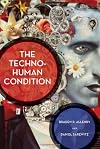
The Techno-Human Condition starts by examining transhumanism, the belief that human being can and should improve their bodies using technology, and the common arguments for and against it. Allenby and Sarewitz soon drop the idea, as both sides hold flawed and simplistic views about technology and its ability to solve problems. They advance a theory of Level I, show more II, and III technologies. Level I technologies imply a simple cause-and-effect relationship: cars allow you to get from Point A to B easily. Level II, technosocial systems, have more complex effects: many cars create traffic and a lack of parking. Level III, Earth systems, are almost unknowable in their implications: cars redesign cities and ways of life, create foreign entanglements in pursuit of gas, and change the composition of the atmosphere with unknown effects.
Coping with Level III technological conditions is the aim of the book. Allenby and Sarewitz propose flexibility and options above all else. Since the effects of technology are prima facia unknowable, we must be ready to change direction at any moment, not to forestall debate, and to always be prepared to reflexively examine our values. This is an ambitious program, and its ambition and ambiguity weakens its real-world relevance--people with simple solutions will always implement their plans faster than those with more complex ideas. But it also might be the only way to survival. show less
The Techno-Human Condition starts by examining transhumanism, the belief that human being can and should improve their bodies using technology, and the common arguments for and against it. Allenby and Sarewitz soon drop the idea, as both sides hold flawed and simplistic views about technology and its ability to solve problems. They advance a theory of Level I, show more II, and III technologies. Level I technologies imply a simple cause-and-effect relationship: cars allow you to get from Point A to B easily. Level II, technosocial systems, have more complex effects: many cars create traffic and a lack of parking. Level III, Earth systems, are almost unknowable in their implications: cars redesign cities and ways of life, create foreign entanglements in pursuit of gas, and change the composition of the atmosphere with unknown effects.
Coping with Level III technological conditions is the aim of the book. Allenby and Sarewitz propose flexibility and options above all else. Since the effects of technology are prima facia unknowable, we must be ready to change direction at any moment, not to forestall debate, and to always be prepared to reflexively examine our values. This is an ambitious program, and its ambition and ambiguity weakens its real-world relevance--people with simple solutions will always implement their plans faster than those with more complex ideas. But it also might be the only way to survival. show less
The relationship between science and policy is one that continually evades our grasp, confuses and confounds us, and appears to elude all reason. It seems imperative that policy makers must understand and act upon the predictions of scientists, and yet the unavoidable uncertainty of scientific predictions, especially in the earth sciences, provides a perfect excuse for inaction. Further, many of us believe that predictive scientific models should focus the direction of decision making; but show more in reality, it is politics (through funding) that focuses the direction of scientific research into predictive models.
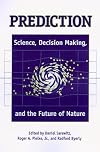
The editors of Prediction: Science, Decision Making, and the Future of Nature have expounded these ideas and others with a book that is truly unique in its approach to the application of science in environmental decision making. They have compiled contributions from a wide variety of authors from the physical and social sciences, providing an interdisciplinary approach to the challenge of using scientific prediction in policymaking. After covering the difficulties of prediction in the earth sciences, ten case studies are offered as examples of the challenges involved in predicting natural events and the social and political ramifications of doing so (or of claiming the ability to do so). The discussion is rounded out by putting prediction into perspective and recommending alternatives to the addictive habit of using prediction as a low-risk decision making tool.
Perhaps the most lucid explanation of the problem of prediction in the earth sciences is that offered by Naomi Oreskes, a geologist-turned-science historian. In the second chapter, Oreskes aptly explains the evolution of earth science methodology from the inductive (factual observations lead to hypotheses) to what is called the hypothetico-deductive (hypotheses are tested by factual observations), a transformation that has only taken place in the last 40 years. The latter methodology, which has long been the basis for physics and chemistry, implies a predictive ability that can only be derived from space- and time-independent generalizations. Thus, it is a problematic methodology for the earth and atmospheric sciences, which are inherently spatially and temporally dependent. Oreskes notes that the output of any model is only as good as its inputs. Therefore, it is imperative that decision makers know the limits of any model that is used to guide their decisions; but it is also imperative that scientists accurately communicate the unknowns and the uncertainties in their models. Unfortunately, the aforementioned influence of politics on research agendas often results in models and predictions that do not adequately serve the needs of the public interest, as is demonstrated through the case studies.
The case studies cover a wide range of predictive challenges, such as determining the timing and location of earthquakes on a major fault; the magnitude of episodic flooding on a river; the path and magnitude of groundwater flow in a proposed nuclear waste repository; the projection of future oil reserves; the extent of global climate change; and other such problems. The earthquake prediction and global climate change case studies demonstrate that bad prediction products do not necessarily result in poor decisions, while good prediction products do not necessarily result in effective decisions—the decision to heed a pseudoscientific prediction led to better earthquake preparedness, while the decision to ignore good predictions because of large uncertainties has led to inaction on global climate change. The nuclear waste and oil reserve case studies provide examples of how convergence of predictions on a similar result is not necessarily a sign of accuracy. No case study demonstrates more aptly the need for decision makers to understand predictive models better than the flood prediction example, in which an underestimation of the maximum potential resulted in inaction and $2 billion worth of damage. It is through these case studies and the analyses of the other contributing authors that the editors achieve their goal of “[painting] a comprehensive portrait of the troubled relationship between predictive science and environmental decision making.”
Perhaps one of the more important contributions the editors make is to use the case studies to demonstrate that prediction is a process that must be understood by decision makers in order to effect better decisions. They note that the tendency is to view prediction as a product, the technological efficiency of which it is assumed will inevitably produce a desired societal benefit. However, the editors echo Oreskes’ sentiment that better technology does not necessarily mean a better prediction. Further, they argue that the product is not as important as the process. They emphasize the need to integrate research, communication, and use of data into the predictive process, noting that both scientists and policymakers are responsible for making the process successful, and concluding that “good decisions are more likely to occur when all three activities of the prediction process are functioning well.” Their ultimate conclusion is that “we should worry less about making good predictions and more about making good decisions.”
The ideas in Prediction are similar to those in Mary O’Brien’s Making Better Environmental Decisions: An Alternative to Risk Assessment. O’Brien’s approach is slightly different, as she is acting as an advocate for people who might be adversely affected by poorly conducted risk assessment. Nevertheless, her book serves to demonstrate that scientific data can ill serve society when it is employed improperly. Risk assessment, in fact, is really just a specific application of prediction—it serves, according to O’Brien, to “[estimate] damages that may be occurring, or that may occur if an activity is undertaken.” As such, it could be argued that the tendency for policymakers to rely on predictive models is in essence a form of risk assessment. Thus, O’Brien’s call for alternatives assessment as a substitute for risk assessment is similar to the appeal of the Prediction editors to view prediction as a process rather than a product—both argue for improved communication; both deemphasize the use of numbers and models; and both emphasize public involvement in the process. show less
The editors of Prediction: Science, Decision Making, and the Future of Nature have expounded these ideas and others with a book that is truly unique in its approach to the application of science in environmental decision making. They have compiled contributions from a wide variety of authors from the physical and social sciences, providing an interdisciplinary approach to the challenge of using scientific prediction in policymaking. After covering the difficulties of prediction in the earth sciences, ten case studies are offered as examples of the challenges involved in predicting natural events and the social and political ramifications of doing so (or of claiming the ability to do so). The discussion is rounded out by putting prediction into perspective and recommending alternatives to the addictive habit of using prediction as a low-risk decision making tool.
Perhaps the most lucid explanation of the problem of prediction in the earth sciences is that offered by Naomi Oreskes, a geologist-turned-science historian. In the second chapter, Oreskes aptly explains the evolution of earth science methodology from the inductive (factual observations lead to hypotheses) to what is called the hypothetico-deductive (hypotheses are tested by factual observations), a transformation that has only taken place in the last 40 years. The latter methodology, which has long been the basis for physics and chemistry, implies a predictive ability that can only be derived from space- and time-independent generalizations. Thus, it is a problematic methodology for the earth and atmospheric sciences, which are inherently spatially and temporally dependent. Oreskes notes that the output of any model is only as good as its inputs. Therefore, it is imperative that decision makers know the limits of any model that is used to guide their decisions; but it is also imperative that scientists accurately communicate the unknowns and the uncertainties in their models. Unfortunately, the aforementioned influence of politics on research agendas often results in models and predictions that do not adequately serve the needs of the public interest, as is demonstrated through the case studies.
The case studies cover a wide range of predictive challenges, such as determining the timing and location of earthquakes on a major fault; the magnitude of episodic flooding on a river; the path and magnitude of groundwater flow in a proposed nuclear waste repository; the projection of future oil reserves; the extent of global climate change; and other such problems. The earthquake prediction and global climate change case studies demonstrate that bad prediction products do not necessarily result in poor decisions, while good prediction products do not necessarily result in effective decisions—the decision to heed a pseudoscientific prediction led to better earthquake preparedness, while the decision to ignore good predictions because of large uncertainties has led to inaction on global climate change. The nuclear waste and oil reserve case studies provide examples of how convergence of predictions on a similar result is not necessarily a sign of accuracy. No case study demonstrates more aptly the need for decision makers to understand predictive models better than the flood prediction example, in which an underestimation of the maximum potential resulted in inaction and $2 billion worth of damage. It is through these case studies and the analyses of the other contributing authors that the editors achieve their goal of “[painting] a comprehensive portrait of the troubled relationship between predictive science and environmental decision making.”
Perhaps one of the more important contributions the editors make is to use the case studies to demonstrate that prediction is a process that must be understood by decision makers in order to effect better decisions. They note that the tendency is to view prediction as a product, the technological efficiency of which it is assumed will inevitably produce a desired societal benefit. However, the editors echo Oreskes’ sentiment that better technology does not necessarily mean a better prediction. Further, they argue that the product is not as important as the process. They emphasize the need to integrate research, communication, and use of data into the predictive process, noting that both scientists and policymakers are responsible for making the process successful, and concluding that “good decisions are more likely to occur when all three activities of the prediction process are functioning well.” Their ultimate conclusion is that “we should worry less about making good predictions and more about making good decisions.”
The ideas in Prediction are similar to those in Mary O’Brien’s Making Better Environmental Decisions: An Alternative to Risk Assessment. O’Brien’s approach is slightly different, as she is acting as an advocate for people who might be adversely affected by poorly conducted risk assessment. Nevertheless, her book serves to demonstrate that scientific data can ill serve society when it is employed improperly. Risk assessment, in fact, is really just a specific application of prediction—it serves, according to O’Brien, to “[estimate] damages that may be occurring, or that may occur if an activity is undertaken.” As such, it could be argued that the tendency for policymakers to rely on predictive models is in essence a form of risk assessment. Thus, O’Brien’s call for alternatives assessment as a substitute for risk assessment is similar to the appeal of the Prediction editors to view prediction as a process rather than a product—both argue for improved communication; both deemphasize the use of numbers and models; and both emphasize public involvement in the process. show less
An interesting examination of the roles of technology in the human condition, and an application of these roles to the movement of transhumanism.
As discussed in Michael's review, the authors classify technology into three groups, based upon their effects and levels of social implications. The authors also discuss the role of technology in war, and debate the meaning of 'progress'. Transhumanism does have its intellectual roots in modern technology, but also in the philosophy of the show more Enlightenment, and ambiguities which arise from transhumanism must also be considered in this past context.
A thoughtful addition to current debates. show less
As discussed in Michael's review, the authors classify technology into three groups, based upon their effects and levels of social implications. The authors also discuss the role of technology in war, and debate the meaning of 'progress'. Transhumanism does have its intellectual roots in modern technology, but also in the philosophy of the show more Enlightenment, and ambiguities which arise from transhumanism must also be considered in this past context.
A thoughtful addition to current debates. show less

Richard Powers' essay is the lead off as he is contacted and engages with Bart in intriguing interplay.
"...where anything can happen, nothing will." Hmmmm.
Book is published by Island Press, devoted to Environmental Solutions.
Takeaway ideas:
1. HVAC still works.
2. Embryos patented.
3. "Science...has limited...world scale war." (Sure wish this was true.)
4. Grow artificial limbs?
5. Repopulate America's "countryside."
6. Slow down Science.
7. Do we need advanced computer systems, A.I., and show more genetically produced foods?
and my own:
8. Stop poisoning the animals, people, and soil - restore family farms -
Cease spending Science money on useless trips to the moon and beyond
and use NASA funds to cure diseases. show less
"...where anything can happen, nothing will." Hmmmm.
Book is published by Island Press, devoted to Environmental Solutions.
Takeaway ideas:
1. HVAC still works.
2. Embryos patented.
3. "Science...has limited...world scale war." (Sure wish this was true.)
4. Grow artificial limbs?
5. Repopulate America's "countryside."
6. Slow down Science.
7. Do we need advanced computer systems, A.I., and show more genetically produced foods?
and my own:
8. Stop poisoning the animals, people, and soil - restore family farms -
Cease spending Science money on useless trips to the moon and beyond
and use NASA funds to cure diseases. show less
Lists
Awards

You May Also Like
Associated Authors
Statistics
- Works
- 5
- Members
- 147
- Popularity
- #140,981
- Rating
- 4.0
- Reviews
- 4
- ISBNs
- 14