
Gloria Houston
Author of My Great-Aunt Arizona
About the Author
Image credit: via Goodreads
Works by Gloria Houston
Tagged
Common Knowledge
- Birthdate
- 20th Century
- Gender
- female
- Education
- Appalachian State University
University of South Florida (Ph. D.|Curriculum and Instruction) - Occupations
- teacher
- Nationality
- USA
- Places of residence
- North Carolina, USA
Tampa, Florida, USA - Associated Place (for map)
- USA
Members
Reviews

Author Gloria Houston and illustrator Susan Condie Lamb, who collaborated on the marvelous My Great-Aunt Arizona, join forces once again in Miss Dorothy and Her Bookmobile, which follows the story of a young woman who longs to become a librarian, and work in a stately red brick building, just like the one in her hometown in Massachusetts. But when Miss Dorothy, all grown up and graduated from college, falls in love and gets married, her life takes her to rural North Carolina, to a town where show more there is no library. The eventual solution - a bookmobile that she can use to bring books to the people - isn't what she envisioned as a girl, but is just what her new neighbors need...
Like the earlier book about Aunt Arizona, Miss Dorothy and Her Bookmobile is based on the life story of someone the author knew as a girl - the real Miss Dorothy used to bring her bookmobile to the store operated by Houston's family, stopping by every two weeks with her treasure - and offers a tribute to a very important profession: the librarian. I liked the story itself, with its message of adapting to the circumstances in which one finds oneself, and I liked that it was a real person (something made plain in the author's brief afterword) being depicted. I also greatly enjoyed the artwork, which I thought was just lovely, although the social critic in me couldn't help but wonder, looking at the happily integrated community, whether this was an accurate portrait of how the townspeople looked, in 1930s (I think it was 1930s?) Appalachia.
Still, leaving that issue of historical realism aside - and really, I'm not sure just how I feel about it: whether I think it is better to be inclusive (a good thing, generally) and draw more children into the story, or whether I feel that, by obscuring the realities of segregation, in the past, we are doing children a disservice - this is a wonderful book. Recommended to young bibliophiles and library lovers, and to anyone looking for children's stories set in Appalachia. show less
Like the earlier book about Aunt Arizona, Miss Dorothy and Her Bookmobile is based on the life story of someone the author knew as a girl - the real Miss Dorothy used to bring her bookmobile to the store operated by Houston's family, stopping by every two weeks with her treasure - and offers a tribute to a very important profession: the librarian. I liked the story itself, with its message of adapting to the circumstances in which one finds oneself, and I liked that it was a real person (something made plain in the author's brief afterword) being depicted. I also greatly enjoyed the artwork, which I thought was just lovely, although the social critic in me couldn't help but wonder, looking at the happily integrated community, whether this was an accurate portrait of how the townspeople looked, in 1930s (I think it was 1930s?) Appalachia.
Still, leaving that issue of historical realism aside - and really, I'm not sure just how I feel about it: whether I think it is better to be inclusive (a good thing, generally) and draw more children into the story, or whether I feel that, by obscuring the realities of segregation, in the past, we are doing children a disservice - this is a wonderful book. Recommended to young bibliophiles and library lovers, and to anyone looking for children's stories set in Appalachia. show less

It is Christmas time in the year 1918, and Ruthie and her mother await the return of Ruthie's father, off fighting in World War I, in this poignant and heart-satisfying holiday tale set in a small Appalachian village. When the pastor comes calling to remind Ruthie's mother that it is their family's turn to supply the church Christmas tree - an annual village tradition - she and Ruthie set out, the night before Christmas Eve, to find the perfect balsam fir, and to make good on their show more obligation. Sacrificing her own wedding dress, as well as the silk stocking sent to her as a special present, Ruthie's mother makes her a wonderful Christmas surprise, but no gift is greater than the one they both receive, after the church Christmas pageant...
The third Appalachian-themed picture-book I have read from the wonderfully talented Gloria Houston, following upon her My Great-Aunt Arizona and Miss Dorothy and Her Bookmobile, The Year of the Perfect Christmas Tree: An Appalachian Story pairs a moving tale of family love and community tradition with lovely artwork from Caldecott medalist Barbara Cooney. I loved all of the little regional details here, and the many bits of Christmas song that Ruthie and her mother sing as they harvest the tree. I particularly appreciated that there was mention of I Wonder As I Wander, an Appalachian folk song that has always been one of my favorites. The illustrations were beautiful, and captured the magic of Ruthie's mountain home, and her nighttime journey. Recommended to picture-book readers looking for Christmas stories and/or tales set in Appalachia. show less
The third Appalachian-themed picture-book I have read from the wonderfully talented Gloria Houston, following upon her My Great-Aunt Arizona and Miss Dorothy and Her Bookmobile, The Year of the Perfect Christmas Tree: An Appalachian Story pairs a moving tale of family love and community tradition with lovely artwork from Caldecott medalist Barbara Cooney. I loved all of the little regional details here, and the many bits of Christmas song that Ruthie and her mother sing as they harvest the tree. I particularly appreciated that there was mention of I Wonder As I Wander, an Appalachian folk song that has always been one of my favorites. The illustrations were beautiful, and captured the magic of Ruthie's mountain home, and her nighttime journey. Recommended to picture-book readers looking for Christmas stories and/or tales set in Appalachia. show less

Gloria Houston's My Great-Aunt Arizona is a delight from start to finish, presenting a biographical sketch of the author's aunt, a book-loving girl who grew up to be the teacher in her small Appalachian community's one-room schoolhouse, nourishing the minds and spirits of many generations of students. Named after the state of Arizona, where her older brother was stationed at the time of her birth, Arizona Houston (Arizona Houston Hughes, as she would one day become) was a girl with many show more interests, from growing flowers to square dancing on a Saturday night. But nothing ever eclipsed her love of words, and nothing - not the death of her mother, not the necessity of caring for her father and younger brother - ever put an end to her desire to get a good education.
A tribute both to a beloved family member, and to the noble profession of teaching - the "most influential profession in the world," according to the author's dedication - this lovely picture-book is also a visual treat, featuring beautiful illustrations by Susan Condie Lamb. The artwork sings with joy, from the scene in which Arizona leaps about with abandon, at the square dance, to that in which she returns home as a teacher, striding confidently into her bright new future. I don't know that My Great-Aunt Arizona, for all its charm, is a particularly earth-shattering book, but its almost perfect blend of textual and visual narrative gives it immense appeal. show less
A tribute both to a beloved family member, and to the noble profession of teaching - the "most influential profession in the world," according to the author's dedication - this lovely picture-book is also a visual treat, featuring beautiful illustrations by Susan Condie Lamb. The artwork sings with joy, from the scene in which Arizona leaps about with abandon, at the square dance, to that in which she returns home as a teacher, striding confidently into her bright new future. I don't know that My Great-Aunt Arizona, for all its charm, is a particularly earth-shattering book, but its almost perfect blend of textual and visual narrative gives it immense appeal. show less
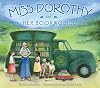
When Miss Dorothy graduates from Radcliffe College, she intends to become a librarian in charge of a "fine brick building just like the one ... in her home town in Massachusetts." But when Miss Dorothy marries, she and her husband move to a farm "at the base of high Mount Mitchell in the Blue Ridge Mountains of North Carolina" where there are no larger towns and cities and thus, no fine brick libraries. However, Miss Dorothy and the townspeople soon organise a bookmobile (a moving library), show more and Miss Dorothy does, indeed, become a librarian, a different type of librarian than she had envisioned, but a librarian nonetheless.
Miss Dorothy and her Bookmobile (written by Gloria Houston and illustrated by Susan Condie Lamb, who also collaborated on the equally wonderful and evocative My Great-Aunt Arizona is based on the true story of Dorothy Thomas, who operated a green bookmobile in the rural area where author Gloria Houston lived as a child, there being no actual, physical library building (for more information, see the informative author's note, which is as much of a paean, a dedication to Miss Dorothy and her bookmobile as the narrative, the story itself).
With a flowing, evocative text (and equally lush and descriptive illustrations, which capture not only the feel of the time, but the feel of the countryside, as well as the moods, the personalities of the people, the characters) Miss Dorothy and her Bookmobile is not only a glowing general tribute to librarians. It is specifically and especially a tribute to those librarians who did not work and often still do not work in traditional library buildings, but who brought and sometimes still bring the joy of reading, the joy of books to people, to their patrons, using bookmobiles, horses, mules, boats, often spending not only many hours, but also uncomfortable, possibly even possibly dangerous hours out and about to make books, reading, and literacy possible and accessible in and to under and undeveloped areas.
Beside the loving homage to librarians, there is also a wonderful message of community demonstrated in this story (it takes the whole community to furnish, to provide Miss Dorothy with a bookmobile, and I just love the fact that as soon as the small town where Miss Dorothy and her husband have settled, decides on getting a bookmobile, everyone, and I mean everyone helps to make said bookmobile a possibility, donating money, time, and of course, books). But even more importantly (at least for me), Miss Dorothy and her Bookmobile shows that although a person's aspirations might have to change, they can still be made a reality, they can still be pursued. Dorothy had wanted to become a librarian, and in the end, she does become a librarian (a different type of librarian than she had originally envisioned for herself, but still a librarian). Her dreams, her hopes might have had to adjust, but basically they have remained the same (the change is, in effect, only cosmetic, the heart of her aspirations, becoming a librarian, has not changed).
Like my LT friend Abigail, I also somewhat wonder at the fact that the small North Carolina town where Miss Dorothy settles seems surprisingly integrated for the 1930s (personally, I appreciate the fact that the illustrations, especially, show an integrated community, but I do have to wonder how historically accurate this is). That is not to say, that I consider an integrated community in 1930s North Carolina a complete and utter impossibility, but I have to admit that I have some doubts (especially considering the recent history of the Southern States). But other than that little caveat, I absolutely adored Miss Dorothy and her Bookmobile and highly recommend it to and for children interested in books, libraries and librarians. show less
Miss Dorothy and her Bookmobile (written by Gloria Houston and illustrated by Susan Condie Lamb, who also collaborated on the equally wonderful and evocative My Great-Aunt Arizona is based on the true story of Dorothy Thomas, who operated a green bookmobile in the rural area where author Gloria Houston lived as a child, there being no actual, physical library building (for more information, see the informative author's note, which is as much of a paean, a dedication to Miss Dorothy and her bookmobile as the narrative, the story itself).
With a flowing, evocative text (and equally lush and descriptive illustrations, which capture not only the feel of the time, but the feel of the countryside, as well as the moods, the personalities of the people, the characters) Miss Dorothy and her Bookmobile is not only a glowing general tribute to librarians. It is specifically and especially a tribute to those librarians who did not work and often still do not work in traditional library buildings, but who brought and sometimes still bring the joy of reading, the joy of books to people, to their patrons, using bookmobiles, horses, mules, boats, often spending not only many hours, but also uncomfortable, possibly even possibly dangerous hours out and about to make books, reading, and literacy possible and accessible in and to under and undeveloped areas.
Beside the loving homage to librarians, there is also a wonderful message of community demonstrated in this story (it takes the whole community to furnish, to provide Miss Dorothy with a bookmobile, and I just love the fact that as soon as the small town where Miss Dorothy and her husband have settled, decides on getting a bookmobile, everyone, and I mean everyone helps to make said bookmobile a possibility, donating money, time, and of course, books). But even more importantly (at least for me), Miss Dorothy and her Bookmobile shows that although a person's aspirations might have to change, they can still be made a reality, they can still be pursued. Dorothy had wanted to become a librarian, and in the end, she does become a librarian (a different type of librarian than she had originally envisioned for herself, but still a librarian). Her dreams, her hopes might have had to adjust, but basically they have remained the same (the change is, in effect, only cosmetic, the heart of her aspirations, becoming a librarian, has not changed).
Like my LT friend Abigail, I also somewhat wonder at the fact that the small North Carolina town where Miss Dorothy settles seems surprisingly integrated for the 1930s (personally, I appreciate the fact that the illustrations, especially, show an integrated community, but I do have to wonder how historically accurate this is). That is not to say, that I consider an integrated community in 1930s North Carolina a complete and utter impossibility, but I have to admit that I have some doubts (especially considering the recent history of the Southern States). But other than that little caveat, I absolutely adored Miss Dorothy and her Bookmobile and highly recommend it to and for children interested in books, libraries and librarians. show less
Lists
Awards


You May Also Like


Associated Authors
Statistics
- Works
- 12
- Members
- 4,142
- Popularity
- #6,078
- Rating
- 4.2
- Reviews
- 76
- ISBNs
- 46
- Languages
- 2
- Favorited
- 1