
About the Author
Joyce Hansen has created a dramatic account of the Reconstruction period, focusing on the experiences of the freed men and women. Weaving the former slaves' own words and stories into a detailed historical background, she provides a full picture of the time. Brief biographies of the era's show more courageous black leaders and period illustrations enrich this readable study, to help readers gain an understanding of an important and tragic episode in American history. show less
Series
Works by Joyce Hansen
I Thought My Soul Would Rise and Fly: The Diary of Patsy, a Freed Girl, Mars Bluff, South Carolina, 1865 (1997) 2,000 copies, 19 reviews
Breaking Ground, Breaking Silence: The Story of New York's African Burial Ground (1998) 84 copies, 4 reviews
Between Two Fires: Black Soldiers in the Civil War (The African-American Experience) (1993) 22 copies
A Safe Space [short story] 1 copy
Associated Works
1789: Twelve Authors Explore a Year of Rebellion, Revolution, and Change (2020) — Contributor — 59 copies, 14 reviews
Tagged
Common Knowledge
- Birthdate
- 1942-10-18
- Gender
- female
- Nationality
- USA
- Birthplace
- Bronx, New York, USA
- Associated Place (for map)
- New York, USA
Members
Reviews
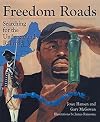
Silent stone faces on a tunnel wall in Syracuse. Ruins of the first settlement of freed men and women discovered under a saltwater marsh in Florida. Family stories leading archaeologists to an upstairs room in a Brooklyn house, where slaves were hidden. These and other archaeological sites are examined in this study of the Underground Railroad. In addition, WPA slave narratives, spirituals, quilts, a ship’s logs, diaries, eyewitness accounts, and letters all demonstrate the ways historians show more learn about the past—from old-fashioned studies of 17th-century church records to the space-age technology of thermal imaging. An important point made here is that the Underground Railroad was not, as often portrayed, an organized network of routes delivering escaping slaves directly to freedom in the North. There were many “freedom roads” and many people with the courage to break the law and put their lives at risk in the name of liberty and democracy. The authors portray historians as detectives, solving mysteries when history keeps a secret, and point out that this is a “living” history, “waiting for a new generation of historians, archaeologists, and researchers to continue to tell this fascinating story.” Discussions of the Kansas-Nebraska Act, the Dred Scott decision, John Brown, and the 1850 Fugitive Slave Law provide additional historical context. Well-written, well-documented, imaginatively arranged, this is a fascinating offering. Handsomely organized with ten black-and-white illustrations, maps, sidebars, photographs, and other archival material, this covers much ground while saying a great deal about the historian’s craft. An important addition to library collections and classroom units. (foreword, bibliography, index) (Nonfiction. 10-14)
-Kirkus Review show less
-Kirkus Review show less
Breaking Ground, Breaking Silence: The Story of New York's African Burial Ground (Coretta Scott King Author Honor Books) by Joyce Hansen
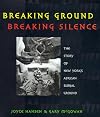
From Hansen (Between Two Fires, 1993, etc.) and McGowan, a moving and enriching story of the discovery of an African burial ground located in lower Manhattan. Although 18th-century maps of New York City show an area marked “Negroes Burying Ground,” the land had been covered over by buildings for two centuries. In 1991, the area was once again excavated to build “a new thirty-four-story federal office building,” but this time, a group of archaeologists hired by the US government were show more able to dig and conduct research. Their discoveries form the basis of this engrossing account. The painstaking methods of archaeologists, and their detective work, reveal much about the lives of Africans in colonial times. Hansen and McGowan recount that “it is as though people who have been written out of history have found a way to tell us about themselves through the objects buried with them,” and that “a people who had no voice when they were living, and who had left no written records, would at last have their stories told.” (b&w photos and illustrations, maps, notes, bibliography) (Nonfiction. 10-14)
-Kirkus Review show less
-Kirkus Review show less
I Thought My Soul Would Rise and Fly: The Diary of Patsy, a Freed Girl, Mars Bluff, South Carolina 1865 (Dear America Series) by Joyce Hansen
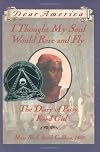
Being a lover of history and historical fiction, I've been very excited about trying out the Dear America series for quite some time. Since all the books are written by different authors, I'm not sure how they compare to this one, but I was very pleased with my first foray into the series. I Thought My Soul Would Rise and Fly chronicles the life of a freed slave girl a few months after emancipation was voted into law. I was pretty sure the book was a work of fiction, but the author did such show more a good job with making the story believable that I had a few moments of doubt until reading the historical notes at the end which confirmed that it was. Patsy was a sweet, lovely, and very relatable character to read about. She is only about twelve or thirteen when the story open, and to the outside world she isn't much to look at. In addition to being an orphan, Patsy is painfully shy because of a severe stuttering problem, and she also walks with a pronounced limp. Inside though, she is a very brave and strong girl who secretly taught herself how to read and write during a time when the punishment for doing so could have been extremely severe. I really like how Patsy grew a lot throughout the story and became braver and more readily able to speak as time went on. She also takes so much joy and comfort from her reading that when she reads aloud, her stutter all but disappears. I really liked how the author put emphasis on the importance of literacy by showing how much it means to Patsy.
Through reading I Thought My Soul Would Rise and Fly, I was able to learn some things about what life was like for freed slaves. I found it interesting that their day to day lives weren't all that different after emancipation than they were before it, with the exception that they were now getting paid, albeit very low wages, for the work they were doing. Many of the former slaves from the plantation where Patsy lived left immediately, hoping to buy land of their own or find better work in the cities. Many stayed behind to become sharecroppers or to continue working as servants. There were conflicted feelings among them, and even in Patsy's mind, as to whether it was better to go or stay, and there were certainly positives and negatives to both sides of the coin. It was very interesting to learn about all of this, and the author's historical notes at the end of the book also helped to put things in perspective.
I don't believe I have ever read a book in diary format before, so I don't know if this is a typical example of a book written in that style or not. The one downside I found about this style, at least in the case of this book, is that it could be rather repetitive at times. For example: Every Monday is wash day; nearly every Tuesday the freed slaves have a Union League meeting where they discuss their rights and read the newspapers; nearly every Sunday they meet in the arbor for worship services. There is some variation in each of these entries, so it didn't bother me overmuch, but I could see how this could become tedious to kids who might be reading it. There were also a lot of characters to keep track of, and I found myself forgetting who various people were on occasion, which would probably mean that kids might have trouble with this too. I think the author's purpose was to show how lonely Patsy felt as more and more of the people she knew and had grown up with left the plantation, but it was a little hard to keep them all straight. Otherwise, I really enjoyed the book, and I am definitely looking forward to reading more books in the Dear America series. I think that this series and its companion series, My America, My Name Is America, and The Royal Diaries all have a great deal to offer both child and adult readers. show less
Through reading I Thought My Soul Would Rise and Fly, I was able to learn some things about what life was like for freed slaves. I found it interesting that their day to day lives weren't all that different after emancipation than they were before it, with the exception that they were now getting paid, albeit very low wages, for the work they were doing. Many of the former slaves from the plantation where Patsy lived left immediately, hoping to buy land of their own or find better work in the cities. Many stayed behind to become sharecroppers or to continue working as servants. There were conflicted feelings among them, and even in Patsy's mind, as to whether it was better to go or stay, and there were certainly positives and negatives to both sides of the coin. It was very interesting to learn about all of this, and the author's historical notes at the end of the book also helped to put things in perspective.
I don't believe I have ever read a book in diary format before, so I don't know if this is a typical example of a book written in that style or not. The one downside I found about this style, at least in the case of this book, is that it could be rather repetitive at times. For example: Every Monday is wash day; nearly every Tuesday the freed slaves have a Union League meeting where they discuss their rights and read the newspapers; nearly every Sunday they meet in the arbor for worship services. There is some variation in each of these entries, so it didn't bother me overmuch, but I could see how this could become tedious to kids who might be reading it. There were also a lot of characters to keep track of, and I found myself forgetting who various people were on occasion, which would probably mean that kids might have trouble with this too. I think the author's purpose was to show how lonely Patsy felt as more and more of the people she knew and had grown up with left the plantation, but it was a little hard to keep them all straight. Otherwise, I really enjoyed the book, and I am definitely looking forward to reading more books in the Dear America series. I think that this series and its companion series, My America, My Name Is America, and The Royal Diaries all have a great deal to offer both child and adult readers. show less
I Thought My Soul Would Rise and Fly: The Diary of Patsy, a Freed Girl, Mars Bluff, South Carolina 1865 (Dear America Series) by Joyce Hansen
This story is told from the point of view of a recently freed disabled girl in South Carolina. Over the course of the novel, Patsy considers what it means to be free, to have autonomy, and to find one's voice. In addition to the well-researched history that is being taught in this book, the growth of Patsy's character is wonderful. It is also so wonderful to have a disabled narrator, especially in historical fiction, where they are frequently excluded from the narrative all together.
Lists
Awards


You May Also Like


Associated Authors
Statistics
- Works
- 21
- Also by
- 4
- Members
- 3,614
- Popularity
- #7,005
- Rating
- 3.9
- Reviews
- 33
- ISBNs
- 91
- Languages
- 1
- Favorited
- 2