
Ryuichi Kaneko
Author of The History of Japanese Photography
About the Author
Works by Ryuichi Kaneko
Provoke: Between Protest and Performance: Photography in Japan 1960–1975 (2016) — Author — 43 copies, 2 reviews
Tagged
Common Knowledge
- Gender
- male
- Nationality
- Japan
- Places of residence
- Tokyo, Japan
- Associated Place (for map)
- Tokyo, Japan
Members
Reviews
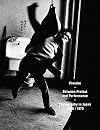
The short-lived Japanese magazine Provoke, founded in 1968, is nowadays recognized as a major contribution to postwar photography in Japan, featuring the country’s finest representatives of protest photography, vanguard fine art and critical theory in only three issues overall. The magazine's goal was to mirror the complexities of Japanese society and its art world of the 1960s, a decade shaped by the country’s first large-scale student protests. The movement yielded a wave of new books show more featuring innovative graphic design combined with photography: serialized imagery, gripping text-image combinations, dynamic cropping and the use of provocatively "poor" materials. The writings and images by Provoke's members―critic Koji Taki, poet Takahiko Okada, photographers Takuma Nakahira, Yakata Takanashi and Daido Moriyama―were suffused with the tactics developed by Japanese protest photographers such as Nobuyoshi Araki, Eikoh Hosoe and Shomei Tomatsu, who pointed at and criticized the mythologies of modern life. Provoke accompanies the first exhibition ever to be held on the magazine and its creators. Illuminating the various uses of photography in Japan at the time, the catalogue focuses on selected projects undertaken between 1960 and 1975 that offer a strongly interpretative account of currents in Japanese art and society at a moment of historical collapse and renewal. show less

Immerse yourself in a century of Japanese photography through the lens of its defining magazines. "Japanese Photography Magazines: 1880s to 1980s" uncovers the rich heritage of Japanese photography, offering a unique perspective beyond Western interpretations. This comprehensive volume is an invaluable resource for researchers, students and photography enthusiasts alike. A tremendous amount of thought and editorial effort has been invested into the organization and selection process for this show more book to provide the reader with a deep understanding of Japan’s distinctive photography history. Selected Highlights to Explore: Social change and identity: See the evolution of Japan’s sense of self through student protests, counterculture movements, social studies of ancient rituals, and a changing landscape in the work of Hiroshi Hamaya, Shomei Tomatsu, Ikko Narahara, Kazuo Kitai, and Koji Taki. Experimental visions: Delve into avant-garde styles, from abstract surrealism of prewar Japan to gritty photojournalism, represented by masters like Ken Domon and Ihei Kimura. Technical advancements: Discover the impact of W.W.II on the development of Japan’s camera manufacturing and magazine industry, as well as the broad adoption of street photography as photojournalism. The “Eizo-ha” generation: Learn about postwar photographers who presented a new relationship with images as well as cross-disciplinary approaches to Butoh dance and literature. Independence: Get to know how photographers independently produced magazines and organized exhibition spaces in the 70s & 80s, forming small collectives that changed the course of photography. Influential voices: Read translated writings by photographers, critics, and poets like Eikoh Hosoe, Shuji Terayama, and Shuntaro Tanikawa, offering insights into the creative discourse. Provoke’s B-side: Discover how the collective produced another publication, with contributions from Daido Moriyama, Takuma Nakahira, and Yutaka Takanashi. Photobooks: Discover how the magazine industry was integral to the development of Japan’s unique photobook culture. Landmark publications: Immerse yourself in the pages of seminal magazines like Shashin Shinbun (1887), Asahi Graph (1923), Camera Mainichi (1956), and Provoke (1968), and Nobuyoshi Araki’s Shashin Jidai (1981), experiencing the evolution of visual storytelling, editorial design, and graphic design. Comprehensive: Experience complete reproductions of iconic works, including a full reproduction of Masahisa Fukase’s "Ravens," complete with authorized translations of his accompanying texts. With over 1,500 illustrations across 500 pages, this book transcends Western narratives, providing a nuanced understanding of the distinct character of Japanese photography. show less
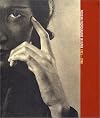
This book has been produced for the "Modern Photography in Japan: 1915 - 1940" exhibit at the Ansel Adams Center, July 24 - September 30, 2001.
The pre-war modern photography movement in Japan flourished with a rich exchange of ideas and information as aritsts studied in Europe and international artistic developments were explored through exhibitions and publications in Japan. "Modern Photography in Japan: 1915-1940"will present over 80 images, many of which have never been seen before in the show more United States, by 35 photographers whose work evolved from a pictorialist tradition to the beginning of a modernist aesthetic. show less
The pre-war modern photography movement in Japan flourished with a rich exchange of ideas and information as aritsts studied in Europe and international artistic developments were explored through exhibitions and publications in Japan. "Modern Photography in Japan: 1915-1940"will present over 80 images, many of which have never been seen before in the show more United States, by 35 photographers whose work evolved from a pictorialist tradition to the beginning of a modernist aesthetic. show less

Awards


You May Also Like
Associated Authors
Statistics
- Works
- 9
- Members
- 166
- Popularity
- #127,844
- Rating
- 3.7
- Reviews
- 5
- ISBNs
- 9
- Languages
- 3