
Mark Galli
Author of Preaching that Connects
About the Author
Mark Galli is the former editor in chief of Christianity Today magazine. He Was previously an editor with Christian History and Leadership magazines. He is a graduate of Fuller Theological Seminary (MDiv) and was a pastor for 10 years. Mark is the author of numerous books on prayer, preaching, and show more pastoral ministry, including Jesus Mean and Wild: The Unexpected Love of an Untamable God. He and his wife live in Illinois. show less
Image credit: via Tyndale
Works by Mark Galli
Dangers, Toils, and Snares: Mastering Ministry (Pressure Points) (1994) — Author — 158 copies, 2 reviews
When Did We Start Forgetting God?: The Root of the Evangelical Crisis and Hope for the Future (2020) 10 copies
The Paradox of David Livingstone 7 copies
Quando Foi Que Começamos A Nos Esquecer De Deus?: Raízes Da Crise Evangélica E Esperança Para O Futuro (2021) 2 copies
Christianity Today, January/February 2015, Volume 59, Number 1 (Stop Worrying About The Millennials) (2015) 2 copies
咄咄逼人的耶穌--祂為鮮為人稱道.不受擺佈的愛 1 copy
To Illustrate . . . 1 copy
William Carey Converts 1 copy
The Man Who Wouldn't Give Up 1 copy
The Local Church 1 copy
The New Christian Man 1 copy
Tagged
Common Knowledge
- Birthdate
- 1952-08-24
- Gender
- male
- Education
- Fuller Theological Seminary (MDiv)
University of California, Santa Cruz - Occupations
- editor
author
Editor-in-Chief (Christianity Today) - Organizations
- Christianity Today
Members
Reviews
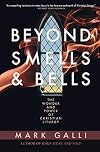
According to Mark Galli, human beings have a reality problem. We carry skewed notions of how the world works, of what we are, of what we’re for, of who God is, and of how we might relate to him. Worse yet, we tend to regard our ill-formed opinions as accurate reflections of what is “real,” whereas those mysteries of life which defy our mastery are “less real.” Like a tragic incarnation of The Matrix, we embrace the deceit of the enemy and fail to perceive the world as it is. show more Worship, however, sets the world aright. Worship is a restorative immersion in reality, forming and reforming true humans to live with the true God in his true world.
Worship (particularly liturgical worship), Galli says, “enacts a story” in a world that has gotten the story horribly wrong. We are not, first of all, those who have chosen to reach out to God of our own accord. The liturgy recenters us into the story of a God who calls us to himself, speaks his life into us, and sends us forth for his purposes. In this way, with its movements of gathering, word, sacrament, and dismissal, the liturgy not only structures the assembly, it models a framework for the whole of life.
The liturgy reminds us also that we are called in community, not as isolated individuals. The liturgy is shot through with reference to God in Trinity, as we recognize that we are made in the image of a God who is himself eternal community. We pray to our Father that he would provide our daily bread and forgive our trespasses as we forgive one another. The liturgy restores us to the reality of loving community, as God is loving community.
In these respects, among others, the liturgy trains us to live in God’s world in alignment with God’s truth, but Galli doesn’t just highlight what the liturgy teaches. He gives much emphasis to how it teaches. In many respects, the liturgy strikes a strange and intriguing contrast against the religion humans think they want. In a culture drawn to the idea of a familiar and friendly God, the liturgy celebrates the holy otherness of God, thereby making intimacy possible as we learn to love God as he truly is. As the seeker-sensitive church culture strains to make God accessible, the liturgy maintains a mode of worship corresponding to the whole nature of God, including his mysterious and incomprehensible attributes. Amidst a culture that values authenticity, the liturgy asserts that authentic human life is ordered by God and not by human spontaneity. For a culture that craves relevance, the liturgy holds to a relevance measured in relation to God and his kingdom spanning across generations and geographies, not just relevance to the attitudes of today’s youth.
In short, the liturgy conforms worshipers to God’s reality as it maintains a strange separation from the winds of contemporary culture. Liturgy refuses to be defined by the times, calling us to submit to that which is timeless. Liturgy denies the shallow impulses of we who would make church in our own image, instead honoring the deeper needs and longings of the human heart and offering the assuring invitation, “There is something larger than you here.” The liturgy turns the desires of the flesh away at the door, but gathers the soul into heaven’s oasis. In this way, the liturgy trains worshipers to approach God in submission, being transformed to live in his story rather than presuming to fit him into ours. Again, it sets the world aright. show less
Worship (particularly liturgical worship), Galli says, “enacts a story” in a world that has gotten the story horribly wrong. We are not, first of all, those who have chosen to reach out to God of our own accord. The liturgy recenters us into the story of a God who calls us to himself, speaks his life into us, and sends us forth for his purposes. In this way, with its movements of gathering, word, sacrament, and dismissal, the liturgy not only structures the assembly, it models a framework for the whole of life.
The liturgy reminds us also that we are called in community, not as isolated individuals. The liturgy is shot through with reference to God in Trinity, as we recognize that we are made in the image of a God who is himself eternal community. We pray to our Father that he would provide our daily bread and forgive our trespasses as we forgive one another. The liturgy restores us to the reality of loving community, as God is loving community.
In these respects, among others, the liturgy trains us to live in God’s world in alignment with God’s truth, but Galli doesn’t just highlight what the liturgy teaches. He gives much emphasis to how it teaches. In many respects, the liturgy strikes a strange and intriguing contrast against the religion humans think they want. In a culture drawn to the idea of a familiar and friendly God, the liturgy celebrates the holy otherness of God, thereby making intimacy possible as we learn to love God as he truly is. As the seeker-sensitive church culture strains to make God accessible, the liturgy maintains a mode of worship corresponding to the whole nature of God, including his mysterious and incomprehensible attributes. Amidst a culture that values authenticity, the liturgy asserts that authentic human life is ordered by God and not by human spontaneity. For a culture that craves relevance, the liturgy holds to a relevance measured in relation to God and his kingdom spanning across generations and geographies, not just relevance to the attitudes of today’s youth.
In short, the liturgy conforms worshipers to God’s reality as it maintains a strange separation from the winds of contemporary culture. Liturgy refuses to be defined by the times, calling us to submit to that which is timeless. Liturgy denies the shallow impulses of we who would make church in our own image, instead honoring the deeper needs and longings of the human heart and offering the assuring invitation, “There is something larger than you here.” The liturgy turns the desires of the flesh away at the door, but gathers the soul into heaven’s oasis. In this way, the liturgy trains worshipers to approach God in submission, being transformed to live in his story rather than presuming to fit him into ours. Again, it sets the world aright. show less
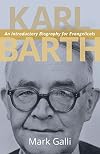
Summary: An succinct overview of the life and theological relevance of Karl Barth, particularly for contemporary evangelicals.
By most estimates, Karl Barth is considered perhaps the greatest theologian of the twentieth century. He commentary on Romans challenged the liberal consensus of his day focusing attention on the sovereignty of God rather than human standpoints. In his insistence on the sovereign initiative of God and Christ's reconciling work, he clashed with Emil Brunner, Rudolph show more Bultmann, and Paul Tillich. He stood as courageously as Bonhoeffer against Nazi totalitarianism, formulating the Barmen Declaration, and eventually losing his faculty position in Bonn when he could not swear loyalty to Hitler. He lived for the rest of his life an exile in Switzerland.
Yet evangelicals have often been uneasy about Barth. From the early opposition of Cornelius Van Til down to present day concerns about Barth's view of scripture and fears of the universalist implications of his soteriology, many evangelicals have wanted to hold Barth at arms length. Mark Galli, as editor in chief of Christianity Today, the flagship publication of evangelicalism, gets that, and yet offers in this slim volume a sketch of Barth's life, and theological work, and what evangelicals might learn and gain from this, even if they retain their reservations.
Galli traces the theological development of Barth in the liberal protestant tradition shaped by Schleiermacher and his mentor Adolph von Harnack. He describes the "conversion" of Barth from a young social activist and socialist pastor through his study of Romans, and how the publication of his commentary on Romans rocked the theological world as he reasserted the centrality of God rather than human initiative, and God's gracious action rather than even the best of human religious impulse. We trace his continued theological development as a professor first at Gottingen and then Bonn.
Galli shows us both the courageous and human side of Barth. He was one of the first to recognize the dangerous pretensions of Nazism and its insidious foothold in the German Church, and led the resistance to this in the formulation and promulgation of the Barmen Declaration, affirming the precedence of the sovereign God over any human sovereignties and that the church could not relent to political captivity to any ideology. This led to Barth being stripped of his teaching position, and his emigration to Basel, Switzerland, where he spent the remainder of his life.
The human side was what Galli concedes was his "emotional adultery" with Charlotte von Kirschbaum, his research assistant for many years. Despite the strains this placed on his marriage, he was unwilling to break off this relationship, and it seems that Barth and his wife Nelly eventually reached some kind of understanding. Even after Karl's death, Nelly regularly visited Charlotte, an Alzheimer's victim. This may say something of Nelly, about whom I wish Galli might have told us more.
It is impossible in a book of this length to adequately summarize the Church Dogmatics. Galli focuses on the two aspects that have often been of concern to evangelicals, and while not removing them as cause for reservation, he points out aspects from which evangelicals might learn. With regard to scripture, he acknowledges the problems of Barth's position of God's authoritatively revealing himself through a fallible scripture, yet he observes Barth's Bible-centered practice, how extensively he cited scripture, and always with a view to it's authority as God's witness, not in criticism of its faults. He also tackles Barth's ideas of "universal reconciliation." He contrasts the Reformers "If you repent and believe, you will be saved" with Barth's "You are saved; therefore believe and repent." He sees in this a position that may have the promise of ending the impasse between Calvinist and Arminian positions, while acknowledging the further work that remains.
Finally, Galli takes up what he sees as a fundamental challenge to contemporary evangelicalism. In Barth's unflinching commitment to the initiative of God, he sees a challenge to an evangelicalism at once focused on subjective experience and on human activism in doing good. He sees in these trends a theology not unlike that of Schleiermacher, even while clinging to evangelical affirmations. He trenchantly observes
"The point is not to make a sweeping condemnation of evangelicalism, as if it were the epitome of nineteenth century liberalism. The point is not to look to Barth as our theological savior. The point is to suggest that the theology Barth eventually found bankrupt, and so ardently battled, is a theology we understand and identify with at some level. That we imbibe it unthinkingly is a problem, because as Barth's theology demonstrates, it is an approach that brings with it a host of problems, problems that undermine not only the church's integrity but especially its evangelistic mission" (p. 145).
Galli gives us a succinct biography that leaves us much to consider. Would we have Barth's courage to stand against a compromised church and a powerful regime? What place does the "strange world of the Bible" have in shaping our world? How central in our thinking is God's initiative in salvation? In Barth's "no" to the natural theology of Brunner, and nineteenth century liberalism, do we also hear a "no" to our own generation's human pretensions? Galli, a skilled editor, also serves us as a skilled writer, using few words to give us much to consider.
____________________________
Disclosure of Material Connection: I received a complimentary review copy of this book from the publisher in exchange for an honest review. The opinions I have expressed are my own. show less
By most estimates, Karl Barth is considered perhaps the greatest theologian of the twentieth century. He commentary on Romans challenged the liberal consensus of his day focusing attention on the sovereignty of God rather than human standpoints. In his insistence on the sovereign initiative of God and Christ's reconciling work, he clashed with Emil Brunner, Rudolph show more Bultmann, and Paul Tillich. He stood as courageously as Bonhoeffer against Nazi totalitarianism, formulating the Barmen Declaration, and eventually losing his faculty position in Bonn when he could not swear loyalty to Hitler. He lived for the rest of his life an exile in Switzerland.
Yet evangelicals have often been uneasy about Barth. From the early opposition of Cornelius Van Til down to present day concerns about Barth's view of scripture and fears of the universalist implications of his soteriology, many evangelicals have wanted to hold Barth at arms length. Mark Galli, as editor in chief of Christianity Today, the flagship publication of evangelicalism, gets that, and yet offers in this slim volume a sketch of Barth's life, and theological work, and what evangelicals might learn and gain from this, even if they retain their reservations.
Galli traces the theological development of Barth in the liberal protestant tradition shaped by Schleiermacher and his mentor Adolph von Harnack. He describes the "conversion" of Barth from a young social activist and socialist pastor through his study of Romans, and how the publication of his commentary on Romans rocked the theological world as he reasserted the centrality of God rather than human initiative, and God's gracious action rather than even the best of human religious impulse. We trace his continued theological development as a professor first at Gottingen and then Bonn.
Galli shows us both the courageous and human side of Barth. He was one of the first to recognize the dangerous pretensions of Nazism and its insidious foothold in the German Church, and led the resistance to this in the formulation and promulgation of the Barmen Declaration, affirming the precedence of the sovereign God over any human sovereignties and that the church could not relent to political captivity to any ideology. This led to Barth being stripped of his teaching position, and his emigration to Basel, Switzerland, where he spent the remainder of his life.
The human side was what Galli concedes was his "emotional adultery" with Charlotte von Kirschbaum, his research assistant for many years. Despite the strains this placed on his marriage, he was unwilling to break off this relationship, and it seems that Barth and his wife Nelly eventually reached some kind of understanding. Even after Karl's death, Nelly regularly visited Charlotte, an Alzheimer's victim. This may say something of Nelly, about whom I wish Galli might have told us more.
It is impossible in a book of this length to adequately summarize the Church Dogmatics. Galli focuses on the two aspects that have often been of concern to evangelicals, and while not removing them as cause for reservation, he points out aspects from which evangelicals might learn. With regard to scripture, he acknowledges the problems of Barth's position of God's authoritatively revealing himself through a fallible scripture, yet he observes Barth's Bible-centered practice, how extensively he cited scripture, and always with a view to it's authority as God's witness, not in criticism of its faults. He also tackles Barth's ideas of "universal reconciliation." He contrasts the Reformers "If you repent and believe, you will be saved" with Barth's "You are saved; therefore believe and repent." He sees in this a position that may have the promise of ending the impasse between Calvinist and Arminian positions, while acknowledging the further work that remains.
Finally, Galli takes up what he sees as a fundamental challenge to contemporary evangelicalism. In Barth's unflinching commitment to the initiative of God, he sees a challenge to an evangelicalism at once focused on subjective experience and on human activism in doing good. He sees in these trends a theology not unlike that of Schleiermacher, even while clinging to evangelical affirmations. He trenchantly observes
"The point is not to make a sweeping condemnation of evangelicalism, as if it were the epitome of nineteenth century liberalism. The point is not to look to Barth as our theological savior. The point is to suggest that the theology Barth eventually found bankrupt, and so ardently battled, is a theology we understand and identify with at some level. That we imbibe it unthinkingly is a problem, because as Barth's theology demonstrates, it is an approach that brings with it a host of problems, problems that undermine not only the church's integrity but especially its evangelistic mission" (p. 145).
Galli gives us a succinct biography that leaves us much to consider. Would we have Barth's courage to stand against a compromised church and a powerful regime? What place does the "strange world of the Bible" have in shaping our world? How central in our thinking is God's initiative in salvation? In Barth's "no" to the natural theology of Brunner, and nineteenth century liberalism, do we also hear a "no" to our own generation's human pretensions? Galli, a skilled editor, also serves us as a skilled writer, using few words to give us much to consider.
____________________________
Disclosure of Material Connection: I received a complimentary review copy of this book from the publisher in exchange for an honest review. The opinions I have expressed are my own. show less
I grew up in a Dutch/Reformed/Presbyterian/Calvinist background, where anything in the liturgy that smacks of Romanism is highly suspect (except for paedobaptism, which is obviously biblical, *wink wink nudge nudge* to my readership). This delightful little book reminds us of the values of participating in a liturgy that has its roots not in Romanism, but instead in the earliest Christian worship. One gathers from this book a sense of the 'catholic' (universal) nature of the Body of Christ - show more not only being joined to believers worldwide but in a very real sense joined in worship with saints from generations past. Ultimately, this points us to a worship that is diametrically opposed to self-centred worship and brings us into worship that is bigger than ourselves, outside of ourselves, and fundamentally worship that is Christ-centred. And for those who are suspect of high liturgy itself because of lifeless and empty ritualism, this book is a keen reminder that the form of the worship itself, regardless of tradition, is empty and ritualistic if not flowing from a regenerated heart pointed away from self and towards community with Christ.
Galli does not write apologetically here; rather he provides a simple primer of the liturgy, gently forming his arguments through the timeless words and prayers themselves, and through the rhythms and flow of the Christian calendar connecting his readers with the Body of Christ throughout the ages. Especially helpful are the appendices at the end with a simple glossary of liturgical terminology for anyone unfamiliar with the lingo, charts comparing the liturgy across traditions, and a basic understanding of the Church year and it's symbolism and importance. show less
Galli does not write apologetically here; rather he provides a simple primer of the liturgy, gently forming his arguments through the timeless words and prayers themselves, and through the rhythms and flow of the Christian calendar connecting his readers with the Body of Christ throughout the ages. Especially helpful are the appendices at the end with a simple glossary of liturgical terminology for anyone unfamiliar with the lingo, charts comparing the liturgy across traditions, and a basic understanding of the Church year and it's symbolism and importance. show less
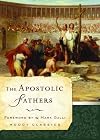
Christians today often have little sense of the past, and a low respect for church history. And they are almost totally ignorant of old books. Not every old book is worth reading, but some shine as true classics of the Christian faith. The Apostolic Fathers is one such work. It remains important for the insight it provides into the world of Christianity in the first generations after the death of the apostles.
As I read The Apostolic Fathers, I was reminded just how far removed I really am show more from the New Testament time period. I encountered much that was strange or different from my normal way of thinking. But I also found a good deal of continuity. Scripture is often quoted as Scripture. Justification by faith is stressed in 1 Clement, and a call to holy living pervades all the apostolic fathers. Even still, the Bible itself shines out all the brighter when compared with these non-inspired writings.
This Moody Classics edition is a handy sized, attractively presented book. It would fit in many pockets, and makes the task of reading “The Apostolic Church Fathers” much less daunting.
The book begins with a helpful foreword by Mark Galli. An introduction to each of the included works is provided and the merits of reading the Fathers is discussed. After the foreword you jump right into the Fathers themselves. 1 & 2 Clement, The Letters of Ignatius and Polycarp, The Martyrdom of Polycarp, The Didache, and The Pastor of Hermas are the included titles.
I was struck by the very first page of the Fathers, Clement’s first letter opens up with this line: “The church of God, living in exile in Rome, to the church of God, exiled in Corinth–to you who are called and sanctified by God’s will through our Lord Jesus Christ.” (pg. 17) The idea of the church being exiled is also found in the opening of 1 Peter and James. It was special to see that sense of a pilgrim-mindset so clearly in 1 Clement.
1 Clement also showed an early example of typological interpretation. This book written in A.D. 96 already reveals importance placed on the “scarlet thread” of Rahab: “(She) should hang a piece of scarlet from her house… by this they made it clear that it was by the blood of the Lord that redemption was going to come to all who believe in God and hope on him.” (pg. 25)
Polycarp’s letter to the bishop of Smyrna exhorts the careful study of Paul’s letters “that will enable you, if you study them carefully, to grow in the faith delivered to you” (pg. 127). Ignatius’ letter to Polycarp revealed that he believed miraculous spiritual gifts were still to be sought in his day: “But ask that you may have revelations of what is unseen. In that way you will lack nothing and have an abundance of every gift.” (pg. 121)
I must confess the Pastor of Hermas (sometimes called Shepherd of Hermas) was rather intriguing. It is a somewhat strange, allegorical tale of quite some length (around 150 pages in this edition). But even though much of it doesn’t make sense to me, or even seems wrong headed, it contains plenty of good exhortations and admonitions. In fact I even found a statement that echoes John Piper’s “Christian Hedonism” ideas: “Wherefore put on cheerfulness, which always is agreeable and acceptable to God, and rejoice in it. For every cheerful man does what is good, and minds what is good…” (pg. 222).
The back cover of this little book declares: “What you have in your hand is a modern translation of early Christian bestsellers.” I would recommend you strongly consider putting down today’s bestseller in favor of this convenient edition of The Apostolic Fathers. You’ll be glad you did.
Disclaimer: This book was provided by Moody Publishing for review. I was under no obligation to offer a favorable review.
An expanded version of this review is available at CrossFocusedReviews.com, where you can find book excerpts, giveaways, promotional offers, audio reviews and more. show less
As I read The Apostolic Fathers, I was reminded just how far removed I really am show more from the New Testament time period. I encountered much that was strange or different from my normal way of thinking. But I also found a good deal of continuity. Scripture is often quoted as Scripture. Justification by faith is stressed in 1 Clement, and a call to holy living pervades all the apostolic fathers. Even still, the Bible itself shines out all the brighter when compared with these non-inspired writings.
This Moody Classics edition is a handy sized, attractively presented book. It would fit in many pockets, and makes the task of reading “The Apostolic Church Fathers” much less daunting.
The book begins with a helpful foreword by Mark Galli. An introduction to each of the included works is provided and the merits of reading the Fathers is discussed. After the foreword you jump right into the Fathers themselves. 1 & 2 Clement, The Letters of Ignatius and Polycarp, The Martyrdom of Polycarp, The Didache, and The Pastor of Hermas are the included titles.
I was struck by the very first page of the Fathers, Clement’s first letter opens up with this line: “The church of God, living in exile in Rome, to the church of God, exiled in Corinth–to you who are called and sanctified by God’s will through our Lord Jesus Christ.” (pg. 17) The idea of the church being exiled is also found in the opening of 1 Peter and James. It was special to see that sense of a pilgrim-mindset so clearly in 1 Clement.
1 Clement also showed an early example of typological interpretation. This book written in A.D. 96 already reveals importance placed on the “scarlet thread” of Rahab: “(She) should hang a piece of scarlet from her house… by this they made it clear that it was by the blood of the Lord that redemption was going to come to all who believe in God and hope on him.” (pg. 25)
Polycarp’s letter to the bishop of Smyrna exhorts the careful study of Paul’s letters “that will enable you, if you study them carefully, to grow in the faith delivered to you” (pg. 127). Ignatius’ letter to Polycarp revealed that he believed miraculous spiritual gifts were still to be sought in his day: “But ask that you may have revelations of what is unseen. In that way you will lack nothing and have an abundance of every gift.” (pg. 121)
I must confess the Pastor of Hermas (sometimes called Shepherd of Hermas) was rather intriguing. It is a somewhat strange, allegorical tale of quite some length (around 150 pages in this edition). But even though much of it doesn’t make sense to me, or even seems wrong headed, it contains plenty of good exhortations and admonitions. In fact I even found a statement that echoes John Piper’s “Christian Hedonism” ideas: “Wherefore put on cheerfulness, which always is agreeable and acceptable to God, and rejoice in it. For every cheerful man does what is good, and minds what is good…” (pg. 222).
The back cover of this little book declares: “What you have in your hand is a modern translation of early Christian bestsellers.” I would recommend you strongly consider putting down today’s bestseller in favor of this convenient edition of The Apostolic Fathers. You’ll be glad you did.
Disclaimer: This book was provided by Moody Publishing for review. I was under no obligation to offer a favorable review.
An expanded version of this review is available at CrossFocusedReviews.com, where you can find book excerpts, giveaways, promotional offers, audio reviews and more. show less
You May Also Like


Associated Authors
Statistics
- Works
- 124
- Members
- 1,721
- Popularity
- #14,927
- Rating
- 3.5
- Reviews
- 42
- ISBNs
- 42
- Languages
- 4