
Robert Allen Bartlett
Author of Real Alchemy: A Primer of Practical Alchemy
About the Author
Robert Allen Bartlett has been a practicing alchemist for over thirty years. He was a student of the twentieth century's most highly recognized alchemist, Frater Albertus. After receiving his degree in Chemistry, Bartlett was appointed Chief Chemist at Frater Albertus' Paralab. He is a member of show more the International Alchemy Guild at the Adept Level. He is an Instructor in Spagyrics at Flamel College Online through www.Alchemylab.com show less
Works by Robert Allen Bartlett
Tagged
Common Knowledge
- Legal name
- Bartlett, Robert Allen
- Birthdate
- 1953
- Gender
- male
- Education
- San Jose State University
Paracelsus Research Society
Boise State University (BS|Chemistry)
Sunnyvale High School, Sunnyvale, CA - Occupations
- alchemist
laboratory scientist
chemist
alchemy teacher
author - Organizations
- International Alchemy Guild
- Nationality
- USA
- Places of residence
- Boise, Idaho, USA
Marysville, Washington, USA - Associated Place (for map)
- USA
Members
Reviews
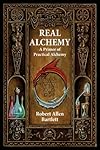
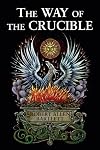
"The Way of the Crucible" is the successor to Robert Allen Bartlett's highly acclaimed book on "Real Alchemy". Bartlett is a practicing laboratory alchemist, and both these books are real treasure troves for those of us who are interested in or even pursuing this occult art.
In "The Way of the Crucible", Bartlett further delves into the fascinating world of practical alchemical work within the mineral realm, a vast topic already discussed to some length in "Real Alchemy", but explored in show more more detail here. The book opens with a sound teaching on the basic principles of the ancient Indian system of Ayurveda, which shares many commonalities with western alchemical philosophy. It is a fascinating subject by itself, but it raised the question why Bartlett has chosen to use a more Eastern approach rather than stay with the equivalent and perfectly satisfactory traditional western ideas and terminology. As alchemical nomenclature is already confusing enough and often highly redundant (often, various terms are used to describe the same thing), I found using the Sanskrit terminology of ayurveda on top of the usual western terms highly confusing.
Bartlett then proceeds to discuss three mineral pathways in extraordinary detail: the Acetate Path, the works with Antimony and works with Gold itself. Extensive quotations from well-known alchemical artists complement these descriptions. Paracelsus, Glauber, Basil Valentine, Sir Isaac Newton, Nicholas Flamel and his method of confecting the Philosopher's Stone: they and their wise words and recipes are all there! For a chemist such as myself, this book is a complete delight as Bartlett also discusses various chemical aspects of the Works, and even -in the Appendix- presents analytical chemical data on various products obtained from the acetate and antimony paths.
"The Way of the Crucible" is a highly inspiring and thoroughly researched book which is also quite a good read, provided one is conversant with general chemistry and alchemy. The book focusses predominantly on the practical side of things and less on the intimately connected spiritual significance of these Works to the operator. This -of course- is something we all should discover for ourselves, whether we follow Bartlett in reality or only 'in token'. I'd highly recommend this book to those who loved "Real Alchemy" and to those who are interested in practical alchemical work in general. show less
In "The Way of the Crucible", Bartlett further delves into the fascinating world of practical alchemical work within the mineral realm, a vast topic already discussed to some length in "Real Alchemy", but explored in show more more detail here. The book opens with a sound teaching on the basic principles of the ancient Indian system of Ayurveda, which shares many commonalities with western alchemical philosophy. It is a fascinating subject by itself, but it raised the question why Bartlett has chosen to use a more Eastern approach rather than stay with the equivalent and perfectly satisfactory traditional western ideas and terminology. As alchemical nomenclature is already confusing enough and often highly redundant (often, various terms are used to describe the same thing), I found using the Sanskrit terminology of ayurveda on top of the usual western terms highly confusing.
Bartlett then proceeds to discuss three mineral pathways in extraordinary detail: the Acetate Path, the works with Antimony and works with Gold itself. Extensive quotations from well-known alchemical artists complement these descriptions. Paracelsus, Glauber, Basil Valentine, Sir Isaac Newton, Nicholas Flamel and his method of confecting the Philosopher's Stone: they and their wise words and recipes are all there! For a chemist such as myself, this book is a complete delight as Bartlett also discusses various chemical aspects of the Works, and even -in the Appendix- presents analytical chemical data on various products obtained from the acetate and antimony paths.
"The Way of the Crucible" is a highly inspiring and thoroughly researched book which is also quite a good read, provided one is conversant with general chemistry and alchemy. The book focusses predominantly on the practical side of things and less on the intimately connected spiritual significance of these Works to the operator. This -of course- is something we all should discover for ourselves, whether we follow Bartlett in reality or only 'in token'. I'd highly recommend this book to those who loved "Real Alchemy" and to those who are interested in practical alchemical work in general. show less
Jan 23, 2011Dutch
You May Also Like


Statistics
- Works
- 4
- Members
- 257
- Popularity
- #89,244
- Rating
- 3.9
- Reviews
- 2
- ISBNs
- 11
- Languages
- 2