
F. H. Batacan
Author of Smaller and Smaller Circles
About the Author
Image credit: via Goodreads
Works by F. H. Batacan
Associated Works
Tagged
Common Knowledge
- Gender
- female
- Nationality
- Philippines
- Associated Place (for map)
- Philippines
Members
Reviews
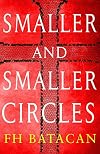
Felisa Batacan is a Filipino journalist, and in Smaller and Smaller Circles, she presents a crime novel that also a critique of system and structural corruption, poverty, and exploitation in the Phillipines. At its core, though, this is a thriller, and a very well-constructed one, well deserving of the many awards it received.
In Smaller and Smaller Circles, two Jesuit priests, Gus Saenz and his protege, Jerome Lucero, are trained as forensic scientist and psychologists, respectively, and show more run a small, non-profit laboratory that supplements the work of the Phillipines' National Bureau of Investigation - depicted as a corrupt, inept, body. A series of inexplicable, brutal murders targets the very poorest of Filipino society in Payatas, an infamous slum located amidst garbage dumps. The killer targets young boys who work as ragpickers, sifting through garbage dumps for food, reusable goods, and anything that can be sold. As young as nine and ten, they are sometimes the sole breadwinners for their families; in death, they have been killed, and their bodies mutilated. Saenz and Lucero, already in the Church's black books for investigating and objecting to the failure to stop a priest who had been abusing young boys, now incur further wrath from the government by insisting that the wrong man has been arrested for these murders. When one more death occurs, the investigative authorities are forced to admit they are right. Along with an ambitious, ruthless state attorney Ben Arcinas, and a unrelenting journalist, Joanna Bonifacio, they track down the murderer, and with it, the tragedy that resulted in these deaths.
This is a heavy book that deals with themes of child abuse, violence, deep poverty and exploitation. It shows, at once, the very best of religious charity, as well as the worst - and more than anything. Batacan has a remarkable touch for humanising even the smallest characters - for instance, a small set of vignettes tell us the story of the family of each of the victims, and each personal story is so vivid, and real that in a few paragraphs she has brought dozens of characters to life in a distinct, memorable, way. This is a book that was hard to read, but will stay with me - I could not put it down. show less
In Smaller and Smaller Circles, two Jesuit priests, Gus Saenz and his protege, Jerome Lucero, are trained as forensic scientist and psychologists, respectively, and show more run a small, non-profit laboratory that supplements the work of the Phillipines' National Bureau of Investigation - depicted as a corrupt, inept, body. A series of inexplicable, brutal murders targets the very poorest of Filipino society in Payatas, an infamous slum located amidst garbage dumps. The killer targets young boys who work as ragpickers, sifting through garbage dumps for food, reusable goods, and anything that can be sold. As young as nine and ten, they are sometimes the sole breadwinners for their families; in death, they have been killed, and their bodies mutilated. Saenz and Lucero, already in the Church's black books for investigating and objecting to the failure to stop a priest who had been abusing young boys, now incur further wrath from the government by insisting that the wrong man has been arrested for these murders. When one more death occurs, the investigative authorities are forced to admit they are right. Along with an ambitious, ruthless state attorney Ben Arcinas, and a unrelenting journalist, Joanna Bonifacio, they track down the murderer, and with it, the tragedy that resulted in these deaths.
This is a heavy book that deals with themes of child abuse, violence, deep poverty and exploitation. It shows, at once, the very best of religious charity, as well as the worst - and more than anything. Batacan has a remarkable touch for humanising even the smallest characters - for instance, a small set of vignettes tell us the story of the family of each of the victims, and each personal story is so vivid, and real that in a few paragraphs she has brought dozens of characters to life in a distinct, memorable, way. This is a book that was hard to read, but will stay with me - I could not put it down. show less
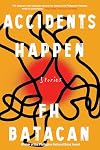
I'm really impressed by this story collection. Great writing. I mean, to create characters that are compelling and inspire investment in a short story - but also to develop plot and mystery in a small space in a satisfying way - and then the messaging, the commentary on the current world, the tension of understanding v. justice, the nature of superficial evil - wow.
Smaller and Smaller Circles has been called the first Filipino crime novel, and it was a pleasure to read-- mostly for its depiction of life in the most poverty-stricken area of Manila.
Batacan's novel moves slowly and deliberately in uncovering a killer, and the pace was something I expected from the title of the book itself. It takes time to move in smaller and smaller circles, time which Batacan uses to show the poverty of the area, the importance of the Catholic Church within it, and the show more all-pervasive government corruption. The plot really has little that's new, but I didn't mind because I enjoyed the setting and the characters so much.
Father Gus Saenz, a forensic anthropologist, and Father Jerome Lucero, a psychologist, have a father/son relationship that's often humorous and at times touching. Saenz runs his laboratory on a shoestring, and the shoestring is so old and frayed that most doing forensics in the U.S. would be completely horror-stricken. He is the conscience of Smaller and Smaller Circles. He has decided beliefs on what should be done with pedophiles in the Church, and his opinion of socialites' involvement with charities mirrors my own. Director Lastimosa seems to be the last honest man standing in government. One of the reasons why he reaches out to the two Jesuits is because he wants this investigation to be conducted honestly-- not swept under the rug as would normally be done with the deaths of children in such poor circumstances. Also demanding a role in the investigation is telejournalist Joanna Bonifacio. Too old for television and with a voice like a cross between Lauren Bacall and Bela Lugosi, Joanna has lots of experience in ferreting out deeply buried facts, and her presence is needed to lighten a cast of "good guys" which has strong overtones of religion and nobility.
Yes, F.H. Batacan may have written the first Filipino crime novel, but it's even more important as a portrait of a country, and that makes it very good reading indeed. show less
Batacan's novel moves slowly and deliberately in uncovering a killer, and the pace was something I expected from the title of the book itself. It takes time to move in smaller and smaller circles, time which Batacan uses to show the poverty of the area, the importance of the Catholic Church within it, and the show more all-pervasive government corruption. The plot really has little that's new, but I didn't mind because I enjoyed the setting and the characters so much.
Father Gus Saenz, a forensic anthropologist, and Father Jerome Lucero, a psychologist, have a father/son relationship that's often humorous and at times touching. Saenz runs his laboratory on a shoestring, and the shoestring is so old and frayed that most doing forensics in the U.S. would be completely horror-stricken. He is the conscience of Smaller and Smaller Circles. He has decided beliefs on what should be done with pedophiles in the Church, and his opinion of socialites' involvement with charities mirrors my own. Director Lastimosa seems to be the last honest man standing in government. One of the reasons why he reaches out to the two Jesuits is because he wants this investigation to be conducted honestly-- not swept under the rug as would normally be done with the deaths of children in such poor circumstances. Also demanding a role in the investigation is telejournalist Joanna Bonifacio. Too old for television and with a voice like a cross between Lauren Bacall and Bela Lugosi, Joanna has lots of experience in ferreting out deeply buried facts, and her presence is needed to lighten a cast of "good guys" which has strong overtones of religion and nobility.
Yes, F.H. Batacan may have written the first Filipino crime novel, but it's even more important as a portrait of a country, and that makes it very good reading indeed. show less
I don't think I've ever read a book set in the Philippines despite the fact that there are many residents of Winnipeg who have immigrated from the Philippines. Given the conditions detailed in this book it is understandable why so many leave the islands but I know that they still love their homeland.
It's 1997 and the body of a young man is found buried in a dump heap in Payatas. He was not just killed but also eviscerated and had his facial skin removed. Another body in similar condition was show more found in February. The Director of the National Bureau of Investigation (NBI) appeals to Father Gus Saenz, a forensic anthropologist, for assistance in tracking down the person doing thi.. In turn, he appeals to his former student, Father Jerome Lucero, a psychologist. However, the Director's decision to bring in outside help does not sit well with some other members of the NBI and Saenz and Lucero don't get all the assistance they could use. Two months later they are no closer to solving this series of crimes and another body appears every month. They finally determine that the killings take place on the first Saturday of every month so they go looking for clues in the Payatas region. Payatas is extremely poor and many young boys make money by picking through the rubbish for items to sell or even food that is not too badly decomposed. Saenz and Lucero learn that the parish church hands out free food on the first Saturday of every month so they wonder if that is how the killer is meeting his victims. Another possibility is the mobile health and dental clinic that is present every Saturday. At the very least the dental records could help identify the bodies since most of the boys had some kind of dental work done. Painstaking review of the clinic's dental records don't provide any matches but then a clerk realizes that some of the records may still be in the hands of the dentist who volunteers with the mobile clinic. And that allows the team to identify most of the victims which brings some relief to families who have been wondering what happened to their young boys. Just when it looks like the team might be getting close politics in the NBI almost derails the case. The Director has had a serious heart attack and his temporary replacement wants to get credit for solving the case so when a suspect is detained and confesses to the killings he goes public. Unfortunately for him, another killing takes place while his suspect is incarcerated and he ends up with egg on his face. So, it's back to Saenz and Lucero to solve the case as quickly as they can.
Batacan doesn't hesitate to condemn the Catholic church for covering up for abusive priests but, at the same time, she shows how hard other Catholic clergy work to make life better for the people in their care. I found that heartening. show less
It's 1997 and the body of a young man is found buried in a dump heap in Payatas. He was not just killed but also eviscerated and had his facial skin removed. Another body in similar condition was show more found in February. The Director of the National Bureau of Investigation (NBI) appeals to Father Gus Saenz, a forensic anthropologist, for assistance in tracking down the person doing thi.. In turn, he appeals to his former student, Father Jerome Lucero, a psychologist. However, the Director's decision to bring in outside help does not sit well with some other members of the NBI and Saenz and Lucero don't get all the assistance they could use. Two months later they are no closer to solving this series of crimes and another body appears every month. They finally determine that the killings take place on the first Saturday of every month so they go looking for clues in the Payatas region. Payatas is extremely poor and many young boys make money by picking through the rubbish for items to sell or even food that is not too badly decomposed. Saenz and Lucero learn that the parish church hands out free food on the first Saturday of every month so they wonder if that is how the killer is meeting his victims. Another possibility is the mobile health and dental clinic that is present every Saturday. At the very least the dental records could help identify the bodies since most of the boys had some kind of dental work done. Painstaking review of the clinic's dental records don't provide any matches but then a clerk realizes that some of the records may still be in the hands of the dentist who volunteers with the mobile clinic. And that allows the team to identify most of the victims which brings some relief to families who have been wondering what happened to their young boys. Just when it looks like the team might be getting close politics in the NBI almost derails the case. The Director has had a serious heart attack and his temporary replacement wants to get credit for solving the case so when a suspect is detained and confesses to the killings he goes public. Unfortunately for him, another killing takes place while his suspect is incarcerated and he ends up with egg on his face. So, it's back to Saenz and Lucero to solve the case as quickly as they can.
Batacan doesn't hesitate to condemn the Catholic church for covering up for abusive priests but, at the same time, she shows how hard other Catholic clergy work to make life better for the people in their care. I found that heartening. show less
Lists
BookTok Adult (1)
Awards

You May Also Like


Associated Authors
Statistics
- Works
- 2
- Also by
- 3
- Members
- 326
- Popularity
- #72,686
- Rating
- 3.7
- Reviews
- 21
- ISBNs
- 17