
James Oliver Curwood (1878–1927)
Author of The Bear
About the Author
James Oliver Curwood lived most of his life in Owosso, Michigan, where he was born on June 12, 1878. His first novel was The Courage of Captain Plum (1908) and he published one or two novels each year thereafter, until his death on August 13, 1927. Owosso residents honor his name to this day, and show more Curwood Castle (built in 1922) is the town's main tourist attraction. During the 1920s Curwood became one of America's best selling and most highly paid authors. This was the decade of his lasting classics The Valley of Silent Men (1920) and The Flaming Forest (1921). He and his wife Ethel were outdoors fanatics and active conservationists show less
Series
Works by James Oliver Curwood
Ancient Highway 2 copies
North-Country Omnibus 1 copy
The Danger Trail Annotated 1 copy
Dolina Ludzi Milcz♯cych 1 copy
Rapide Éclair 1 copy
Faulkner of the Inland Seas 1 copy
Bari Chien Loup 1 copy
Le grizzly 1 copy
Łowcy Złota 1 copy
Un Gentleman Courageux 1 copy
La Vallée du Silence 1 copy
Nomades du Nord 1 copy
EL BOSQUE EN LLAMAS 1 copy
Kazan Perro Lobo 1 copy
Kalliovuorten kuningas 1 copy
Ulvejegerne 1 copy
Łowcy Przygód 1 copy
Caliu sota la neu. 1 copy
Las llanuras de Abraham 1 copy
The Great Lakes: The Vessels That Plough Them, Their Owners, Their Sailors, And Their Cargoes (1909) (2010) 1 copy
Aljaškan 1 copy
Alaska 1 copy
Kalnu karalis ; Kazans 1 copy
Associated Works
Reader's Digest Condensed Books 1990 v04: Cold Harbor / Circle of Pearls / The Bear / Finders Keepers (1990) — Contributor — 49 copies, 1 review
60 Westerns: Cowboy Adventures, Yukon & Oregon Trail Tales, Famous Outlaws, Gold Rush Adventures & Much More (2017) 33 copies
Readers Digest Condensed Books: A Dangerous Fortune • The Client • The Estuary Pilgrim • The Bear (1994) 16 copies
Het Beste Boek 163: Coma / Iris / veearts in Rodenburg / De verre vreemde / De zoon van Kazan 4 copies, 1 review
Reader's Digest Auswahlbücher 173 - Hurrikan des Grauens. Der Bär. Spenderherz. Warten auf den Regen (1990) 4 copies
Het Beste Boek 152: Dans des doods / Zegeningen / De vrouwen van Willem van Oranje / Thor de beer (1992) 3 copies, 1 review
Reader's Digest Auswahlbücher 197 - Der Zeuge. Barie, kleiner Bruder des Wolfes. Ultimatum. Liebe auf den zweiten Blick (1994) 3 copies
Reader's Digest Auswahlbücher, Bestseller-Sonderband - Todesangst / Der Bär / Das späte Geständnis (1994) — Author — 3 copies
Walt Disney's: Tonka / Kidnapped / Nomads of the North — Contributor — 1 copy
The Lady of Blossholme / The Country Beyond — Author, some editions — 1 copy
Tagged
Common Knowledge
- Canonical name
- Curwood, James Oliver
- Other names
- Curwood, Jim
- Birthdate
- 1878-06-12
- Date of death
- 1927-08-13
- Gender
- male
- Education
- University of Michigan
- Occupations
- reporter
novelist
explorer of Canadian wilderness
Member/Chairman Michigan Conservation Commission, appointed 1927 - Awards and honors
- Mt. Curwood, L'Anse Michigan; Curwood Park, L'Anse Michigan, Curwood Festival, Owosso, USA annual, Curwood castle, residence Owosso MI, USA on National Registry of Historic Places.
- Short biography
- He hoped to live to 100 through an exercise regimen and a diet that eliminated meat, coffee, tea, and liquor, but unfortunately died at age 49. Over one hundred and eighty movies have been based on or inspired by Curwood's novels and short stories (Wikipedia).
- Cause of death
- infection (following pucture wound while fishing in Florida)
sepsis - Nationality
- USA
- Birthplace
- Owosso, Michigan, USA
- Places of residence
- Ann Arbor, Michigan, USA
Owosso, Michigan, USA - Place of death
- Owosso, Michigan, USA
- Burial location
- Oak Hill Cemetery, Owosso, Michigan, USA
- Associated Place (for map)
- Owosso, Michigan, USA
Members
Reviews
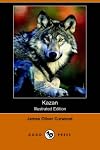
Passing through this book very early on is one character, Paul Weyman, a zoologist who loves wild animals purely for their own sake: he hates the steel gin-traps, bait poisoned with strychnine, the whole paraphernalia of cruelty used routinely in this setting—and, in fact, never even carries a gun. He plays no important part in the story and is there, I’m sure, to give us a glimpse of the author himself. Even back in 1914 when Kazan was being written, there were people with a more show more enlightened attitude toward our fellow creatures and James Oliver Curwood, a hunter as a young man, had become one of them.
Kazan is three parts husky and one part wolf, most of his four years having been spent as lead dog in a sled-team during the pioneering days of the Canadian northwest. Although a huge and powerful animal, it’s been an exceptionally savage existence and his body is scarred from nose to tail by the whip and the club, his eyes bloodshot from the brutal winters. One fateful day, though, Kazan kills a man and takes off into the forest; what he’s actually done is save a woman from attack, possibly even saved her life, but he’s not to know that—all this wolf-dog knows is that he’s ripped a human throat out and must run. And so he exchanges one harsh life for another, but at least in this new one he is free.
I found the opening a bit confusing, and clumsy—but after that simply could not put this book down as Kazan contended, one after another, with everything the Yukon and its harsh landscapes and climate, its other wild animals and occasional humans, could throw at him. The truth of it is that Curwood doesn’t get into his stride until he finally clears the last human being off its pages and leaves us with the wolf-dog alone in his wilderness. Once he has, though, it’s an effortless read: no elaborate plot or subtle characters, just a series of challenges, tragedies and adventures. If you have any kind of soft spot for dogs and wolves at all, it’s a rollercoaster.
There are inevitable comparisons with Jack London’s The Call of the Wild and White Fang, some questioning Curwood’s portrayal of Kazan’s inner life as unrealistic, too similar to our own. Unusually for his time, he came to believe we are not the only animal on this planet capable of rational thought and Kazan reads to me very much like his response to The Call of the Wild, which is more to do with instincts, with drives. He uses his gin-trap-hating zoologist to make this clear too: Weyman is himself writing a work to be called The Reasoning of the Wild.
Either way, for me Kazan’s setting is the more memorable of the two, with its lynx, beaver dams and snowshoe hares, its vast open spaces, its winters. There is a sequel, but I doubt I’ll read it—I don’t want to risk spoiling Kazan himself; I want to leave him, and Gray Wolf too, in my mind exactly the way they are. show less
Kazan is three parts husky and one part wolf, most of his four years having been spent as lead dog in a sled-team during the pioneering days of the Canadian northwest. Although a huge and powerful animal, it’s been an exceptionally savage existence and his body is scarred from nose to tail by the whip and the club, his eyes bloodshot from the brutal winters. One fateful day, though, Kazan kills a man and takes off into the forest; what he’s actually done is save a woman from attack, possibly even saved her life, but he’s not to know that—all this wolf-dog knows is that he’s ripped a human throat out and must run. And so he exchanges one harsh life for another, but at least in this new one he is free.
I found the opening a bit confusing, and clumsy—but after that simply could not put this book down as Kazan contended, one after another, with everything the Yukon and its harsh landscapes and climate, its other wild animals and occasional humans, could throw at him. The truth of it is that Curwood doesn’t get into his stride until he finally clears the last human being off its pages and leaves us with the wolf-dog alone in his wilderness. Once he has, though, it’s an effortless read: no elaborate plot or subtle characters, just a series of challenges, tragedies and adventures. If you have any kind of soft spot for dogs and wolves at all, it’s a rollercoaster.
There are inevitable comparisons with Jack London’s The Call of the Wild and White Fang, some questioning Curwood’s portrayal of Kazan’s inner life as unrealistic, too similar to our own. Unusually for his time, he came to believe we are not the only animal on this planet capable of rational thought and Kazan reads to me very much like his response to The Call of the Wild, which is more to do with instincts, with drives. He uses his gin-trap-hating zoologist to make this clear too: Weyman is himself writing a work to be called The Reasoning of the Wild.
Either way, for me Kazan’s setting is the more memorable of the two, with its lynx, beaver dams and snowshoe hares, its vast open spaces, its winters. There is a sequel, but I doubt I’ll read it—I don’t want to risk spoiling Kazan himself; I want to leave him, and Gray Wolf too, in my mind exactly the way they are. show less

A lovely read about a complicated passage in history, this old chestnut is worth picking up. I read it because I'm going on vacation in Quebec, where it's set. But it's a great story for anyone -- at times, heartwarming and even laugh-out-loud funny; at other times, horrifying and sad. Curwood produced a well researched glimpse of colonial North America that many of us have not contemplated. Prepare for a few shockers and some food for thought. I had so much fun reading it that I'm already show more knee-deep in its prequel, The Black Hunter. show less
"The Alaskan" by James Oliver Curwood takes readers on an adventurous journey through the breathtaking wilderness of Alaska, capturing the essence of the untamed frontier. Set against a backdrop of pristine landscapes and rugged beauty, this novel tells a tale of survival, love, and the clash between man and nature.
Curwood's descriptive prose immerses readers in the wild and unforgiving Alaskan terrain. From snow-capped mountains and icy rivers to dense forests and vast expanses of tundra, show more the author paints a vivid picture of the natural wonders that both challenge and captivate the characters. The evocative descriptions create a sense of awe and wonder, transporting readers to a world untouched by civilization.
The protagonist of the story is an intrepid adventurer who finds himself stranded in the Alaskan wilderness. The trials he faces, including encounters with wild animals and harsh weather conditions, demonstrate the unforgiving nature of the frontier and the resilience required to survive. Curwood's portrayal of the protagonist's tenacity and resourcefulness adds depth to his character, making him relatable and inspiring.
The novel also delves into the complexities of human relationships in a harsh and isolated environment. The interactions between the protagonist and the other characters, including a mysterious woman who becomes his companion, provide glimpses of both tenderness and tension amidst the hardships. These relationships add a layer of emotional depth to the story, exploring themes of love, loyalty, and the innate human need for connection.
While "The Alaskan" captures the spirit of adventure and paints a captivating portrait of Alaska, it occasionally falls into predictable plot tropes and romantic clichés. The narrative follows a formulaic structure, and the development of certain characters and storylines lacks nuance. The book's pacing also suffers at times, with stretches of slow-moving plot that may test the patience of readers seeking constant action and excitement.
Additionally, the novel reflects the attitudes and perspectives of its time of publication, which may feel dated and at odds with contemporary sensibilities. Some aspects of the portrayal of indigenous people and gender dynamics may be viewed as problematic or stereotypical by modern standards. It is important to approach the book with an understanding of its historical context.
In conclusion, "The Alaskan" by James Oliver Curwood is a tale of adventure and survival set against the backdrop of the magnificent Alaskan wilderness. While the novel captures the grandeur and allure of the frontier, it falls into certain predictable patterns and occasionally lacks depth in character development. Despite its flaws, the book is an enjoyable read for those who appreciate stories of rugged landscapes, exploration, and the resilience of the human spirit in the face of nature's challenges. It serves as a window into a bygone era of adventure literature, where the untamed frontier beckoned with both danger and allure. show less
Curwood's descriptive prose immerses readers in the wild and unforgiving Alaskan terrain. From snow-capped mountains and icy rivers to dense forests and vast expanses of tundra, show more the author paints a vivid picture of the natural wonders that both challenge and captivate the characters. The evocative descriptions create a sense of awe and wonder, transporting readers to a world untouched by civilization.
The protagonist of the story is an intrepid adventurer who finds himself stranded in the Alaskan wilderness. The trials he faces, including encounters with wild animals and harsh weather conditions, demonstrate the unforgiving nature of the frontier and the resilience required to survive. Curwood's portrayal of the protagonist's tenacity and resourcefulness adds depth to his character, making him relatable and inspiring.
The novel also delves into the complexities of human relationships in a harsh and isolated environment. The interactions between the protagonist and the other characters, including a mysterious woman who becomes his companion, provide glimpses of both tenderness and tension amidst the hardships. These relationships add a layer of emotional depth to the story, exploring themes of love, loyalty, and the innate human need for connection.
While "The Alaskan" captures the spirit of adventure and paints a captivating portrait of Alaska, it occasionally falls into predictable plot tropes and romantic clichés. The narrative follows a formulaic structure, and the development of certain characters and storylines lacks nuance. The book's pacing also suffers at times, with stretches of slow-moving plot that may test the patience of readers seeking constant action and excitement.
Additionally, the novel reflects the attitudes and perspectives of its time of publication, which may feel dated and at odds with contemporary sensibilities. Some aspects of the portrayal of indigenous people and gender dynamics may be viewed as problematic or stereotypical by modern standards. It is important to approach the book with an understanding of its historical context.
In conclusion, "The Alaskan" by James Oliver Curwood is a tale of adventure and survival set against the backdrop of the magnificent Alaskan wilderness. While the novel captures the grandeur and allure of the frontier, it falls into certain predictable patterns and occasionally lacks depth in character development. Despite its flaws, the book is an enjoyable read for those who appreciate stories of rugged landscapes, exploration, and the resilience of the human spirit in the face of nature's challenges. It serves as a window into a bygone era of adventure literature, where the untamed frontier beckoned with both danger and allure. show less

Oh.my.God! This is silly, and also appalling. What ever was I thinking? I blame it all on my spouse's grandfather, who introduced me to James Oliver Curwood some 49 years ago, when we had just begun courting.
So, Jim Kent, a Mountie, lies in bed. He thinks he's dying, so confesses to having murdered someone or other so as to get the guy the Mounties had fingered, Sandy McGregor, set free. An amazingly beautiful young woman visits Kent, briefly, and he is immediately smitten by her long raven show more tresses and her violet-flamed eyes. Also her tiny feet.
Well, it turns out Kent was lying and he didn't kill someone or other. But his testimony convicts him. But...the ravishing young woman, Marette Radisson, comes to the jail and frees him. They flee up the river into the north. They are separated when their boat crashes on the rapids, and each presumes the other is done for. But each persists on to the "Valley of the Silent Men" so as to commune with the soul of the "lost" one. And so forth.
The sexism in this is appalling. Yeah, I know it was written in 1920, but even for that time it seems appalling to me. The silly, self-indulgent romantic fantasies of the main character are appalling. But, back in the dark ages, I was attracted to the works of James Oliver Curwood, chuckling at the rampant sexism and self-indulgent romantic fantasies. I'm appalled at what I once was. show less
So, Jim Kent, a Mountie, lies in bed. He thinks he's dying, so confesses to having murdered someone or other so as to get the guy the Mounties had fingered, Sandy McGregor, set free. An amazingly beautiful young woman visits Kent, briefly, and he is immediately smitten by her long raven show more tresses and her violet-flamed eyes. Also her tiny feet.
Well, it turns out Kent was lying and he didn't kill someone or other. But his testimony convicts him. But...the ravishing young woman, Marette Radisson, comes to the jail and frees him. They flee up the river into the north. They are separated when their boat crashes on the rapids, and each presumes the other is done for. But each persists on to the "Valley of the Silent Men" so as to commune with the soul of the "lost" one. And so forth.
The sexism in this is appalling. Yeah, I know it was written in 1920, but even for that time it seems appalling to me. The silly, self-indulgent romantic fantasies of the main character are appalling. But, back in the dark ages, I was attracted to the works of James Oliver Curwood, chuckling at the rampant sexism and self-indulgent romantic fantasies. I'm appalled at what I once was. show less
Lists
Awards


You May Also Like


Associated Authors
Statistics
- Works
- 112
- Also by
- 22
- Members
- 2,209
- Popularity
- #11,610
- Rating
- 3.6
- Reviews
- 49
- ISBNs
- 859
- Languages
- 14
- Favorited
- 7