
George Pérez (1954–2022)
Author of Crisis on Infinite Earths
About the Author
Image credit: http://marvel.wikia.com/George_P%C3%A9rez
Series
Works by George Pérez
Batman: A Death in the Family [with A Lonely Place of Dying] (2011) — Illustrator — 519 copies, 5 reviews
Teen Titans/Outsiders: The Death and Return of Donna Troy (2006) — Illustrator — 106 copies, 5 reviews
Wonder Woman by George Pérez Omnibus (2015) — Inker (Annual 1 "Flight of the Icarus"), Artist (Annual 1 "Private Lives"); Co-plotter/Penciller (1-2), Plotter/Penciller (3-16), Writer/Penciller (17-24), Writer (Annual 1) — 86 copies, 3 reviews
DC Comics Classics Library: Justice League of America by George Pérez, Volume One (2009) — Illustrator — 17 copies
The Infinity Gauntlet, Vol. 1 #6: The Final Confrontation (1991) — Illustrator — 11 copies, 1 review
The Infinity Gauntlet, Vol. 1 #4: Cosmic Battle on the Edge of the Universe! (1991) — Illustrator — 10 copies, 1 review
DC Comics Classics Library: Justice League of America by George Pérez, Volume Two (2010) — Illustrator — 8 copies
Crisis on Infinite Earths #11 (of 12) — Illustrator — 7 copies
Crisis on Infinite Earths #06 (of 12) — Illustrator — 6 copies
Crisis on Infinite Earths #05 (of 12) — Illustrator — 6 copies
Crisis on Infinite Earths #12 (of 12) — Illustrator — 5 copies
Wonder Woman, Vol. 2 #13 5 copies
Superman, Vol. 3 # 2 5 copies
Wonder Woman, Vol. 2 #21 5 copies
Avengers (Vol.3) #4 — Illustrator — 5 copies
Wonder Woman, Vol. 2 #15 4 copies
Wonder Woman, Vol. 2 #5 3 copies
Wonder Woman, Vol. 2 #18 3 copies
Wonder Woman, Vol. 2 #19 3 copies
Avengers (Vol.3) #34 — Illustrator — 3 copies
Secrets of the House of M #1 — Illustrator — 3 copies
Wonder Woman, Vol. 2 #23 3 copies
Wonder Woman, Vol. 2 #14 3 copies
Lendas do Universo DC: Os Novos Titãs - Volume 3 — Illustrator — 3 copies
Wonder Woman, Vol. 2 #10 3 copies
Wonder Woman, Vol. 2 #24 2 copies
Tales of the New Teen Titans #2 (of 4) - Raven — Illustrator — 2 copies
Marvel Fanfare #13 — Illustrator — 2 copies
Viúva-Negra: Teia De Intrigas (Marvel Vintage) — Illustrator — 2 copies
Marvel Fanfare #12 — Illustrator — 2 copies
The Avengers, Vol. 1 #200: The Child Is Father To...? — Illustrator — 2 copies
Wonder Woman (1987-2006) #6 2 copies
Wonder Woman, Vol. 2 #6 2 copies
Wonder Woman, Vol. 2 #2 2 copies
Wonder Woman, Vol. 2 #3 2 copies
Wonder Woman, Vol. 2 #4 2 copies
Wonder Woman, Vol. 2 #7 2 copies
Wonder Woman, Vol. 2 #8 2 copies
Grandes autores de Wonder Woman: George Pérez La Mujer Maravilla (Spanish Edition) (2017) 2 copies
Wonder Woman, Vol. 2 #60 2 copies
Wonder Woman (1987-2006) #61 1 copy
Wonder Woman (1987-2006) #27 1 copy
Wonder Woman (1987-2006) #29 1 copy
Wonder Woman (1987-2006) #30 1 copy
Wonder Woman (1987-2006) #31 1 copy
Wonder Woman (1987-2006) #32 1 copy
Wonder Woman (1987-2006) #34 1 copy
Fantastic Four [1961] #178 - Call My Killer the Brute — Illustrator — 1 copy
Wonder Woman (1987-2006) #35 1 copy
Wonder Woman (1987-2006) #25 1 copy
Wonder Woman #17 1 copy
Colección Novelas Gráficas - Especial Sagas DC, Libro 03: La Guerra de los Dioses / Armagedón 2001 (2017) 1 copy
Wonder Woman, Vol. 2 #58 1 copy
Wonder Woman, Vol. 2 #59 1 copy
Wonder Woman, Vol. 2 #61 1 copy
Superman Classic n. 34 1 copy
Werewolf By Night: Panic By Moonlight Part 2: Madness Under A Mid-summer Moon — Illustrator — 1 copy
Marvel Two-in-One [1974] #64 - The Thing and Stingray — Illustrator — 1 copy
Superman Classic n. 32 1 copy
Superman Classic n. 33 1 copy
War of the Gods (1991) #2 1 copy
Hechos de sangre 1 copy
Crimson Plague #1 (of 6) 1 copy
Wonder Woman #23 1 copy
Wonder Woman #18 1 copy
Wonder Woman #19 1 copy
Wonder Woman #20 1 copy
Wonder Woman #22 1 copy
Wonder Woman Annual #1 1 copy
Wonder Woman #24 1 copy
Superman #2 1 copy
Crisis en Tierras Infinitas 1 copy
Hopeasurffari ja Teräsmies 1 copy
Crisi sulle Terre infinite, Vol. 1 — Illustrator — 1 copy
Superman #3 1 copy
Superman #6 1 copy
Crimson Plague #s 1-2 1 copy
Wonder Woman (1987-2006) #9 1 copy
Wonder Woman (1987-2006) #48 1 copy
Wonder Woman (1987-2006) #14 1 copy
Wonder Woman (1987-2006) #13 1 copy
Wonder Woman (1987-2006) #12 1 copy
Wonder Woman (1987-2006) #11 1 copy
Wonder Woman (1987-2006) #10 1 copy
Wonder Woman (1987-2006) #8 1 copy
The New Titans, Vol. 2 #55 1 copy
Wonder Woman (1987-2006) #7 1 copy
Wonder Woman (1987-2006) #5 1 copy
Wonder Woman (1987-2006) #4 1 copy
Wonder Woman (1987-2006) #3 1 copy
Wonder Woman (1987-2006) #2 1 copy
Spider-Man Team-Up #4 1 copy
Associated Works
She-Hulk by Rainbow Rowell Vol. 3: Girl Can't Help It (2023) — Illustrator, some editions — 46 copies, 2 reviews
Marvel Masterworks, Volume 037: The Uncanny X-Men Volume 4 [#122-131 + Annual #3] (2004) — Illustrator — 46 copies, 1 review
Heroes: The World's Greatest Super Hero Creators Honor The World's Greatest Heroes 9-11-2001 (2001) — Illustrator — 25 copies, 1 review
Superman in Action Comics: Volume 2, Featuring the Complete Covers of the Second 25 Years (Tiny Folios) (1994) — Illustrator — 21 copies
Marvel Masterworks, Volume 296: Marvel Two-in-One Volume 5 [#47-60 + Annual #4] (2020) — Illustrator — 12 copies
The Avengers, Vol. 1 #185 — Cover artist — 3 copies
The Avengers, Vol. 1 #183 — Cover artist — 3 copies
The Avengers, Vol. 1 #181 — Cover artist — 3 copies
DC Sampler (1983—1984) #2 — Illustrator — 2 copies
The Avengers, Vol. 1 #184 — Cover artist — 2 copies
Occupation Force — Illustrator — 1 copy
The Return of Donna Troy — Cover artist — 1 copy
Ghost Rider, Vol. 2 #26 — Cover artist — 1 copy
Deadly Hands of Kung Fu Vol. 1 #7 — Illustrator — 1 copy
Tagged
Common Knowledge
- Canonical name
- Pérez, George
- Legal name
- Pérez, George
- Other names
- Perez, George
- Birthdate
- 1954-06-09
- Date of death
- 2022-05-06
- Gender
- male
- Occupations
- comic book illustrator
- Awards and honors
- Eagle Award (1979 ∙ 1980 ∙ 1986 ∙ 2000)
Inkpot Award (1983)
Jack Kirby Award (1985 ∙ 1986)
Squiddy Award (Favorite Artist ∙ 1992)
Hero Initiative Lifetime Achievement Award (2006) - Cause of death
- cancer (pancreatic)
- Nationality
- USA
- Birthplace
- New York, New York, USA
- Place of death
- Sanford, Florida, USA
- Associated Place (for map)
- USA
Members
Reviews
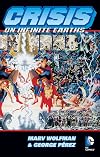
"Explain that to me, Harbinger! What happened to my life? I am flesh and blood... I exist... yet I don't exist."
This is a wild read. Originally intended as a sort of business move for DC Comics, who had by that time created so many different versions of characters on so many different Earths (for example, Earth 1, Earth 2, Earth 3, Earth X, Earth Prime, etc) that their DC Universe had become unwieldy, this comic was supposed to tidy things up and reset everything into one, congruent universe show more setting. I am not well versed in comics, however, so the effect of reading this book was kind of amazing. I encountered pages and pages of characters I just had to assume meant something to other people. After 100 or so pages of this, the effect was to totally destabilize all notions of centralized, unique "superheros."
The existence of this heterogeneity of superheros, some with other worldly powers, some without even that distinction, causes the reader to follow their collective abstraction, since none have the page space to truly stand out. You follow "superhero-ness" as it fights against the evil... wait for it... Anti-monitor. Awesome name, mostly because it drives an entire dialectical plot towards (strangely) Hegelian concepts.
The Monitor is a character who has functioned throughout the ages as a sort of uber-voyeur/arms dealer. He watches every superhero on every planet and collects data on them (and I gather at one point he was selling this data to villains for cash). One could very easily interpret this character as a stand in for the avid comic book reader, only taller. In this particular story, the main baddy is the Monitor's twin brother, established at the beginning of the Universe's creation yet set in an anti-matter sphere. He is the Anti-monitor and he wants to destroy everything. Insert dramatic music and postmodern irony here.
The binary relationships are set and blurred many times over in this novel: superheros decentralize into the collective, super villains fight to retain their Hegelian dialectical relationships with superhero counterparts, thus calling into question their defining motives, the worldly threat (the anti-monitor's desire to condense all reality into a single anti-matter universe, his own) not only ties indirectly to the comic book reader's identity but underscores a weird sort of "negation of the negation."
In short, 1) all concepts in the DC Universe (characters, settings, origins, etc) are shown to have an opposite and opposing side, 2) as the balance between these sides shifts gradually, then suddenly, gradual changes lead to major turning points, which tumble and shift the nature of reality, and 3) all of these turning points develop as a "negation of the negation" and the DC Universe as well as all its characters are changed forever. In this case, consolidated into a unified universe with separate and unique parts (i.e. only one Earth) among other ways.
I definitely do not recommend this to just anyone. You have to either totally be into the world of comics already (in which case, my reading of it will be as bizarre to you as this novel was for me) or willing to really brave out some strange ideas with a huge collection of characters whom you never even knew existed. I liked reading this but only because I loved how campy it was and I found it intellectually engaging (in my own way). show less
This is a wild read. Originally intended as a sort of business move for DC Comics, who had by that time created so many different versions of characters on so many different Earths (for example, Earth 1, Earth 2, Earth 3, Earth X, Earth Prime, etc) that their DC Universe had become unwieldy, this comic was supposed to tidy things up and reset everything into one, congruent universe show more setting. I am not well versed in comics, however, so the effect of reading this book was kind of amazing. I encountered pages and pages of characters I just had to assume meant something to other people. After 100 or so pages of this, the effect was to totally destabilize all notions of centralized, unique "superheros."
The existence of this heterogeneity of superheros, some with other worldly powers, some without even that distinction, causes the reader to follow their collective abstraction, since none have the page space to truly stand out. You follow "superhero-ness" as it fights against the evil... wait for it... Anti-monitor. Awesome name, mostly because it drives an entire dialectical plot towards (strangely) Hegelian concepts.
The Monitor is a character who has functioned throughout the ages as a sort of uber-voyeur/arms dealer. He watches every superhero on every planet and collects data on them (and I gather at one point he was selling this data to villains for cash). One could very easily interpret this character as a stand in for the avid comic book reader, only taller. In this particular story, the main baddy is the Monitor's twin brother, established at the beginning of the Universe's creation yet set in an anti-matter sphere. He is the Anti-monitor and he wants to destroy everything. Insert dramatic music and postmodern irony here.
The binary relationships are set and blurred many times over in this novel: superheros decentralize into the collective, super villains fight to retain their Hegelian dialectical relationships with superhero counterparts, thus calling into question their defining motives, the worldly threat (the anti-monitor's desire to condense all reality into a single anti-matter universe, his own) not only ties indirectly to the comic book reader's identity but underscores a weird sort of "negation of the negation."
In short, 1) all concepts in the DC Universe (characters, settings, origins, etc) are shown to have an opposite and opposing side, 2) as the balance between these sides shifts gradually, then suddenly, gradual changes lead to major turning points, which tumble and shift the nature of reality, and 3) all of these turning points develop as a "negation of the negation" and the DC Universe as well as all its characters are changed forever. In this case, consolidated into a unified universe with separate and unique parts (i.e. only one Earth) among other ways.
I definitely do not recommend this to just anyone. You have to either totally be into the world of comics already (in which case, my reading of it will be as bizarre to you as this novel was for me) or willing to really brave out some strange ideas with a huge collection of characters whom you never even knew existed. I liked reading this but only because I loved how campy it was and I found it intellectually engaging (in my own way). show less
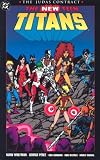
It was cool to see Dick’s debut as Nightwing, but that was actually kinda infuriatingly-written? Like, he decides he needs to sort out his whole superhero identity shit before he can go rescue his friends who are in mortal danger? Just… what the heck, Dick???
There’s also just… a lot in Terra’s characterization that I didn’t like, especially towards the end. Although it's not always done perfectly, the way many modern versions of this story explicitly show that Slade was grooming show more her makes a lot more sense than going out of your way to say that she was evil the whole time and deserves no sympathy. People can do bad things and still be victims. You don’t need to be an angel to deserve the safety of not being preyed upon by gross older men. show less
There’s also just… a lot in Terra’s characterization that I didn’t like, especially towards the end. Although it's not always done perfectly, the way many modern versions of this story explicitly show that Slade was grooming show more her makes a lot more sense than going out of your way to say that she was evil the whole time and deserves no sympathy. People can do bad things and still be victims. You don’t need to be an angel to deserve the safety of not being preyed upon by gross older men. show less

Access a version of the below that includes illustrations on my blog.
DC has begun a new reprint series called "DC Finest." Despite the name—which would seem to indicate some kind of selectivity—its aim to comprehensively reprint everything DC has ever published in various lines. One of those is the "Events" line, which reprints not just the headline event stories, but integrates them with their myriad tie-ins. Crisis on Infinite Earths has of course been reprinted many times, but never show more with all of the "Special Crisis Cross-overs." The core series is twelve issues long, but estimates are that its DC Finest reprinting will run four 500-page volumes! I've read Crisis a couple times before, so here I won't focus on the core story, but the various included stories.
A lot of the included issues are of Roy Thomas's Earth-Two titles: here we get issues #50-52 of the WWII-set All-Star Squadron and issues #18-19 of the present-day Infinity, Inc. (There's also Justice League of America #244, which is the second half of the story begun in Infinc #19, the last-ever JLA/JSA team-up.) Both of these titles were significantly affected by the Crisis and did a lot tying into it, so their inclusion here makes sense... though I know from past experience I will definitely be bored of A-SS's Shanghaied into Hyperspace! story by the end of it. Overall, though, no complaints; these are exactly the kind of stories that ought to be included in a book like this.
We also get a bunch of one-off stories from various titles: Fury of Firestorm #41, Green Lantern #194, and Wonder Woman #327. The Firestorm one is fine, it basically just shows how Firestorm is recruited by Harbinger in more detail, which isn't particularly interesting but I guess the kind of thing you'd expect a Crisis Cross-over to do. The Green Lantern story is kind of complicated, as it's clearly very enmeshed in the ongoing stories of Hal Jordan, John Stewart, and Guy Gardner, but I'm always happy to see some Joe Staton artwork, and I'm curious to see how it continues in later volumes. (There's a funny bit of continuity massaging; as John thinks to himself that he usually doesn't wear a mask anymore but he's going to put one on before journeying to the Monitor's satellite, presumably because George Pérez drew him with a mask.) The Wonder Woman story is clearly the wrapup of an ongoing story, and therefore pretty confusing on its own.
There are a couple inclusions I didn't get. There weren't any Crisis ties in Detective Comics #555 that I detected, nor in The Losers Special, even though that does have the Crisis Cross-over branding on the cover.
The real highlight of the book, though, are the Batman issues: we get a continuous six-part Batman story from Batman #389-91 and Detective #556-58. The Crisis connection is technically slight, in that there's just the red skies from the Crisis... but man these stories (from the team of Doug Moench and Tom Mandrake, somehow pumping out an issue every two weeks) are great! Jason Todd is Robin, but this is before Jim Starlin turned him into an obnoxious asshole; here he's a kid trying to find his way in rough world, bereft of strong parental figures to give him guidance. Like some of the other stories I've read from this era, we're clearly at a transitional point between the Silver Age aesthetic and the Frank Miller one; unlike those other stories, I thought this really worked. It's high melodrama, but it doesn't take itself too seriously; it's dark without being grim; it's not afraid to be goofy but we get solid psychological depth for all of the principal characters. Sure, the only Crisis element is that the skies are red... but it's so beautifully used, creating a funereal atmosphere. These stories are also included in a Batman "DC Finest," Red Skies, and after reading this, I'm sorely tempted to pick up that, because I'd love to see more Moench and Mandrake on Batman.
My only quibble with this volume is the sequencing doesn't always make sense; Detective #558 ends with Batman hearing Joker has escaped, leading into Crisis #2... but for some reason the story is placed after Crisis #2. Similarly, I think the Wonder Woman issue is also in the wrong spot. On the whole, this isn't high art, or often, even medium art, but if the point of superhero comics is their sheer interconnectedness, the creation of a massive tapestry of events that becomes a pleasure in itself, then this book captures that exceedingly well. I hope that Part Two is solicited sooner rather than later! show less
DC has begun a new reprint series called "DC Finest." Despite the name—which would seem to indicate some kind of selectivity—its aim to comprehensively reprint everything DC has ever published in various lines. One of those is the "Events" line, which reprints not just the headline event stories, but integrates them with their myriad tie-ins. Crisis on Infinite Earths has of course been reprinted many times, but never show more with all of the "Special Crisis Cross-overs." The core series is twelve issues long, but estimates are that its DC Finest reprinting will run four 500-page volumes! I've read Crisis a couple times before, so here I won't focus on the core story, but the various included stories.
A lot of the included issues are of Roy Thomas's Earth-Two titles: here we get issues #50-52 of the WWII-set All-Star Squadron and issues #18-19 of the present-day Infinity, Inc. (There's also Justice League of America #244, which is the second half of the story begun in Infinc #19, the last-ever JLA/JSA team-up.) Both of these titles were significantly affected by the Crisis and did a lot tying into it, so their inclusion here makes sense... though I know from past experience I will definitely be bored of A-SS's Shanghaied into Hyperspace! story by the end of it. Overall, though, no complaints; these are exactly the kind of stories that ought to be included in a book like this.
We also get a bunch of one-off stories from various titles: Fury of Firestorm #41, Green Lantern #194, and Wonder Woman #327. The Firestorm one is fine, it basically just shows how Firestorm is recruited by Harbinger in more detail, which isn't particularly interesting but I guess the kind of thing you'd expect a Crisis Cross-over to do. The Green Lantern story is kind of complicated, as it's clearly very enmeshed in the ongoing stories of Hal Jordan, John Stewart, and Guy Gardner, but I'm always happy to see some Joe Staton artwork, and I'm curious to see how it continues in later volumes. (There's a funny bit of continuity massaging; as John thinks to himself that he usually doesn't wear a mask anymore but he's going to put one on before journeying to the Monitor's satellite, presumably because George Pérez drew him with a mask.) The Wonder Woman story is clearly the wrapup of an ongoing story, and therefore pretty confusing on its own.
There are a couple inclusions I didn't get. There weren't any Crisis ties in Detective Comics #555 that I detected, nor in The Losers Special, even though that does have the Crisis Cross-over branding on the cover.
The real highlight of the book, though, are the Batman issues: we get a continuous six-part Batman story from Batman #389-91 and Detective #556-58. The Crisis connection is technically slight, in that there's just the red skies from the Crisis... but man these stories (from the team of Doug Moench and Tom Mandrake, somehow pumping out an issue every two weeks) are great! Jason Todd is Robin, but this is before Jim Starlin turned him into an obnoxious asshole; here he's a kid trying to find his way in rough world, bereft of strong parental figures to give him guidance. Like some of the other stories I've read from this era, we're clearly at a transitional point between the Silver Age aesthetic and the Frank Miller one; unlike those other stories, I thought this really worked. It's high melodrama, but it doesn't take itself too seriously; it's dark without being grim; it's not afraid to be goofy but we get solid psychological depth for all of the principal characters. Sure, the only Crisis element is that the skies are red... but it's so beautifully used, creating a funereal atmosphere. These stories are also included in a Batman "DC Finest," Red Skies, and after reading this, I'm sorely tempted to pick up that, because I'd love to see more Moench and Mandrake on Batman.
My only quibble with this volume is the sequencing doesn't always make sense; Detective #558 ends with Batman hearing Joker has escaped, leading into Crisis #2... but for some reason the story is placed after Crisis #2. Similarly, I think the Wonder Woman issue is also in the wrong spot. On the whole, this isn't high art, or often, even medium art, but if the point of superhero comics is their sheer interconnectedness, the creation of a massive tapestry of events that becomes a pleasure in itself, then this book captures that exceedingly well. I hope that Part Two is solicited sooner rather than later! show less
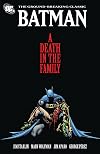
This was such a goofy fever dream of a read.
The inciting event is that the Joker escapes Arkham using cleaning supplies, then to raise funds (his assets were seized and he claims to be a victim of Reganomics), he takes a nuke (that he just happens to have) to the Middle East to sell to terrorists.
Also, at one point, Batman lets one of the costumed bad guys go because “training terrorists is not against the law” in that country.
It was super cool to have fans vote on if Jason Todd were to show more live or die by calling in, and it’s amusing to me that they chose to “team up” with the Joker to get rid of the character.
In the end, the Joker becomes an Iranian ambassador, providing him with diplomatic immunity. Thus, Batman cannot touch the Joker… until after he bombs the U.N. Building in New York. show less
The inciting event is that the Joker escapes Arkham using cleaning supplies, then to raise funds (his assets were seized and he claims to be a victim of Reganomics), he takes a nuke (that he just happens to have) to the Middle East to sell to terrorists.
Also, at one point, Batman lets one of the costumed bad guys go because “training terrorists is not against the law” in that country.
It was super cool to have fans vote on if Jason Todd were to show more live or die by calling in, and it’s amusing to me that they chose to “team up” with the Joker to get rid of the character.
In the end, the Joker becomes an Iranian ambassador, providing him with diplomatic immunity. Thus, Batman cannot touch the Joker… until after he bombs the U.N. Building in New York. show less
Lists
Awards


You May Also Like


Associated Authors
Statistics
- Works
- 300
- Also by
- 53
- Members
- 7,222
- Popularity
- #3,392
- Rating
- 3.7
- Reviews
- 184
- ISBNs
- 298
- Languages
- 8
- Favorited
- 1
