
Madeline Martin
Author of The Last Bookshop in London
About the Author
Series
Works by Madeline Martin
How to Tempt a Duke: A Regency Historical Romance (The London School for Ladies Book 1) (2019) 13 copies, 3 reviews
The Forgotten Pages 1 copy
Associated Works
Tagged
Common Knowledge
- Gender
- female
- Nationality
- USA
- Places of residence
- Florida, USA
- Associated Place (for map)
- Florida, USA
Members
Reviews
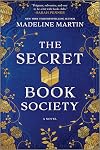
Madeline Martin has done it again. She has written another fabulous story of capable and amazing women who want more than society (men) will allow in the late 1800s. Set in London, a thrice widowed woman, Lady Duxbury had many rumors swirling about her. To fulfill a promise, she sent invitations to several society women to join her for “tea”, but they were really joining a secret book society. Lavinia, Rose, and Eleanor needed to be seen and Lady Duxbury saw them beyond just an obedient show more wife. Each of the women have their own baggage and their own hopes and dreams. I loved how these very different women learned to care and support each other and gave each woman what they needed. The character development allows the reader to really understand the similarities and differences of each woman. As I was reading, I had so many feelings about what the women did and what they experienced which is something I love in a book. If you are looking for a historical fiction book where you will be immersed in the time and place with complex characters, I highly recommend this book.
Spoilers below:
I don’t usually include spoilers but one male character evoked so much emotion I need to talk about him here. Cecil Clarke is the husband of Eleanor. I know in my head that Cecil’s character is true to the time period, but he was so cruel and disrespectful toward Eleanor, I kept hoping something bad would happen to him. He got what was coming to him in the end! The way he could just throw her away and put her in an asylum made me so furious. Good job on the author for writing such an awful character that could give me all those feelings.
#TheSecretBookSociety #NetGalley #historicalfiction
Thank you to Harlequin Trade Publishing and Net Galley for a complimentary copy. All opinions expressed are my own. show less
Spoilers below:
I don’t usually include spoilers but one male character evoked so much emotion I need to talk about him here. Cecil Clarke is the husband of Eleanor. I know in my head that Cecil’s character is true to the time period, but he was so cruel and disrespectful toward Eleanor, I kept hoping something bad would happen to him. He got what was coming to him in the end! The way he could just throw her away and put her in an asylum made me so furious. Good job on the author for writing such an awful character that could give me all those feelings.
#TheSecretBookSociety #NetGalley #historicalfiction
Thank you to Harlequin Trade Publishing and Net Galley for a complimentary copy. All opinions expressed are my own. show less

Zofia Nowak and her friends love to read, but in Warsaw in August 1939, reading has become a radical activity. With a Nazi invasion imminent, Zofia and her friends scramble to read as many Hitler-banned books as they can before they’re confiscated. When the Nazi invasion arrives, Zofia and her father hide the banned books beneath the floor in their apartment, hoping to keep them safe until a time when Poland might be free again. When her father, a physician, is taken off to prison along show more with so many of Warsaw’s intellectual elite and her best friend, Janina, is confined to the Jewish ghetto, Zofia realizes she herself must join the resistance against the Nazis. The Nazis are trying to control the Polish people by controlling the ideas they have access to; Zofia and a few other librarians find clever ways to continue getting books into hands and education into minds of the people. As the crackdown against the Jewish people gathers strength, Zofia puts her new skills to work hiding away not only the banned books but also the Jewish people she’s helping to smuggle out of the ghetto. Madeline Martin has created a novel that is both heartbreaking and timely. Through Zofia’s eyes, the reader experiences the agonizing separation of families at the hands of the Nazis and the anger that so many Polish people had to tamp down in order to survive. The fear that so many families must have felt as friends and neighbors disappeared and there was no way to know who might be next was so vividly captured. Through it all, Zofia recognizes the hope and love this beloved clutch of hidden books represents and she knows and understands that love in itself is precisely the reason that Hitler wanted the books stamped out in the first place. Zofia reflects, “Books inspired free thought and empathy, an overall understanding and acceptance of everyone". Those of us living in what has always been a "free world" will find parts of this story difficult to read and even more difficult to understand, but may Heaven forbid this ever happen again! show less
3.5⭐️
“Understanding and knowledge were wasted if one did not apply them to life.”
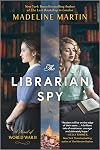
In 1943, Ava Harper, a librarian working in the Rare Book Room at the Library of Congress in Washington DC recruited to work in Lisbon, Portugal, a neutral zone during WWII to gather intelligence on the enemy from all available print media. When Ava lands in Lisbon, she finds that her job entails collecting as much as she can from magazines and newspapers but having to do so while navigating her way show more around Nazi spies and the Portuguese secret police. She also befriends many Jews who are waiting for onward travel Visas in Lisbon and learns more about the events that forced them to flee Europe as well as the hurdles involved in their onward journey. She is adamant that their stories and voices are not lost and takes the initiative to document as much as she can.
In Nazi-occupied France, Helene Belanger ( under the assumed name Elaine Rousseau) joins the Resistance in Lyon after her husband Joseph, who unbeknownst to her was a part of the Resistance, is arrested and imprisoned. Her work includes working in a clandestine press - printing and distributing anti-Nazi newspapers. At every step, she faces the danger of discovery and imprisonment, and much worse, but she is determined to contribute to the efforts to defeat the enemy.
These two women’s stories come together through a coded message Helen/Elaine sends through the newspaper – a code Ava manages to decipher with the help of her friends in Lisbon – and what follows is a series of events in which both these women put everything at risk to save a Jewish mother and child from capture and find passage to America.
“Words have such incredible power.”
The Author’s Note at the end of the book is very informative and shows the amount of research that went into crafting this story. I always enjoy delving into the history behind fiction set in this era. This is the first time I read about WWII Lisbon and the role librarians played in gathering information during the war. I was also unaware of how Lisbon was a refuge for those who were fleeing persecution. It’s never easy to read about the plight of Jews in WWII Europe and the horrors of war. The author however keeps the tone relatively restrained while alluding to the Holocaust.
This is a well-written book. Both these women are different in their circumstances and backgrounds but both are brave and smart and willing to go beyond the call of duty to help those who require assistance. Both the parallel storylines are well narrated and are interesting in their own way. The author covers a lot of ground in this novel – the French Resistance and the significance of the written word, Lisbon’s role in WWII, espionage and much more. What works for this novel is the setting/settings but I felt that the story took a while to gain momentum. While I did enjoy both the tracks in this novel, I expected a stronger espionage track, which was mostly relegated to the background. The Resistance track was very strong and the character of Helene/Elaine was well-developed. I feel Ava’s track had much potential but after a point fell flat. While parts of it were compelling, the story overall, was not as impactful as it could have been. In short , while I really liked The Librarian Spy by Madeline Martin, I did not love it.
“I mean that this present we live in is tomorrow’s history. You ask if this is important. This is the education for our future, to learn from the mistakes that have been made now and never let atrocities such as this continue or be repeated.” show less
“Understanding and knowledge were wasted if one did not apply them to life.”
In 1943, Ava Harper, a librarian working in the Rare Book Room at the Library of Congress in Washington DC recruited to work in Lisbon, Portugal, a neutral zone during WWII to gather intelligence on the enemy from all available print media. When Ava lands in Lisbon, she finds that her job entails collecting as much as she can from magazines and newspapers but having to do so while navigating her way show more around Nazi spies and the Portuguese secret police. She also befriends many Jews who are waiting for onward travel Visas in Lisbon and learns more about the events that forced them to flee Europe as well as the hurdles involved in their onward journey. She is adamant that their stories and voices are not lost and takes the initiative to document as much as she can.
In Nazi-occupied France, Helene Belanger ( under the assumed name Elaine Rousseau) joins the Resistance in Lyon after her husband Joseph, who unbeknownst to her was a part of the Resistance, is arrested and imprisoned. Her work includes working in a clandestine press - printing and distributing anti-Nazi newspapers. At every step, she faces the danger of discovery and imprisonment, and much worse, but she is determined to contribute to the efforts to defeat the enemy.
These two women’s stories come together through a coded message Helen/Elaine sends through the newspaper – a code Ava manages to decipher with the help of her friends in Lisbon – and what follows is a series of events in which both these women put everything at risk to save a Jewish mother and child from capture and find passage to America.
“Words have such incredible power.”
The Author’s Note at the end of the book is very informative and shows the amount of research that went into crafting this story. I always enjoy delving into the history behind fiction set in this era. This is the first time I read about WWII Lisbon and the role librarians played in gathering information during the war. I was also unaware of how Lisbon was a refuge for those who were fleeing persecution. It’s never easy to read about the plight of Jews in WWII Europe and the horrors of war. The author however keeps the tone relatively restrained while alluding to the Holocaust.
This is a well-written book. Both these women are different in their circumstances and backgrounds but both are brave and smart and willing to go beyond the call of duty to help those who require assistance. Both the parallel storylines are well narrated and are interesting in their own way. The author covers a lot of ground in this novel – the French Resistance and the significance of the written word, Lisbon’s role in WWII, espionage and much more. What works for this novel is the setting/settings but I felt that the story took a while to gain momentum. While I did enjoy both the tracks in this novel, I expected a stronger espionage track, which was mostly relegated to the background. The Resistance track was very strong and the character of Helene/Elaine was well-developed. I feel Ava’s track had much potential but after a point fell flat. While parts of it were compelling, the story overall, was not as impactful as it could have been. In short , while I really liked The Librarian Spy by Madeline Martin, I did not love it.
“I mean that this present we live in is tomorrow’s history. You ask if this is important. This is the education for our future, to learn from the mistakes that have been made now and never let atrocities such as this continue or be repeated.” show less
The Secret Book Society by Madeline Martin is historical fiction with heart, grit, and a quiet kind of rebellion that lingers long after the final page.
If you love stories that celebrate the power of books, community, and connection, this novel is a must-read. Set in Victorian London, it invites readers into a hidden world where women gather under the guise of tea to share stories, strength, and solidarity. What if your invitation to tea was really a lifeline—a secret book club tucked show more behind the rigid rules of society? That’s the premise, and it’s beautifully executed.
Martin’s prose is vivid and emotionally rich, and the characters feel fully alive—especially Eleanor, whose journey from constraint to courage is deeply moving. The novel blends literary love with social critique, allowing readers to step into a world so tightly orchestrated that every moment feels like a performance. And yet, within that structure, Martin carves out space for joy, frustration, and transformation.
Reading this felt like stepping through a time machine—not just to witness history, but to reflect on what still echoes today. It made me grateful for what we’ve gained, thoughtful about what remains, and hopeful for what’s still to come.
Perfect for book clubs and anyone who believes reading is an act of resistance. I finished it wanting to talk, reflect, and read it all over again. show less
If you love stories that celebrate the power of books, community, and connection, this novel is a must-read. Set in Victorian London, it invites readers into a hidden world where women gather under the guise of tea to share stories, strength, and solidarity. What if your invitation to tea was really a lifeline—a secret book club tucked show more behind the rigid rules of society? That’s the premise, and it’s beautifully executed.
Martin’s prose is vivid and emotionally rich, and the characters feel fully alive—especially Eleanor, whose journey from constraint to courage is deeply moving. The novel blends literary love with social critique, allowing readers to step into a world so tightly orchestrated that every moment feels like a performance. And yet, within that structure, Martin carves out space for joy, frustration, and transformation.
Reading this felt like stepping through a time machine—not just to witness history, but to reflect on what still echoes today. It made me grateful for what we’ve gained, thoughtful about what remains, and hopeful for what’s still to come.
Perfect for book clubs and anyone who believes reading is an act of resistance. I finished it wanting to talk, reflect, and read it all over again. show less
Lists
Awards


You May Also Like


Associated Authors
Statistics
- Works
- 57
- Also by
- 2
- Members
- 4,166
- Popularity
- #6,045
- Rating
- 4.0
- Reviews
- 249
- ISBNs
- 164
- Languages
- 12
- Favorited
- 2