George R. Knight
Author of Philosophy & Education: An Introduction in Christian Perspective
About the Author
George Knight is a retired professor of church history at the Seventh-day Adventist Theological Seminary at Andrews University. He is the author of more than 40 books, including the Adventist Heritage series, the Ellen White series, and a devotional commentary series.
Series
Works by George R. Knight
Seventh-Day Adventists Answer Questions on Doctrine: An Explanation of Certain Major Aspects of Seventh-Day Adventist Belief (2003) 58 copies
A Search For Identity: The Development of Seventh-day Adventist Beliefs (Adventist Heritage Series) (2000) 41 copies, 1 review
Myths in Adventism: An Interpretive Study of Ellen White, Education, and Related Issues (Adventist Classic) (1985) 40 copies, 1 review
Angry Saints: Tensions and Possibilities in the Adventist Struggle Over Righteousness by Faith (1989) 26 copies, 1 review
If I Were the Devil: Seeing Through the Enemy's Smokescreen: Contemporary Challenges Facing Adventism (2007) 21 copies
Organizing to beat the devil: The development of Adventist church structure (Adventist heritage series) (2001) 15 copies, 1 review
The Fat Lady and the Kingdom: Confronting the Challenge of Change and Secularization (1995) 10 copies, 1 review
Organizing for Mission and Growth. The Development of Adventist Church Structure (Adventist Heritage Series) (2006) 6 copies, 1 review
The Truth 1 copy
MATTHEW Amplified 1 copy
Abundant Life Bible Amplifier, The: PETER & JUDE — Author — 1 copy
Associated Works
By What Authority?: The Vital Questions of Religious Authority in Christianity (2010) — Contributor — 5 copies
Tagged
Common Knowledge
Members
Reviews
While those who would eventually form the Seventh-day Adventist Church were Millerites, only one was influential in both that his work after the Great Disappointment would standout and provide the underpinnings of the eventual largest Adventist denomination. Joseph Bates: The Real Founder of Seventh-day Adventism by George R. Knight is a comprehensive look at one of the most important men in the Adventism movement before and after October 1844.
Beginning with a young boy looking for adventure show more as a sailor, Knight fully covers the life of Joseph Bates until his death as a senior statesman of the Church he helped to found still looking to serve Christ. In covering Bates career at sea, Knight pulls out traits—both potentially benefital and harmful—that would serve him as he preached the soon coming of Christ as part of the Millerite movement and later his development of Sabbatarian Adventism. After retiring, Bates who had already shown a keen interest in reform, firstly himself and then his own ship’s crew, launched himself into numerous reform movements until he heard Advent message of William Miller and seeing it as the ultimate reform movement wholeheartedly went to spread the good news. Though not a primary leader, he was a major secondary leader within the Millerites that both chaired conferences and went out preaching. After the Great Disappointment of October 1844, Bates began studying and joined those Adventists that believed something did occur though not the fanatics that tainted this group of post-Disappointment Millerites. It is at this point in which Knight carefully covers Bates life over a decade, though focused on a four year span in particular, in which Bates became both the first theologian and then first historian of Sabbatarian Adventism and would lay the foundations of essentially all major doctrines that set the Seventh-day Adventist Church apart from other denominations. Knight covers Bates relationship with both James and Ellen White in full during this period and after as the trio would guide the “little flock” over the next two decades until his death.
In approximately 220 pages of text and reference, Knight use Bates’ own autobiography as well as research first discovered others including two of his own students to give the reader a full sense of the life of Joseph Bate as can be expected. Though the book is not strictly chronological, Knight structures the book in such a way as to give an overview in a certain period of Bates life in one chapter and in the subsequent one focus on a particular aspect during that period with it most typically being theological in nature. This keeps the book engaging for the general reader and not getting them bogged down or overwhelmed with detail of having a strictly chronological book from beginning to end. Yet while these choices by Knight create a very good and readable book, there just seemed to be something off with his writing that made me feel that it was up to other books that he had authored.
Joseph Bates: The Real Founder of Seventh-day Adventism is a very good book for those, whether Seventh-day Adventists or not, looking to understand the history of denomination that Bates helped to found. As the preeminent Seventh-day Adventist historian, George R. Knight presents the Bates the man of both virtues and flaws and how he shaped the Advent movement. I highly recommend this book for those interested in SDA Church history. show less
Beginning with a young boy looking for adventure show more as a sailor, Knight fully covers the life of Joseph Bates until his death as a senior statesman of the Church he helped to found still looking to serve Christ. In covering Bates career at sea, Knight pulls out traits—both potentially benefital and harmful—that would serve him as he preached the soon coming of Christ as part of the Millerite movement and later his development of Sabbatarian Adventism. After retiring, Bates who had already shown a keen interest in reform, firstly himself and then his own ship’s crew, launched himself into numerous reform movements until he heard Advent message of William Miller and seeing it as the ultimate reform movement wholeheartedly went to spread the good news. Though not a primary leader, he was a major secondary leader within the Millerites that both chaired conferences and went out preaching. After the Great Disappointment of October 1844, Bates began studying and joined those Adventists that believed something did occur though not the fanatics that tainted this group of post-Disappointment Millerites. It is at this point in which Knight carefully covers Bates life over a decade, though focused on a four year span in particular, in which Bates became both the first theologian and then first historian of Sabbatarian Adventism and would lay the foundations of essentially all major doctrines that set the Seventh-day Adventist Church apart from other denominations. Knight covers Bates relationship with both James and Ellen White in full during this period and after as the trio would guide the “little flock” over the next two decades until his death.
In approximately 220 pages of text and reference, Knight use Bates’ own autobiography as well as research first discovered others including two of his own students to give the reader a full sense of the life of Joseph Bate as can be expected. Though the book is not strictly chronological, Knight structures the book in such a way as to give an overview in a certain period of Bates life in one chapter and in the subsequent one focus on a particular aspect during that period with it most typically being theological in nature. This keeps the book engaging for the general reader and not getting them bogged down or overwhelmed with detail of having a strictly chronological book from beginning to end. Yet while these choices by Knight create a very good and readable book, there just seemed to be something off with his writing that made me feel that it was up to other books that he had authored.
Joseph Bates: The Real Founder of Seventh-day Adventism is a very good book for those, whether Seventh-day Adventists or not, looking to understand the history of denomination that Bates helped to found. As the preeminent Seventh-day Adventist historian, George R. Knight presents the Bates the man of both virtues and flaws and how he shaped the Advent movement. I highly recommend this book for those interested in SDA Church history. show less
Organizing for Mission and Growth. The Development of Adventist Church Structure (Adventist Heritage Series) by George R. Knight
Throughout the history of the Seventh-day Adventist history there has been a constant question “To organize or not to organize, and if so how?” Organizing for Mission and Growth is the third book of the Adventist Heritage Series written by Adventist historian George R. Knight. In covering over 170 years in fewer than 190 pages, the book covers the struggles to first organize then restructuring and then reinvigorating the church so as to achieve its mission to spread its end time show more message.
The Sabbatarian Adventists out of the Millerite movement were small and disorganized across New York and New England, but their former denominational experiences and theological beliefs in the evils of organization forces the rising leaders of the group to do much of the work themselves particularly James White. While White himself initially was against organizing and “making a name”, the essential one-man operation that he was preforming led him to reexamine scripture and rethinking his anti-organizational ideas becoming a strong advocate for the organizing of the denomination so much so that he refused to become its first president. But as the decades past and the church grew, the strengths for church structure for a small number of believers over the breath of half a nation became detriments as membership grew and expanded worldwide leading to crisis that brought about restructuring at the beginning of the 20th Century. However, the divide in ideas about how to restructure causes nearly a decade of drama before it was resolved. Yet throughout the 20th Century the organization of the church was tweaked and reinvigorated with innovation on several levels but in the 21st Century many have begun questioning the extent of how much administration is needed compared to the previous 100 years.
Unlike what he was able to cover in A Brief History of Seventh-day Adventists, Knight goes in-depth on how Seventh-day Adventists got their name and how they structured their denomination’s organization and the debates for and against as well as how it innovated. Knight does not go in-depth over the entire course of the 155 year history of the General Conference, but he focuses on what needs to be in-depth like James White’s struggle to found the denomination and later the 1901-3 restructuring of the denomination by A.G. Daniels and others against the efforts by A.T. Jones and others who wanted a much decentralized organization (congregationalism). Yet the events of 1901-3 also had a theological element that while touched upon was discussed more in A Search for Identity, another Adventist Heritage Series book focused on the development of Seventh-day Adventist theology. This limited focus created a very strong book that gave the reader a clear history of its topic without going down various rabbit holes.
Although Knight intended Organizing for Mission and Growth to be the third of a seven book series related to Adventist heritage, however for over a decade it has been the last he has written. This fact does not take away how important this and other Adventist Heritage Series books for Seventh-day Adventists who are interested in the history of their denomination, it’s theological beliefs, and it’s organizational structure as they are the primary readers Knight aims for. show less
The Sabbatarian Adventists out of the Millerite movement were small and disorganized across New York and New England, but their former denominational experiences and theological beliefs in the evils of organization forces the rising leaders of the group to do much of the work themselves particularly James White. While White himself initially was against organizing and “making a name”, the essential one-man operation that he was preforming led him to reexamine scripture and rethinking his anti-organizational ideas becoming a strong advocate for the organizing of the denomination so much so that he refused to become its first president. But as the decades past and the church grew, the strengths for church structure for a small number of believers over the breath of half a nation became detriments as membership grew and expanded worldwide leading to crisis that brought about restructuring at the beginning of the 20th Century. However, the divide in ideas about how to restructure causes nearly a decade of drama before it was resolved. Yet throughout the 20th Century the organization of the church was tweaked and reinvigorated with innovation on several levels but in the 21st Century many have begun questioning the extent of how much administration is needed compared to the previous 100 years.
Unlike what he was able to cover in A Brief History of Seventh-day Adventists, Knight goes in-depth on how Seventh-day Adventists got their name and how they structured their denomination’s organization and the debates for and against as well as how it innovated. Knight does not go in-depth over the entire course of the 155 year history of the General Conference, but he focuses on what needs to be in-depth like James White’s struggle to found the denomination and later the 1901-3 restructuring of the denomination by A.G. Daniels and others against the efforts by A.T. Jones and others who wanted a much decentralized organization (congregationalism). Yet the events of 1901-3 also had a theological element that while touched upon was discussed more in A Search for Identity, another Adventist Heritage Series book focused on the development of Seventh-day Adventist theology. This limited focus created a very strong book that gave the reader a clear history of its topic without going down various rabbit holes.
Although Knight intended Organizing for Mission and Growth to be the third of a seven book series related to Adventist heritage, however for over a decade it has been the last he has written. This fact does not take away how important this and other Adventist Heritage Series books for Seventh-day Adventists who are interested in the history of their denomination, it’s theological beliefs, and it’s organizational structure as they are the primary readers Knight aims for. show less
It is most likely the first gospel written and was aimed at Roman Christians during the persecutions of Nero by a follower of Christ in his youth. Exploring Mark: A Devotional Commentary by George R. Knight reveals that why the other Gospels focus on Jesus’ teachings it is Mark shows He is a Man of Action.
Knight divides his study of Mark into 61 segments allowing him to not only explain each passage within the context of the book, the other Gospels and other parts of the Bible, and show more providing commentary about what the passage means for us today. Throughout Knight brings out themes and threads that Mark sowed throughout his Gospel from showing Jesus doing things and not just teaching, to sandwiching stories in-between two parts of another, Jesus’ continual request to keep his messiahship secret (which comes into relevance at the end of the Gospel), and finally the continual failure of Jesus’ followers to either understand, believe, or to take action which everyone one of us can relate to. As with other books in Knight’s Devotional Commentary series, context of the time of writing gives greater a clearer understanding to Jesus’ teachings and action that gives to us today the same blessing that those 1st-Century Roman Christians received in their time of need.
Exploring Mark is an excellent commentary and devotional by George R. Knight, who gives insight into the shortest and most like the earliest Gospel for the 21st Century. show less
Knight divides his study of Mark into 61 segments allowing him to not only explain each passage within the context of the book, the other Gospels and other parts of the Bible, and show more providing commentary about what the passage means for us today. Throughout Knight brings out themes and threads that Mark sowed throughout his Gospel from showing Jesus doing things and not just teaching, to sandwiching stories in-between two parts of another, Jesus’ continual request to keep his messiahship secret (which comes into relevance at the end of the Gospel), and finally the continual failure of Jesus’ followers to either understand, believe, or to take action which everyone one of us can relate to. As with other books in Knight’s Devotional Commentary series, context of the time of writing gives greater a clearer understanding to Jesus’ teachings and action that gives to us today the same blessing that those 1st-Century Roman Christians received in their time of need.
Exploring Mark is an excellent commentary and devotional by George R. Knight, who gives insight into the shortest and most like the earliest Gospel for the 21st Century. show less
Myths in Adventism: An Interpretive Study of Ellen White, Education, and Related Issues (Adventist Classic) by George R. Knight
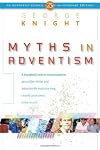
Myths pop up everywhere from history, to religion, and in the understanding of someone’s writing. George R. Knight writes in Myths in Adventism: An Interpretive Study of Ellen White, Education, and Related Issues about numerous issues that influence the thinking of Adventists educators and administrators.
Knight tackles 19 “myths” related to Adventist education, institutions, and thoughts over the course of 250 pages. Beginning with myth related to “Historical and Philosophical” show more issues including those surrounding Ellen White, Knight clears up historical inaccuracies and puts Mrs. White’s writing not only in the context in which lines are written but what was going on at the time that made her write certain statements. Knight then turned his attention to “Institutions and People” focusing on such issues the interplay between home and school, human nature, and intellectualism in Adventist education. The largest section of the book about “Curriculum and Methods”, Knight focused on sacred and secular topics, Bible as textbook, literary subjects, religious instructions, in-classroom environments, and recreation and manual labor.
As a child of a retired Adventist teacher, I appreciated this book in seeing what my mother had to face over the course of approximately 35 years of her career. Knight’s research and writing are fantastic throughout the book giving the reader amazing insights in how myths are given life in numerous fields and situations. However, my problem with this book is not with Knight but with the publishers who in designing the book and blurbs made this book something it wasn’t. The front cover blurb literally says, “A thoughtful look at misconceptions about Ellen White and Adventist life that have long caused controversy in the church” but nothing about education which is what the book is about and instead makes it appear it’ll be about numerous other things about Adventism. Though Knight attempts to shield the publishers for their decision in the preface, it’s unfortunately makes the reader realize they might have gotten hoodwinked.
Overall Myths in Adventism is an insightful look at the cultural clashes in Adventist education by a writer that knows how to do research in Adventist history and education. However even though George R. Knight is fantastic, the decisions of the publishers to make this book appear to be something that it’s not is very annoying and future readers need to know about it. show less
Knight tackles 19 “myths” related to Adventist education, institutions, and thoughts over the course of 250 pages. Beginning with myth related to “Historical and Philosophical” show more issues including those surrounding Ellen White, Knight clears up historical inaccuracies and puts Mrs. White’s writing not only in the context in which lines are written but what was going on at the time that made her write certain statements. Knight then turned his attention to “Institutions and People” focusing on such issues the interplay between home and school, human nature, and intellectualism in Adventist education. The largest section of the book about “Curriculum and Methods”, Knight focused on sacred and secular topics, Bible as textbook, literary subjects, religious instructions, in-classroom environments, and recreation and manual labor.
As a child of a retired Adventist teacher, I appreciated this book in seeing what my mother had to face over the course of approximately 35 years of her career. Knight’s research and writing are fantastic throughout the book giving the reader amazing insights in how myths are given life in numerous fields and situations. However, my problem with this book is not with Knight but with the publishers who in designing the book and blurbs made this book something it wasn’t. The front cover blurb literally says, “A thoughtful look at misconceptions about Ellen White and Adventist life that have long caused controversy in the church” but nothing about education which is what the book is about and instead makes it appear it’ll be about numerous other things about Adventism. Though Knight attempts to shield the publishers for their decision in the preface, it’s unfortunately makes the reader realize they might have gotten hoodwinked.
Overall Myths in Adventism is an insightful look at the cultural clashes in Adventist education by a writer that knows how to do research in Adventist history and education. However even though George R. Knight is fantastic, the decisions of the publishers to make this book appear to be something that it’s not is very annoying and future readers need to know about it. show less
Lists
You May Also Like
Associated Authors
Statistics
- Works
- 60
- Also by
- 1
- Members
- 1,233
- Popularity
- #20,820
- Rating
- 4.1
- Reviews
- 25
- ISBNs
- 74
- Languages
- 6
- Favorited
- 1