
About the Author
Tom Nettles is Senior Professor of Historical Theology at The Southern Baptist Theological Seminary, Louisville, Kentucky.
Series
Works by Tom J. Nettles
By His Grace and for His Glory: A Historical Theological, and Practical Study of the Doctrines of Grace in Baptist Life (1986) 499 copies, 2 reviews
Living by Revealed Truth: The Life and Pastoral Theology of Charles Haddon Spurgeon (2013) 243 copies
Teaching Truth, Training Hearts: The Study of Catechisms in Baptist Life (1998) 171 copies, 1 review
The Baptists: Beginnings in America - Vol 2 (Baptists: Key People Involved in Forming a Baptist Identity) (2009) 163 copies
A Commentary on James: Good Words, Bad Words; Good Works, Bad Works; True Faith, False Faith (2020) 16 copies
The Spurgeon Reader 9 copies
Remember Jesus Christ: Believing the Absolute Truth about the Absolute Person in a Relativistic Age 4 copies
Baptist, The 3 copies
Baptists - Modern Era 2 copies
Born Again: God's Sovereign Grace in the miracle of Regeneration (Credo Magazine Book 9) (2013) 2 copies
Baptists - Vol 1 1 copy
Baptists - Vol 2 1 copy
Baptists vol 3 1 copy
Why I Am a Baptist 1 copy
Catechism for Girls and Boys 1 copy
Pregação Doutrinária 1 copy
Associated Works
Tagged
Common Knowledge
Members
Reviews

On reflection, this 2021 book about Spurgeon by Tom Nettles could be better titled. The reason it has the title it has is because Dr Nettles works through ten themes or keynotes that were part and parcel of Spurgeon's life from his youth onwards (Calvinism, being a Baptist, preaching, evangelism, poor physical and mental health, a helpful self-centredness, contending for the faith, being slandered, the Bible). It is intended to be a companion to the much larger biography Nettles produced in show more 2013. To be frank, that work rather collapsed under its own weight and so this companion volume is worth doing and most will be wisest to begin here. show less
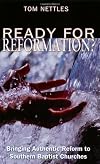
What is the difference between a prophet and a pessimist? Sometimes only time can tell the difference between the two.
At the height of British imperial glory, Rudyard Kipling penned his famous poem "Recessional". Rather than spilling forth with uncritical praise, Kipling issued a warning:
If, drunk with sight of power, we loose
Wild tongues that have not Thee in awe-
Such boasting as the Gentiles use
Or lesser breeds without the Law-
Lord God of Hosts, be with us yet,
Lest we forget, lest show more we forget!
Dr. Tom Nettles is professor of historical theology at The Southern Baptist Theological Seminary in Louisville, Kentucky. In the spirit of Kipling, Nettles warns the Southern Baptist Convention of the danger of lethargy and pride. Glorying in past accomplishments will blind us to our errors, and will stunt fuller biblical reform.
With deep gratitude to God, we acknowledge the recovery of biblical authority brought about through the conservative resurgence in the SBC. Nettles himself played a part in the recovery through his influential book Baptists and the Bible.
The first article of The Baptist Faith and Message clearly defines our convictions regarding the inerrancy and authority of Scripture. This is what we believe about the Bible. But how effectively does that belief work itself out in the local church?
Nettles pleads for unity built on solid biblical theology. We should not aspire to be a common-denominator denomination. He writes, "An unwillingness to confess a body of definite truth often betrays a sickness unto death already at work."
Regarding preaching, Nettles asks, "Does inerrancy guarantee biblical preaching?" No, and the proof can be found in the plentitude of shallow-sermon pulpits. Conservative credentials and sincerity do not fix flimsy exegesis. He states, "No amount of zeal or earnestness to prompt sinners to commit to the message will transform error into truth."
Nettles outlines the history of evangelism among Baptists, and applies the lessons to contemporary practices. He wonders why only 25-35 percent of SBC members can be found worshipping on any given Sunday. Certainly this is not indicative of a biblical view of evangelism and the gospel. He says, "Perhaps less baptisms with greater pastoral and church discernment would be better than more baptisms under the same programmatic conditions that have governed the last fifty to seventy-five years."
In a powerful chapter on grace, Nettles argues against synergism, the idea that grace is "a cooperative effort." Showing a Trinitarian understanding of the atonement, Nettles says, "When a person ignores the particularity of the grace of all three persons of the triune God, he courts theological disaster." Nettles shows the pastoral significance of these vital doctrines.
Finally, in writing about the doctrine of the church, Nettles addresses three issues ripe for change. We must recover a biblical view of membership, eldership, and church discipline.
So, is Nettles a prophet or pessimist? His exalted view of our sovereign God keeps his book far from the language of defeat. Nettles knows God is able to stir His people to a greater love and application of the truth. There is both warning and hope found in the verse, "Except the Lord build the house, they labor in vain that build it."
Therefore, Nettles serves as prophet in warning us not to stop the reformation on the doorstep of inerrancy. A house full of precious treasure from the Lord awaits those who press on and live out their confidence in the Scripture. Nettles concludes the book by saying, "We must learn to see Christian doctrine as so relevant and revitalizing that its implications redefine our entire being."
Purchase a copy of this book, and discover new areas of needed reformation in your own ministry. show less
At the height of British imperial glory, Rudyard Kipling penned his famous poem "Recessional". Rather than spilling forth with uncritical praise, Kipling issued a warning:
If, drunk with sight of power, we loose
Wild tongues that have not Thee in awe-
Such boasting as the Gentiles use
Or lesser breeds without the Law-
Lord God of Hosts, be with us yet,
Lest we forget, lest show more we forget!
Dr. Tom Nettles is professor of historical theology at The Southern Baptist Theological Seminary in Louisville, Kentucky. In the spirit of Kipling, Nettles warns the Southern Baptist Convention of the danger of lethargy and pride. Glorying in past accomplishments will blind us to our errors, and will stunt fuller biblical reform.
With deep gratitude to God, we acknowledge the recovery of biblical authority brought about through the conservative resurgence in the SBC. Nettles himself played a part in the recovery through his influential book Baptists and the Bible.
The first article of The Baptist Faith and Message clearly defines our convictions regarding the inerrancy and authority of Scripture. This is what we believe about the Bible. But how effectively does that belief work itself out in the local church?
Nettles pleads for unity built on solid biblical theology. We should not aspire to be a common-denominator denomination. He writes, "An unwillingness to confess a body of definite truth often betrays a sickness unto death already at work."
Regarding preaching, Nettles asks, "Does inerrancy guarantee biblical preaching?" No, and the proof can be found in the plentitude of shallow-sermon pulpits. Conservative credentials and sincerity do not fix flimsy exegesis. He states, "No amount of zeal or earnestness to prompt sinners to commit to the message will transform error into truth."
Nettles outlines the history of evangelism among Baptists, and applies the lessons to contemporary practices. He wonders why only 25-35 percent of SBC members can be found worshipping on any given Sunday. Certainly this is not indicative of a biblical view of evangelism and the gospel. He says, "Perhaps less baptisms with greater pastoral and church discernment would be better than more baptisms under the same programmatic conditions that have governed the last fifty to seventy-five years."
In a powerful chapter on grace, Nettles argues against synergism, the idea that grace is "a cooperative effort." Showing a Trinitarian understanding of the atonement, Nettles says, "When a person ignores the particularity of the grace of all three persons of the triune God, he courts theological disaster." Nettles shows the pastoral significance of these vital doctrines.
Finally, in writing about the doctrine of the church, Nettles addresses three issues ripe for change. We must recover a biblical view of membership, eldership, and church discipline.
So, is Nettles a prophet or pessimist? His exalted view of our sovereign God keeps his book far from the language of defeat. Nettles knows God is able to stir His people to a greater love and application of the truth. There is both warning and hope found in the verse, "Except the Lord build the house, they labor in vain that build it."
Therefore, Nettles serves as prophet in warning us not to stop the reformation on the doorstep of inerrancy. A house full of precious treasure from the Lord awaits those who press on and live out their confidence in the Scripture. Nettles concludes the book by saying, "We must learn to see Christian doctrine as so relevant and revitalizing that its implications redefine our entire being."
Purchase a copy of this book, and discover new areas of needed reformation in your own ministry. show less
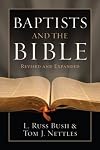
Early on in my ministry, I served at a church directly involved with the so-called “Conservative Resurgence,” and was given a copy of L. Ross Bush’s and Tom J. Nettles’ Baptists and the Bible by my pastor and encouraged to take a good, hard look at a book he said was of utmost importance in the Baptist fight to continue to plead for the importance of the inerrancy and infallibility of the Word of God. I might have been twenty-one or twenty-two at the time and honestly; I did not have show more much desire to jump into a 440-page book on the heels of graduating from Dallas Baptist University. Nevertheless, I took my pastor up on the challenge, grabbed my highlight, and began to trace my Baptist heritage “from 17th century England to the New Millennium in America,” particularly in regards to such a monumental push for rightly dividing the Word of God. As I recall, I finished the book in a week and a half and enjoyed discussing my discoveries with my pastor at length for some time.
While the other books intrigued me, I decided eleven or so years was enough time to consider revisiting Baptists and the Bible, but I chose to do so by purchasing a fresh copy to have a brand new look at this timeless work by authors Bush and Nettles. First published in 1980, the authors set out to trace the history of Baptists from the 17th century to its publishing date by taking an honest, thorough, and helpful look at what made Baptists what they are today; a people clinging to the importance of Biblical inerrancy and infallibility. In a sense, their thesis would be the answer to the question they posed in their introduction, “Why a book on Baptists and the Bible?” Because virtually every denomination was grappling with the issue of Biblical authority!
Biographical Sketch of the Authors
Baptists and the Bible has two authors, Drs. L. Russ Bush and Tom J. Nettles, the former was the academic dean at Southeastern Baptist Theological Seminary, where he also taught on Christian Philosophy, and the latter taught church history and historical theology at The Southern Baptist Theological Seminary. Both brought a wealth of experience, research, and a passion for Baptist heritage to the table as they placed their pens to the papers together to provide students of Baptist history a timely look at where we came from and how that brought us to today. Each author is well published and renown for his work inside and outside the Southern Baptist Convention. Thus, with nearly a century of experience undergirding their work, along with their faithfulness to Biblical authority, I would suggest you would be hard-pressed to find a better team to put together a work like Baptists and the Bible.
Summary of Contents
While there are many things able to divide Baptists, from carpet color to Calvinism, there are many distinctives that are used to unite Baptists across the globe. In Baptists and the Bible, the authors walk the reader from Baptists in the 17th century to the millennium, often covering many of the distinctives making Baptists what they are today. This book comes in at 440 pages made up of forewords, an introduction, three main parts, and indexes.
The forewords, prefaces, and acknowledgments were written for the original and revised editions; the original was written in 1980 and the revised was published in 1999. While easy to overlook, the give a brief look at what was added over the years. This is especially helpful due to the major shift in the Southern Baptist Convention during the Conservative Resurgence. The introduction is packed with names, events, numbers, and dates, but also includes some pertinent Scriptures for a few of the main themes the authors were introducing. The indexes, found at the back of the book, prove to be very effective in finding every person, subject, Scripture, or doctrine covered between page 11 and 422.
The first part uses the creation account of Genesis to title the seven chapters as the authors begin to introduce the reader to important figures and a few confessions, beginning with John Smyth and ending with John L. Dagg. As the reader makes their way through major people and events, they will discover Biblical inerrancy was a foundational element for Baptists from the very beginning. Also, the reader will say significant disagreements within the realm of soteriology; you will also be introduced to the birth of Baptist missions. People from either side of the stark differences unite in the Great Commission. Finally, in this part covering the birth to the nineteenth century, they end with a look at another divisive issue, slavery, but providing several essays about several men in chapter seven.
The Second part continued the theme of utilizing lines from Scripture to title each chapter, ultimately giving an idea of the themes each chapter would consider. If you would like to say part one shows what united Baptists, part two seems to begin looking at some more divisive issues. The authors used some of the cultural shifting, such as higher criticism, to show how some Baptists fell into doubting the authority of the Bible or Scripture infallibility. The reader is now into the twentieth century of Baptist history and the authors juxtapose major influences on either side of various coins of theological issues. The concern for many is revealed that the importance for Biblical inerrancy is at the forefront because “they are holding firmly to that indispensable core of truth that supports those freedoms and from which such liberty derives. In Scripture and Scripture alone has God granted the grace of a faith once delivered to the saints” (337).
The third part takes the reader essentially to the present, or obviously to the present at the point at which Baptists and the Bible was written. What seems most important to the authors is the necessity of our Baptist confessions, beginning with the Charlestown in 1665 and ending with the second most recent “Baptist Faith and Message,” which was adopted in 1963. In other words, the authors move the reader from history to practical application, such as the importance of preaching literal truth on page 359 through 362. Finally, the authors conclude the book with a powerful quote from Adorinam Judson commending the reader to continue the fervor of Baptist passion for evangelism and missions.
Critical Evaluation
Baptists and the Bible could best be described as thorough and honest, with an apparent deep appreciation for the individuals making Baptists who we are today, even those with whom conservative Baptists may vehemently disagree. For that, Drs. Ross and Nettles are to be commended and their step-by-step journey through our Baptist heritage was fair, mostly concise, and will provide the reader with a robust history on which to lean. However, if given the chance to add to this book, I would prefer to see things more issue-based. In other words, instead of biography after biography, I would prefer to see where each of these individuals landed on controversy or theology. For example, I would love to see Nettles author an addition to this book on the events leading up to and causing the so-called “Conservative Resurgence.”
Also, there were times when the essays on Baptists figures seemed to drag on and on. While I appreciate the thoroughness, going too deep would make it difficult for an average reader to make the trek all the way through the book without getting in over their head. For an academic, this is probably appreciated, but for a layperson or someone that simply wants to know some of the reasons we became known as a people of the Book, this would probably send the book straight over their head and possibly keep them from finishing. However, the authors' deep appreciation for Scripture, especially issues like inerrancy, is deeply refreshing, especially as we continue to ride the wave from the great men of God that stemmed the tide of liberalism and set course for Biblical faithfulness.
Finally, my favorite aspect of this book was well after the biographies and even the deep look at the confessions, but how the authors brought all of the people, all of the confessions, all of the controversies, and all of the other important events and brought it “home,” so to speak, for where we are today as Baptists. While Baptists and the Bible is not easy reading, they offer a great handbook for pastors, especially if they had to deal with a member or perhaps even a church-wide push to reject Biblical authority. Our view of Scripture matters; if we do not hold it in high regard, the authors believe that would negatively affect one's life and certainly the life of our churches.
Conclusion
Thus, I commend Drs. Ross and Nettles’ Baptists and the Bible to those interested in a robust look at important figures in Baptist history. With the indexes at the end of the book, I believe they will be able to find important events or people necessary to utilize research papers. Further, I believe this would be beneficial for pastors, church leaders, or denominational leaders to have “at the ready” to defend the inerrancy and infallibility of Scripture. Additionally, the Scripture and doctrinal indexes would even be helpful in sermon prep, especially if one was to preach through Baptist distinctives. Regardless, a book is usually only as good as its thesis and Ross and Nettles not only defended it, they did so in a clear manner. It is somewhat accessible, most certainly timely, and it was a joy to read through it again and renew my focus on defending the Baptist distinctive of Biblical faithfulness. show less
While the other books intrigued me, I decided eleven or so years was enough time to consider revisiting Baptists and the Bible, but I chose to do so by purchasing a fresh copy to have a brand new look at this timeless work by authors Bush and Nettles. First published in 1980, the authors set out to trace the history of Baptists from the 17th century to its publishing date by taking an honest, thorough, and helpful look at what made Baptists what they are today; a people clinging to the importance of Biblical inerrancy and infallibility. In a sense, their thesis would be the answer to the question they posed in their introduction, “Why a book on Baptists and the Bible?” Because virtually every denomination was grappling with the issue of Biblical authority!
Biographical Sketch of the Authors
Baptists and the Bible has two authors, Drs. L. Russ Bush and Tom J. Nettles, the former was the academic dean at Southeastern Baptist Theological Seminary, where he also taught on Christian Philosophy, and the latter taught church history and historical theology at The Southern Baptist Theological Seminary. Both brought a wealth of experience, research, and a passion for Baptist heritage to the table as they placed their pens to the papers together to provide students of Baptist history a timely look at where we came from and how that brought us to today. Each author is well published and renown for his work inside and outside the Southern Baptist Convention. Thus, with nearly a century of experience undergirding their work, along with their faithfulness to Biblical authority, I would suggest you would be hard-pressed to find a better team to put together a work like Baptists and the Bible.
Summary of Contents
While there are many things able to divide Baptists, from carpet color to Calvinism, there are many distinctives that are used to unite Baptists across the globe. In Baptists and the Bible, the authors walk the reader from Baptists in the 17th century to the millennium, often covering many of the distinctives making Baptists what they are today. This book comes in at 440 pages made up of forewords, an introduction, three main parts, and indexes.
The forewords, prefaces, and acknowledgments were written for the original and revised editions; the original was written in 1980 and the revised was published in 1999. While easy to overlook, the give a brief look at what was added over the years. This is especially helpful due to the major shift in the Southern Baptist Convention during the Conservative Resurgence. The introduction is packed with names, events, numbers, and dates, but also includes some pertinent Scriptures for a few of the main themes the authors were introducing. The indexes, found at the back of the book, prove to be very effective in finding every person, subject, Scripture, or doctrine covered between page 11 and 422.
The first part uses the creation account of Genesis to title the seven chapters as the authors begin to introduce the reader to important figures and a few confessions, beginning with John Smyth and ending with John L. Dagg. As the reader makes their way through major people and events, they will discover Biblical inerrancy was a foundational element for Baptists from the very beginning. Also, the reader will say significant disagreements within the realm of soteriology; you will also be introduced to the birth of Baptist missions. People from either side of the stark differences unite in the Great Commission. Finally, in this part covering the birth to the nineteenth century, they end with a look at another divisive issue, slavery, but providing several essays about several men in chapter seven.
The Second part continued the theme of utilizing lines from Scripture to title each chapter, ultimately giving an idea of the themes each chapter would consider. If you would like to say part one shows what united Baptists, part two seems to begin looking at some more divisive issues. The authors used some of the cultural shifting, such as higher criticism, to show how some Baptists fell into doubting the authority of the Bible or Scripture infallibility. The reader is now into the twentieth century of Baptist history and the authors juxtapose major influences on either side of various coins of theological issues. The concern for many is revealed that the importance for Biblical inerrancy is at the forefront because “they are holding firmly to that indispensable core of truth that supports those freedoms and from which such liberty derives. In Scripture and Scripture alone has God granted the grace of a faith once delivered to the saints” (337).
The third part takes the reader essentially to the present, or obviously to the present at the point at which Baptists and the Bible was written. What seems most important to the authors is the necessity of our Baptist confessions, beginning with the Charlestown in 1665 and ending with the second most recent “Baptist Faith and Message,” which was adopted in 1963. In other words, the authors move the reader from history to practical application, such as the importance of preaching literal truth on page 359 through 362. Finally, the authors conclude the book with a powerful quote from Adorinam Judson commending the reader to continue the fervor of Baptist passion for evangelism and missions.
Critical Evaluation
Baptists and the Bible could best be described as thorough and honest, with an apparent deep appreciation for the individuals making Baptists who we are today, even those with whom conservative Baptists may vehemently disagree. For that, Drs. Ross and Nettles are to be commended and their step-by-step journey through our Baptist heritage was fair, mostly concise, and will provide the reader with a robust history on which to lean. However, if given the chance to add to this book, I would prefer to see things more issue-based. In other words, instead of biography after biography, I would prefer to see where each of these individuals landed on controversy or theology. For example, I would love to see Nettles author an addition to this book on the events leading up to and causing the so-called “Conservative Resurgence.”
Also, there were times when the essays on Baptists figures seemed to drag on and on. While I appreciate the thoroughness, going too deep would make it difficult for an average reader to make the trek all the way through the book without getting in over their head. For an academic, this is probably appreciated, but for a layperson or someone that simply wants to know some of the reasons we became known as a people of the Book, this would probably send the book straight over their head and possibly keep them from finishing. However, the authors' deep appreciation for Scripture, especially issues like inerrancy, is deeply refreshing, especially as we continue to ride the wave from the great men of God that stemmed the tide of liberalism and set course for Biblical faithfulness.
Finally, my favorite aspect of this book was well after the biographies and even the deep look at the confessions, but how the authors brought all of the people, all of the confessions, all of the controversies, and all of the other important events and brought it “home,” so to speak, for where we are today as Baptists. While Baptists and the Bible is not easy reading, they offer a great handbook for pastors, especially if they had to deal with a member or perhaps even a church-wide push to reject Biblical authority. Our view of Scripture matters; if we do not hold it in high regard, the authors believe that would negatively affect one's life and certainly the life of our churches.
Conclusion
Thus, I commend Drs. Ross and Nettles’ Baptists and the Bible to those interested in a robust look at important figures in Baptist history. With the indexes at the end of the book, I believe they will be able to find important events or people necessary to utilize research papers. Further, I believe this would be beneficial for pastors, church leaders, or denominational leaders to have “at the ready” to defend the inerrancy and infallibility of Scripture. Additionally, the Scripture and doctrinal indexes would even be helpful in sermon prep, especially if one was to preach through Baptist distinctives. Regardless, a book is usually only as good as its thesis and Ross and Nettles not only defended it, they did so in a clear manner. It is somewhat accessible, most certainly timely, and it was a joy to read through it again and renew my focus on defending the Baptist distinctive of Biblical faithfulness. show less
Great book on the history of the Baptist church in Enagland. Shows the Calvinistic and Arminian elements in the early histroy. The only drawback on the book is the lack of a bibliography.
You May Also Like


Associated Authors
Statistics
- Works
- 48
- Also by
- 2
- Members
- 3,476
- Popularity
- #7,321
- Rating
- 4.1
- Reviews
- 11
- ISBNs
- 39
- Favorited
- 1