
Michael Ridpath
Author of Where the Shadows Lie
About the Author
Series
Works by Michael Ridpath
Associated Works
Reader's Digest Condensed Books: The Shadow in the Sands • The Cobra Event • No Regrets • The Marketmaker (1998) 7 copies
Reader's Digest Condensed Books: The Bombmaker • Relative Strangers • Final Venture • The Other Side of the Dale (2000) 6 copies
Reader's Digest Select Editions: Where the Shadows Lie (M. Ridpath) | Blood Lines (K. Casey) | The Mountain Between Us (C. Martin) | Rainwater (S. Brown) — Author — 5 copies
Readers Digest Select Editions: The Lion's Game / Donor / Hawke's Cove / Final Venture (2001) — Author — 3 copies
Reader's Digest Condensed Books: Free to Trade • The Tiger's Child • Wall of Brass • Salem Street (1995) — Contributor — 3 copies
Reader's Digest Condensed Books: The Marketmaker • No Regrets • The Marching Season • Miss Julia Speaks Her Mind (2000) — Author — 3 copies
Reader's Digest Condensed Books: The Third Twin • Wilderness of Mirrors • The Notebook • Trading Reality (1997) — Author — 2 copies
Het Beste Boek 190: Maanlicht staat je goed / Een halfjaar miljonair / Virtueel bedrog / Fly Away Home (1998) 2 copies, 1 review
Det Bästas Bokval (2001) vol 214 : Dollar; Hoppets färg är vit; Sista satsningen; Salvia och makterna — Author — 2 copies
Reader's Digest Condensed Books: Free to Trade • Cloud Shadows • Acceptable Risk • White Harvest (1995) 2 copies
Readers Digest Auswahlbücher: Nimm dich in Acht / Der Marktmacher / Lebe ewig / Das Gold des Generals (2000) 2 copies
A Nossa História; Onde Moram as Sombras; O Maior Amor do Mundo; O Mistério de Whistable (2017) 1 copy
Reader's Digest Select Editions: The Partner / Only Son / Trading Reality / All God's Children (1998) — Author — 1 copy
Tagged
Common Knowledge
- Birthdate
- 1961
- Gender
- male
- Education
- Merton College, Oxford (BA, History)
- Occupations
- bond trader
- Organizations
- International Centre for Financial Regulation
- Relationships
- רידפאת', מייקל (selfreference)
- Short biography
- Michael Ridpath is the author of various thrillers based around the world of high finance. He was born in Devon in 1961 and grew up in Yorkshire. He was educated at Millfield School and Merton College, Oxford where he obtained first class honours in Modern History, and represented the University at athletics. He spent eight years working as a bond trader at an international bank in the City of London. Michael Ridpath lives in north London with three children and his wife, Barbara, former Managing Director, Europe, of Standard and Poor, and currently Chief Executive of the International Centre for Financial Regulation.
- Nationality
- UK
- Birthplace
- Devon, England, UK
- Places of residence
- Yorkshire, England, UK
London, Middlesex, England, UK - Associated Place (for map)
- England, UK
Members
Reviews
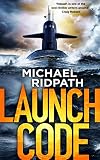
This enjoyable, fast-paced thriller moves between two timelines. In 1983 Lieutenant Bill Guth is assistant weapons officer on USS Alexander Hamilton, a nuclear submarine on exercise three hundred feet beneath the Norwegian Sea. Cold War tensions are increasing, and the crew is used to simulating various disaster scenarios, including the one they all dread, the order to trigger a nuclear attack. When Bill decodes a seemingly genuine order to launch a full nuclear strike against the USSR, he show more is prepared to do his duty. However, doubts begin to creep in when anxieties are expressed about the fact that the order is identical to one used for a recent training exercise. Surely orders are orders … but what if it really is an erroneous message? Ultimately a disastrous crisis is ultimately averted, but in the process one crew member dies.
In 2019 Bill is living in London but he and his late wife had also bought a cottage on the North Norfolk coast and it is here that he and his four daughters and their partners have gathered, as they do every year, to celebrate Thanksgiving. Bill has agreed to be interviewed that afternoon by Sam Bowen, an historian who wants to talk to him about his time in the navy in the 1980s, although he’s warned the historian that there’s a limit to what he can share, that much of what happened during his naval career remains classified. Inevitably, the subject Sam wants to investigate is how close the world came to a full-scale nuclear war on that November day in 1983. Frustrating Sam’s attempts to discover the facts of what happened on the submarine, Bill refused to elaborate but, wanting to be sociable, did invite the historian to return in the evening to share in the family’s Thanksgiving celebrations. Later that night Sam is brutally murdered, triggering an intensive police investigation, with suspicion focusing on the family.
Moving with impressive assurance between the two timescales, the author gradually revealed what really did happen in 1983, the repercussions of which continue to echo down through the years, still affecting family relationships and friendships in 2019. It soon becomes clear that there are people who will do anything to ensure that the secrets of the past will not be exposed, and it isn’t long before the lives of some of the characters are in danger. It also becomes clear that Bill and his late wife had their own secrets and that some aspects of their family life had been based on a web of lies, a web which begin to unravel during the investigations into Sam’s death, with the inevitable unearthing of unpalatable truths which this brings. I thought that the author convincingly captured the effects this had on each of Bill’s daughters as they struggled to reconcile the united family they thought they’d had, with all the withholding and dishonesty which had underpinned it. Each of the daughters has been affected, albeit in different ways, and as the facts emerge, long-held sibling rivalries and resentments are exposed, and the sisters are forced to confront their own behaviour. I thought that these tensions, conflicts and resolutions were characterised in an effective, recognisable (if you have siblings!) and credible way.
There were times when I found myself intensely disliking the present-day Bill, but as his history was gradually revealed, showing the struggles he had experienced with conflicting pulls between feelings of loyalty and duty to the navy and his country, his moral and ethical dilemmas about the use of nuclear weapons and his responsibilities to the people he loved, I was able to feel a little more empathy with him! Through the flashbacks the reader discovers the history of his loving, but complex, relationship with his late wife, and the part she played in what happened not only in the 1980s, but also in the intervening years. Although this is a key part of the plot, it’s hard to say too much without including spoilers!
I enjoyed the atmospheric descriptions which conveyed some idea of what it must be like to spend months submerged underwater in a submarine, always conscious of the need to keep noise to a minimum in order to avoid detection by the enemy. Although I’ve never experienced anything like this, it seems to me that the lack of space, the claustrophobia, the living cheek-by-jowl with fellow submariners would be enough on their own to create tension, without all the extra stress of the fear that you could be responsible for starting a nuclear war – a certain degree of paranoia would seem to be a quite “healthy” reaction to this combination of pressures! However, I am very familiar with the coastal areas of North Norfolk and think that the author captured the wide-open spaces, and the huge skies of this part of the country in a recognisably evocative way – what a huge contrast to the claustrophobic conditions on the submarine!
From start to finish the story was full of twists and turns and although I’d guessed many of them, this didn’t seem to matter because the story-telling was so good, with tension being relentlessly ratcheted-up until the final dénouement. I think that had I noticed this novel in a bookshop, the rather “gung-ho” cover would almost certainly have put me off buying it so I’m very pleased that I was given a copy to review because, not only is it a well-written story, but it’s also a very thought-provoking one. It was clear that the author had researched nuclear submarines and the elaborate, cross-checking procedures put in place to prevent someone accidentally (or maliciously!) triggering the launch of nuclear weapons. However, as his research demonstrated, systems and procedures can, and do, fail and that is when human beings need to be brave enough to ignore orders and override erroneous messages, to ensure that the nuclear button isn’t pressed by accident … lots of themes here for group discussion!
With thanks to Readers First and Corvus for a copy of this book in exchange for an honest review. show less
In 2019 Bill is living in London but he and his late wife had also bought a cottage on the North Norfolk coast and it is here that he and his four daughters and their partners have gathered, as they do every year, to celebrate Thanksgiving. Bill has agreed to be interviewed that afternoon by Sam Bowen, an historian who wants to talk to him about his time in the navy in the 1980s, although he’s warned the historian that there’s a limit to what he can share, that much of what happened during his naval career remains classified. Inevitably, the subject Sam wants to investigate is how close the world came to a full-scale nuclear war on that November day in 1983. Frustrating Sam’s attempts to discover the facts of what happened on the submarine, Bill refused to elaborate but, wanting to be sociable, did invite the historian to return in the evening to share in the family’s Thanksgiving celebrations. Later that night Sam is brutally murdered, triggering an intensive police investigation, with suspicion focusing on the family.
Moving with impressive assurance between the two timescales, the author gradually revealed what really did happen in 1983, the repercussions of which continue to echo down through the years, still affecting family relationships and friendships in 2019. It soon becomes clear that there are people who will do anything to ensure that the secrets of the past will not be exposed, and it isn’t long before the lives of some of the characters are in danger. It also becomes clear that Bill and his late wife had their own secrets and that some aspects of their family life had been based on a web of lies, a web which begin to unravel during the investigations into Sam’s death, with the inevitable unearthing of unpalatable truths which this brings. I thought that the author convincingly captured the effects this had on each of Bill’s daughters as they struggled to reconcile the united family they thought they’d had, with all the withholding and dishonesty which had underpinned it. Each of the daughters has been affected, albeit in different ways, and as the facts emerge, long-held sibling rivalries and resentments are exposed, and the sisters are forced to confront their own behaviour. I thought that these tensions, conflicts and resolutions were characterised in an effective, recognisable (if you have siblings!) and credible way.
There were times when I found myself intensely disliking the present-day Bill, but as his history was gradually revealed, showing the struggles he had experienced with conflicting pulls between feelings of loyalty and duty to the navy and his country, his moral and ethical dilemmas about the use of nuclear weapons and his responsibilities to the people he loved, I was able to feel a little more empathy with him! Through the flashbacks the reader discovers the history of his loving, but complex, relationship with his late wife, and the part she played in what happened not only in the 1980s, but also in the intervening years. Although this is a key part of the plot, it’s hard to say too much without including spoilers!
I enjoyed the atmospheric descriptions which conveyed some idea of what it must be like to spend months submerged underwater in a submarine, always conscious of the need to keep noise to a minimum in order to avoid detection by the enemy. Although I’ve never experienced anything like this, it seems to me that the lack of space, the claustrophobia, the living cheek-by-jowl with fellow submariners would be enough on their own to create tension, without all the extra stress of the fear that you could be responsible for starting a nuclear war – a certain degree of paranoia would seem to be a quite “healthy” reaction to this combination of pressures! However, I am very familiar with the coastal areas of North Norfolk and think that the author captured the wide-open spaces, and the huge skies of this part of the country in a recognisably evocative way – what a huge contrast to the claustrophobic conditions on the submarine!
From start to finish the story was full of twists and turns and although I’d guessed many of them, this didn’t seem to matter because the story-telling was so good, with tension being relentlessly ratcheted-up until the final dénouement. I think that had I noticed this novel in a bookshop, the rather “gung-ho” cover would almost certainly have put me off buying it so I’m very pleased that I was given a copy to review because, not only is it a well-written story, but it’s also a very thought-provoking one. It was clear that the author had researched nuclear submarines and the elaborate, cross-checking procedures put in place to prevent someone accidentally (or maliciously!) triggering the launch of nuclear weapons. However, as his research demonstrated, systems and procedures can, and do, fail and that is when human beings need to be brave enough to ignore orders and override erroneous messages, to ensure that the nuclear button isn’t pressed by accident … lots of themes here for group discussion!
With thanks to Readers First and Corvus for a copy of this book in exchange for an honest review. show less
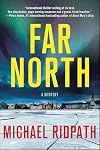
Far North is the second book of Michael Ridpath's “Fire and Ice Trilogy” set in Iceland. Boston police detective Magnus Jonsson is still in Reykjavik working with the Icelandic police on violent crime issues. Magnus, currently teaching at the Icelandic police college, hears of the London murder of Oskar Gunnarsson, former head of Odinsbanki before it was nationalized. While he has no evidence, other than gut instinct, he connects it to the suicide of local banker Gabriel Orn. This leap show more is one of the weakest parts of the plot but is obviously necessary to advance the storyline.
There's quite a bit of background on the Icelandic credit crunch of 2009 where the krona was devalued, savings evaporated overnight and everyday Icelander's were financially ruined. It makes it possible to understand how angry the Icelanders were and how the bankers could have been targeted.
There is also a second storyline that plays out in the background that revolves around Magnus's family history and how he ended up in Boston. This began in the first book and is obviously leading us toward a conclusion in the final book of the trilogy.
The reason I rated this 3.5 stars instead of 4 is because the plot of Far North is weaker than the first book (Where the Shadows Lie). The back-story starts in 1934 and transitions in an awkward way but once I understood what was going on it made more sense.
Iceland is the star once again. I found the atmosphere, culture and people fascinating. I enjoyed it very much and am on my way to the local bookstore to see if I can find a copy of the next book, Meltwater. Maybe along the way I'll stop at the travel agency too! show less
There's quite a bit of background on the Icelandic credit crunch of 2009 where the krona was devalued, savings evaporated overnight and everyday Icelander's were financially ruined. It makes it possible to understand how angry the Icelanders were and how the bankers could have been targeted.
There is also a second storyline that plays out in the background that revolves around Magnus's family history and how he ended up in Boston. This began in the first book and is obviously leading us toward a conclusion in the final book of the trilogy.
The reason I rated this 3.5 stars instead of 4 is because the plot of Far North is weaker than the first book (Where the Shadows Lie). The back-story starts in 1934 and transitions in an awkward way but once I understood what was going on it made more sense.
Iceland is the star once again. I found the atmosphere, culture and people fascinating. I enjoyed it very much and am on my way to the local bookstore to see if I can find a copy of the next book, Meltwater. Maybe along the way I'll stop at the travel agency too! show less

Toward the end of the first decade of the 21st century, Iceland is in the throes of the kreppa, or the great financial crisis that resulted when the massive investment bubble burst. Lots of bad debt, thousands with all of their savings wiped out, and other countries have felt the effects as well, making Iceland look bad on the global stage. The people are furious, and if the justice system won't punish those responsible for the bubble that collapsed, then perhaps someone will take matters show more into their own hands.
Magnus Jonson is an Icelander who left his home country at the age of 12 and is now a resident of Boston. He's returned to teach and take courses at the police college, but he's itching for the opportunity to work on a case as well. A noted banker's death is just the thing. Meanwhile, he has his own family history to contend with: the story of Hallgrimur and his friend, Benedikt, and the relationship between their families.
I greatly enjoyed the book, especially the story of Hallgrimur and Benedikt, which alternated well with the present-day storyline. I loved the Icelandic names and places and descriptions of the landscape, and the story itself proved quite thrilling toward the end in particular. The present-day storyline wrapped up neatly but the past storyline ended with enough of a cliffhanger to make me immediately put the next book, Meltwater, on the to-read list. I must find out what happens next with Benedikt! Magnus is also a fairly interesting character. I read this book without having read the first book in the series and thought it worked well without that background (although now that I've read and liked this book, I'll have to catch up!).
Overall I would recommend this book if you're interested in Iceland and/or have read the Erlendur series -- Magnus is less brooding than Erlendur but both have compelling family storylines that form a good backbone for the series. The current events are also a nice touch, and there is little gratuitous sex or violence. Worth a read! show less
Magnus Jonson is an Icelander who left his home country at the age of 12 and is now a resident of Boston. He's returned to teach and take courses at the police college, but he's itching for the opportunity to work on a case as well. A noted banker's death is just the thing. Meanwhile, he has his own family history to contend with: the story of Hallgrimur and his friend, Benedikt, and the relationship between their families.
I greatly enjoyed the book, especially the story of Hallgrimur and Benedikt, which alternated well with the present-day storyline. I loved the Icelandic names and places and descriptions of the landscape, and the story itself proved quite thrilling toward the end in particular. The present-day storyline wrapped up neatly but the past storyline ended with enough of a cliffhanger to make me immediately put the next book, Meltwater, on the to-read list. I must find out what happens next with Benedikt! Magnus is also a fairly interesting character. I read this book without having read the first book in the series and thought it worked well without that background (although now that I've read and liked this book, I'll have to catch up!).
Overall I would recommend this book if you're interested in Iceland and/or have read the Erlendur series -- Magnus is less brooding than Erlendur but both have compelling family storylines that form a good backbone for the series. The current events are also a nice touch, and there is little gratuitous sex or violence. Worth a read! show less
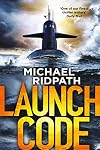
I do enjoy a ‘skeleton in the family closet’ story, and this is a good one.
The truth about a near-apocalyptic event in 1983 has run silent and deep for decades but even ‘loitering’ nuclear submarines have to surface eventually, as do secrets, and here we have national and family secrets unravelling in a compelling way.
The story shifts between past and present and I like the timeline contrast from the dark, claustrophobic world of submarines and the Cold War to the wide open skies of show more Norfolk.
Initially, I was worried about the number of present day characters introduced early in the proceedings and I began to feel this may become more of a family saga. It didn’t. I understood that I had to know these people, not only are they integral to the plot but, also, most of them might never have been born… and that is the scary aspect of this book.
I enjoyed reading this book. It engaged me from the first chapter and took me on many twists and turns. I only solved one mystery before the end and that is satisfying.
However, I’m still not sure whether or not I like Bill… but the author? Yes, this book has made me want to read more of his work.
Thank you to Readers First, Corvus, Atlantic Books and Micheal Ridpath for my ARC in return for my honest review. show less
The truth about a near-apocalyptic event in 1983 has run silent and deep for decades but even ‘loitering’ nuclear submarines have to surface eventually, as do secrets, and here we have national and family secrets unravelling in a compelling way.
The story shifts between past and present and I like the timeline contrast from the dark, claustrophobic world of submarines and the Cold War to the wide open skies of show more Norfolk.
Initially, I was worried about the number of present day characters introduced early in the proceedings and I began to feel this may become more of a family saga. It didn’t. I understood that I had to know these people, not only are they integral to the plot but, also, most of them might never have been born… and that is the scary aspect of this book.
I enjoyed reading this book. It engaged me from the first chapter and took me on many twists and turns. I only solved one mystery before the end and that is satisfying.
However, I’m still not sure whether or not I like Bill… but the author? Yes, this book has made me want to read more of his work.
Thank you to Readers First, Corvus, Atlantic Books and Micheal Ridpath for my ARC in return for my honest review. show less
Lists
Awards

You May Also Like


Associated Authors
Statistics
- Works
- 37
- Also by
- 21
- Members
- 2,115
- Popularity
- #12,169
- Rating
- 3.5
- Reviews
- 85
- ISBNs
- 294
- Languages
- 16
- Favorited
- 4