
Lynn Peppas
Author of Life in Ancient Greece
Series
Works by Lynn Peppas
Tagged
Common Knowledge
There is no Common Knowledge data for this author yet. You can help.
Members
Reviews
Holi by Lynn Peppas

A recent discussion, over in the Children's Books Group to which I belong has revealed that there is a real dearth of good children's titles (here in the US, anyway) about, or set during Holi - the Hindu Festival of Colors. There's Here Comes Holi: The Festival of Colors (on it's way to me via Inter-Library Loan), but other than that, this type of informational book, published as part of a series, and explicitly for the library market, seems to be pretty much all there is.
That seems rather show more unfortunate to me, as holiday tales are a great way to introduce young children to some of the beliefs and customs of other cultures. After all, Hinduism is the world's third largest religion, and a growing number of young Americans are of that faith, and should be able to find books that reflect their experiences. Here's a holiday involving bonfires, throwing brightly-colored paints and powder, and (upon occasion) contests between men and women. If that can't be made into a good children's story, I don't know what can!
Until such time as it is, however, we have books like Lynn Peppas' Holi, which gives a very brief outline of the holiday, and the stories and customs associated with it. With minimal, basic text, and lots of color photographs, this is an appealing volume, and does what it sets out to do: inform the young reader (early elementary-school level, I would say) about Holi. At $26.60 for a 32-page picture-book, however, it will probably need to be a library book for most families. show less
That seems rather show more unfortunate to me, as holiday tales are a great way to introduce young children to some of the beliefs and customs of other cultures. After all, Hinduism is the world's third largest religion, and a growing number of young Americans are of that faith, and should be able to find books that reflect their experiences. Here's a holiday involving bonfires, throwing brightly-colored paints and powder, and (upon occasion) contests between men and women. If that can't be made into a good children's story, I don't know what can!
Until such time as it is, however, we have books like Lynn Peppas' Holi, which gives a very brief outline of the holiday, and the stories and customs associated with it. With minimal, basic text, and lots of color photographs, this is an appealing volume, and does what it sets out to do: inform the young reader (early elementary-school level, I would say) about Holi. At $26.60 for a 32-page picture-book, however, it will probably need to be a library book for most families. show less
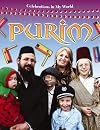
I really liked this book, but do not know if it would be appealing to most elementary school students. The format of this story reminds me of a short textbook. There are headings and subheadings with a lot of text and very few pictures. The pictures are all real images and there are no drawings. The pictures include captions, which help describe what is happening in each picture and help label Jewish foods. Some students may be overwhelmed by all of the information in this book that is shown show more through full paragraphs of text. The recommended age for this book is 5-7, but this book would be much better for older elementary school students because of its length of the frequent use of tier III vocabulary words relating to Judaism. These words include “synagogue”, “mitzvah”, and “Hamantasch”. As someone who celebrates Purim, I know that the information in this book is accurate and does a great job of informing people about this holiday. There are no characters to relate to and no real plot, so younger students could get bored and find it hard to retain all of the information in this story. It could also be boring for Jewish students to read. While it is a great representation of their culture, this story would just give these students information they already know without a plot to offer. This book is not solely about food, but there are two long sections titled “The Purim Meal” and “Traditional Purim Foods”. These sections describe traditional Jewish dishes in great detail, which helps students learn about foods that are important in Judaism. Most non-Jewish students know about Chanukah, but do not know Purim exists, so I like that the big idea of this book is to inform everyone about a significant Jewish holiday. show less
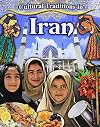
I enjoyed reading Cultural Traditions in Iran. After reading the text I feel that I have gained a large amount of new information about Iran. The book covers a large array of topics, including geographical location, attire, celebrations, and holidays. What I loved most about the book was the way the information is separated into two page summaries. Every time I turned the page, the following two pages functioned as one. For example, pages 4 and 5 functioned as one introductory page titled show more “Welcome to Iran”. The page introduced the country, its location, map display, language, and religion. Pages 10 and 11 introduce “Islamic Republic Day”. The page informs the reader of the origination of the holiday and why is exist. It is explained that “Iranians celebrate their country by watching parades and fireworks, going on picnics, and gathering in public squares to listen to speeches.” The information is very thorough and descriptive allowing the reader to develop a strong understanding for the holiday.
I also loved the pictures provided. Each holiday is thoroughly described in the verbiage, but the image provided is what brings it to life. The photos are candid and show the specific action being described. For example, on the page describing the holiday “Sizdah Bedar” there is a photo of a large group sitting on the grass with their families enjoying a large picnic. In the candid photo the families are laughing, talking, and eating. The photo provides a real image of how the holiday is celebrated and the importance of family time. On the following page there is a photo of a family of 5 playing soccer together. The ball and the family members are in motion, they are smiling and appear to be having a wonderful time.
The big idea of the book is to provide a look into Iran as a country and the traditions that take place there. The author doesn’t only provide information about traditions, she goes more in depth and shares how the people celebrate them and their origination. After reading the book, I feel very knowledgeable in regard to the Iranian traditions and how they are celebrated. show less
I also loved the pictures provided. Each holiday is thoroughly described in the verbiage, but the image provided is what brings it to life. The photos are candid and show the specific action being described. For example, on the page describing the holiday “Sizdah Bedar” there is a photo of a large group sitting on the grass with their families enjoying a large picnic. In the candid photo the families are laughing, talking, and eating. The photo provides a real image of how the holiday is celebrated and the importance of family time. On the following page there is a photo of a family of 5 playing soccer together. The ball and the family members are in motion, they are smiling and appear to be having a wonderful time.
The big idea of the book is to provide a look into Iran as a country and the traditions that take place there. The author doesn’t only provide information about traditions, she goes more in depth and shares how the people celebrate them and their origination. After reading the book, I feel very knowledgeable in regard to the Iranian traditions and how they are celebrated. show less
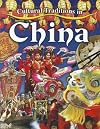
“Cultural Traditions in China” is a great informational text. I like that there are plenty of pictures, many of which fill the entire page, like the one of the Great Wall of China. These photographs are beautiful, and really give me a sense of what the country looks like. I also like that there is a glossary in the back that explains more complex words like ancestor and lunar. I think the overall theme in this particular text is about celebrations and the different days they occur on in show more China. Some examples are the Qing Ming Festival and Mid-Autumn Day. show less
You May Also Like


Statistics
- Works
- 85
- Members
- 770
- Popularity
- #33,050
- Rating
- 4.0
- Reviews
- 12
- ISBNs
- 370
- Languages
- 2