
Deborah Heiligman
Author of From Caterpillar to Butterfly (Let's-Read-and-Find-Out Science, Stage 1)
About the Author
Series
Works by Deborah Heiligman
From Caterpillar to Butterfly (Let's-Read-and-Find-Out Science, Stage 1) (1996) 2,423 copies, 31 reviews
Torpedoed: The True Story of the World War II Sinking of "The Children's Ship" (2019) 265 copies, 7 reviews
Celebrate Rosh Hashanah and Yom Kippur: With Honey, Prayers, and the Shofar (2007) 180 copies, 1 review
Associated Works
Don't Cramp My Style: Stories About "That" Time of the Month (2004) — Contributor — 31 copies, 1 review
Tagged
Common Knowledge
- Birthdate
- 1958
- Gender
- female
- Education
- Brown University (AB|Religious Studies|1980)
- Occupations
- writer
- Relationships
- Weiner, Jonathan (spouse)
- Nationality
- USA
- Birthplace
- Allentown, Pennsylvania, USA
- Places of residence
- Bucks County, Pennsylvania, USA
New York, New York, USA
Providence, Rhode Island, USA - Associated Place (for map)
- USA
Members
Reviews
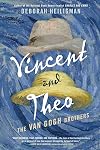
A story about an artist, Vincent Van Gogh, and his brother, Theo, an art dealer, and how their relationship as brothers made the artist we know as Van Gogh.
At first I wondered why it was marketed to young adults. Then I started reading and saw that the simplicity of the writing style and the short chapters might appeal to younger readers.
It reads like a novel, a novel you can't put down. There is so much research here, and so many primary sources, their letters, from which Heligman drew to show more write her biography. I felt, as I read, that I was there in the room with them.
It was also a story of courage, Vincent's courage in the face of undiagnosed mental illness, probably bipolar disorder, based on my reading. How he managed to paint during his good times, and survive his bad times, until he didn't. And his friendship, not only with Theo but with other artists of his time, how he befriended, and Theo promoted the Impressionists. He had a tremendous generosity of spirit, first trying to work as an evangelist to the very poorest, then championing other artists when he hadn't even achieved renown himself.
It is a heartbreaking story. You want to shout, "No," as each brother dies. Their stories ended too quickly. And it seems to me, but for Theo's wife, Johanna Bonger, we would not have come to know Van Gogh as we do. It was she who pushed his art into the world, after Theo died.
Recommend this to readers who are artists or interested in art, even if they are no longer "young adults." show less
At first I wondered why it was marketed to young adults. Then I started reading and saw that the simplicity of the writing style and the short chapters might appeal to younger readers.
It reads like a novel, a novel you can't put down. There is so much research here, and so many primary sources, their letters, from which Heligman drew to show more write her biography. I felt, as I read, that I was there in the room with them.
It was also a story of courage, Vincent's courage in the face of undiagnosed mental illness, probably bipolar disorder, based on my reading. How he managed to paint during his good times, and survive his bad times, until he didn't. And his friendship, not only with Theo but with other artists of his time, how he befriended, and Theo promoted the Impressionists. He had a tremendous generosity of spirit, first trying to work as an evangelist to the very poorest, then championing other artists when he hadn't even achieved renown himself.
It is a heartbreaking story. You want to shout, "No," as each brother dies. Their stories ended too quickly. And it seems to me, but for Theo's wife, Johanna Bonger, we would not have come to know Van Gogh as we do. It was she who pushed his art into the world, after Theo died.
Recommend this to readers who are artists or interested in art, even if they are no longer "young adults." show less
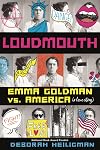
What an absolute badass. Emma Goldman (1869-1940) was born in what is now Lithuania but was then within the Russian Empire, Emma had a difficult childhood, frequently the target of her father's abuse and her mother's disinterest, although she was close with her older sister Helena. She emigrated to the United States and soon moved to New York City, propelled by the ideals of anarchism, which she held close her whole life. (She never advocated for women's right to vote, because she didn't show more believe in voting - or government - at all.) She had a series of romantic relationships in her life, including a brief marriage that gave her citizenship, but her longest companion was Alexander Berkman (Sasha), who was equally dedicated to the anarchist cause. Emma wrote and gave speeches on a variety of topics, from workers' rights to birth control, and was frequently arrested and jailed; she often defended herself in court (she was fluent in several languages; a year imprisoned on Blackwell's Island helped her with her English). Ultimately, after over thirty years in the country, she was stripped of her citizenship and deported, though she is buried in Chicago. Her life intersected with so many others - Margaret Sanger, Nellie Bly, Paul Robeson - and her dedication to her cause(s) never wavered. Impressive.
Quotes/notes
To combat workplace injustice, people organized unions. One person alone has no power, but in a group, there is a better chance to achieve change. (6)
These lectures and their success made Emma confident that she could reach people with her words. She could use her mind to change other people's minds. She could use her power and passion to agitate for change. (73)
[Nellie Bly(!) interviewed Emma for an article in The World in 1893] (125)
Fresh out of prison [in 1894], Emma began: "If the representatives of your Government intend to prosecute women for talking, they will have to begin with their mothers, wives, sisters, and sweethearts, for thy will never stop women from talking." (147)
1873 Comstock Act --> Emma added the right to birth control information to her causes and her lecture list. She would later mentor Margaret Sanger, who became the most famous proponent of access to birth control for women in America. Also an anarchist, Sanger later left the movement and didn't give Emma credit for mentoring her. (156)
Emma's main goal was the make people question the status quo. She wanted them to understand they didn't have to - and shouldn't - accept the way things were. They could change what was considered unchangeable. (158)
Anarchism the way Emma saw it - people helping one another to live without government, taking care of the people in their own communities - was idealistic. (161)
...just in case, she started to carry a book with her whenever she gave a speech so that she would have something to read if she was sent to jail. (167)
Emma was arrested, she said, not because she was speaking but because of whom she was speaking for - the working class. (231)
Emma warned against a country that locked up men and women who stand for an ideal: "What chance is there for that country and for the future and for the young generation, a country that has not in her midst dangerous disturbers and troublemakers who can see further than their time and propagate a new idea?" Good troublemakers. (246)
Emma...always had a lot to say against the kind of patriotism that led to prejudice and war... (247)
[Roger Baldwin visited Emma in prison in St. Louis. He had been inspired by Emma to become an activist and went on to create the ACLU] (255)
[J. Edgar Hoover wrote a letter recommending deportation for Emma Goldman and Alexander (Sasha) Berkman] (258)
"Be of good cheer, beloved comrades. Our enemies are fighting a losing battle. They are of the dying past. We are of the glowing future." (265)
[Emma's niece Stella's son] Ian Ballentine became a publisher who made paperback books affordable to everyone. (280)
From the Acknowledgments:
It's not every editor who gets a tattoo of your subject after reading the manuscript. (285) show less
Quotes/notes
To combat workplace injustice, people organized unions. One person alone has no power, but in a group, there is a better chance to achieve change. (6)
These lectures and their success made Emma confident that she could reach people with her words. She could use her mind to change other people's minds. She could use her power and passion to agitate for change. (73)
[Nellie Bly(!) interviewed Emma for an article in The World in 1893] (125)
Fresh out of prison [in 1894], Emma began: "If the representatives of your Government intend to prosecute women for talking, they will have to begin with their mothers, wives, sisters, and sweethearts, for thy will never stop women from talking." (147)
1873 Comstock Act --> Emma added the right to birth control information to her causes and her lecture list. She would later mentor Margaret Sanger, who became the most famous proponent of access to birth control for women in America. Also an anarchist, Sanger later left the movement and didn't give Emma credit for mentoring her. (156)
Emma's main goal was the make people question the status quo. She wanted them to understand they didn't have to - and shouldn't - accept the way things were. They could change what was considered unchangeable. (158)
Anarchism the way Emma saw it - people helping one another to live without government, taking care of the people in their own communities - was idealistic. (161)
...just in case, she started to carry a book with her whenever she gave a speech so that she would have something to read if she was sent to jail. (167)
Emma was arrested, she said, not because she was speaking but because of whom she was speaking for - the working class. (231)
Emma warned against a country that locked up men and women who stand for an ideal: "What chance is there for that country and for the future and for the young generation, a country that has not in her midst dangerous disturbers and troublemakers who can see further than their time and propagate a new idea?" Good troublemakers. (246)
Emma...always had a lot to say against the kind of patriotism that led to prejudice and war... (247)
[Roger Baldwin visited Emma in prison in St. Louis. He had been inspired by Emma to become an activist and went on to create the ACLU] (255)
[J. Edgar Hoover wrote a letter recommending deportation for Emma Goldman and Alexander (Sasha) Berkman] (258)
"Be of good cheer, beloved comrades. Our enemies are fighting a losing battle. They are of the dying past. We are of the glowing future." (265)
[Emma's niece Stella's son] Ian Ballentine became a publisher who made paperback books affordable to everyone. (280)
From the Acknowledgments:
It's not every editor who gets a tattoo of your subject after reading the manuscript. (285) show less
A marvelous portrait of brothers Vincent and Theo Van Gogh, who were devoted to each other through thick and (more often) thin throughout their too-short lives. They moved often after leaving home and wrote a tremendous volume of letters to each other (and other relatives, friends, and eventually Theo's wife Jo), which formed the basis of Heiligman's primary source research. Vincent did not start out as a painter, but once he found that path, he worked incredibly hard - often neglecting his show more health, buying paint instead of food - and was impressively productive as he learned and mastered his craft. Yet without Theo's financial support and firm belief in Vincent's ability, it's likely there would be much less art now, and it would be less well known. And since Theo himself died young, of syphilis, it was Jo and their son who we have to thank for preserving and championing Vincent's art and establishing the Van Gogh Museum where so many of his works reside today. Both brothers struggled with their mental health and physical health, but despite their ups and downs over the years, their relationship with each other was the most important in either of their lives.
Quotes
But sometimes a person who seems easy is one whose calm outside belies a troubled and turbulent inside. (re: Theo, 39)
"I gave up on a girl and she married someone else, and I went far away from her and kept her in my thoughts anyway. Fatal." (Vincent to Theo, 1881)
"[Vincent] has illusions about people and judges people before he knows them, and then when he finds out what they're really like and they don't live up to the opinion he formed of them prematurely, he's so disappointed that he throws them away like a bouquet of wilted flowers..." (Anna to Theo, 1874)
Being sad for too long could cause lasting damage, [Dorus] says. (71)
One is never truly alone if one has art. (100) [see Jonathan Franzen, 'the first thing reading teaches is how to be alone']
You can't look for the same qualities in everyone! (Theo to Vincent, 138)
"Success is sometimes the outcome of a whole string of failures." (Vincent to Theo, 173)
"I can't help but make progress precisely through learning by doing; every drawing one makes, every study one paints is a step. It's true that it's like going along a road, one can see the steeple in the distance, but the land undulates, so that when one things one is there, there's another stretch that one didn't see at first and which is added on. However, one does get nearer." (Vincent to Theo, 183)
"I keep on making what I can't do yet in order to learn to be able to do it." (Vincent to Van Rappard, 211)
Painted portraits have a life of their own that comes from deep in the soul of the painter and where the machine [camera] can't go. (227)
He is more committed to being that artist than to taking regular care of himself. (324)
"There's something of that mysteriousness that one gets by looking at nature as if through the eyelashes, so that the forms simplify themselves into patches of color." (Vincent to Theo, 373)
Vincent died in Theo's arms.
Theo dies alone. (402) show less
Quotes
But sometimes a person who seems easy is one whose calm outside belies a troubled and turbulent inside. (re: Theo, 39)
"I gave up on a girl and she married someone else, and I went far away from her and kept her in my thoughts anyway. Fatal." (Vincent to Theo, 1881)
"[Vincent] has illusions about people and judges people before he knows them, and then when he finds out what they're really like and they don't live up to the opinion he formed of them prematurely, he's so disappointed that he throws them away like a bouquet of wilted flowers..." (Anna to Theo, 1874)
Being sad for too long could cause lasting damage, [Dorus] says. (71)
One is never truly alone if one has art. (100) [see Jonathan Franzen, 'the first thing reading teaches is how to be alone']
You can't look for the same qualities in everyone! (Theo to Vincent, 138)
"Success is sometimes the outcome of a whole string of failures." (Vincent to Theo, 173)
"I can't help but make progress precisely through learning by doing; every drawing one makes, every study one paints is a step. It's true that it's like going along a road, one can see the steeple in the distance, but the land undulates, so that when one things one is there, there's another stretch that one didn't see at first and which is added on. However, one does get nearer." (Vincent to Theo, 183)
"I keep on making what I can't do yet in order to learn to be able to do it." (Vincent to Van Rappard, 211)
Painted portraits have a life of their own that comes from deep in the soul of the painter and where the machine [camera] can't go. (227)
He is more committed to being that artist than to taking regular care of himself. (324)
"There's something of that mysteriousness that one gets by looking at nature as if through the eyelashes, so that the forms simplify themselves into patches of color." (Vincent to Theo, 373)
Vincent died in Theo's arms.
Theo dies alone. (402) show less

This rich, insightful portrait of Charles and Emma Darwin's marriage explores a dimension of the naturalist's life that has heretofore been largely ignored. Emma Wedgewood, Darwin’s cousin, was a highly intelligent and deeply religious woman, a fascinating counterpoint to her equally brilliant husband and his unyielding belief in the world of science and reason. Together, they were a remarkable team, bonded by a deep mutual respect, admiration, and love. They constantly challenged each show more other’s beliefs and ideas about the world, Emma chiding Charles for his inability to believe in spiritual faith, and Charles countering by expressing how ridiculous it is to place faith in something impossible to rationally or scientifically explain. So vital and inspiring was Emma to Charles that I found myself wondering what may have been had they not met. Emma, with her support, understanding, and intellect, had as much to do with the emergence of Darwin’s theory of evolution as did his lifelong fascination with the natural world, and this seemingly disparate mix of religious conviction and scientific reason converged in a relationship that forever changed how we see the world show less
Lists
Awards


You May Also Like


Associated Authors
Statistics
- Works
- 39
- Also by
- 1
- Members
- 10,373
- Popularity
- #2,291
- Rating
- 4.0
- Reviews
- 374
- ISBNs
- 216
- Languages
- 7
- Favorited
- 1