
Jonathan Weiner
Author of The Beak of the Finch: A Story of Evolution in Our Time
About the Author
Jonathan Weiner's books have won the Pulitzer Prize, the National Book Critics Circle Award, and the Los Angeles Times Book Prize. He is the author of The Beak of the Finch; Time, Love, Memory; His Brother's Keeper; and other books. He lives in New York, where he teaches science writing at Columbia show more University's Graduate School of Journalism. show less
Image credit: Columbia University
Works by Jonathan Weiner
Time, Love, Memory: A Great Biologist and His Quest for the Origins of Behavior (1999) 530 copies, 11 reviews
Associated Works
Tagged
Common Knowledge
- Canonical name
- Weiner, Jonathan
- Birthdate
- 1953-11-26
- Gender
- male
- Education
- Harvard College (AB|1976)
- Occupations
- writer
journalist
professor - Organizations
- Columbia University Graduate School of Journalism
- Awards and honors
- Pulitzer Prize for General Nonfiction (1995)
Los Angeles Times Book Prize for Science (1994)
National Book Critics Circle Award (1999) - Relationships
- Heiligman, Deborah (spouse)
- Nationality
- USA
- Birthplace
- New York, New York, USA
- Associated Place (for map)
- New York, USA
Members
Reviews

This book is a highly regarded examination of the state-of-the-art in genetics and its discoveries regarding the biological foundations of behavior. It won the 1999 American National Book Critics Circle Award for General Nonfiction, highlighting the life and contributions of pioneering scientist Seymour Benzer and his groundbreaking studies of fruit flies (*Drosophila*).
It serves as an engaging biography of Seymour Benzer, a gifted and somewhat eccentric scientist who invented the use of show more fruit flies to investigate behavior's genetic foundation. Weiner details eloquently Benzer's path from physics to phage genetics and finally to the study of *Drosophila*, demonstrating his distinct method of scientific investigation. The book focuses on the "Fly Rooms" at Caltech, where thousands of mutant fruit flies were carefully examined to learn how genes affect intricate behaviors like learning and recall (memory), courtship rituals (love), and circadian rhythms (time). Tiny creatures, with their relatively simple genetic makeup, became invaluable models for understanding fundamental biological processes that have counterparts in humans.
Beyond Benzer's individual story, "Time, Love, Memory" provides a broader historical context for the field of genetics, tracing its evolution from Gregor Mendel's pea plants to the revolutionary discoveries of DNA by Watson and Crick and the subsequent explosion of molecular biology. Weiner adeptly connects Benzer's work to these larger scientific narratives.
Weiner excels at humanizing the scientific process, offering "you-are-there" descriptions of lab life and portraying the personalities of the scientists involved. He reveals the humor, quirks, frustrations, and triumphs that are inherent to scientific discovery, making complex ideas accessible and engaging for a wide audience. He also weaves in allusions to philosophy, literature, and popular culture, enriching the narrative. show less
It serves as an engaging biography of Seymour Benzer, a gifted and somewhat eccentric scientist who invented the use of show more fruit flies to investigate behavior's genetic foundation. Weiner details eloquently Benzer's path from physics to phage genetics and finally to the study of *Drosophila*, demonstrating his distinct method of scientific investigation. The book focuses on the "Fly Rooms" at Caltech, where thousands of mutant fruit flies were carefully examined to learn how genes affect intricate behaviors like learning and recall (memory), courtship rituals (love), and circadian rhythms (time). Tiny creatures, with their relatively simple genetic makeup, became invaluable models for understanding fundamental biological processes that have counterparts in humans.
Beyond Benzer's individual story, "Time, Love, Memory" provides a broader historical context for the field of genetics, tracing its evolution from Gregor Mendel's pea plants to the revolutionary discoveries of DNA by Watson and Crick and the subsequent explosion of molecular biology. Weiner adeptly connects Benzer's work to these larger scientific narratives.
Weiner excels at humanizing the scientific process, offering "you-are-there" descriptions of lab life and portraying the personalities of the scientists involved. He reveals the humor, quirks, frustrations, and triumphs that are inherent to scientific discovery, making complex ideas accessible and engaging for a wide audience. He also weaves in allusions to philosophy, literature, and popular culture, enriching the narrative. show less
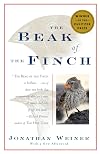
I vaguely recall reading this in college (maybe?) or before I went to grad school? The information (like in the book about pigeons...) all felt familiar. Considering I've had a lifelong goal to understand evolution, it would not surprise me that I've read this. before. I don't recall how I used to keep track of what I read before Goodreads...I'm terrible at lists. Or journaling (I definitely don't keep them, all in the garbage). Or being consistent...
But this book is excellent and show more consistent. It updated the masses on where we were with evolutionary thought in a time (the 1990s) when creationist ideas were EVERYWHERE (at least in my life) and evolution was most definitely not taught (wait...was evolution our generations critical race theory?). I'm not sure why the two ideas (evolution, creationists) have to be separate. If there is a Creator, why would any human think they could say "no, the Creator is not smart enough to have created species to evolve." I'm more of the mind-set that evolution and intelligent design go hand-in-hand because if I were an all-powerful being and I liked to build worlds, I would sometimes want to have control over everything they do (The Sims) and other times I would want to control the infrastructure (SimCity). Sometimes I might want to mess around and see what happens if I set it on hyper-speed and let those creatures do what they do (umm..the game in Oryx & Crake?). I mean, when you're an all powerful being, you get to do whatever you want and as a lowly human I can't comprehend all that an APB would come up with. show less
But this book is excellent and show more consistent. It updated the masses on where we were with evolutionary thought in a time (the 1990s) when creationist ideas were EVERYWHERE (at least in my life) and evolution was most definitely not taught (wait...was evolution our generations critical race theory?). I'm not sure why the two ideas (evolution, creationists) have to be separate. If there is a Creator, why would any human think they could say "no, the Creator is not smart enough to have created species to evolve." I'm more of the mind-set that evolution and intelligent design go hand-in-hand because if I were an all-powerful being and I liked to build worlds, I would sometimes want to have control over everything they do (The Sims) and other times I would want to control the infrastructure (SimCity). Sometimes I might want to mess around and see what happens if I set it on hyper-speed and let those creatures do what they do (umm..the game in Oryx & Crake?). I mean, when you're an all powerful being, you get to do whatever you want and as a lowly human I can't comprehend all that an APB would come up with. show less
Islands are the perfect laboratory for studying a species. In the case of the Galapagos archipelago, the islands are isolated like a fortress; no one can easily arrive or depart. Princeton University biologists Peter and Rosemary Grant, along with their daughters, take a small group of scientists to help them investigate Darwin's finches. By the beak of the finch they are able to track an evolutionary journey through time. Beak of the Finch is an extraordinary account of survival of the show more fittest as it happened then; as it is happening right now. Our world is constantly evolving and adapting and we aren't done yet.
Word to the wise - listen to this on audio. John McDonough does a fantastic job. Weiner's writing may be approachable science, but McDonough's reading makes it all the more enjoyable.
As an aside, I love books I like to describe as "rabbit holes." They take me to knowledge I never would have learned otherwise. I think people describe the internet that way sometimes. In this case, I learned that when a finch is ready to mate its beak turns black. Who knew? show less
Word to the wise - listen to this on audio. John McDonough does a fantastic job. Weiner's writing may be approachable science, but McDonough's reading makes it all the more enjoyable.
As an aside, I love books I like to describe as "rabbit holes." They take me to knowledge I never would have learned otherwise. I think people describe the internet that way sometimes. In this case, I learned that when a finch is ready to mate its beak turns black. Who knew? show less
Five years ago I realized a life-long dream with a trip to the Galapagos Islands. It was a wonderful trip and we met a great group of people who we have stayed friends with ever since. They had read this book before they came and recommended it.
A team of evolutionary biologists, headed by Peter and Rosemary Grant, spent up to six months a year on the isolated island of Daphne Major studying the finches who live there. The differences between the species were noticed by Charles Darwin when show more the Beagle spent time in the Galapagos Islands. His theory of selection was, in part, based upon these birds. So they seemed a natural population for the Grants to study. During the time they were on the island there was one year of severe drought and one year of excessive rain. During the drought years the smaller beaked finches had trouble finding seeds to eat and many died out. Subsequently, larger beaked birds were observed on the island. Then when the rainy year came, the smaller beaked finches were able to get the softer seeds more quickly and they thrived. Based on their studies the Grants derived three main observations:
1. Natural selection is a variable and constantly changing process
2. It can be a quite rapid process, not taking millennia as Darwin thought.
3. Selection can change over time.
Jonathan Weiner explains the Grants' studies in clear language. He also extrapolates from their findings to those of other researchers that support and add to the studies. I learned so much about evolution and natural selection by reading this book.
The Grants are now based in Princeton University but they met at the University of British Columbia and they both worked at McGill University in the 1970s when they started their studies of the Galapagos finches. It seems that Canada lost out by not supporting their work enough. (Note: Weiner only associates them with Princeton; I learned about their Canadian connection from Wikipedia.) show less
A team of evolutionary biologists, headed by Peter and Rosemary Grant, spent up to six months a year on the isolated island of Daphne Major studying the finches who live there. The differences between the species were noticed by Charles Darwin when show more the Beagle spent time in the Galapagos Islands. His theory of selection was, in part, based upon these birds. So they seemed a natural population for the Grants to study. During the time they were on the island there was one year of severe drought and one year of excessive rain. During the drought years the smaller beaked finches had trouble finding seeds to eat and many died out. Subsequently, larger beaked birds were observed on the island. Then when the rainy year came, the smaller beaked finches were able to get the softer seeds more quickly and they thrived. Based on their studies the Grants derived three main observations:
1. Natural selection is a variable and constantly changing process
2. It can be a quite rapid process, not taking millennia as Darwin thought.
3. Selection can change over time.
Jonathan Weiner explains the Grants' studies in clear language. He also extrapolates from their findings to those of other researchers that support and add to the studies. I learned so much about evolution and natural selection by reading this book.
The Grants are now based in Princeton University but they met at the University of British Columbia and they both worked at McGill University in the 1970s when they started their studies of the Galapagos finches. It seems that Canada lost out by not supporting their work enough. (Note: Weiner only associates them with Princeton; I learned about their Canadian connection from Wikipedia.) show less
Lists
Awards


You May Also Like


Associated Authors
Statistics
- Works
- 9
- Also by
- 2
- Members
- 3,812
- Popularity
- #6,647
- Rating
- 4.0
- Reviews
- 64
- ISBNs
- 65
- Languages
- 10
- Favorited
- 4