
Joseph Bédier (1864–1938)
Author of The Romance of Tristan and Iseult
About the Author
Image credit: www.academie-francaise.fr
Works by Joseph Bédier
Histoire de la littérature française illustrée. Tome second : du XVII e siècle à nos jours (1948) 3 copies
Les fabliaux: études de littérature populaire et d'histoire littéraire du Moyen Age (2010) — Author — 3 copies
Romance of Tristan & Iseult 1 copy
Storia psicologica della Prima Guerra Mondiale. L'uso delle false notizie nella Grande Guerra (2015) 1 copy
Histoire de la nation française. tome XII : histoire des lettres. 1er volume (des origines à Ronsard.) (1929) 1 copy
LE ROMAN DE TRISRAN ET ISEUT 1 copy
Роман за Тристан и Изолда 1 copy
La Chanson de Roland II 1 copy
Associated Works
Tagged
Common Knowledge
- Canonical name
- Bédier, Joseph
- Legal name
- Bédier, Charles-Marie-Joseph
- Birthdate
- 1864-01-28
- Date of death
- 1938-08-29
- Gender
- male
- Education
- École Normale Supérieure (l'agrégation de lettres 1883|doctorat 1893)
- Occupations
- scholar
writer
historian
professor - Organizations
- Collège de France (1903-1936)
University of Fribourg, Switzerland - Awards and honors
- Académie française (1920)
Medieval Academy of America (Corresponding Fellow, 1927)
American Academy of Arts and Sciences (Foreign Honorary, 1929)
American Philosophical Society (International Member, 1937)
Légion d'Honneur (Grand-croix, 1937) - Nationality
- France
- Birthplace
- Paris, France
- Places of residence
- Réunion
Paris, France - Place of death
- Le Grand-Serre, France
- Associated Place (for map)
- France
Members
Reviews
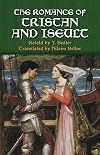
The Romance of Tristan and Iseult (1913; 12th century), Drawn from the Best French Sources and Retold by J. Bédier; Rendered into English by H. Belloc (5 stars)
Six-word review: Very old, very beautiful, very rich.
Read this medieval romance for its beautiful language and for its place in our history.
I purchased a paper copy of The Romance of Tristan and Iseult, the 1913 translation by Hilaire Belloc, so I could enjoy it in comfort, away from anything that plugs in. I grew up reading stories show more like that, written like that, alongside the King James Bible.
Some of the most beautiful English in existence is in the King James version of the Bible, released in 1606. For poetry and cadence, a well-told medieval tale comes behind it, but not by far. The marvel of the Belloc treatment of Tristan and Iseult is not only that someone could still write like that in the twentieth century or even that it could still be published--because in 1913 there was still a traditional very high literary standard--but that a hundred years later someone is keeping it in print. It begins:
My lords, if you would hear a high tale of love and of death, here is that of Tristan and Queen Iseult; how to their full joy, but to their sorrow also, they loved each other, and how at last they died of that love together upon one day; she by him and he by her.
The story tells how heroic Tristan, sent to fetch the fair Iseult as bride of his uncle King Mark, unwittingly shares a love potion with her. The two are thus powerless to resist an adulterous affair, forcing them to deceive good King Mark and draw down calumny upon themselves. What happens then and how it all turns out are not just part of the story but part of our heritage as speakers of English.
You can also find this work online, thanks to Project Gutenberg:
http://www.gutenberg.org/files/14244/14244-h/14244-h.htm#link2H_4_0005 show less
Six-word review: Very old, very beautiful, very rich.
Read this medieval romance for its beautiful language and for its place in our history.
I purchased a paper copy of The Romance of Tristan and Iseult, the 1913 translation by Hilaire Belloc, so I could enjoy it in comfort, away from anything that plugs in. I grew up reading stories show more like that, written like that, alongside the King James Bible.
Some of the most beautiful English in existence is in the King James version of the Bible, released in 1606. For poetry and cadence, a well-told medieval tale comes behind it, but not by far. The marvel of the Belloc treatment of Tristan and Iseult is not only that someone could still write like that in the twentieth century or even that it could still be published--because in 1913 there was still a traditional very high literary standard--but that a hundred years later someone is keeping it in print. It begins:
My lords, if you would hear a high tale of love and of death, here is that of Tristan and Queen Iseult; how to their full joy, but to their sorrow also, they loved each other, and how at last they died of that love together upon one day; she by him and he by her.
The story tells how heroic Tristan, sent to fetch the fair Iseult as bride of his uncle King Mark, unwittingly shares a love potion with her. The two are thus powerless to resist an adulterous affair, forcing them to deceive good King Mark and draw down calumny upon themselves. What happens then and how it all turns out are not just part of the story but part of our heritage as speakers of English.
You can also find this work online, thanks to Project Gutenberg:
http://www.gutenberg.org/files/14244/14244-h/14244-h.htm#link2H_4_0005 show less
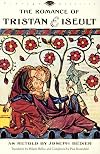
What a fantastic thing Joseph Bédier did here, reconstructing this story in 1900 from ancient French poems and other sources. The tale is of the brave young knight Tristan, and the fair lady with the ‘hair of gold’ Iseult, and it’s complete with honor and romance, battles with dragons, magic philters, court intrigues, and daring escapes. Tristan is bearing Iseult across the sea to wed his King, when the two inadvertently drink a love potion that binds them forever, and leads them into show more adultery. Bédier’s language is enchanting, and adds to his storytelling. What a beautiful image Tristan conjures of a crystal chamber, between the clouds and heaven, filled with roses and the morning, where he would like to take Iseult. How well he describes everyone seeing the “Love terrible, that rode them”, as they simply can’t be apart. There are moments that are far from PG, such as Iseult’s loyal maid pretending to be her and slipping into the King’s bed to sacrifice her ‘purity’ to him, in order to conceal Iseult having lost hers to Tristan, as well as Iseult being turned over to a mob of lepers who want to “have her in common”, but in general the story is told with great restraint, despite a plot containing such passion and violence. If you’re looking for a classic medieval tale, this one’s for you. show less

The story of Tristan and Iseult was known to me because it was a bedtime story of mine. It's a tale which belongs both to the French and the British as part of their confusing entwined history due to the huge amount of ships which crossed the channel in both directions. I grew up believing it went a little differently than Monsieur Bédier here relates it, but I am satisfied and confused in new ways now that I've read the original translation.
Historical opinions on religion, filial piety, show more woman's roles, disease and racism aside, this story perplexes me because of the narrators deep sympathy for the characters. Perhaps I do not know about French stories, and perhaps this, like Le Morte d'Arthur, is merely the fashion, but I cannot reconcile the story that has survived until today with the sensibilities of those days.
Tristan is a blessed son of kings, and after a childhood spent in hiding, he returns to the lands of his uncle, King Mark, and becomes the Lancelot to his Arthur. Tristan cannot be defeated, in music, in combat, he is champion and is cherished and loved by all but four barons whose jealously or chivalry bring them to unfold some wicked plots against him.
Mark is a bachelor and when pressed to sire an heir, he mocks his counsel by taking a golden hair a sparrow has brought across the Irish Sea and requesting its owner to become his wife. Tristan, loyal to Mark to a fault, declares he shall find the maiden, and returns to Ireland - he'd been wounded by an Irishman and nursed back to health, unknowingly, by the woman who was his foe's sister. This is the woman he has a mind to find, as her fair hair was possibly the same gold as the hair the sparrows brought.
Iseult's mother brews a potion once Tristan is to take her back to Cornwall, and charges Branigen, Iseult's hand maiden, to make sure that Mark and Iseult drink it on their wedding night, so as to fall into a life long love. When a heatwave on the ship overtakes them, the potion is found, Tristian and Iseult quench their thirst with it, drinking their love, and their death. This is a sentiment often repeated in the tale, 'they drank their death', and certainly places the entire romance in a tragic light. For a while, they love on the sly. There is even a mention of Branigen, in her loyalty, taking Iseult's place in the wedding bed.
I will admit that in a story so entwined with God's implied will, that I have difficulty reconciling half completed ideas of what is moral and what is christian, with these myths embedded in the story and the tragedy itself. Religion isn't quite mythology for me, and I don't believe many atheists even view religion the same way they view some pagan belief they were never raised in. It's hard to reconcile something which represents an ancestral state with the present day.
It might surprise you that my favorite characters were those without a story: the narrator, who may not be a character aside from that part of Joseph Bédier which was projected into the story with his own opinions on events; Branigen and King Mark, who perhaps, unknowingly, have their own love story; if not with each other, I'd like to know about the family that Branigen left behind in Ireland; my favorite of all, Iseult of the White Hands, the fair princess of France whom Tristan marries after a long seperation from Iseult the Fair. Her trechery, as it may be called, is lightly forgiven by Joseph Bédier, and she herself atones for it, but I find it completed her character. She was a combination of Juliet and Lady Macbeth. She carried a dagger and used it on herself. She drank the poison she intended to give someone else. If I were directing the movie, I would make her the narrator, and leave Joseph Bédier to one side.
Tristan and Iseult is a poor story, critically, and it isn't complete for me. I don't sympathise with the lovers as much as I should, and I can't understand how their reprieves, said to be granted by God, are Christian. I think it says more about the narrator and the author being God, which is something my contemporary readers may find a common problem. Today we would call 'God's will' contrivance, laziness on some part to make the plot the action and the characters passive.
Using the phrase, 'God's will' isn't the problem, or even bringing God into the mix isn't so bad, but I really have difficulty seeing the Christian worth in all the things that God supposedly did in their favor. Was there a lesson that God was trying to teach them? Was God trying to offer them respite before their certain deaths? Apparently readers agreed with the Christian themes back then and for many ? years after. How about you? If you're familiar with the story, from the Wagnerian opera or James Franco's movie, or if you've also read the book, let me know, I'm open for any interpretation.
read more at auroralector.blogspot.com show less
Historical opinions on religion, filial piety, show more woman's roles, disease and racism aside, this story perplexes me because of the narrators deep sympathy for the characters. Perhaps I do not know about French stories, and perhaps this, like Le Morte d'Arthur, is merely the fashion, but I cannot reconcile the story that has survived until today with the sensibilities of those days.
Tristan is a blessed son of kings, and after a childhood spent in hiding, he returns to the lands of his uncle, King Mark, and becomes the Lancelot to his Arthur. Tristan cannot be defeated, in music, in combat, he is champion and is cherished and loved by all but four barons whose jealously or chivalry bring them to unfold some wicked plots against him.
Mark is a bachelor and when pressed to sire an heir, he mocks his counsel by taking a golden hair a sparrow has brought across the Irish Sea and requesting its owner to become his wife. Tristan, loyal to Mark to a fault, declares he shall find the maiden, and returns to Ireland - he'd been wounded by an Irishman and nursed back to health, unknowingly, by the woman who was his foe's sister. This is the woman he has a mind to find, as her fair hair was possibly the same gold as the hair the sparrows brought.
Iseult's mother brews a potion once Tristan is to take her back to Cornwall, and charges Branigen, Iseult's hand maiden, to make sure that Mark and Iseult drink it on their wedding night, so as to fall into a life long love. When a heatwave on the ship overtakes them, the potion is found, Tristian and Iseult quench their thirst with it, drinking their love, and their death. This is a sentiment often repeated in the tale, 'they drank their death', and certainly places the entire romance in a tragic light. For a while, they love on the sly. There is even a mention of Branigen, in her loyalty, taking Iseult's place in the wedding bed.
I will admit that in a story so entwined with God's implied will, that I have difficulty reconciling half completed ideas of what is moral and what is christian, with these myths embedded in the story and the tragedy itself. Religion isn't quite mythology for me, and I don't believe many atheists even view religion the same way they view some pagan belief they were never raised in. It's hard to reconcile something which represents an ancestral state with the present day.
It might surprise you that my favorite characters were those without a story: the narrator, who may not be a character aside from that part of Joseph Bédier which was projected into the story with his own opinions on events; Branigen and King Mark, who perhaps, unknowingly, have their own love story; if not with each other, I'd like to know about the family that Branigen left behind in Ireland; my favorite of all, Iseult of the White Hands, the fair princess of France whom Tristan marries after a long seperation from Iseult the Fair. Her trechery, as it may be called, is lightly forgiven by Joseph Bédier, and she herself atones for it, but I find it completed her character. She was a combination of Juliet and Lady Macbeth. She carried a dagger and used it on herself. She drank the poison she intended to give someone else. If I were directing the movie, I would make her the narrator, and leave Joseph Bédier to one side.
Tristan and Iseult is a poor story, critically, and it isn't complete for me. I don't sympathise with the lovers as much as I should, and I can't understand how their reprieves, said to be granted by God, are Christian. I think it says more about the narrator and the author being God, which is something my contemporary readers may find a common problem. Today we would call 'God's will' contrivance, laziness on some part to make the plot the action and the characters passive.
Using the phrase, 'God's will' isn't the problem, or even bringing God into the mix isn't so bad, but I really have difficulty seeing the Christian worth in all the things that God supposedly did in their favor. Was there a lesson that God was trying to teach them? Was God trying to offer them respite before their certain deaths? Apparently readers agreed with the Christian themes back then and for many ? years after. How about you? If you're familiar with the story, from the Wagnerian opera or James Franco's movie, or if you've also read the book, let me know, I'm open for any interpretation.
read more at auroralector.blogspot.com show less
I didn't mind the theme or even the writing style - but I didn't like a single character. And, to me, if I don't like anyone in the story - I typically just don't like or don't care about their story. Very true here. I just couldn't care if Tristan and Iseult got to stay together or, if they would be hung/burned/banished to the lepers, etc. It lacked the great dialogue, character development and even lovely foreshadowing that Shakespeare has. I'd rather read 700 pages of more dialogue and show more interaction than suffer through this fable again.... show less
Lists
Awards


You May Also Like


Associated Authors
Statistics
- Works
- 39
- Also by
- 4
- Members
- 2,281
- Popularity
- #11,247
- Rating
- 3.7
- Reviews
- 25
- ISBNs
- 138
- Languages
- 17
- Favorited
- 1