
Peter Snejbjerg
Author of Preacher Vol. 6: War in the Sun
About the Author
Works by Peter Snejbjerg
John Constantine, Hellblazer Vol. 08: Rake at the Gates of Hell (2014) — Illustrator — 121 copies, 2 reviews
The Children's Crusade #2 (In Which Avril Mitchell Learns the Story So Far) (1994) — Illustrator — 21 copies
Teen Titans (2003-2011) #42 — Illustrator — 1 copy
Associated Works
Starshipsofa Stories Vol 3 — Illustrator — 4 copies
Tagged
Common Knowledge
- Birthdate
- 1963
- Gender
- male
- Nationality
- Denmark (birth)
- Map Location
- Denmark
Members
Reviews
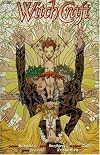
This isn't the first Sandman spin-off-- it's predated by the launch of Sandman Mystery Theatre and the first Death miniseries-- but it's kinda the first standalone one. (I say "kinda" because it did garner a sequel, but said sequel was never collected in trade paperback.) Its subject is a little odd, though; I refused to believe that any Sandman fans were clamoring for a return of the Three Fates or the Three Witches or the Three Goddesses or whatever they were. (I mean, they don't even have show more clear names.) They would just pop up sporadically and be cryptic; I think they had a role in the finale, but maybe the Three Furies were something separate? I don't know and I don't really care.
The story opens with a Pict barbarian coming to Londinium and raping a Roman woman. She's a priestess of the Triple Goddess, though, and lets off a prayer as she dies. Too late to save herself, but the Triple Goddess decide that she will get her revenge: when she and her killer are next reincarnated in the London area, her killer will die. This takes over a millennium, but finally a young maiden is due to marry a guy who turns out to be a rapist. She's secretly a witch, and so is he, and though the Triple Goddess try their best, it doesn't quite come together, everyone dies, and no revenge is had. At this point, I wasn't really into the story either way-- didn't hate it, didn't love it. Did kinda wonder what the point was. (Except that the introduction had told me, but I'll come back to that later.)
So they're left to try again in 1842, where for some reason the priestess has been reincarnated as a man-- and not just any man, but Sir Richard F. Burton (though he's no "sir" yet). What? This just seemed bizarre to me. The killer is actually his mother's lover, and willingly so. Richard Burton is chastised by her for not allowing her her sexual freedom. But he chases the lover anyway and, whoops, the lover rapes Burton. I guess because he's just so evil? Then Burton meets up with gypsies, who teach him sex magic or something (you know gypsies) and then he finds the lover, but doesn't kill him, and goes on to be imperialist bastard we all know and love. And who wrote awful, dull travelogues.
The last bit brings us to the 1990s, when the priestess is now an old lady, and the barbarian is her baby-raping, wife-mind-controlling, priest-killing warlock son-in-law. Because he just wasn't evil enough? It's starting to get over the top at this point. Anyway, the grandma wins, and the Triple Goddess sentences him to be reincarnated throughout the past as the victim of every sex crime ever. Leaving aside the fact that "sex crime" sounds a bit too 20th-century in the mouth of a pagan goddess, it's just what!? I don't even understand what this is supposed to mean. Does it make rape into an empowering act for women? Or is it poetic justice (because raping men is funny maybe)? Or something? God, how bizarre. The book tries to pull back from it by having one of the Goddesses say "I actually started wondering if the matter deserved all the fuss we'd given it," but you know, that ending still exists!
Like Black Orchid (it must be a Vertigo thing), this collection contains a fawning introduction from someone I've never heard of, but I think is supposed to be famous maybe, Penelope Spheeris. Spheeris describes the book as creating "a comic-book world for those who are evolved enough to know that ultimately there is justice in the world." There's nothing evolved about this book! It depicts men as eternal rapists and women as eternal victims, whose best outcome for "justice" is that the men can secretly be the victims of the rapes they commit. She also claims that it shows the power of women as "immeasurably strong and immeasurably subtle," though I feel like being victimized through the millennia is pretty much neither. And lastly, she's quick to claim that men will like this book too even if it is all about female power (really?) because the stories "are sexually titillating without being sexist. They are sometimes erotic, but in an artful, beautiful way... and in a way that allows the WitchCraft women to keep their power and their moral strength." WHAT!? Did we read the same book? Because in the book I read, every sex act bar two is coerced. This book is not remotely titillating-- sex is nasty, brutish, and short, a means to an end for one or both parties in every case. None of the participants are ever drawn attractively. And let's not even talk about the assumption that "boys and men alike" need sex on display to enjoy a story about women anyway...
I freely admit that Penelope Spheeris's introduction is not James Robinson's fault. But it does show the same warped, unpleasant set of values that seems to underly this entire book. Ugh.
Neil Gaiman's The Sandman Spin-Offs: « Previous in sequence | Next in sequence » show less
The story opens with a Pict barbarian coming to Londinium and raping a Roman woman. She's a priestess of the Triple Goddess, though, and lets off a prayer as she dies. Too late to save herself, but the Triple Goddess decide that she will get her revenge: when she and her killer are next reincarnated in the London area, her killer will die. This takes over a millennium, but finally a young maiden is due to marry a guy who turns out to be a rapist. She's secretly a witch, and so is he, and though the Triple Goddess try their best, it doesn't quite come together, everyone dies, and no revenge is had. At this point, I wasn't really into the story either way-- didn't hate it, didn't love it. Did kinda wonder what the point was. (Except that the introduction had told me, but I'll come back to that later.)
So they're left to try again in 1842, where for some reason the priestess has been reincarnated as a man-- and not just any man, but Sir Richard F. Burton (though he's no "sir" yet). What? This just seemed bizarre to me. The killer is actually his mother's lover, and willingly so. Richard Burton is chastised by her for not allowing her her sexual freedom. But he chases the lover anyway and, whoops, the lover rapes Burton. I guess because he's just so evil? Then Burton meets up with gypsies, who teach him sex magic or something (you know gypsies) and then he finds the lover, but doesn't kill him, and goes on to be imperialist bastard we all know and love. And who wrote awful, dull travelogues.
The last bit brings us to the 1990s, when the priestess is now an old lady, and the barbarian is her baby-raping, wife-mind-controlling, priest-killing warlock son-in-law. Because he just wasn't evil enough? It's starting to get over the top at this point. Anyway, the grandma wins, and the Triple Goddess sentences him to be reincarnated throughout the past as the victim of every sex crime ever. Leaving aside the fact that "sex crime" sounds a bit too 20th-century in the mouth of a pagan goddess, it's just what!? I don't even understand what this is supposed to mean. Does it make rape into an empowering act for women? Or is it poetic justice (because raping men is funny maybe)? Or something? God, how bizarre. The book tries to pull back from it by having one of the Goddesses say "I actually started wondering if the matter deserved all the fuss we'd given it," but you know, that ending still exists!
Like Black Orchid (it must be a Vertigo thing), this collection contains a fawning introduction from someone I've never heard of, but I think is supposed to be famous maybe, Penelope Spheeris. Spheeris describes the book as creating "a comic-book world for those who are evolved enough to know that ultimately there is justice in the world." There's nothing evolved about this book! It depicts men as eternal rapists and women as eternal victims, whose best outcome for "justice" is that the men can secretly be the victims of the rapes they commit. She also claims that it shows the power of women as "immeasurably strong and immeasurably subtle," though I feel like being victimized through the millennia is pretty much neither. And lastly, she's quick to claim that men will like this book too even if it is all about female power (really?) because the stories "are sexually titillating without being sexist. They are sometimes erotic, but in an artful, beautiful way... and in a way that allows the WitchCraft women to keep their power and their moral strength." WHAT!? Did we read the same book? Because in the book I read, every sex act bar two is coerced. This book is not remotely titillating-- sex is nasty, brutish, and short, a means to an end for one or both parties in every case. None of the participants are ever drawn attractively. And let's not even talk about the assumption that "boys and men alike" need sex on display to enjoy a story about women anyway...
I freely admit that Penelope Spheeris's introduction is not James Robinson's fault. But it does show the same warped, unpleasant set of values that seems to underly this entire book. Ugh.
Neil Gaiman's The Sandman Spin-Offs: « Previous in sequence | Next in sequence » show less

Access a version of the below that includes illustrations on my blog.
I complained when reading book two of this series that it seemed like the stories were being collected out of order; book three (called The Power of Legacy! on the cover but subtitle-free on the title page) makes that particularly clear, with later issues collected here introducing things that had already happened in book two, like the transfer of the JSA chairship to Mr. Terrific. But anyway: let's take this part by part show more as it's presented.
The book begins with JSA All Stars vol. 1, an eight-issue miniseries about the various "legacy" characters in the JSA, those who are successors to older heroes: Hawkgirl, Dr. Fate, Stargirl, Hourman, Dr. Mid-Nite, and Mr. Terrific. The middle six issues all follow the same format. First, there's a sixteen-page story about the modern hero written by Geoff Johns and David Goyer, usually delving into character points for them, like Hourman's addiction (this is the Rick Tyler version from Infinity, Inc.) or Stargirl's relationship with her biological father. Then, there's a six-page story about their Golden Age predecessor, written and drawn by high-profile guest artists, like Howard Chaykin, James Robinson and Tony Harris, or Darwyn Cooke. Overall, I enjoyed these; the present-day stories actually give us some solid character work, especially for characters who haven't really had much meaningful focus in the present-day stories, like Hourman, Dr. Mid-Nite, and Mr. Terrific. The flashback stories are good fun stuff: if you take a great writer and artist (or writer/artist) and tell them to do what they want in a six-page Golden Age adventure, they will deliver.
The only thing I didn't like was the frame, which I have a sneaking suspicion was added after the middle six issues were completed, because of it how it contorts to not be mentioned in them. A villain turns up, but disguises himself as the Spectre and tells the characters to take time off to think about their histories but also that they shouldn't think about the events of the frame. It's pretty pointless, to be honest, and the six issues would have stood up on their own just fine. But overall, JSA All Stars is my favorite thing I've read thus far in this title... though technically, it's not part of it!
Then come three stories about a character named Nemesis, two from JSA Annual #1 and JSA Secret Files & Origins #2. She's raised by the Council (the same organization responsible for some of DC's various Manhunters), and I felt like a lot of time was spent on her for reasons that weren't clear to me. But maybe this will come in during book four more? The Ultra-Humanite seems to be part of the Council storyline, and he's in book four. (There are some other stories from that Secret Files issue, too; one I already read in the Chase collection, and the other is to foreshadow an upcoming storyline.)
After this, we finally get back to the main JSA series. First we have one of those standalone stories where nothing in particular is going on and we check in on various character that team books like to do—and that I like them to do. After the icky stuff in book two where everyone was expecting teenage Hawkgirl to hook up with octagenarian Hawkman because it was her "destiny," this volume thankfully pushes back against that, with her telling everyone she's going to do what she wants to do. I hope the series sticks to this, and that it's not a set-up for her coming around and getting together with Hawkman anyway. We also have some interrogation of the idea that Black Adam can be part of the team; I liked that Captain Marvel turned up, though was Atom Smasher (then called Nuklon) this hot-headed back in Infinc? Thankfully Sand, the team's most boring nonentity of a character, finally steps down as team leader.
This book also introduces Alex, a new character who was a cousin to Yolanda Montez, the Wildcat of Infinity, Inc. He was inspired by her JSA enthusiasm, and now he manages the JSA museum in the JSA's HQ. Fun idea... but he never actually appeared in Infinc! Didn't Yolanda have a younger brother? Why not use him?
Lastly, we have a storyline where villains kidnap a number of JSA members and force them to fight each other as part of a gambling operation. This I thought was pretty good, probably the best actual storyline thus far, with lots of good moments of characterization, something sorely lacking from the series up to this point. I've been complaining about Geoff Johns, but this is actually the first story not co-written with David Goyer, so maybe it's him who's the problem. My favorite issue here was one where Stargirl and Jakeem Thunder (modern-day inheritor of Johnny Thunder's Thunderbolt) are the only two heroes left in HQ during the events of the Joker: Last Laugh crossover and have to protect New York City from a Joker-venom infected Solomon Grundy. Just two principal characters gives the characterization and the action time to shine, aided by some excellent moody art from Peter Snejbjerg. There's also a decent story about the JSA working with Batman. So... after three 400-page books things are finally looking up?
The last story in the collection is "History 101," which the back cover proudly declares has never before been reprinted... but in fact it was already reprinted in The Justice Society Returns! way back in 2003! There are also lots of profiles and such from various issues of Secret Files & Origins, which is nice to have if you like that kind of thing; I did enjoy the diagram of JSA HQ.
The Justice Society and Earth-Two: « Previous in sequence | Next in sequence » show less
I complained when reading book two of this series that it seemed like the stories were being collected out of order; book three (called The Power of Legacy! on the cover but subtitle-free on the title page) makes that particularly clear, with later issues collected here introducing things that had already happened in book two, like the transfer of the JSA chairship to Mr. Terrific. But anyway: let's take this part by part show more as it's presented.
The book begins with JSA All Stars vol. 1, an eight-issue miniseries about the various "legacy" characters in the JSA, those who are successors to older heroes: Hawkgirl, Dr. Fate, Stargirl, Hourman, Dr. Mid-Nite, and Mr. Terrific. The middle six issues all follow the same format. First, there's a sixteen-page story about the modern hero written by Geoff Johns and David Goyer, usually delving into character points for them, like Hourman's addiction (this is the Rick Tyler version from Infinity, Inc.) or Stargirl's relationship with her biological father. Then, there's a six-page story about their Golden Age predecessor, written and drawn by high-profile guest artists, like Howard Chaykin, James Robinson and Tony Harris, or Darwyn Cooke. Overall, I enjoyed these; the present-day stories actually give us some solid character work, especially for characters who haven't really had much meaningful focus in the present-day stories, like Hourman, Dr. Mid-Nite, and Mr. Terrific. The flashback stories are good fun stuff: if you take a great writer and artist (or writer/artist) and tell them to do what they want in a six-page Golden Age adventure, they will deliver.
The only thing I didn't like was the frame, which I have a sneaking suspicion was added after the middle six issues were completed, because of it how it contorts to not be mentioned in them. A villain turns up, but disguises himself as the Spectre and tells the characters to take time off to think about their histories but also that they shouldn't think about the events of the frame. It's pretty pointless, to be honest, and the six issues would have stood up on their own just fine. But overall, JSA All Stars is my favorite thing I've read thus far in this title... though technically, it's not part of it!
Then come three stories about a character named Nemesis, two from JSA Annual #1 and JSA Secret Files & Origins #2. She's raised by the Council (the same organization responsible for some of DC's various Manhunters), and I felt like a lot of time was spent on her for reasons that weren't clear to me. But maybe this will come in during book four more? The Ultra-Humanite seems to be part of the Council storyline, and he's in book four. (There are some other stories from that Secret Files issue, too; one I already read in the Chase collection, and the other is to foreshadow an upcoming storyline.)
After this, we finally get back to the main JSA series. First we have one of those standalone stories where nothing in particular is going on and we check in on various character that team books like to do—and that I like them to do. After the icky stuff in book two where everyone was expecting teenage Hawkgirl to hook up with octagenarian Hawkman because it was her "destiny," this volume thankfully pushes back against that, with her telling everyone she's going to do what she wants to do. I hope the series sticks to this, and that it's not a set-up for her coming around and getting together with Hawkman anyway. We also have some interrogation of the idea that Black Adam can be part of the team; I liked that Captain Marvel turned up, though was Atom Smasher (then called Nuklon) this hot-headed back in Infinc? Thankfully Sand, the team's most boring nonentity of a character, finally steps down as team leader.
This book also introduces Alex, a new character who was a cousin to Yolanda Montez, the Wildcat of Infinity, Inc. He was inspired by her JSA enthusiasm, and now he manages the JSA museum in the JSA's HQ. Fun idea... but he never actually appeared in Infinc! Didn't Yolanda have a younger brother? Why not use him?
Lastly, we have a storyline where villains kidnap a number of JSA members and force them to fight each other as part of a gambling operation. This I thought was pretty good, probably the best actual storyline thus far, with lots of good moments of characterization, something sorely lacking from the series up to this point. I've been complaining about Geoff Johns, but this is actually the first story not co-written with David Goyer, so maybe it's him who's the problem. My favorite issue here was one where Stargirl and Jakeem Thunder (modern-day inheritor of Johnny Thunder's Thunderbolt) are the only two heroes left in HQ during the events of the Joker: Last Laugh crossover and have to protect New York City from a Joker-venom infected Solomon Grundy. Just two principal characters gives the characterization and the action time to shine, aided by some excellent moody art from Peter Snejbjerg. There's also a decent story about the JSA working with Batman. So... after three 400-page books things are finally looking up?
The last story in the collection is "History 101," which the back cover proudly declares has never before been reprinted... but in fact it was already reprinted in The Justice Society Returns! way back in 2003! There are also lots of profiles and such from various issues of Secret Files & Origins, which is nice to have if you like that kind of thing; I did enjoy the diagram of JSA HQ.
The Justice Society and Earth-Two: « Previous in sequence | Next in sequence » show less
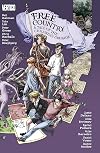
Free Country: A Tale of the Children’s Crusade collects the seven-issue crossover story from Vertigo Comics, including The Children’s Crusade nos. 1 and 2, Black Orchid Annual no. 1, Animal Man Annual no. 1, Swamp Thing Annual no. 7, Doom Patrol Annual no. 2, and Arcana Annual no. 1. The material was written by Neil Gaiman, Toby Litt, Rachel Pollack, Alisa Kwitney, and Jamie Delano with art from Chris Bachelo, Peter Gross, Al Davison, and Peter Snejbjerg, inks by Mike Barreiro, colors by show more Daniel Vozzo and Jeanne McGee, and letters by John Costanza and Todd Klein. This trade paperback includes new material that was not originally part of the various issues collected.
The story begins with the Children’s Crusade of 1212 and the Pied Piper deceiving children away from their homes, but the lucky ones are able to cross into a mystical land called Free Country where they are safe from the evils of the world. When an entire village’s children go missing, a girl hires the Dead Boy Detectives, Edwin Paine and Charles Rowland from The Sandman no. 25, to find out what happened to them. They discover that a council in Free Country plans to bring all the world’s children to the land, but first they must trick five mystical children to come to Free Country where their magic will empower the land to support so many children. They need Suzy, the sister of Flora from Neil Gaiman and Dave McKean’s 1989 Black Orchid story, Tefé Holland, the daughter of the Swamp Thing and Abby Holland, Dorothy Spinner from the Doom Patrol, Maxine Baker, the daughter of Animal Man, and Timothy Hunter, from The Books of Magic.
Though Gaiman and the various Vertigo authors pitched this miniseries as the first crossover between Vertigo’s various titles, it’s primarily a Dead Boy Detectives tale with the occasional cameo. The detectives can be entertaining, but it’s difficult for them to sustain such a large narrative and the differences in the titles is rather apparent between the chapters. Gaiman’s voice stands out clear in his portions, adding some great atmosphere, but the book is most interesting as an experimental work and will primarily appeal to those looking to read Vertigo’s back catalog and the Sandman-adjacent works. show less
The story begins with the Children’s Crusade of 1212 and the Pied Piper deceiving children away from their homes, but the lucky ones are able to cross into a mystical land called Free Country where they are safe from the evils of the world. When an entire village’s children go missing, a girl hires the Dead Boy Detectives, Edwin Paine and Charles Rowland from The Sandman no. 25, to find out what happened to them. They discover that a council in Free Country plans to bring all the world’s children to the land, but first they must trick five mystical children to come to Free Country where their magic will empower the land to support so many children. They need Suzy, the sister of Flora from Neil Gaiman and Dave McKean’s 1989 Black Orchid story, Tefé Holland, the daughter of the Swamp Thing and Abby Holland, Dorothy Spinner from the Doom Patrol, Maxine Baker, the daughter of Animal Man, and Timothy Hunter, from The Books of Magic.
Though Gaiman and the various Vertigo authors pitched this miniseries as the first crossover between Vertigo’s various titles, it’s primarily a Dead Boy Detectives tale with the occasional cameo. The detectives can be entertaining, but it’s difficult for them to sustain such a large narrative and the differences in the titles is rather apparent between the chapters. Gaiman’s voice stands out clear in his portions, adding some great atmosphere, but the book is most interesting as an experimental work and will primarily appeal to those looking to read Vertigo’s back catalog and the Sandman-adjacent works. show less
I still have the two issues that bookended Vertigo's Children's Crusade crossover, a terribly over-ambitious idea full of brilliant ideas that never fully meshed. Nonetheless, the first bookend, written by Gaiman and drawn by Bachalo remains one of the most potent, mysterious, atmospheric, sad and thrilling comics ever produced. The second issue wrapped things up quite well, I always thought, even though though the two together never felt like a whole story. Even if you read the other show more relevant issues in the crossover, they were a bit all over the place and uneven. The art in the Doom Patrol issue was dire, if I recall correctly. Anyway, Gaiman has talked about it before, and about the difficulty of getting the Vertigo writers to mesh, and he reiterates it here in the introduction.
So this collection finally gives the curious the chance to see what it was all about, and it's certainly worth getting for that opening. Toby Litt, who had an excellent run recently on Dead Boy Detectives, and Peter Gross do their level best to patch something all together in the middle with results that are readable, at any rate, but the sheer number of moving parts and plot points barely touched on in the originals makes it a bit rushed and crowded. Some of it doesn't fit very well, making it seem awkward, and a far cry from the eerie, sinister atmosphere of the opening. I also can't help but wonder if the Black Tower stuff was best left undeveloped - it was wonderfully enigmatic and mysterious as it was. The story makes more sense, believe it or not, but it unavoidably ends up being laborious about it, sacrificing pace and atmosphere - squishing three or four issues' worth of story into a few pages is never going to make for a properly seamless result.
So the missing children of Flaxdown and the the Dead Boy Detectives and the children of Vertigo set out on their Crusade once more. Fitting that after an rousing opening it all dissolves into a bit of a mess, really, don't you think? show less
So this collection finally gives the curious the chance to see what it was all about, and it's certainly worth getting for that opening. Toby Litt, who had an excellent run recently on Dead Boy Detectives, and Peter Gross do their level best to patch something all together in the middle with results that are readable, at any rate, but the sheer number of moving parts and plot points barely touched on in the originals makes it a bit rushed and crowded. Some of it doesn't fit very well, making it seem awkward, and a far cry from the eerie, sinister atmosphere of the opening. I also can't help but wonder if the Black Tower stuff was best left undeveloped - it was wonderfully enigmatic and mysterious as it was. The story makes more sense, believe it or not, but it unavoidably ends up being laborious about it, sacrificing pace and atmosphere - squishing three or four issues' worth of story into a few pages is never going to make for a properly seamless result.
So the missing children of Flaxdown and the the Dead Boy Detectives and the children of Vertigo set out on their Crusade once more. Fitting that after an rousing opening it all dissolves into a bit of a mess, really, don't you think? show less
Lists
Awards


You May Also Like
Associated Authors
Statistics
- Works
- 32
- Also by
- 26
- Members
- 3,151
- Popularity
- #8,108
- Rating
- 3.8
- Reviews
- 59
- ISBNs
- 69
- Languages
- 9
- Favorited
- 1