
Peter Beale
Author of Death by Design: British Tank Development In The Second World War
Works by Peter Beale
Tagged
Common Knowledge
- Gender
- male
Members
Reviews
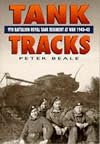
This is the story of 9 RTR in WW2 written by one of its officers and including material from many of the survivors and contemporary diaries, including the battalion war diary, the brigade history and at one point the radio logs. It is packed with a wealth of material, much of which is directly quoted from a primary source. If you want a feel for what life was like for a heavy tank battalion then this is the book to read.
The stories told by the survivors and in the diaries don’t pull any show more punches, and some of what is described is quite horrific, many of the casualties in the battalion are well documented and the nature of the injuries suffered by tank crews tend to be severe.
The battalion re-formed in [late 1940/l941] and was one of the first to be equipped with Churchills. It trained in the UK until mid to late June 44 when it went to France. It took part in Goodwood & Epsom and the Falaise battles supporting the Canadians and 43rd Wessex Division at various stages. After that they were involved in the capture of Le Havre, Walcheren, and the Reichswald.
Each of the stages of the battalion’s existence and each of its battles forms a chapter. These are opened by the official account of what happened followed by personal narratives of events during the same period. Often the same incident is reported from several sources which gives you a clearer idea of what might have happened, and the level of confusion. For example one tank driver reported that he had no idea where he was during one operation as his vision slits were covered in mud and he was relying on the tank commander to guide him.
At the end of the book are several appendices with a wealth of statistics and other information useful to gamers. Amongst other things the casualties are very well documented, not only in the usual table of numbers, but it also gives service number, rank, name, trade, appointment (e.g. troop leader’s driver), date, place, and sometimes a short description of the incident (e.g. mortar fragment in the face). There are also extracts from operational orders and most battles have several maps showing you the ground and the movements of the troops.
Overall I’d rate the book very highly and strongly recommend it to others that have an interest in WW2 and/or tank operations. show less
The stories told by the survivors and in the diaries don’t pull any show more punches, and some of what is described is quite horrific, many of the casualties in the battalion are well documented and the nature of the injuries suffered by tank crews tend to be severe.
The battalion re-formed in [late 1940/l941] and was one of the first to be equipped with Churchills. It trained in the UK until mid to late June 44 when it went to France. It took part in Goodwood & Epsom and the Falaise battles supporting the Canadians and 43rd Wessex Division at various stages. After that they were involved in the capture of Le Havre, Walcheren, and the Reichswald.
Each of the stages of the battalion’s existence and each of its battles forms a chapter. These are opened by the official account of what happened followed by personal narratives of events during the same period. Often the same incident is reported from several sources which gives you a clearer idea of what might have happened, and the level of confusion. For example one tank driver reported that he had no idea where he was during one operation as his vision slits were covered in mud and he was relying on the tank commander to guide him.
At the end of the book are several appendices with a wealth of statistics and other information useful to gamers. Amongst other things the casualties are very well documented, not only in the usual table of numbers, but it also gives service number, rank, name, trade, appointment (e.g. troop leader’s driver), date, place, and sometimes a short description of the incident (e.g. mortar fragment in the face). There are also extracts from operational orders and most battles have several maps showing you the ground and the movements of the troops.
Overall I’d rate the book very highly and strongly recommend it to others that have an interest in WW2 and/or tank operations. show less
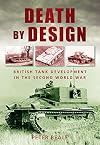
British tank design in WW II was less than impressive, to say the least. This book examines what went wrong and why no truly effective British tank was fielded before 1945. There is a lot of good stuff in the book, but it is overly fragmented. For instance, there are chapters on gun development, development of the various tank categories (light, cruiser, infantry), reactions from the troops... each telling same story over again, but from different angles. Only in the last thirty pages or so, show more the various strands come together, and there is some analysis of what went wrong. show less
I had a lot of questions that on the subject of British tank development, but this book is of limited help in answering them. The book lacks references, which doesn't help, and generally does not appear to well researched. A lot of tired myths about tank design seem to be trotted out unquestioningly. The fictionalised sections that open some chapters are frankly bizarre, and don't help at all. It's not all bad, some of the sections on the paths of tank design are quite interesting, but this show more is far from the definitive work that I was looking for. show less
Statistics
- Works
- 7
- Members
- 81
- Popularity
- #222,753
- Rating
- 3.8
- Reviews
- 3
- ISBNs
- 12