
Maria Williams (1)
Author of How Raven Stole the Sun (Tales of the People)
For other authors named Maria Williams, see the disambiguation page.
Works by Maria Williams
Associated Works
Tagged
Common Knowledge
There is no Common Knowledge data for this author yet. You can help.
Members
Reviews
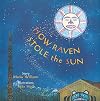
Clever Raven figures out how to trick the greedy Chief out of the celestial treasures he keeps to himself: the stars, moon, and sun. Raven disguises himself as the Chief's infant grandson and points to the boxes where the treasures are kept; Raven opens the boxes one after another and the stars, moon, and sun escape up into the sky. To escape the Chief's anger, Raven flies out through the smoke hole in the ceiling, turning from white to black in the process.
A gorgeous, nearly full-page show more painting in an air frame occupies the recto of each double page spread, with text on the verso; back matter includes information about Raven, a glossary of Tlingit words (but without a pronunciation guide), photographs, information on the Tlingit people, about the author, about the illustrator.
Tales of the People, Smithsonian's National Museum of the American Indian. show less
A gorgeous, nearly full-page show more painting in an air frame occupies the recto of each double page spread, with text on the verso; back matter includes information about Raven, a glossary of Tlingit words (but without a pronunciation guide), photographs, information on the Tlingit people, about the author, about the illustrator.
Tales of the People, Smithsonian's National Museum of the American Indian. show less
This is a retelling of a Tlingit Tale that tells of how Raven used to be white and how there was only darkness in the world. The Chief of the tribe is greedy and keeping the stars, sun and moon to himself. The cunning Raven comes up with a plan to trick the chief into releasing the treasures. Raven disguises himself as the Chief's grandson and releases each treasure. After releasing the stars, moon and sun, he decides to turn back into a Raven. When the Chief sees this he is furious and show more traps Raven in his home. Raven flies through the smoke hole in the ceiling and turns from white to back with soot in the process.
This is a beautiful story and would be perfect to use in a unit on myths. This book also includes a glossary of Tlingit words, photographs, and information on the Tlingit people. show less
This is a beautiful story and would be perfect to use in a unit on myths. This book also includes a glossary of Tlingit words, photographs, and information on the Tlingit people. show less
Genre- Multicultural, Legend
Age- P-I
This is such a good book; I was so excited to see it at the library, as I remembered reading the same one when I was younger. I was also delighted to see that this book was written and illustrated by American Indians! The author is Tlingit—which is where this version of the story comes from—and the illustrator is Apache and Pueblo. This book would be great in a unit about creation myths in many cultures, as it tells the story of how the sun came to be. show more It could also be used in a discussion about legends, as could any book in the Tales of the People series, to which this book belongs. The illustrations were engaging, and inspired by the artwork of the Tlingit people. The drawings of the sun, moon, and stars being released into the sky are especially stunning. Though some aspects of this book may be hard for a young child to understand (like the pregnancy and Raven’s transformations) it would still be very enjoyable in a classroom. The book contained several pages of factual information about the story and the tribe it’s from after the story was over, which could be an interesting follow-up to the story for students. This is a book that every classroom and library should contain, if only to make sure these old legends don’t disappear completely. show less
Age- P-I
This is such a good book; I was so excited to see it at the library, as I remembered reading the same one when I was younger. I was also delighted to see that this book was written and illustrated by American Indians! The author is Tlingit—which is where this version of the story comes from—and the illustrator is Apache and Pueblo. This book would be great in a unit about creation myths in many cultures, as it tells the story of how the sun came to be. show more It could also be used in a discussion about legends, as could any book in the Tales of the People series, to which this book belongs. The illustrations were engaging, and inspired by the artwork of the Tlingit people. The drawings of the sun, moon, and stars being released into the sky are especially stunning. Though some aspects of this book may be hard for a young child to understand (like the pregnancy and Raven’s transformations) it would still be very enjoyable in a classroom. The book contained several pages of factual information about the story and the tribe it’s from after the story was over, which could be an interesting follow-up to the story for students. This is a book that every classroom and library should contain, if only to make sure these old legends don’t disappear completely. show less
Summary: A long time ago, Raven was pure white, like fresh snow in winter. This was so long ago that the only light came from campfires, because a greedy chief kept the stars, moon, and sun locked up in elaborately carved boxes. Determined to free them, the shape-shifting Raven resourcefully transformed himself into the chief's baby grandson and cleverly tricked him into opening the boxes and releasing the starlight and moonlight.
Created with the Smithsonian's National Museum of the American show more Indian (NMAI), Tales of the People is a series of children's books celebrating Native American culture with illustrations and stories by Indian artists and writers. In addition to the tales themselves, each book also offers four pages filled with information and photographs exploring various aspects of Native culture, including a glossary of words in different Indian languages.
Personal Reaction: Striking images and I enjoy learning about different Native American folktales. A great way to enrich students understanding of Native American culture.
Classroom Extension: Use in my Montana History chapter 2 about Native American creation stories. Also can be used as an example of Native American culture. show less
Created with the Smithsonian's National Museum of the American show more Indian (NMAI), Tales of the People is a series of children's books celebrating Native American culture with illustrations and stories by Indian artists and writers. In addition to the tales themselves, each book also offers four pages filled with information and photographs exploring various aspects of Native culture, including a glossary of words in different Indian languages.
Personal Reaction: Striking images and I enjoy learning about different Native American folktales. A great way to enrich students understanding of Native American culture.
Classroom Extension: Use in my Montana History chapter 2 about Native American creation stories. Also can be used as an example of Native American culture. show less
You May Also Like


Associated Authors
Statistics
- Works
- 2
- Also by
- 1
- Members
- 119
- Popularity
- #166,387
- Rating
- 3.7
- Reviews
- 7
- ISBNs
- 4
- Languages
- 1