
Alexander Stille
Author of The Future of the Past: How the Information Age Threatens to Destroy Our Cultural Heritage
About the Author
Alexander Stille is the author of Excellent Cadavers: The Mafia and the Death of the First Italian Republic and Benevolence and Betrayal: Five Italian Jewish Families Under Fascism. He is a frequent contributor to The New Yorker and The New York Times. He lives in New York City
Image credit: Wikipedia
Works by Alexander Stille
The Future of the Past: How the Information Age Threatens to Destroy Our Cultural Heritage (2002) 279 copies, 7 reviews
The Sack of Rome: How a Beautiful European Country with a Fabled History and a Storied Culture Was Taken Over by a Man Named Silvio Berlusconi (2006) 131 copies, 1 review
The Sullivanians: Sex, Psychotherapy, and the Wild Life of an American Commune (2023) 125 copies, 5 reviews
Pleasure 1 copy
Associated Works
Tagged
Common Knowledge
- Birthdate
- 1957
- Gender
- male
- Education
- Yale University
Columbia University (Graduate School of Journalism) - Occupations
- writer (The Boston Globe, The New York Times, The New Yorker)
professor (Columbia University | Journalism) - Awards and honors
- Guggenheim Fellow
- Agent
- Sallie Gouverneur
- Relationships
- Rudnitsky, Lexi (wife)
- Nationality
- USA
- Places of residence
- New York, New York, USA
- Associated Place (for map)
- New York, USA
Members
Reviews
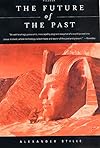
Very interesting book on how different cultures approach preservation and/or veneration of their past, from Egypt (where academic archaeologists and Egyptian preservationists have to contend with wacky New Agers for the "real" story of the pyramids) to China and elsewhere. A lot of books like this are terrific magazine articles that don't pan out as full length books. (I don't know that this started out as a magazine article; it just reminds me of that sort of book.) But this one justifies show more its presence between hard covers. This is one of those books that I bought, gave away and then repurchased because I just had to have it in my library. show less

One reason I rarely read self-published work is that it often has bad (or no) editors. A good editor cannot spin straw into gold, but she can polish and shape gold from a shiny nugget into something beautiful. By the same token a bad editor, can utterly destroy a good book. There are certain publishing houses I rely upon to provide their writers with great editors. I may not love every book those publishers release, but I can be reasonably certain I will get the best iteration of the book I show more am reading. In the top 5 on that list is FSG. They have a long history and a notable present facility for releasing books that have literary merit and which are beautifully edited and presented. And so I am surprised and disappointed by this book, which seems to have been edited by people with short-term memory loss and no training in sentence structure. That editing team made what should have been a really good read an absolute chore.
This story is one that would be of great interest, both intellectual and prurient, to most people, including me. I don't want to go into the workings of the cult, many other reviews have done so, but an adult child of one of the founders (who grew up with her mother and was not raised in the cult) said that the Fourth Wall incorporated the worst elements of psychotherapy, Marxism, and musical theater, and that is the most perfect and succinct description ever. Sadly, this led to neglected and abused children, women raped as a regular event, vulnerable people being told by their therapists they should kill themselves, people being made destitute, and other tragedies. There is pathos and comedy to spare in this tale, but this book is repetitive and dry. One character (this is non-fiction, I use the word "character" for real people) who is quite central cannot be featured in a scene without the author noting that he felt he could not leave the cult because of the threat of losing his two children. Another character is always reintroduced with the reminder of how sweet and adorable he is. We are constantly reminded that one member is 6-feet tall and unattractive (until she loses 35 pounds and becomes desirable - insert eyeroll) The women at the top of the cult were cruel and abusive to the women drafted and forced to be their babysitters. Over and over Stille tells the stories of babysitters making innocent mistakes and the women at the top flying into rages, screaming at, and hitting them and of the community being convinced that these innocent lapses meant the sitters were psychopaths (that is the precise word used.) He tells us over and over about the group's head, Saul Newton, demanding his patients give him blow jobs during their psychotherapy sessions (for which they were paying hourly.) He also repreatedly tells us how long those blow jobs were because an 8o year old requires a lot of snake-charming to get off. I am not saying these are not all horrifying incidents. I am saying they could be covered once or twice with the note that these behaviors were rampant in the cult, and maybe quick references - "Sue also suffered sexual abuse at the hands of Newton and Klein" or "Naomi, despite not wanting to be a babysitter, stayed in the postion despite the frequent abuse from Joan Harvey" rather than yet another blow-by-blow (no pun intended) of these behaviors. And these repeated utterances are not juicy descriptions. This book is extremely well researched, but the writing is bone dry. Stille makes boring an upper-west side polyamorous sex cult led by psychoanalysts where people were forced to stage revolutionary original musicals in a downton blackbox theater in the spare time they had after work, regular therapy, and guerilla action to protect the cult against paranoid fantasies of imminent government attack. It is really hard to make that dull. And yet Stille does just that. Between the endless repetition (this could he easily 100 pages shorter without losing a single thing) the endlessly long over-complicated sentences, and the over-explication of events, Stille somehow managed to excise anything remotely titillating. Stille sucked the life out of this. I get that he did not want to further sensationalize this story, but in his efforts to avoid sensationalization he somehow managed to make all of this seem ho-hum.
There was some interesting sociological and psychological perspective in the last 100 pages (Though that was also repetitive. Tell me about the Stanford Prison Experiment once, not three times! Especially since most people who would read this book likely know about the Stanford Prison Experiment.) However, IMO the analysis of the actions of the cult leaders and followers should have been blended more with the reporting so the reader would get that analysis while reading about the actions rather than have to try to remember specifics of actions that happened on page 27 while reading the analysis on page 427.
Great topic great research smothered by a writer and editor who have an aversion to declarative sentences and a strange need to tell you the same story 11 times. A 2.5. I will tip it to a GR 3 for the great cover art and for making me see how valuable the offer of cheap rent and psychoanalysis would be when starting a cult in Manhattan -- it would definitely get people through the front door even now. show less
This story is one that would be of great interest, both intellectual and prurient, to most people, including me. I don't want to go into the workings of the cult, many other reviews have done so, but an adult child of one of the founders (who grew up with her mother and was not raised in the cult) said that the Fourth Wall incorporated the worst elements of psychotherapy, Marxism, and musical theater, and that is the most perfect and succinct description ever. Sadly, this led to neglected and abused children, women raped as a regular event, vulnerable people being told by their therapists they should kill themselves, people being made destitute, and other tragedies. There is pathos and comedy to spare in this tale, but this book is repetitive and dry. One character (this is non-fiction, I use the word "character" for real people) who is quite central cannot be featured in a scene without the author noting that he felt he could not leave the cult because of the threat of losing his two children. Another character is always reintroduced with the reminder of how sweet and adorable he is. We are constantly reminded that one member is 6-feet tall and unattractive (until she loses 35 pounds and becomes desirable - insert eyeroll) The women at the top of the cult were cruel and abusive to the women drafted and forced to be their babysitters. Over and over Stille tells the stories of babysitters making innocent mistakes and the women at the top flying into rages, screaming at, and hitting them and of the community being convinced that these innocent lapses meant the sitters were psychopaths (that is the precise word used.) He tells us over and over about the group's head, Saul Newton, demanding his patients give him blow jobs during their psychotherapy sessions (for which they were paying hourly.) He also repreatedly tells us how long those blow jobs were because an 8o year old requires a lot of snake-charming to get off. I am not saying these are not all horrifying incidents. I am saying they could be covered once or twice with the note that these behaviors were rampant in the cult, and maybe quick references - "Sue also suffered sexual abuse at the hands of Newton and Klein" or "Naomi, despite not wanting to be a babysitter, stayed in the postion despite the frequent abuse from Joan Harvey" rather than yet another blow-by-blow (no pun intended) of these behaviors. And these repeated utterances are not juicy descriptions. This book is extremely well researched, but the writing is bone dry. Stille makes boring an upper-west side polyamorous sex cult led by psychoanalysts where people were forced to stage revolutionary original musicals in a downton blackbox theater in the spare time they had after work, regular therapy, and guerilla action to protect the cult against paranoid fantasies of imminent government attack. It is really hard to make that dull. And yet Stille does just that. Between the endless repetition (this could he easily 100 pages shorter without losing a single thing) the endlessly long over-complicated sentences, and the over-explication of events, Stille somehow managed to excise anything remotely titillating. Stille sucked the life out of this. I get that he did not want to further sensationalize this story, but in his efforts to avoid sensationalization he somehow managed to make all of this seem ho-hum.
There was some interesting sociological and psychological perspective in the last 100 pages (Though that was also repetitive. Tell me about the Stanford Prison Experiment once, not three times! Especially since most people who would read this book likely know about the Stanford Prison Experiment.) However, IMO the analysis of the actions of the cult leaders and followers should have been blended more with the reporting so the reader would get that analysis while reading about the actions rather than have to try to remember specifics of actions that happened on page 27 while reading the analysis on page 427.
Great topic great research smothered by a writer and editor who have an aversion to declarative sentences and a strange need to tell you the same story 11 times. A 2.5. I will tip it to a GR 3 for the great cover art and for making me see how valuable the offer of cheap rent and psychoanalysis would be when starting a cult in Manhattan -- it would definitely get people through the front door even now. show less
This book is a really wonderful series of essays--easy to read on there own, or straight through. They reveal the dilemmas and problems of cultural heritage, especially in the globalized era.
The sack of Rome : how a beautiful European country with a fabled history and a storied culture was taken over by a man by Alexander Stille
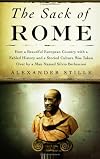
This book fills a real need in my life. I lived in Italy as a young student in 1996-1997 and earnestly tried to read the newspapers (and watch TV on the rare occasions I had access) to understand current events. It was nearly impossible to make sense of it--most of the time I couldn't even grasp who they were talking about! Now it seems obvious that I was frustrated by a heavy cultural barrier on top of the language barrier.
Here is a book that translates contemporary Italian political show more culture for the curious but confused statunitense. It didn't exactly transport me like the Italian chapter of How soccer explains the world--the writing wasn't nearly as engaging and tight. But it describes tycoon Silvio Berlusconi's rise to political prominence in the context of major cultural shifts and with enough gory detail that I just might be able to follow an Italian media report now. At least it gives me the courage to try again.
Complaints: It was slow to start and sometimes unnecessarily repetitive--Stille repeats many of the shocking and outrageous Berlusconi, Inc. quotes in multiple places, which I found distracting, since I got it the first round. I was also vaguely alarmed to read only on page 306 of 351 (when the book is practically over!) that the author's father was the editor of the Corriere della Sera (one of the major Italian newspapers discussed throughout) from 1987 until 1992, not long before Berlusconi entered politics. In a book so focused on wild conflicts of interest, I wish the author had gone out of his way to disclose and elaborate on any potentially juicy (or plain old benign) personal connections to the story early on, in, say, the introduction.
For instant gratification, the Salon.com and New York Times reviews serve up great summaries. show less
Here is a book that translates contemporary Italian political show more culture for the curious but confused statunitense. It didn't exactly transport me like the Italian chapter of How soccer explains the world--the writing wasn't nearly as engaging and tight. But it describes tycoon Silvio Berlusconi's rise to political prominence in the context of major cultural shifts and with enough gory detail that I just might be able to follow an Italian media report now. At least it gives me the courage to try again.
Complaints: It was slow to start and sometimes unnecessarily repetitive--Stille repeats many of the shocking and outrageous Berlusconi, Inc. quotes in multiple places, which I found distracting, since I got it the first round. I was also vaguely alarmed to read only on page 306 of 351 (when the book is practically over!) that the author's father was the editor of the Corriere della Sera (one of the major Italian newspapers discussed throughout) from 1987 until 1992, not long before Berlusconi entered politics. In a book so focused on wild conflicts of interest, I wish the author had gone out of his way to disclose and elaborate on any potentially juicy (or plain old benign) personal connections to the story early on, in, say, the introduction.
For instant gratification, the Salon.com and New York Times reviews serve up great summaries. show less
Lists
Awards


You May Also Like


Associated Authors
Statistics
- Works
- 11
- Also by
- 2
- Members
- 1,017
- Popularity
- #25,335
- Rating
- 4.1
- Reviews
- 21
- ISBNs
- 50
- Languages
- 5
- Favorited
- 1