
About the Author
Carlyn Beccia (pronounced Betcha) is an author, an illustrator, a graphic designer, and a future organ donor who (so far) has kept all her body parts. Beccia's children's books, including Who Put the B in the Ballyhoo?, The Raucous Royals, and I Feel Better with a Frog in My Throat, have won show more numerous awards, like the Golden Kite Honor, the International Reading Associations Children's and Young Adult Book Award, and the Cybils Award. show less
Works by Carlyn Beccia
They Lost Their Heads!: What Happened to Washington's Teeth, Einstein's Brain, and Other Famous Body Parts (2018) 207 copies, 1 review
Raucous Royals: Test your Royal Wits: Crack Codes, Solve Mysteries, and Deduce WhichRoyal Rumors are True (2008) 100 copies, 10 reviews
Tagged
Common Knowledge
- Gender
- female
- Nationality
- USA
- Places of residence
- Lynnfield, Massachusetss, USA
- Associated Place (for map)
- Massachusetss, USA
Members
Reviews
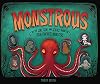
First I missed when this was published, then I put off reading it. I don't know why - I personally have no interest in cryptids or movie monsters, but I always love Beccia's creepy, informative work! Of course, when I finally got around to reading this, it was awesome!
Beccia takes eight classic monsters and dissects (heh) their history, science, and probability. She starts with Frankenstein's Monster, placing him in context of the scientific revolution and the discoveries being made in show more electricity. Next she looks at Dracula and readers will find out if you can really drink blood (spoiler alert - you can't!). Zombies, real and imaginary, are introduced, then King Kong, who says "I hate science! Science makes my size impossible." Werewolves have a brief chapter, but there's more meat (heh) on the Kraken. There's a reasonably unbiased discussion of Bigfoot (as always, if Bigfoot was real, there would be poop) and it ends with Godzilla, with a reflection on the aftermath of the atomic bomb and the continued threat of nuclear weapons in the world today.
The book is illustrated throughout by Beccia, ranging from the deliciously evil, an exquisite black and white decoration of a female vampire with a trail of blood, to the explanatory pictures of relative weight and mass, showing how King Kong is simply too big to exist (and a dung beetle is comparatively stronger than a human!). There are charts showing the calories in each part of the human body, and a pack of eager and then exhausted werewolves outhunted by a smug cat.
The book ends with a reflection on how science can be wrong, illustrated by Beccia's drawing of a T. rex with and then without feathers. There is a page of notes, extensive bibliography, glossary, and index.
This book works equally well as a straight narrative and as a browsing experience. It is a little awkwardly shaped, laid out in a rectangle that is almost picture book-shaped with a spine that feels flimsy to me. However, the creepy topics and copious illustrations will encourage any readers who might dismiss this as a "baby book" and caregivers who object to the layout probably wouldn't like the subject matter anyways.
Verdict: Another excellent book from Carlyn Beccia, sure to appeal to a wide range of monster, science, and history-loving readers. Recommended.
ISBN: 9781512449167; Published 2019 by Carolrhoda; Purchased for the library show less
Beccia takes eight classic monsters and dissects (heh) their history, science, and probability. She starts with Frankenstein's Monster, placing him in context of the scientific revolution and the discoveries being made in show more electricity. Next she looks at Dracula and readers will find out if you can really drink blood (spoiler alert - you can't!). Zombies, real and imaginary, are introduced, then King Kong, who says "I hate science! Science makes my size impossible." Werewolves have a brief chapter, but there's more meat (heh) on the Kraken. There's a reasonably unbiased discussion of Bigfoot (as always, if Bigfoot was real, there would be poop) and it ends with Godzilla, with a reflection on the aftermath of the atomic bomb and the continued threat of nuclear weapons in the world today.
The book is illustrated throughout by Beccia, ranging from the deliciously evil, an exquisite black and white decoration of a female vampire with a trail of blood, to the explanatory pictures of relative weight and mass, showing how King Kong is simply too big to exist (and a dung beetle is comparatively stronger than a human!). There are charts showing the calories in each part of the human body, and a pack of eager and then exhausted werewolves outhunted by a smug cat.
The book ends with a reflection on how science can be wrong, illustrated by Beccia's drawing of a T. rex with and then without feathers. There is a page of notes, extensive bibliography, glossary, and index.
This book works equally well as a straight narrative and as a browsing experience. It is a little awkwardly shaped, laid out in a rectangle that is almost picture book-shaped with a spine that feels flimsy to me. However, the creepy topics and copious illustrations will encourage any readers who might dismiss this as a "baby book" and caregivers who object to the layout probably wouldn't like the subject matter anyways.
Verdict: Another excellent book from Carlyn Beccia, sure to appeal to a wide range of monster, science, and history-loving readers. Recommended.
ISBN: 9781512449167; Published 2019 by Carolrhoda; Purchased for the library show less
As an adult I loved the information I learned in this book, and I found the organization of it to be really engaging and creative. As an educator, this is such a fun book to share with students because it is interactive and educational. Carlyn Beccia takes the reader through different ailments and cures that were used through the ages and then asks the readers which ones they think might actually work. I learned so much and had a good laugh as well.
They Lost Their Heads!: What Happened to Washington's Teeth, Einstein's Brain, and Other Famous Body Parts by Carlyn Beccia
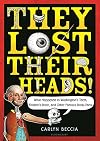
I was super excited when I saw Beccia was doing another wacky foray into history and this book fully met and exceeded my expectations. Also, my colleagues will think twice about asking me what I’m reading during lunch in the future. Mwa ha ha ha.
Beccia focuses on seventeen stories of famous remains, how they came to be saved, and where they are now. Between these sections, she includes lots of ghoulish science and history about vampires, zombies, organ transplants, clones, and more. The show more main stories range from the legendary (Ines de Castro) to the conspiratorial (John Wilkes Booth) as well as the scientific (Thomas Alva Edison). Readers will learn about how bodies decompose, exactly how many medieval medicines contained human body parts, and the perambulations and final fates and many famous heads, skulls, legs, fingers, hearts, and more!
Want to know the scientific truth behind vampires? The real story of George Washington’s teeth? Whether it’s really possible to clone Elvis from his wart? You’ll find all the answers here.
Told with humor and plenty of ghoulish delight in the stories of rotten flesh and wandering body parts, this is sure to appeal to kids who love weird history and gross-out factors. Humorous footnotes add to the experience. There is a bibliography, source notes, and index (to be included).
I reviewed this from a galley, so I assume the couple typos I saw will be corrected, as well as a couple minor errors (the common mistake of thinking Frankenstein is the name of the monster, for example). I did think there wasn’t a really clear line between some of the legends and actual historical events, but as a jumping off point for further research this is a great start. Plus, it’s an awesome, fun read (as long as you don’t mind a little cannibalism). For the most part, the author sticks with Western history and medicine and, because of the many stereotypes around “primitive” people, cannibalism, and funeral customs, I am actually ok with the chosen scope of this book. Beccia cautiously skirts some of the more inappropriate situations with “you probably know what that means but it’s beyond the scope of this book” type of notes and I think it’s fine for upper elementary and middle school readers. That’s who I’m going to recommend it to, anyways (after all my staff have read it...)
Verdict: I finally have a book for that 5th grade girl who wanted to research cryogenics. Also, this was an awesome read and my colleagues are going to be giving me weird looks for a long time. I love Carlyn Beccia! You MUST have this one in your collection, especially if you serve 5th-6th graders. Really, absolute must.
9780802737458; Published April 2018 by Bloomsbury; ARC provided by publisher; Purchased for the library show less
Beccia focuses on seventeen stories of famous remains, how they came to be saved, and where they are now. Between these sections, she includes lots of ghoulish science and history about vampires, zombies, organ transplants, clones, and more. The show more main stories range from the legendary (Ines de Castro) to the conspiratorial (John Wilkes Booth) as well as the scientific (Thomas Alva Edison). Readers will learn about how bodies decompose, exactly how many medieval medicines contained human body parts, and the perambulations and final fates and many famous heads, skulls, legs, fingers, hearts, and more!
Want to know the scientific truth behind vampires? The real story of George Washington’s teeth? Whether it’s really possible to clone Elvis from his wart? You’ll find all the answers here.
Told with humor and plenty of ghoulish delight in the stories of rotten flesh and wandering body parts, this is sure to appeal to kids who love weird history and gross-out factors. Humorous footnotes add to the experience. There is a bibliography, source notes, and index (to be included).
I reviewed this from a galley, so I assume the couple typos I saw will be corrected, as well as a couple minor errors (the common mistake of thinking Frankenstein is the name of the monster, for example). I did think there wasn’t a really clear line between some of the legends and actual historical events, but as a jumping off point for further research this is a great start. Plus, it’s an awesome, fun read (as long as you don’t mind a little cannibalism). For the most part, the author sticks with Western history and medicine and, because of the many stereotypes around “primitive” people, cannibalism, and funeral customs, I am actually ok with the chosen scope of this book. Beccia cautiously skirts some of the more inappropriate situations with “you probably know what that means but it’s beyond the scope of this book” type of notes and I think it’s fine for upper elementary and middle school readers. That’s who I’m going to recommend it to, anyways (after all my staff have read it...)
Verdict: I finally have a book for that 5th grade girl who wanted to research cryogenics. Also, this was an awesome read and my colleagues are going to be giving me weird looks for a long time. I love Carlyn Beccia! You MUST have this one in your collection, especially if you serve 5th-6th graders. Really, absolute must.
9780802737458; Published April 2018 by Bloomsbury; ARC provided by publisher; Purchased for the library show less
I am a big fan of cryptids and monsters. I picked up this book after reading a preview because I was impressed by the writing. It struck me as being in the same spirit as Bill Nye the Science Guy. Using humor to educate and not talking down to its audience. Despite the book being written for an age range of 9-13, the writing was engaging, informative, and funny. Reading as an adult, I didn't feel like I was being spoken down to or that the writing was so dumbed down that it was boring. In show more fact, I found the writing to be the exact right level to keep me interested and I even learned a thing or two. The artwork in the book balances the right tone of humor and scientific knowledge to be both fun and informative. I would recommend this book to parents with middle school readers but I also encourage them to read it themselves. It could make for a fun family discussion. show less
Lists
Circus (1)
Awards


You May Also Like


Statistics
- Works
- 9
- Members
- 678
- Popularity
- #37,271
- Rating
- 4.1
- Reviews
- 33
- ISBNs
- 36
- Languages
- 2