
Quentin J. Schultze
Author of Habits of the High-Tech Heart: Living Virtuously in the Information Age
About the Author
Quentin J. Schultze (PhD, University of Illinois) is a speaker, mentor, consultant, and professor of communication emeritus at Calvin University. His many books include Communicative Like a True Leader and An Essential Guide to Interpersonal Communication. Visit his website at show more www.quentischultze.com. show less
Image credit: Used by permission of Baker Publishing Group, copyright © 2008. All rights to this material are reserved. Materials are not to be distributed to other web locations for retrieval, published(see © info.)
Works by Quentin J. Schultze
An Essential Guide to Public Speaking: Serving Your Audience with Faith, Skill, and Virtue (2006) 144 copies, 1 review
Communicating for Life: Christian Stewardship in Community and Media (RenewedMinds) (2000) 100 copies, 1 review
Redeeming Television: How TV Changes Christians-How Christians Can Change TV (1992) 39 copies, 1 review
An Essential Guide to Interpersonal Communication: Building Great Relationships with Faith, Skill, and Virtue in the Age of Social Media (2015) 34 copies
Communicating with Grace and Virtue: Learning to Listen, Speak, Text, and Interact as a Christian (2020) 26 copies
American Evangelicals and the Mass Media: Perspectives on the Relationship Between American Evangelicals and the Mass Media (1990) — Editor — 21 copies
Resume 101: A Student and Recent-Grad Guide to Crafting Resumes and Cover Letters that Land Jobs (2012) 21 copies, 1 review
Associated Works
Fundamentalisms and Society: Reclaiming the Sciences, the Family, and Education (The Fundamentalism Project) (1993) — Contributor — 38 copies
Tagged
Common Knowledge
Members
Reviews
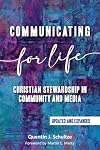
Summary: An introductory text in communication grounded in a theology of communication and a vision of faithful stewardship.
Communication. It may be argued that we spend the greater parts of our day in some form of communication. Conversation with family. Scrolling through our newsfeeds, posting and commenting. Listening to podcasts. Sending texts and emails. Writing a proposal or report. Teaching a class or giving a presentation. I could go on. Our unique human capacity to convey meaning, show more however imperfectly is constantly employed.
Followers of Christ are people who want to please him in all we say and do. Matthew 12:36 is sobering: “But I tell you that everyone will have to give account on the day of judgment for every empty word they have spoken” (NIV). That strikes me as a lot of accounting. And it motivates me to want to do this well, in ways that honor the one I follow.
Quentin Schultze has given a great deal of thought to this matter as a professor of communication. Communicating for Life is a product of a life of reflection and teaching. While meant to serve as an introductory text for communication courses in a Christian setting, it offers great insight to any of us engaged extensively in communication. Which is all of us. While he discusses various theories and media, the focus of his work is to help us think about communication in light of our faith, with thought of how then we should live.
He begins with creation and understands communication as a way we “co-create” culture in our relationships with God, our neighbors, our world, and ourselves. Our ability to name makes us symbolic stewards in defining what things are. Done under God’s grace, communication fosters the shalom of flourishing in community in all the relationships just mentioned. One of the most powerful aspects of our symbolic stewardship is the ability to identify with other communicators through listening well and conveying our sense of connection–that we understand something of each other’s world.
Hence, Schultze thinks our theories ought to reflect our call to servant stewardship with symbols. Thus, he takes issue with transmission models of communication, which reduce communication to sending and receiving messages. Not only does this miss the creative aspects of communication but it may foster manipulation and control. In contrast, he proposes a cultural view of communication, emphasizing co-creating culture.
But theory alone does not account for what goes on in our communication. Instead, human rebellion through the Fall results in misunderstanding, arrogance, and presumption. Consequently, there is confusion and hurt. However, there is hope in Christ’s incarnated loving work. He both exemplifies to us and empowers in us the use of communication to serve and love others and to advocate for the marginalized.
Then Schultze turns to an analysis of the role of mass media. He notes how much is shaped by love for earthly wealth and power and functions as a form of religious storytelling, occasionally challenging the status quo but more often supporting it. He also deals with how powerfully it may be used to demonize those who don’t fit in.
From here, Schultze turns to ethics. He affirms our responsibility before God. We are to tell the truth, and live authentic lives. Most of all, he challenges us to think of our communication as part of Christian discipleship, seeing all our communication in terms of both service and worship to God.
My sense is that the chapters closely reflect the 2000 edition of this book. That means he wrote prior to social media and the new forms of online-based media that arose since that time. For all that, I found him remarkably prescient in his analysis of mass media and spot on in his ethics. However because of the changes in both media and his discipline, he invited a team of scholars to respond, one for each chapter, to his work.
On one hand these essays often complemented his content well. For example, in response to Schultze’s shalom focus as a goal for our communication, Bill Strom proposes covenantal communication as a means to that end. Others enhanced his ideas with their own research. But I felt that the book lost some sense of continuity as a result. This may be remedied by reading all the chapters first, then the responses. One nice addition are reflection questions at the end of each response.
In conclusion, I’m glad to see Schultze’s work updated. The theology of communication he elaborates is timeless, and the communication virtues he advocates are, if anything, even more timely. And he models co-creating in community with a new generation of communication scholars to carry forward his work. And the relevance of this work isn’t just communication in the classroom. It is, indeed, communicating for life.
_____________
Disclosure of Material Connection: I received a complimentary copy of this book from the publisher for review. show less
Communication. It may be argued that we spend the greater parts of our day in some form of communication. Conversation with family. Scrolling through our newsfeeds, posting and commenting. Listening to podcasts. Sending texts and emails. Writing a proposal or report. Teaching a class or giving a presentation. I could go on. Our unique human capacity to convey meaning, show more however imperfectly is constantly employed.
Followers of Christ are people who want to please him in all we say and do. Matthew 12:36 is sobering: “But I tell you that everyone will have to give account on the day of judgment for every empty word they have spoken” (NIV). That strikes me as a lot of accounting. And it motivates me to want to do this well, in ways that honor the one I follow.
Quentin Schultze has given a great deal of thought to this matter as a professor of communication. Communicating for Life is a product of a life of reflection and teaching. While meant to serve as an introductory text for communication courses in a Christian setting, it offers great insight to any of us engaged extensively in communication. Which is all of us. While he discusses various theories and media, the focus of his work is to help us think about communication in light of our faith, with thought of how then we should live.
He begins with creation and understands communication as a way we “co-create” culture in our relationships with God, our neighbors, our world, and ourselves. Our ability to name makes us symbolic stewards in defining what things are. Done under God’s grace, communication fosters the shalom of flourishing in community in all the relationships just mentioned. One of the most powerful aspects of our symbolic stewardship is the ability to identify with other communicators through listening well and conveying our sense of connection–that we understand something of each other’s world.
Hence, Schultze thinks our theories ought to reflect our call to servant stewardship with symbols. Thus, he takes issue with transmission models of communication, which reduce communication to sending and receiving messages. Not only does this miss the creative aspects of communication but it may foster manipulation and control. In contrast, he proposes a cultural view of communication, emphasizing co-creating culture.
But theory alone does not account for what goes on in our communication. Instead, human rebellion through the Fall results in misunderstanding, arrogance, and presumption. Consequently, there is confusion and hurt. However, there is hope in Christ’s incarnated loving work. He both exemplifies to us and empowers in us the use of communication to serve and love others and to advocate for the marginalized.
Then Schultze turns to an analysis of the role of mass media. He notes how much is shaped by love for earthly wealth and power and functions as a form of religious storytelling, occasionally challenging the status quo but more often supporting it. He also deals with how powerfully it may be used to demonize those who don’t fit in.
From here, Schultze turns to ethics. He affirms our responsibility before God. We are to tell the truth, and live authentic lives. Most of all, he challenges us to think of our communication as part of Christian discipleship, seeing all our communication in terms of both service and worship to God.
My sense is that the chapters closely reflect the 2000 edition of this book. That means he wrote prior to social media and the new forms of online-based media that arose since that time. For all that, I found him remarkably prescient in his analysis of mass media and spot on in his ethics. However because of the changes in both media and his discipline, he invited a team of scholars to respond, one for each chapter, to his work.
On one hand these essays often complemented his content well. For example, in response to Schultze’s shalom focus as a goal for our communication, Bill Strom proposes covenantal communication as a means to that end. Others enhanced his ideas with their own research. But I felt that the book lost some sense of continuity as a result. This may be remedied by reading all the chapters first, then the responses. One nice addition are reflection questions at the end of each response.
In conclusion, I’m glad to see Schultze’s work updated. The theology of communication he elaborates is timeless, and the communication virtues he advocates are, if anything, even more timely. And he models co-creating in community with a new generation of communication scholars to carry forward his work. And the relevance of this work isn’t just communication in the classroom. It is, indeed, communicating for life.
_____________
Disclosure of Material Connection: I received a complimentary copy of this book from the publisher for review. show less
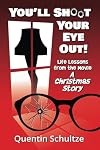
Summary: Life lessons from the movie “A Christmas Story” from a friend of storyteller and screenplay writer Jean Shepherd.
We all have our favorite classic Christmas movies that we can watch over and over again. “It’s a Wonderful Life” is probably at the top of my list. But in second place, I would probably pick “A Christmas Story.” Part of the reason is that we lived in the Cleveland area during the filming of the movie. There really was a Higbee’s store! In addition, there show more are so many memorable lines:
“You’ll shoot your eye out!”
“Frah-JEE-lay”
“The line ends here. It begins there.”
“That [Olds SOB] would freeze up in the middle of the summer in the equator.”
“Mom hadn’t had a hot meal for herself in fifteen years.”
“Triple dog dare”
“Oh, f-u-u-u-d-g-e”
I’ll bet you can remember the scenes just from the lines!
Quentin Schultze, who taught communications for many years at Calvin College, had the unusual experience of inviting Jean Shepherd, who wrote the film’s screenplay, to co-teach a course on storytelling. Along the way, he had the chance to gain an inside glimpse into the storytelling behind the movie. Specifically, he contends that, embedded in the different scenes, are a number of parables, life lessons as it were reflecting Shepherd’s keen insights into human nature.
Schultze begins with Ralphie’s dream to get a Red Ryder “200-shot range model air rifle” to protect his family from Black Bart and the villains of Cleveland Street. He pursues the dream the whole movie, and Schultze believes that lesson of pursuing dreams is a good one, even if we make fools out of ourselves.
Subsequent chapters draw from other scenes, warning us against obsessions like leg lamps or bullies like Scut, who inhabit not only schoolyards but companies, churches, and even government. Ralphie and Randy teach us about caring for family.
Some of the lessons go deeper. The tension with the unseen next door neighbors, the Bumpuses, and their hounds leads to an exploration of who the Bumpuses our in our lives, and perhaps whether we are Bumpus-like. When Randy hides under the sink after Ralphie beats up Scut for fear of “the Old Man,” mom’s response reflects the reality that we all have times of needing refuge. Perhaps the most appreciated was Schultze discussion of heroes, and the everyday sensibility if mom that makes her the hero in the story.
Of course, there are the lighter moments that remind us of the playful. Singing ‘Jingle Bells” in the car, Ralphie’s disquisition on different soaps, and the wax fang episode in which Mrs. Shields adds them to a draw of gags, including still-chattering teeth, all reveal Shepherd’s playful outlook. The fact that we love the trivia from this movie suggests how successful Shepherd was.
There’s still probably time to get and read a copy before watching the movie again. Schultze helps us understand why we love this film. He helped me appreciate the storytelling genius of Jean Shepherd. And if you haven’t seen the movie in a while, it will remind you of all your favorite scenes, and some you may have forgotten.
____________________
Disclosure of Material Connection: I received a complimentary copy of this book from the author for review. show less
We all have our favorite classic Christmas movies that we can watch over and over again. “It’s a Wonderful Life” is probably at the top of my list. But in second place, I would probably pick “A Christmas Story.” Part of the reason is that we lived in the Cleveland area during the filming of the movie. There really was a Higbee’s store! In addition, there show more are so many memorable lines:
“You’ll shoot your eye out!”
“Frah-JEE-lay”
“The line ends here. It begins there.”
“That [Olds SOB] would freeze up in the middle of the summer in the equator.”
“Mom hadn’t had a hot meal for herself in fifteen years.”
“Triple dog dare”
“Oh, f-u-u-u-d-g-e”
I’ll bet you can remember the scenes just from the lines!
Quentin Schultze, who taught communications for many years at Calvin College, had the unusual experience of inviting Jean Shepherd, who wrote the film’s screenplay, to co-teach a course on storytelling. Along the way, he had the chance to gain an inside glimpse into the storytelling behind the movie. Specifically, he contends that, embedded in the different scenes, are a number of parables, life lessons as it were reflecting Shepherd’s keen insights into human nature.
Schultze begins with Ralphie’s dream to get a Red Ryder “200-shot range model air rifle” to protect his family from Black Bart and the villains of Cleveland Street. He pursues the dream the whole movie, and Schultze believes that lesson of pursuing dreams is a good one, even if we make fools out of ourselves.
Subsequent chapters draw from other scenes, warning us against obsessions like leg lamps or bullies like Scut, who inhabit not only schoolyards but companies, churches, and even government. Ralphie and Randy teach us about caring for family.
Some of the lessons go deeper. The tension with the unseen next door neighbors, the Bumpuses, and their hounds leads to an exploration of who the Bumpuses our in our lives, and perhaps whether we are Bumpus-like. When Randy hides under the sink after Ralphie beats up Scut for fear of “the Old Man,” mom’s response reflects the reality that we all have times of needing refuge. Perhaps the most appreciated was Schultze discussion of heroes, and the everyday sensibility if mom that makes her the hero in the story.
Of course, there are the lighter moments that remind us of the playful. Singing ‘Jingle Bells” in the car, Ralphie’s disquisition on different soaps, and the wax fang episode in which Mrs. Shields adds them to a draw of gags, including still-chattering teeth, all reveal Shepherd’s playful outlook. The fact that we love the trivia from this movie suggests how successful Shepherd was.
There’s still probably time to get and read a copy before watching the movie again. Schultze helps us understand why we love this film. He helped me appreciate the storytelling genius of Jean Shepherd. And if you haven’t seen the movie in a while, it will remind you of all your favorite scenes, and some you may have forgotten.
____________________
Disclosure of Material Connection: I received a complimentary copy of this book from the author for review. show less
Take a group of professors from a Calvinist religious college, put them in offices away from any urban influence, and ask them to write about youth culture. There are some limitations in the book. Still, it's an interesting way to see how a particular chunk of the majority culture viewed youth at a certain time. If it doesn't tell you much about youth, it does tell you something about the people who were (pick your own verb) by it.

It is time for the Christian community to make TV part of the life of faith. Clhristians must transform their use of the tube into a discerning and thoughtful enterprise.. Either we will use the medium in God-glorifying ways, selecting and evaluating our programs carefully, or the medium will continue to use us.
Awards

You May Also Like


Associated Authors
Statistics
- Works
- 45
- Also by
- 2
- Members
- 1,165
- Popularity
- #22,061
- Rating
- 3.3
- Reviews
- 28
- ISBNs
- 47