
Robin Wasserman
Author of Ghosts of the Shadow Market (10-in-1)
About the Author
Image credit: Simon and Schuster
Series
Works by Robin Wasserman
The Balm and the Wound 2 copies
Scooby-Doo! Hantu Salju 1 copy
Graven Images 1 copy
Scooby-Doo! O Fantasma Da Escola. Livro De Pistas Ilustradas (Em Portuguese do Brasil) (2008) 1 copy
Atom Summer Reads Sampler 1 copy
Vengeance Of Mars 1 copy
Associated Works
Shadowhunters and Downworlders: A Mortal Instruments Reader (2013) — Contributor — 471 copies, 18 reviews
Oz Reimagined: New Tales from the Emerald City and Beyond (2013) — Contributor — 167 copies, 12 reviews
Mind-Rain: Your Favorite Authors on Scott Westerfeld's Uglies Series (2009) — Contributor — 125 copies, 2 reviews
First Kiss (Then Tell): A Collection of True Lip-Locked Moments (2007) — Contributor — 92 copies, 3 reviews
Tagged
Common Knowledge
- Canonical name
- Wasserman, Robin
- Birthdate
- 1978-05-31
- Gender
- female
- Education
- Harvard University (BA)
University of California, Los Angeles (MA) - Occupations
- children's book editor
novelist
television writer
producer - Awards and honors
- MacDowell Fellowships (2015, 2023)
- Agent
- Meredith Kaffel Simonoff (DeFiore and Co.)
- Nationality
- USA
- Birthplace
- Philadelphia, Pennsylvania, USA
- Places of residence
- Brooklyn, New York, USA
Huntingdon Valley, Pennsylvania, USA
Los Angeles, California, USA - Map Location
- USA
Members
Reviews

Hannah is essentially a "good girl", if a bit of an outsider. Lacey is the "bad girl" in school, who seems to throw her indifference in the faces of all who would question her place in society. These two girls somehow find themselves thrown together into a severely co-dependent relationship (think Thelma and Louise hyped up on some of Cobain's "teen spirit"). Hannah lacks any self-identity and simply transforms into what people expect of her. Lacey christens her under the new name of "Dex" show more and recreates her into her own goth image.
Then you have Nikki, the privileged mean girl in school who everyone follows as if she were the pied piper of vicious teenagers. The school is sent into a bit of a spiral by the suicide of the school jock, who was Nikki's longtime boyfriend. The pair were high school royalty.
Then there are the parents. The ever-embarrassing parents who never seem to "get" their troubled teens. Dex comes from a normal home with parents who care, while Lacey comes from a screwed up home life with an overbearing step-father and an alcoholic and dispassionate mother.
The story switches between the perspectives of Dex and Lacey (Us), and occasionally that of the parents (Them). Sometimes switching perspectives like this can be difficult to follow, but the author really handled it well and it was a useful tool and quite enlightening. It is interesting to see an act through the eyes of one person, and then to see the same act through those of another person. What may have first seemed cruel or selfish or self-motivated could actually have been motivated by compassion or fear or even love. And even an act motivated by love can be evil or cruel.
My final word: This book is marketed as the author's first "adult novel", yet check Goodreads and you'll see the number one genre classification by readers is "young adult", and I have to agree with that. This book really took me back to my teen years. I could see a bit of myself in Dex and my friend in Lacey. There's a hard edge to the story and quite a bit of graphic sexuality and some violence, so it is not for the younger crowd. But it definitely fits into the young adult niche. I enjoyed the author's writing, which is very easy to read and engaging. The characters are well drawn and defined, and her technique with the ever-changing perspectives was expertly handled. There is a twist at one point that left me thinking, "Well, I did not see that coming!" Moments made me cringe, some made me angry, others made me ache for the individual. Overall this is one damn fine read! show less
Then you have Nikki, the privileged mean girl in school who everyone follows as if she were the pied piper of vicious teenagers. The school is sent into a bit of a spiral by the suicide of the school jock, who was Nikki's longtime boyfriend. The pair were high school royalty.
Then there are the parents. The ever-embarrassing parents who never seem to "get" their troubled teens. Dex comes from a normal home with parents who care, while Lacey comes from a screwed up home life with an overbearing step-father and an alcoholic and dispassionate mother.
The story switches between the perspectives of Dex and Lacey (Us), and occasionally that of the parents (Them). Sometimes switching perspectives like this can be difficult to follow, but the author really handled it well and it was a useful tool and quite enlightening. It is interesting to see an act through the eyes of one person, and then to see the same act through those of another person. What may have first seemed cruel or selfish or self-motivated could actually have been motivated by compassion or fear or even love. And even an act motivated by love can be evil or cruel.
My final word: This book is marketed as the author's first "adult novel", yet check Goodreads and you'll see the number one genre classification by readers is "young adult", and I have to agree with that. This book really took me back to my teen years. I could see a bit of myself in Dex and my friend in Lacey. There's a hard edge to the story and quite a bit of graphic sexuality and some violence, so it is not for the younger crowd. But it definitely fits into the young adult niche. I enjoyed the author's writing, which is very easy to read and engaging. The characters are well drawn and defined, and her technique with the ever-changing perspectives was expertly handled. There is a twist at one point that left me thinking, "Well, I did not see that coming!" Moments made me cringe, some made me angry, others made me ache for the individual. Overall this is one damn fine read! show less

Much like Lacey’s beloved Kurt, Girls on Fire is a brutally raw story of friendship, particularly of the obsessive nature of them. Neither Dex nor Lacey are particularly likeable; one is too manipulative, and the other is too submissive. If Anne Shirley and Diana Barry are the quintessential example of kindred spirits, then Dex and Lacey are their antithesis. Yet, the two work well together and manage to form a bond that is difficult to break.
Dex is the Every Girl and represents all of us show more who have been swept off our feet by the attention of someone more exotic than us. In Lacey, she finds someone so at odds with her own upbringing that her attention is not just welcome but desired. In fact, there is a subtle erotic tone to their friendship that adds tension to later scenes. Building upon this layer of semi-sexual tension is the fact that Dex struggles with Lacey’s sudden but very welcome attention. She simultaneously craves it and yet fears the real reasons behind her friendship. It is the truth behind Lacey’s actions which supply much of the drama and suspense within the story, confirming fears everywhere that sudden attention from someone new is never a good thing.
Alternating between Dex’s and Lacey’s perspectives, readers eventually get the whole, ugly, and strangely beautiful truth behind their odd friendship. With these girls, Ms. Wasserman shines the spotlight on the dysfunction that passes for high school female friendship and the idiosyncrasies which are unique to female friendships in general. Dex and Lacey, for all of their faults and individual as well as collective issues, prove that true friends will stick together through thick or thin. Yet, this total acceptance comes with its darker side.
Girls on Fire is like the entire grunge movement – angsty, angry, unimpressed, isolated; reading it will evoke all of these feelings and more. Robin Wasserman expertly captures what it was like to come of age in the early 90’s. In Dex and Lacey, she portrays our profound apathy and social isolation and our fierce need to differentiate ourselves from the bright and overly stylized 70’s and 80’s. She does such an excellent job at representing this era that in many ways reading Girls on Fire is like stepping back in time to that age where life was at once hopeful, with the end of the Cold War, and hopeless, with the World Trade Center bombing and the rising awareness/acceptance of global warming, and where we expressed our confusion and despair at the future through grunge and self-mutilation (in the form of tattoos and piercings). In a world where Gen-X holds no sway because we are too small a generation to drive much of anything, Girls on Fire reminds us of who we are and what we have overcome. show less
Dex is the Every Girl and represents all of us show more who have been swept off our feet by the attention of someone more exotic than us. In Lacey, she finds someone so at odds with her own upbringing that her attention is not just welcome but desired. In fact, there is a subtle erotic tone to their friendship that adds tension to later scenes. Building upon this layer of semi-sexual tension is the fact that Dex struggles with Lacey’s sudden but very welcome attention. She simultaneously craves it and yet fears the real reasons behind her friendship. It is the truth behind Lacey’s actions which supply much of the drama and suspense within the story, confirming fears everywhere that sudden attention from someone new is never a good thing.
Alternating between Dex’s and Lacey’s perspectives, readers eventually get the whole, ugly, and strangely beautiful truth behind their odd friendship. With these girls, Ms. Wasserman shines the spotlight on the dysfunction that passes for high school female friendship and the idiosyncrasies which are unique to female friendships in general. Dex and Lacey, for all of their faults and individual as well as collective issues, prove that true friends will stick together through thick or thin. Yet, this total acceptance comes with its darker side.
Girls on Fire is like the entire grunge movement – angsty, angry, unimpressed, isolated; reading it will evoke all of these feelings and more. Robin Wasserman expertly captures what it was like to come of age in the early 90’s. In Dex and Lacey, she portrays our profound apathy and social isolation and our fierce need to differentiate ourselves from the bright and overly stylized 70’s and 80’s. She does such an excellent job at representing this era that in many ways reading Girls on Fire is like stepping back in time to that age where life was at once hopeful, with the end of the Cold War, and hopeless, with the World Trade Center bombing and the rising awareness/acceptance of global warming, and where we expressed our confusion and despair at the future through grunge and self-mutilation (in the form of tattoos and piercings). In a world where Gen-X holds no sway because we are too small a generation to drive much of anything, Girls on Fire reminds us of who we are and what we have overcome. show less
Girls on Fire by author Robin Wasserman takes place in a small town in Pennsylvania during the ‘90s. Hannah Dexter had managed to stay under the radar at high school until her senior year when a humiliating encounter with popular girl, Nikki Drummond, brings her to the attention of Lacey Champlain. Fueled by their mutual hatred for Nikki, they form a strong but unequal bond. Lacey takes over Hannah’s life, renames her Dex, changes her style from nondescript to grunge and introduces her show more to casual sex, binge drinking, the music of Kurt Cobain, and a couple of bad boys suspected of dabbling in drugs and Satanism. Dex’s mom has misgivings about the relationship between the two girls but her father seems to enjoy his daughter’s new rebelliousness and her new friend – perhaps a little too much. Running in the background is the story of the suicide of Nikki’s boyfriend, Craig, the previous Hallowe’en, an event that has raised a lot of questions and created some hysteria in the small town about Satanism.
Girls on Fire is a well-written, compelling and suspenseful YA novel. It is also almost unceasingly dark. The narrative is divided between Lacey and Dex as they give us their own separate stories, an Us section in which we get their shared perspectives and a Them in which we get the perspective of others. Wasserman does a fascinating job of showing how toxic teenaged relationships can become as the story and their relationships move towards what can only be a bad ending for everyone. She has created some extremely unlikeable characters doing increasingly disturbing things and somehow makes us care how it will turn out. A definite high recommendation from me.
Thanks to Edelweiss and Harper Publishing for the opportunity to read this novel in exchange for an honest review show less
Girls on Fire is a well-written, compelling and suspenseful YA novel. It is also almost unceasingly dark. The narrative is divided between Lacey and Dex as they give us their own separate stories, an Us section in which we get their shared perspectives and a Them in which we get the perspective of others. Wasserman does a fascinating job of showing how toxic teenaged relationships can become as the story and their relationships move towards what can only be a bad ending for everyone. She has created some extremely unlikeable characters doing increasingly disturbing things and somehow makes us care how it will turn out. A definite high recommendation from me.
Thanks to Edelweiss and Harper Publishing for the opportunity to read this novel in exchange for an honest review show less
Hidden Under a Mountain of Words
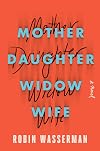
Given how patients relate their stories slowly and often piecemeal to their psychological therapists, these professionals need lots of patience, probably more than the average person. With this low-key psychological suspense novel, readers will have to exhibit a great deal of forbearance to get to the nut of the story. Wasserman throws a lot at you in the forms of emotions, medical jargon, point of view shifts, and hops between past and present, thus turning show more what begins as the mystery of woman’s memory loss into a complicated journey through the minds of the three principal protagonists: Lizzie/Elizabeth, alternately the young researcher and the older widow; Alice, in search of her mother; and Wendy/Karen, the woman who can’t or choses not to remember her past.
In 1999, Lizzie presents herself as one of a group of protégées selected by the renowned memory scientist, Dr. Benjamin Strauss. Your radar immediately turns on when you learn from kibitzing among the group that, among other things, Dr. Strauss has a reputation as a predator, and also that Lizzie considers herself a lightweight compared to the others in the group. So, what’s one to think when Dr. Strauss picks her to work closely on the case of Wendy, the mystery woman with no memory of her past, a project that could open her great research success or ruin? It soon becomes apparent that Lizzie has issues that make her vulnerable to a man life Strauss. One thing leads to another, and early on we jump to the present to learn she and Strauss carried on, he divorced, and he married her. Lizzie/Elizabeth has lots of barrage to sort through, parents, friends, profession, and the like, and readers are there for every thought, or so it feels like.
In her life as the widow Strauss, out of science and contemplating getting about her writing, Alice turns up in search of her mother, Karen, who might have been patient Wendy. At 18 and on her way to college, she decides it’s time to understand why her mother disappeared when she was a baby. Feelings of abandonment stir all kinds of psychological turmoil, relationship problems and father-daughter issues not the least, along with self-worth. Alice and Elizabeth, now a widow, connect and talk about Wendy/Karen, particularly what Elizabeth might have learned and what became of Wendy. It’s during this storyline that finally you get a focused picture of what transpired, and it’s not very pretty, but anticipated.
Wendy, while critical to everybody involved, sort of gets short shrift. Of course, when someone has no idea who they are, not a shred of memory, you can understand. (Joyce Carol Oates built an entire novel around this idea of truncated memory in her very good The Man Without a Shadow.) Wasserman gives her short chapters to express herself, and a bit more character building in interchanges with Lizzie, who comes to treat her a friend/patient. But by the end, you know with certainty who she was in one of her past lives, for she has a history of entering dissociative fugue states, a condition wherein you forget your past, establish a new life, then remember you past and forget her amnesia life.
Recommended only for the most patient readers, though readers might do better with Oates’ aforementioned novel. show less
Given how patients relate their stories slowly and often piecemeal to their psychological therapists, these professionals need lots of patience, probably more than the average person. With this low-key psychological suspense novel, readers will have to exhibit a great deal of forbearance to get to the nut of the story. Wasserman throws a lot at you in the forms of emotions, medical jargon, point of view shifts, and hops between past and present, thus turning show more what begins as the mystery of woman’s memory loss into a complicated journey through the minds of the three principal protagonists: Lizzie/Elizabeth, alternately the young researcher and the older widow; Alice, in search of her mother; and Wendy/Karen, the woman who can’t or choses not to remember her past.
In 1999, Lizzie presents herself as one of a group of protégées selected by the renowned memory scientist, Dr. Benjamin Strauss. Your radar immediately turns on when you learn from kibitzing among the group that, among other things, Dr. Strauss has a reputation as a predator, and also that Lizzie considers herself a lightweight compared to the others in the group. So, what’s one to think when Dr. Strauss picks her to work closely on the case of Wendy, the mystery woman with no memory of her past, a project that could open her great research success or ruin? It soon becomes apparent that Lizzie has issues that make her vulnerable to a man life Strauss. One thing leads to another, and early on we jump to the present to learn she and Strauss carried on, he divorced, and he married her. Lizzie/Elizabeth has lots of barrage to sort through, parents, friends, profession, and the like, and readers are there for every thought, or so it feels like.
In her life as the widow Strauss, out of science and contemplating getting about her writing, Alice turns up in search of her mother, Karen, who might have been patient Wendy. At 18 and on her way to college, she decides it’s time to understand why her mother disappeared when she was a baby. Feelings of abandonment stir all kinds of psychological turmoil, relationship problems and father-daughter issues not the least, along with self-worth. Alice and Elizabeth, now a widow, connect and talk about Wendy/Karen, particularly what Elizabeth might have learned and what became of Wendy. It’s during this storyline that finally you get a focused picture of what transpired, and it’s not very pretty, but anticipated.
Wendy, while critical to everybody involved, sort of gets short shrift. Of course, when someone has no idea who they are, not a shred of memory, you can understand. (Joyce Carol Oates built an entire novel around this idea of truncated memory in her very good The Man Without a Shadow.) Wasserman gives her short chapters to express herself, and a bit more character building in interchanges with Lizzie, who comes to treat her a friend/patient. But by the end, you know with certainty who she was in one of her past lives, for she has a history of entering dissociative fugue states, a condition wherein you forget your past, establish a new life, then remember you past and forget her amnesia life.
Recommended only for the most patient readers, though readers might do better with Oates’ aforementioned novel. show less
Lists
Awards


You May Also Like


Associated Authors
Statistics
- Works
- 84
- Also by
- 13
- Members
- 9,450
- Popularity
- #2,539
- Rating
- 3.7
- Reviews
- 255
- ISBNs
- 345
- Languages
- 13
- Favorited
- 4