
Anita Burgh
Author of Clare's War
About the Author
Image credit: /cristianabembo
Series
Works by Anita Burgh
Perekond 1 copy
Associated Works
Tagged
Common Knowledge
- Birthdate
- 1937-06-09
- Gender
- female
- Nationality
- UK
- Birthplace
- Gillingham, Kent, England, UK
- Associated Place (for map)
- England, UK
Members
Reviews

This is a modern medical mild thriller and light romance - not the sort of thing I'd normally read.
It focuses on St Edith's, a community hospital which is in danger of closing. It features Chrissy, a nurse who recently lost her husband and has moved back to her home-town to take a senior post at St Edith's. Unfortunately not everybody is happy for her to have this post, and she finds herself in the midst of conflict almost immediately.
At the same time there are clearly some underhand show more discussions going on, and a few unscrupulous people who care nothing for the patients.
I thought it was very well-written, and also felt the characters were fairly well-drawn and rounded; there were a couple of particularly delightful redoubtable elderly ladies featured, and I could easily get a feel for several of the other characters.
My main problem with this book was the sheer number of people involved, most of whom were introduced within the first few chapters, switching scenes rapidly and leaving me bewildered about who was who. Perhaps this would have worked in a film - a snapshot of different places, following a few significant people going about their everyday lives or having a secret conversation. But in a book, with name after name and little to go on visually, I lost track very quickly; I was about half-way through the book before I had sorted out the major characters, because in the early chapters it wasn't really obvious who the most important people were.
I found the plot a little melodramatic too, and rather too easily resolved in the end with an intense and rather quick conclusion. There were one or two surprises, which were unexpected but almost too much so - I found them not entirely believable. I also found it hard to believe that the few unscrupulous people could really be as bad as they were made out to be!
I doubt if I'll read it again, although who knows? I might come across it in a few years and try it again. I liked the style - it was eminently readable, and I mostly kept interested although I have to admit to skipping a few chapters in the middle which didn't seem to be moving anywhere. show less
It focuses on St Edith's, a community hospital which is in danger of closing. It features Chrissy, a nurse who recently lost her husband and has moved back to her home-town to take a senior post at St Edith's. Unfortunately not everybody is happy for her to have this post, and she finds herself in the midst of conflict almost immediately.
At the same time there are clearly some underhand show more discussions going on, and a few unscrupulous people who care nothing for the patients.
I thought it was very well-written, and also felt the characters were fairly well-drawn and rounded; there were a couple of particularly delightful redoubtable elderly ladies featured, and I could easily get a feel for several of the other characters.
My main problem with this book was the sheer number of people involved, most of whom were introduced within the first few chapters, switching scenes rapidly and leaving me bewildered about who was who. Perhaps this would have worked in a film - a snapshot of different places, following a few significant people going about their everyday lives or having a secret conversation. But in a book, with name after name and little to go on visually, I lost track very quickly; I was about half-way through the book before I had sorted out the major characters, because in the early chapters it wasn't really obvious who the most important people were.
I found the plot a little melodramatic too, and rather too easily resolved in the end with an intense and rather quick conclusion. There were one or two surprises, which were unexpected but almost too much so - I found them not entirely believable. I also found it hard to believe that the few unscrupulous people could really be as bad as they were made out to be!
I doubt if I'll read it again, although who knows? I might come across it in a few years and try it again. I liked the style - it was eminently readable, and I mostly kept interested although I have to admit to skipping a few chapters in the middle which didn't seem to be moving anywhere. show less
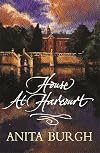
The House At Harcourt by Anita Burgh is first and foremost a sweeping historical saga set in the Victorian period. Harcourt Barton is a large English manor in Devon and we are give permission to peep in through the keyhole at all the different levels of society that live within. From the master of the manor and his daughter, down to the servants from governess to kitchen maid, and on to the tenant farmer. The details of running such a large estate, and how society lived in this time period show more was fascinating.
The story revolves around Eliza, the daughter of the house and her recently hired governess, Fanny. Eliza grows up motherless, virtually ignored by her father, unless her desires interfere with his wishes. She believes that her mother is dead, but in actual fact her father threw her out for adultery and her name is never mentioned. Eliza tries to be the dutiful daughter but it is very difficult with a cold, and uncaring father. Fanny and Eliza grow very close, until circumstances force Fanny to leave due to trumped up charges.
As with many books written about Victorian times, we see such extremes between those with money and those without, between the power men had and lack of it that made women mere chattels, between the acceptable morals of the day and what was often going on behind the scenes, and between the classes where the upper class held all the power and the lower classes were there to obey. Women were held accountable for their behavior while many men were not. It was certainly an age where the appearance of respectability was more importance than the actual fact of it.
I found parts of The House At Harcourt a little overdone and melodramatic, but despite its flaws I found it to be an enjoyable read. show less
The story revolves around Eliza, the daughter of the house and her recently hired governess, Fanny. Eliza grows up motherless, virtually ignored by her father, unless her desires interfere with his wishes. She believes that her mother is dead, but in actual fact her father threw her out for adultery and her name is never mentioned. Eliza tries to be the dutiful daughter but it is very difficult with a cold, and uncaring father. Fanny and Eliza grow very close, until circumstances force Fanny to leave due to trumped up charges.
As with many books written about Victorian times, we see such extremes between those with money and those without, between the power men had and lack of it that made women mere chattels, between the acceptable morals of the day and what was often going on behind the scenes, and between the classes where the upper class held all the power and the lower classes were there to obey. Women were held accountable for their behavior while many men were not. It was certainly an age where the appearance of respectability was more importance than the actual fact of it.
I found parts of The House At Harcourt a little overdone and melodramatic, but despite its flaws I found it to be an enjoyable read. show less
WARNING: Contains Spoilers
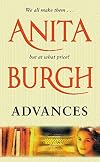
Highly readable novel featuring a varied cast of characters. The protagonist is an overweight woman named Kate who has a disinterested, indifferent husband. She begins writing fiction and enters the complex world of British publishing. Meanwhile Joy, who is an agent meets Kate at a party in the bathroom. She has a super nasty and irresistable husband who is very guilty of domestic violence. Kate is the kind of protagonist who immediately one feels for and supports. show more Well Done show less
Highly readable novel featuring a varied cast of characters. The protagonist is an overweight woman named Kate who has a disinterested, indifferent husband. She begins writing fiction and enters the complex world of British publishing. Meanwhile Joy, who is an agent meets Kate at a party in the bathroom. She has a super nasty and irresistable husband who is very guilty of domestic violence. Kate is the kind of protagonist who immediately one feels for and supports. show more Well Done show less
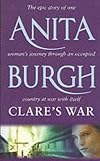
A dramatic novel about a young girl in France during World War Two. She is headstrong and has left her family after an accident with her sister. The novel is about her life, her friends in the resistance and her love life. Often improbably, but always readable.
You May Also Like


Associated Authors
Statistics
- Works
- 27
- Also by
- 2
- Members
- 611
- Popularity
- #41,143
- Rating
- 3.4
- Reviews
- 7
- ISBNs
- 138
- Languages
- 4