
Steve Behrends
Author of The Vaults of Yoh-Vombis [short story]
Works by Steve Behrends
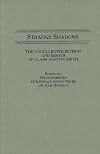
Strange Shadows: The Uncollected Fiction and Essays of Clark Ashton Smith (Contributions to the Study of Science Fiction (1989) — Editor — 22 copies, 3 reviews
Clark Ashton Smith: A Critical Guide to the Man and His Work, Second Edition (2013) — Author — 15 copies
Associated Works
The Freedom of Fantastic Things: Selected Criticism on Clark Ashton Smith (2006) — Composer — 26 copies
Tagged
Common Knowledge
- Canonical name
- Behrends, Steve
- Gender
- male
- Occupations
- physicist (Brandeis University, Boston)
- Nationality
- USA
- Associated Place (for map)
- USA
Members
Reviews
I am not reviewing the book here but the title short story 'Strange Shadows' published after Ashton Smith's death in 1985. It is not one of his greatest stories (although Ashton Smith cannot write badly), being a conventional tale of urban unease based on a rather absurd premise.
The core idea is that shadows tell the clairvoyant observer (not the rest of us) the real character and intentions of people (and, it is suggested, of animals) but the imagery is stereotypical and the story line show more weak. Yet Ashton Smith still manages to engage us.
This brings us on to another interesting tale published after his death but the year before as his drafts were disinterred for an eager public. This is 'Nemesis of the Unfinished' which tells us of the awful fate of a pulp fantasy and horror writer at the hands of his own work.
They say that a writer should write about what he knows, This is worth reading as a sardonic account of the life of a pulp fiction writer with too many ideas and too perfectionist to make an easy living. Not a masterpiece but amusing enough and insightful. show less
The core idea is that shadows tell the clairvoyant observer (not the rest of us) the real character and intentions of people (and, it is suggested, of animals) but the imagery is stereotypical and the story line show more weak. Yet Ashton Smith still manages to engage us.
This brings us on to another interesting tale published after his death but the year before as his drafts were disinterred for an eager public. This is 'Nemesis of the Unfinished' which tells us of the awful fate of a pulp fantasy and horror writer at the hands of his own work.
They say that a writer should write about what he knows, This is worth reading as a sardonic account of the life of a pulp fiction writer with too many ideas and too perfectionist to make an easy living. Not a masterpiece but amusing enough and insightful. show less

I listened to 'The Vaults of Yoh-Vombis on the HorrorBabble channel on YouTube. It is stated to be from the restored version, not the abridged form that was published in 'Weird Tales' magazine. I haven't read much by Clark Ashton Smith, although I knew about him from reading about H. P. Lovecraft.
The action is set on Mars, a Mars with humanoid natives, very cold nights, and an atmosphere as thin as the Himalayas. Our information comes from a story dictated by Rodney Severn, sole human show more survivor of an archaeological expedition to the deserted. legendary city of the extinct Yorhis race, Yoh-Vombis. (The Yorhis apparently were wiped out about 40,000 years ago.)
Seven archeologists and two Aihais, native Martian guides, made the trip. The first night, before they actually enter the ruins, Rodney thinks he sees something while he's half asleep. The audio book doesn't have any background music. If it did, this would have been a cue for something nicely ominous. I find it interesting that Smith wrote 'The feeling seemed to be made of a million spectral adumbrations that oozed unseen but palpable from the great, unearthly architecture; that weighed upon me like tomb-born incubi, but were void of form and meaning such as could be comprehended by human thought. I appeared to move, not in the open air, but in the smothering gloom of sealed sepulchral vaults; to choke with a death-fraught atmosphere, with the miasmata of aeon-old corruption.' Why use 'incubi'? Incubi prey on women. Succubi prey on men. (I have wondered if a gay man would be preyed upon by an incubus and a lesbian by a succubus. I suppose if one is bi, either one could do the preying.)
The Aihai guides refuse to enter the city. Naturally, the archeologists assume it's some taboo. I've been reading/listening to/watching horror for decades. I just wanted to smack those arrogant idiots for taking only a crowbar and two picks inside, leaving other tools, explosives, and guns at their camp. Well, they do have electric torches (flashlights). Don't expect them to have sense enough to weight a big ball of string at the entrance of the underground vaults so they don't get lost. These are your genuine horror story first-class scholarly twits we're dealing with.
The descriptions are excellent for building atmosphere, particularly when they make their big discovery. Will this lead to the stuff of nightmares? Fear not, it will! The end is deliciously gruesome in its implications.
If you enjoy old horror stories, you should enjoy this one. I used an online text to get the spellings. If you read instead of listen to the story, expect some old-fashioned spellings. I thought it interesting that Rodney referred to his previous explorations as 'ultra-terrene' instead of extra-terrestrial. show less
The action is set on Mars, a Mars with humanoid natives, very cold nights, and an atmosphere as thin as the Himalayas. Our information comes from a story dictated by Rodney Severn, sole human show more survivor of an archaeological expedition to the deserted. legendary city of the extinct Yorhis race, Yoh-Vombis. (The Yorhis apparently were wiped out about 40,000 years ago.)
Seven archeologists and two Aihais, native Martian guides, made the trip. The first night, before they actually enter the ruins, Rodney thinks he sees something while he's half asleep. The audio book doesn't have any background music. If it did, this would have been a cue for something nicely ominous. I find it interesting that Smith wrote 'The feeling seemed to be made of a million spectral adumbrations that oozed unseen but palpable from the great, unearthly architecture; that weighed upon me like tomb-born incubi, but were void of form and meaning such as could be comprehended by human thought. I appeared to move, not in the open air, but in the smothering gloom of sealed sepulchral vaults; to choke with a death-fraught atmosphere, with the miasmata of aeon-old corruption.' Why use 'incubi'? Incubi prey on women. Succubi prey on men. (I have wondered if a gay man would be preyed upon by an incubus and a lesbian by a succubus. I suppose if one is bi, either one could do the preying.)
The Aihai guides refuse to enter the city. Naturally, the archeologists assume it's some taboo. I've been reading/listening to/watching horror for decades. I just wanted to smack those arrogant idiots for taking only a crowbar and two picks inside, leaving other tools, explosives, and guns at their camp. Well, they do have electric torches (flashlights). Don't expect them to have sense enough to weight a big ball of string at the entrance of the underground vaults so they don't get lost. These are your genuine horror story first-class scholarly twits we're dealing with.
The descriptions are excellent for building atmosphere, particularly when they make their big discovery. Will this lead to the stuff of nightmares? Fear not, it will! The end is deliciously gruesome in its implications.
If you enjoy old horror stories, you should enjoy this one. I used an online text to get the spellings. If you read instead of listen to the story, expect some old-fashioned spellings. I thought it interesting that Rodney referred to his previous explorations as 'ultra-terrene' instead of extra-terrestrial. show less

It is rare to find a bit of a dud in Clark Ashton Smith's work but this is one. It revisits the territory of 'The Vaults of Yoh-Vombis' (1932) only a year later but in the less interesting 'Wonder Stories'. The tale is one cliche after another at the edge of being a Weird Tales pastiche.
The story begins with a superb and evocative picture of the Red Mars as imagined in the fantasies of the interwar period before science ended that dream but descends (literally and figuratively) into a show more sub-Lovecraftian horror story that fails to engage. Indeed, I really started to yawn after a while. show less
The story begins with a superb and evocative picture of the Red Mars as imagined in the fantasies of the interwar period before science ended that dream but descends (literally and figuratively) into a show more sub-Lovecraftian horror story that fails to engage. Indeed, I really started to yawn after a while. show less
Written in 1932, this is a classic mash-up of a Mars part-derived from Edgar Rice Boroughs, the Lovecraft of Mountains of Madness and the period lore of ancient civilisations (like those being explicated in the popular press of the 1930s) pushed back 40,000 years and across the solar system.
It suffers from being a Lovecraft pastiche in style at the beginning, with the standard issue mad man turning up in civilisation to tell a a tale of eldritch horror, but once the actual tale starts to get show more told it is genuinely atmospheric and horrific.
The bottom line is leech-like brain eaters lurking in the bowels of the planet and you can see the link between 1930s pulp and the C movie horror films of the 1950s here but there is genuine awe and terror in this story and it is justly regarded as one of the fantasists' best. show less
It suffers from being a Lovecraft pastiche in style at the beginning, with the standard issue mad man turning up in civilisation to tell a a tale of eldritch horror, but once the actual tale starts to get show more told it is genuinely atmospheric and horrific.
The bottom line is leech-like brain eaters lurking in the bowels of the planet and you can see the link between 1930s pulp and the C movie horror films of the 1950s here but there is genuine awe and terror in this story and it is justly regarded as one of the fantasists' best. show less
You May Also Like
Associated Authors
Statistics
- Works
- 11
- Also by
- 4
- Members
- 155
- Popularity
- #135,096
- Rating
- 3.8
- Reviews
- 8
- ISBNs
- 11
- Languages
- 1