
About the Author
Rod Gragg is a historian, journalist, and current director of the Center for Military and Veterans Studies at Coastal Carolina University, where he also serves as an adjunct professor of history. He has authored numerous books, including Covered with Glory, Confederate Goliath, and The Pilgrim show more Chronicles. His works have earned the Fletcher Pratt Award and the James I. Robertson Award, as well as selection in various book clubs. show less
Image credit: Coates Crewe
Works by Rod Gragg
Lewis and Clark on the Trail of Discovery: An Interactive History with Removable Artifacts (Museum in a Book) (2003) 283 copies, 5 reviews
The Declaration of Independence: The Story Behind America's Founding Document and the Men Who Created It (2005) 215 copies, 2 reviews
The Illustrated Gettysburg Reader: An Eyewitness History of the Civil War?s Greatest Battle (2013) 55 copies, 2 reviews
My Brother's Keeper: Christians Who Risked All to Protect Jewish Targets of the Nazi Holocaust (2016) 36 copies, 2 reviews
The Pilgrim Chronicles: An Eyewitness History of the Pilgrims and the Founding of Plymouth Colony (2014) 35 copies
Planters, Pirates, and Patriots: Historical Tales from the South Carolina Grand Strand (1984) 20 copies
The Civil War 1 copy
THE ILLLUSTRATED READER 1 copy
Tagged
Common Knowledge
- Gender
- male
- Occupations
- historian
writer
journalist
adjunct professor - Organizations
- Coastal Carolina University
- Awards and honors
- Fletcher Pratt Award
James I. Robertson Award - Short biography
- A former journalist, historian Rod Gragg is director of the Center for Military and Veterans Studies at Coastal Carolina University, where he also serves as an adjunct professor of history. His works have earned the Fletcher Pratt Award, the James I. Robertson Award and other honors, and have been selected for the Book-of-the-Month Club, the History Book Club and the Military History Book Club.
- Nationality
- USA
- Places of residence
- Conway, South Carolina, USA
- Associated Place (for map)
- South Carolina, USA
Members
Reviews

It's bad enough when you can't see the forest for the trees. It's worse when you can't see the trees for the twigs.
This is an attempt to describe of the last major events of the American Civil War: The closing of the port of Wilmington, North Carolina, the last significant site for blockade runners bringing in cargo from the outside world. The problem is, it views everything under such a high-power microscope that it becomes hard to see the context.
At the very beginning of the war, one of show more the pillars of Winfield Scott's so-called "Anaconda Plan" was to close off southern harbors to prevent the Confederacy from exporting the cotton that was its only real product, and from importing the manufactured goods that it needed but had tried so hard not to build. At first, the blockade was ridiculously porous. But, gradually, major southern ports were captured (New Orleans) or rendered unusable because of warships waiting outside (the ports on Hampton Roads below Richmond). Capturing was, of course, the better course when possible, because it meant no possibility at all of a ship sneaking out.
By the end of 1864, with ports like New Orleans, Mobile, Charleston, and Richmond completely useless, only Wilmington was left to the Confederacy. If it could be closed off, the South would be cut off and its doom a step closer. Naturally, the Confederacy did everything it could to prevent that. Wilmington was heavily fortified -- and the lynchpin of the defense was Fort Fisher. It was not, as it is sometimes made out, the whole of the defensive position -- by itself, it did very little to defend Wilmington; troops could have been landed above it and marched into the city and the fort left to wither on the vine. But it was what kept Federal ships from entering the river's mouth. Thus Fort Fisher did not guard Wilmington as such; it guarded the passage out of Wilmington.
You would hardly know it from this book. Indeed, you'd have a hard time knowing that the Civil War had started in 1861. The book really starts in 1864, with Fort Fisher built and the Federals preparing to attack it. There is only a brief overview of the reasons it is significant, or of its relationship with the other Confederate defenses in the area. Indeed, despite a long description of how big and fancy Fort Fisher was, I would not consider the description of its building adequate; was it really as tough as it was made out to be? After all, it fell amazingly easily....
What really bothered me, though, is that this isn't really the story of the Wilmington campaign; it is mostly the story of William Lamb, the commander of the fort. Oh, we learn something of the Federal planning, and we read about the assault on Fort Fisher. But the view is myopic. For instance, Robert Hoke's division of Confederate troops was sent to help defend the approaches of the Fort. But all we really learn about Hoke's division concerns the tug-of-war between Lamb and his superior General Whiting versus General Braxton Bragg about what Hoke is to do. (He didn't end up doing much. But what was Hoke thinking? We don't know.) To me, this was unsatisfactory -- for my particular purposes, I wanted details about Hoke's division, which should have been part of the story -- and they just weren't there.
As a Lamb's-eye view of the siege of Fort Fisher, this book is well-documented and readable, although it could have cut about 90% of the personal anecdotes about what soldiers experienced without the slightest loss. But, as a general overview of the story of the conquest of Wilmington, it really falls short. show less
This is an attempt to describe of the last major events of the American Civil War: The closing of the port of Wilmington, North Carolina, the last significant site for blockade runners bringing in cargo from the outside world. The problem is, it views everything under such a high-power microscope that it becomes hard to see the context.
At the very beginning of the war, one of show more the pillars of Winfield Scott's so-called "Anaconda Plan" was to close off southern harbors to prevent the Confederacy from exporting the cotton that was its only real product, and from importing the manufactured goods that it needed but had tried so hard not to build. At first, the blockade was ridiculously porous. But, gradually, major southern ports were captured (New Orleans) or rendered unusable because of warships waiting outside (the ports on Hampton Roads below Richmond). Capturing was, of course, the better course when possible, because it meant no possibility at all of a ship sneaking out.
By the end of 1864, with ports like New Orleans, Mobile, Charleston, and Richmond completely useless, only Wilmington was left to the Confederacy. If it could be closed off, the South would be cut off and its doom a step closer. Naturally, the Confederacy did everything it could to prevent that. Wilmington was heavily fortified -- and the lynchpin of the defense was Fort Fisher. It was not, as it is sometimes made out, the whole of the defensive position -- by itself, it did very little to defend Wilmington; troops could have been landed above it and marched into the city and the fort left to wither on the vine. But it was what kept Federal ships from entering the river's mouth. Thus Fort Fisher did not guard Wilmington as such; it guarded the passage out of Wilmington.
You would hardly know it from this book. Indeed, you'd have a hard time knowing that the Civil War had started in 1861. The book really starts in 1864, with Fort Fisher built and the Federals preparing to attack it. There is only a brief overview of the reasons it is significant, or of its relationship with the other Confederate defenses in the area. Indeed, despite a long description of how big and fancy Fort Fisher was, I would not consider the description of its building adequate; was it really as tough as it was made out to be? After all, it fell amazingly easily....
What really bothered me, though, is that this isn't really the story of the Wilmington campaign; it is mostly the story of William Lamb, the commander of the fort. Oh, we learn something of the Federal planning, and we read about the assault on Fort Fisher. But the view is myopic. For instance, Robert Hoke's division of Confederate troops was sent to help defend the approaches of the Fort. But all we really learn about Hoke's division concerns the tug-of-war between Lamb and his superior General Whiting versus General Braxton Bragg about what Hoke is to do. (He didn't end up doing much. But what was Hoke thinking? We don't know.) To me, this was unsatisfactory -- for my particular purposes, I wanted details about Hoke's division, which should have been part of the story -- and they just weren't there.
As a Lamb's-eye view of the siege of Fort Fisher, this book is well-documented and readable, although it could have cut about 90% of the personal anecdotes about what soldiers experienced without the slightest loss. But, as a general overview of the story of the conquest of Wilmington, it really falls short. show less
My brother's keeper : Christians who risked all to protect Jewish targets of the Nazi Holocaust by Rod Gragg
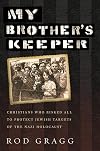
This book is a collection of brief profiles of Christians who risked their lives to protect Jews during the Holocaust. Some of the subjects of the sketches are well known for their work during the Holocaust, such as the Ten Boom family. Some rescued hundreds or thousands, and others rescued one or two. Some are surprising, like Princess Alice of Battenberg, mother of Prince Philip. All were motivated to act by their Christian faith, and all have been designated as Righteous Among the Nations show more by Yad Vashem.
I was glad to see one local man recognized. Master Sergeant Roddie Edmonds was a local boy from Knoxville, Tennessee. As the highest-ranking non-commissioned officer in a German POW camp, he used his position to protect the Jewish soldiers who were fellow POWs. When the Germans ordered the Jewish soldiers to report one morning, Edmonds feared that they would end up in an extermination camp. He ordered all of the American soldiers to report, and they followed his order. When questioned by the Germans, they claimed “We are all Jews.” The Germans backed down in the face of this, and the Jewish soldiers were spared. Roddie Edmonds was the first—and at this point the only—American soldier recognized by Yad Vashem. show less
I was glad to see one local man recognized. Master Sergeant Roddie Edmonds was a local boy from Knoxville, Tennessee. As the highest-ranking non-commissioned officer in a German POW camp, he used his position to protect the Jewish soldiers who were fellow POWs. When the Germans ordered the Jewish soldiers to report one morning, Edmonds feared that they would end up in an extermination camp. He ordered all of the American soldiers to report, and they followed his order. When questioned by the Germans, they claimed “We are all Jews.” The Germans backed down in the face of this, and the Jewish soldiers were spared. Roddie Edmonds was the first—and at this point the only—American soldier recognized by Yad Vashem. show less
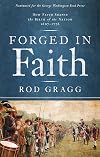
Forged in Faith was good, but it fell a bit short of my expectations — or at least what I was looking for. It started out by focusing on the various faith-based influences on the founding of specific settlements and colonies. I could have listened to an entire book based on this.
There were also interesting tidbits on the role of key religious leaders like George Whitefield and Jonathan Edwards. I wish there had been more time spent on the influence of these people, but given the relatively show more short length of the book, I can understand why they got the limited focus they did.
The book really started to fall apart for me when it hit the years leading up to the American Revolution. The focus narrowed to the influence of a handful of founding fathers, and it was viewed through a somewhat glossy lense. I mean, Patrick Henry came across as a moderate and Sam Adams sounded like a martyr to the cause instead of a rabble-rouser with a questionable success rate at anything he tried. (Don't get me wrong. I love Sam Adams, but...)
One-sided views of the founding fathers aside, the book kept losing its focus on faith to focus more on events. OK, there was the occasional reference to John Adams' thoughts, but does anyone doubt he was heavily steeped in his religion? The storyline also swung back from time to time to talk about Congress calling for national days of prayer and fasting. That was interesting, but I would have liked to hear more about the church's role and the role played by specific religious influences in the course of events.
There were also times when I thought the author tried too hard. For example, he went to great lengths to discount Deism's influence on the Declaration of Independence, but there is no doubt in my mind that Deism was an influence. I don't think Christians, left to their own devices, would come up with the phrase "the laws of nature and nature's God." That one always sounded to me like a compromise between Christian and Deist influences, with a little more leaning toward the Deists. In my opinion, the influence of Christianity on our founding is strong enough to stand on its own. We don't need to downplay other influences to make the case.
The author also made rather specific claims, such as Thomas Jefferson considered himself a Christian, without backing these up with evidence. Perhaps Jefferson did make that claim, but for it to be credible I really would like to have heard it in Jefferson's own words and understand the context. Again, I really wanted the author to make the case, not simply make statements and expect his audience to take them at face value. Believers will, but it's the skeptics who need to be convinced.
Quick note: I listened to the unabridged version of the book from Audible. It is possible that the print version contained footnotes and references that an audio format obviously could not capture effectively.
Finally, the "founding" stopped at the beginning of the Revolution. How could the author not touch on the concept of "separation of church and state" and what Jefferson really meant when he proposed it as a central tenant? It is probably one of the most misunderstood beliefs of the founding fathers.
Finally, there was no discussion of the Constitution. Granted, the Constitution is more of a structural document whereas the Declaration is more emotional, for lack of a better word. (If you've not read the two, I encourage you to do so and you'll see what I mean.) That said, the Constitution was not constructed out of thin air. Many of its principles were also founded on faith and I would have like to see the case made.
Forged in Faith is still an interesting and well-crafted book, despite all my reservations. For anyone who doesn't have the background, I would highly recommend it, just don't stop here. You'll come away with a basic understanding, just not a very clear picture of the founding let alone of the nuanced yet vital role faith played. show less
There were also interesting tidbits on the role of key religious leaders like George Whitefield and Jonathan Edwards. I wish there had been more time spent on the influence of these people, but given the relatively show more short length of the book, I can understand why they got the limited focus they did.
The book really started to fall apart for me when it hit the years leading up to the American Revolution. The focus narrowed to the influence of a handful of founding fathers, and it was viewed through a somewhat glossy lense. I mean, Patrick Henry came across as a moderate and Sam Adams sounded like a martyr to the cause instead of a rabble-rouser with a questionable success rate at anything he tried. (Don't get me wrong. I love Sam Adams, but...)
One-sided views of the founding fathers aside, the book kept losing its focus on faith to focus more on events. OK, there was the occasional reference to John Adams' thoughts, but does anyone doubt he was heavily steeped in his religion? The storyline also swung back from time to time to talk about Congress calling for national days of prayer and fasting. That was interesting, but I would have liked to hear more about the church's role and the role played by specific religious influences in the course of events.
There were also times when I thought the author tried too hard. For example, he went to great lengths to discount Deism's influence on the Declaration of Independence, but there is no doubt in my mind that Deism was an influence. I don't think Christians, left to their own devices, would come up with the phrase "the laws of nature and nature's God." That one always sounded to me like a compromise between Christian and Deist influences, with a little more leaning toward the Deists. In my opinion, the influence of Christianity on our founding is strong enough to stand on its own. We don't need to downplay other influences to make the case.
The author also made rather specific claims, such as Thomas Jefferson considered himself a Christian, without backing these up with evidence. Perhaps Jefferson did make that claim, but for it to be credible I really would like to have heard it in Jefferson's own words and understand the context. Again, I really wanted the author to make the case, not simply make statements and expect his audience to take them at face value. Believers will, but it's the skeptics who need to be convinced.
Quick note: I listened to the unabridged version of the book from Audible. It is possible that the print version contained footnotes and references that an audio format obviously could not capture effectively.
Finally, the "founding" stopped at the beginning of the Revolution. How could the author not touch on the concept of "separation of church and state" and what Jefferson really meant when he proposed it as a central tenant? It is probably one of the most misunderstood beliefs of the founding fathers.
Finally, there was no discussion of the Constitution. Granted, the Constitution is more of a structural document whereas the Declaration is more emotional, for lack of a better word. (If you've not read the two, I encourage you to do so and you'll see what I mean.) That said, the Constitution was not constructed out of thin air. Many of its principles were also founded on faith and I would have like to see the case made.
Forged in Faith is still an interesting and well-crafted book, despite all my reservations. For anyone who doesn't have the background, I would highly recommend it, just don't stop here. You'll come away with a basic understanding, just not a very clear picture of the founding let alone of the nuanced yet vital role faith played. show less
The Illustrated Gettysburg Reader: An Eyewitness History of the Civil War?s Greatest Battle by Rod Gragg
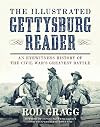
A comprehensive account of the greatest battle of the Civil War that turned the tide against the South as the high water mark. Detailed descriptions of the many encounters and strategies that took place during this three day battle are presented.
Descriptions of each event are interspersed with written accounts from personnel on each side of the conflict. These words offer real and graphic enhancement to the terror and stresses that were a constant in the struggle. An important contribution show more to the prolific material available on this momentous battle. show less
Descriptions of each event are interspersed with written accounts from personnel on each side of the conflict. These words offer real and graphic enhancement to the terror and stresses that were a constant in the struggle. An important contribution show more to the prolific material available on this momentous battle. show less
Lists
Holocaust (1)
Awards


You May Also Like


Associated Authors
Statistics
- Works
- 27
- Members
- 1,708
- Popularity
- #15,025
- Rating
- 3.9
- Reviews
- 21
- ISBNs
- 64
- Favorited
- 1