
Shelly R. Roberts
Author of Circles in the Stream
About the Author
Works by Shelly R. Roberts
Tagged
Common Knowledge
- Canonical name
- Roberts, Shelly R.
- Other names
- Roberts, Rachel
- Gender
- female
- Nationality
- USA
- Places of residence
- California, USA
- Associated Place (for map)
- California, USA
Members
Reviews
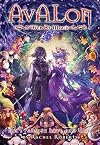
Just gonna say this: I'm 20, and I still enjoy this series. I started reading it when I was in Elementary School and I've reread it numerous times between new books and after new books came out.
FYI, this is a Kara book.
Anyway. This series, like most long series, has its ups and its downs. "All's Fairy in Love and War" borrows a few more cliches than some of the other books, which is part of the reason I give it a lower rating than some of the others. Roberts does play a little bit, as usual, show more so it's still fun to read. I always enjoy seeing Kara as grow as an admirable character, which always happens in her books in some way, even if the novel doesn't end on a high note.
Keep an eye on the Goblin Prince. He's important later. show less
FYI, this is a Kara book.
Anyway. This series, like most long series, has its ups and its downs. "All's Fairy in Love and War" borrows a few more cliches than some of the other books, which is part of the reason I give it a lower rating than some of the others. Roberts does play a little bit, as usual, show more so it's still fun to read. I always enjoy seeing Kara as grow as an admirable character, which always happens in her books in some way, even if the novel doesn't end on a high note.
Keep an eye on the Goblin Prince. He's important later. show less
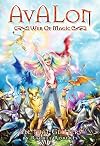
I read this originally when I was in Elementary School, but only recently learned that book 1-10 were rewritten a bit with added illustrations since then. So I'm on a reread run of books 1-10.
I always found it hardest to relate to Kara, and I still do. I'm more like a cross between Emily and Adriane, and something tells me that Roberts is, too. The way Kara is written is rather stereotypical of how television studios in the 90s depicted The Popular Girl/prep, and feels less like someone show more who's actually been inside that person's head or has well-known someone like that. She likes pink, accessorizes, obsesses over clothes and hair for no apparent reason, is obsessed with people thinking well of her for no apparent reason, has bothersome younger sibling(s), and is from a family of some wealth/power. Added points for being white, blonde and scared of anything "gross", which is essentially anything that doesn't include the aforementioned characteristics.
I have never met someone like Kara as depicted here and in at least the early books in this series. I still look for her, whenever I see pretty, fashionable, skinny, popular women who don't seem as smart I like my friends to be. Even the most vapid of those people never seems to hold a candle to Kara.
The problem might be that Kara is meant to be the character we dislike. Emily's problem is that she doesn't believe in herself. Adriane's problem is her lack of trust. Kara's problem is, well... she's Kara. She's self-centered and thinks of "silly" things like her appearance. Her journey is to change so drastically from what she is to be an actually "decent' person. And while I think that I certainly wouldn't get along with someone like Kara - there are aspects of her that are too similar to people I know and heartily dislike - I don't think that's a great way to write a character. True, we're meant to care for Kara. Her problem isn't to "change", it's to curb her desires.
Thing is, like many pieces of fiction featuring girls in the 90s, these young women exist in a vacuum. Where's all the marketing and merchandising and parents pushing pink and bright-colored stuff onto these girls because THAT'S what girls are SUPPOSED to like? Where's the parent disapproving of Adriane because she thinks that woman in black isn't the "right person" for her daughter to be hanging out with (you know, because racism and classism)? You know, someone who wears black, listens to loud music, OBVIOUSLY has a poor school record because that's what Rebels do, and is probably involved in drugs or a gang? This was a community ready to tear down an animal preserve and turn it into a golf course. Where's the emotional backing behind that? If the largely absent Mrs. Windor was the only person behind that decision, I doubt it would have gotten all that far. Why was Adriane an outcast? Children can be cruel, but a big reason behind that is typically because their parents gossip in front of them about certain families in the neighborhood. Like those weird people who live in the old Ravenswood Reserve. Children pretend to be grown-ups and then take out their dislike on the children associated with those families. They don't fully understand why, but there's something WRONG with this person. I'm not supporting bullying or ostracization. But it's not the color BLACK that creeps Kara out about Adriane and it's not the color PINK that creeps Adriane out, at least on their own. There are forces around them that encourage them to think the way they do about each other, from their families, friends, school, community, government and the media they consume. I'm also not expecting preteens to fully comprehend what's setting them at odds rather than to just go with the assumptions they've built up over their lives about others they see, coupled with bad first impressions. But it's the fact that they never even mildly get close to that problem that bothers me.
Why is trying to have the good opinion of others bad? Emily obviously understands this from the get-go, but I don't think either she or Adriane fully comprehend it. Ever. Even when Ravenswood is threatened and it's largely good opinion that SAVES the place. How you look creates impressions of you for others to take away. I'm not suggesting that Adriane change her style. But that she and Emily at least respect that there is VALUE in what Kara does, even if Kara does so subconsciously, and often for the wrong reasons. Although I don't think she entirely does it subconsciously. There are moments where she sees her father as not so much a bag of money but also as someone to impress. To prove her adult status and responsibility. I see a Kara Davis in 15 years working in some political party herself, campaigning for some cause or another, using every tool in her box to get support, whether that's looks, a properly turned phrase, or favors earned through whatever means. And that's partially because she saw what her father can do with his position. I would say her mother influenced her but her mother doesn't really do anything in the series outside pop into her room at the beginning of this book so... eh? Would have been nice to see more. But again, it's part of that vacuum effect.
I'd love to see how Kara met her friends. What they talk about outside of that contrived chat session at the beginning of the story. Much as I imagine people worry about their clothes, I doubt they get into three way phone and chat conversations about it because someone lost a sweater they were planning to wear on their first day of school. Especially someone with money like Kara's family and a closet like Kara.
I also don't find the hair thing as petty as I imagine it is supposed to be. Personally, the only thing I really like about myself IS my hair. And if someone burned it or ripped a giant chunk off of it - besides the physical PAIN of such a thing - I would be upset, too. I actually did get my hair cut short when I was little. Immediately after I saw myself in the mirror I asked them to put it back. I knew they couldn't, but I was upset about it. If we as a people by and large didn't care about hair, we wouldn't have so many hairstyles and hats and create wigs for various reasons other than simple costume entertainment. I think that Roberts found something of a middle ground by adding the Lyra element - after all, Kara helped this horribly disfigured creature restore at least some of what she lost, and she's at least proud of that. But it's still shown as kind of petty. Emily's act is more like throwing a bone than anything else. I respect the act. I didn't have the kind of chutzpa Emily had to do what she did for Kara in a crowded school auditorium. Still don't, in fact. But well...
This book also bothers because of how it sets up this system of parallels and kind of messes with it overmuch. It always bothered me that Emily never really gets an animal companion. She sort of gets the unicorn, but it's more like she gets Ozzie. Which doesn't make any sense. And he's also a mage, to boot! It's just... bleh. Give Emily a magical companion, like Adriane and Kara!
I appreciate that there are aspects about Kara we're meant to like. She obviously has compassion and she cares for her friends - ANY of her friends. She doesn't LEARN friendship via Emily and Adriane. As far as I can recall she retains her old friendships throughout the series. She just learns to stop judging a book by its cover. But I never feel like we learn to accept Kara for who she is. The others just accept who she becomes. She's a twelve-year-old, I GET that she's going to change and not stay who she is and all the girls have measures of selfishness and naivety that they need to overcome, but well... The writing in Kara's books is always tougher to get through than the others. It would be easier to deal with if it didn't tick off the 90s personality boxes we're all used to: the angry one, the prep and the neutral party. Ah well. A decent YA book starring powerful women struggling with responsibility, education and consequences. I love when characters attempt to experiment with these secret powers they're given and don't like that no one's around to teach them, but also when they're smart enough to know they have to be careful about it. Fun stuff. show less
I always found it hardest to relate to Kara, and I still do. I'm more like a cross between Emily and Adriane, and something tells me that Roberts is, too. The way Kara is written is rather stereotypical of how television studios in the 90s depicted The Popular Girl/prep, and feels less like someone show more who's actually been inside that person's head or has well-known someone like that. She likes pink, accessorizes, obsesses over clothes and hair for no apparent reason, is obsessed with people thinking well of her for no apparent reason, has bothersome younger sibling(s), and is from a family of some wealth/power. Added points for being white, blonde and scared of anything "gross", which is essentially anything that doesn't include the aforementioned characteristics.
I have never met someone like Kara as depicted here and in at least the early books in this series. I still look for her, whenever I see pretty, fashionable, skinny, popular women who don't seem as smart I like my friends to be. Even the most vapid of those people never seems to hold a candle to Kara.
The problem might be that Kara is meant to be the character we dislike. Emily's problem is that she doesn't believe in herself. Adriane's problem is her lack of trust. Kara's problem is, well... she's Kara. She's self-centered and thinks of "silly" things like her appearance. Her journey is to change so drastically from what she is to be an actually "decent' person. And while I think that I certainly wouldn't get along with someone like Kara - there are aspects of her that are too similar to people I know and heartily dislike - I don't think that's a great way to write a character. True, we're meant to care for Kara. Her problem isn't to "change", it's to curb her desires.
Thing is, like many pieces of fiction featuring girls in the 90s, these young women exist in a vacuum. Where's all the marketing and merchandising and parents pushing pink and bright-colored stuff onto these girls because THAT'S what girls are SUPPOSED to like? Where's the parent disapproving of Adriane because she thinks that woman in black isn't the "right person" for her daughter to be hanging out with (you know, because racism and classism)? You know, someone who wears black, listens to loud music, OBVIOUSLY has a poor school record because that's what Rebels do, and is probably involved in drugs or a gang? This was a community ready to tear down an animal preserve and turn it into a golf course. Where's the emotional backing behind that? If the largely absent Mrs. Windor was the only person behind that decision, I doubt it would have gotten all that far. Why was Adriane an outcast? Children can be cruel, but a big reason behind that is typically because their parents gossip in front of them about certain families in the neighborhood. Like those weird people who live in the old Ravenswood Reserve. Children pretend to be grown-ups and then take out their dislike on the children associated with those families. They don't fully understand why, but there's something WRONG with this person. I'm not supporting bullying or ostracization. But it's not the color BLACK that creeps Kara out about Adriane and it's not the color PINK that creeps Adriane out, at least on their own. There are forces around them that encourage them to think the way they do about each other, from their families, friends, school, community, government and the media they consume. I'm also not expecting preteens to fully comprehend what's setting them at odds rather than to just go with the assumptions they've built up over their lives about others they see, coupled with bad first impressions. But it's the fact that they never even mildly get close to that problem that bothers me.
Why is trying to have the good opinion of others bad? Emily obviously understands this from the get-go, but I don't think either she or Adriane fully comprehend it. Ever. Even when Ravenswood is threatened and it's largely good opinion that SAVES the place. How you look creates impressions of you for others to take away. I'm not suggesting that Adriane change her style. But that she and Emily at least respect that there is VALUE in what Kara does, even if Kara does so subconsciously, and often for the wrong reasons. Although I don't think she entirely does it subconsciously. There are moments where she sees her father as not so much a bag of money but also as someone to impress. To prove her adult status and responsibility. I see a Kara Davis in 15 years working in some political party herself, campaigning for some cause or another, using every tool in her box to get support, whether that's looks, a properly turned phrase, or favors earned through whatever means. And that's partially because she saw what her father can do with his position. I would say her mother influenced her but her mother doesn't really do anything in the series outside pop into her room at the beginning of this book so... eh? Would have been nice to see more. But again, it's part of that vacuum effect.
I'd love to see how Kara met her friends. What they talk about outside of that contrived chat session at the beginning of the story. Much as I imagine people worry about their clothes, I doubt they get into three way phone and chat conversations about it because someone lost a sweater they were planning to wear on their first day of school. Especially someone with money like Kara's family and a closet like Kara.
I also don't find the hair thing as petty as I imagine it is supposed to be. Personally, the only thing I really like about myself IS my hair. And if someone burned it or ripped a giant chunk off of it - besides the physical PAIN of such a thing - I would be upset, too. I actually did get my hair cut short when I was little. Immediately after I saw myself in the mirror I asked them to put it back. I knew they couldn't, but I was upset about it. If we as a people by and large didn't care about hair, we wouldn't have so many hairstyles and hats and create wigs for various reasons other than simple costume entertainment. I think that Roberts found something of a middle ground by adding the Lyra element - after all, Kara helped this horribly disfigured creature restore at least some of what she lost, and she's at least proud of that. But it's still shown as kind of petty. Emily's act is more like throwing a bone than anything else. I respect the act. I didn't have the kind of chutzpa Emily had to do what she did for Kara in a crowded school auditorium. Still don't, in fact. But well...
This book also bothers because of how it sets up this system of parallels and kind of messes with it overmuch. It always bothered me that Emily never really gets an animal companion. She sort of gets the unicorn, but it's more like she gets Ozzie. Which doesn't make any sense. And he's also a mage, to boot! It's just... bleh. Give Emily a magical companion, like Adriane and Kara!
I appreciate that there are aspects about Kara we're meant to like. She obviously has compassion and she cares for her friends - ANY of her friends. She doesn't LEARN friendship via Emily and Adriane. As far as I can recall she retains her old friendships throughout the series. She just learns to stop judging a book by its cover. But I never feel like we learn to accept Kara for who she is. The others just accept who she becomes. She's a twelve-year-old, I GET that she's going to change and not stay who she is and all the girls have measures of selfishness and naivety that they need to overcome, but well... The writing in Kara's books is always tougher to get through than the others. It would be easier to deal with if it didn't tick off the 90s personality boxes we're all used to: the angry one, the prep and the neutral party. Ah well. A decent YA book starring powerful women struggling with responsibility, education and consequences. I love when characters attempt to experiment with these secret powers they're given and don't like that no one's around to teach them, but also when they're smart enough to know they have to be careful about it. Fun stuff. show less
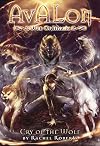
Continuing my reread of the rewritten versions of the series.
I remember being really excited for Adriane's books when I was little. She always came at the end of the "trilogies" in the series. And climaxes are always full of fun. But I guess I forgot how much of a letdown they were, too.
I understand that the books originally began as two six-book long plot lines, and that each trilogy didn't really wrap up a plot line. But still... I find it hard to come out of this book thinking that show more anything really happened.
There are a lot of reasons that the first plot thread in this book - the discovery of a pack of living mistwolves - was done, in my opinion, rather poorly. We had this thread in the first book where Storm tells us that she is the last of her kind. We have no real explanation for why she thinks this. Even if her pack was killed, there's no evidence that she was a member of the LAST pack of mistwolves, from herself or the other magical creatures. So I could have more easily accepted that this new pack of mistwolves is a shock... if Roberts followed up on that. Were the mistwolves notoriously extinct? Are they from a different world than Aldenmoor? Were they involved in a mass genocide? No, not really. They were collected... and that's it. So the arrival - even of a different pack - particularly in such a sudden and unexplained manner, is anti-climactic, at best. Like, oh, she's not the last anymore. Well.
This wouldn't be so silly if it weren't imitated laster in the book with the magic cats. Now I don't LIKE animals being killed into extinction. I don't want these characters to be alone. I care. But... we were also of the impression that LYRA was the last. And well... she's not. Huzzah? Could we get some more excitement here? Maybe certain species aren't as extinct as we thought? Emily was keeping tallies last book. Surely we could do the same system here?
I think Roberts tried for some sort of parallel/subversion in the book by using Zach as a foil for Adriane. He's the stereotyped fantasy hero: mysterious boy of mysterious origin with a magical steed, wields a sword (with some Elvish origin to boot), unafraid of combat, with warrior spirit. Adriane, on the other hand... is female. She doesn't carry weapons around, ready to jump into combat. She talks to people, goes for diplomacy first rather than combat. She makes friends easily. She doesn't reach for her weapons - her magic - whenever possible.
Except... wait. Didn't I just describe Emily? The Adriane we have come to know HAS calmed down a bit. But she was excited, ready to jump into action. And we get some of that Adriane. If anything, this is a book about an Adriane already changed. She's calmer, more open to diplomatic options. Sure, she broke the glass cage in prison, but she attempted to comfort the other animals first, not attack the cell doors or reach out for the guards or attempt to attack the Sorceress from a distance.
The point of the foil is that we're shown how Adriane is not a genderbent version of the stereotyped Campbell male hero. She's her own hero, using narratively stereotypical feminine ways to deal with problems - diplomacy, healing, and friendship, with a complete lack of typical weapons, like sharp things made of metal. And I can appreciate that, and I can appreciate that Adriane isn't at the end of the journey, since there are nine more books to go, but I would have liked to have seen Zach save Adriane a BIT less. Like a lot less. Because while I think that all those things above about Adriane's "attack" style, I think the 'Warrior' should show off a bit more of her 'warrior' side, because otherwise what's the point of the warrior? The ability to move boulders and trees slightly? What was she learning before Kara showed up in book 2? We have yet to really see that spell she showed off be USED for anything. Has she been watching videos on physical combat? Learning survival techniques? Writing something on survival in a magical world like the Ravenswood Preserve?
I'm also STILL confused on how Scorge knocked out and stuck Adriane in a sack and apparently didn't realize she wasn't the drake egg until he got to the palace. I didn't get it when the book first came out - I actually reread the section a few times back when I got the book to see if I'd missed something - and I don't get it now. If he was faking it because he hoped the Sorceress would be satisfied, that's one thing. But he doesn't seem to be. He seems to have legitimately thought that Adriane was the egg. And she obviously wasn't. Which implies that either he or someone else captured Adriane, stuck her in the sack, and she was given over to Scorge to take away. This could mean that SCORGE knocked her out, or the orcs knocked her out and for some reason gave her to Scorge. Which is odd, given that there's no real reason for him to. Unless the orcs didn't communicate properly and just delivered whatever they caught to Scorge and he, for some reason, didn't bother to check inside the sack, even though he should have only expected to see a simple stone. Yeah, it's stereotypically "funny" in that "oh, what a stupid henchmen getting his just desserts" or whatever... but it doesn't make any sense with the information we're given.
This also bothered me. The pictures were again, by and large a pleasant addition. But the book's climax is between the manticore and the manticore's serpent guards and an army of mistwolves, a diverse group of magical animals, two humans and a baby dragon. I respect that this is very difficult to draw, given the amount of detail required, but instead of anything resembling even a small part of this scene, we have a generic picture of the Sorceress swiping her hand out doing something generically magical. She wasn't even IN the scene, physically or telepathically or by giant floating image in the sky. I mean if you're not going to depict the scene, why even add this picture? It's just off-putting, particularly since I kept expecting the Sorceress to show up and she never does.
Overall it was an okay book. Things get a lot more interesting when the girls learn how to use their stones better, so I'll keep going. But a bit of a disappointment, anyway. show less
I remember being really excited for Adriane's books when I was little. She always came at the end of the "trilogies" in the series. And climaxes are always full of fun. But I guess I forgot how much of a letdown they were, too.
I understand that the books originally began as two six-book long plot lines, and that each trilogy didn't really wrap up a plot line. But still... I find it hard to come out of this book thinking that show more anything really happened.
There are a lot of reasons that the first plot thread in this book - the discovery of a pack of living mistwolves - was done, in my opinion, rather poorly. We had this thread in the first book where Storm tells us that she is the last of her kind. We have no real explanation for why she thinks this. Even if her pack was killed, there's no evidence that she was a member of the LAST pack of mistwolves, from herself or the other magical creatures. So I could have more easily accepted that this new pack of mistwolves is a shock... if Roberts followed up on that. Were the mistwolves notoriously extinct? Are they from a different world than Aldenmoor? Were they involved in a mass genocide? No, not really. They were collected... and that's it. So the arrival - even of a different pack - particularly in such a sudden and unexplained manner, is anti-climactic, at best. Like, oh, she's not the last anymore. Well.
This wouldn't be so silly if it weren't imitated laster in the book with the magic cats. Now I don't LIKE animals being killed into extinction. I don't want these characters to be alone. I care. But... we were also of the impression that LYRA was the last. And well... she's not. Huzzah? Could we get some more excitement here? Maybe certain species aren't as extinct as we thought? Emily was keeping tallies last book. Surely we could do the same system here?
I think Roberts tried for some sort of parallel/subversion in the book by using Zach as a foil for Adriane. He's the stereotyped fantasy hero: mysterious boy of mysterious origin with a magical steed, wields a sword (with some Elvish origin to boot), unafraid of combat, with warrior spirit. Adriane, on the other hand... is female. She doesn't carry weapons around, ready to jump into combat. She talks to people, goes for diplomacy first rather than combat. She makes friends easily. She doesn't reach for her weapons - her magic - whenever possible.
Except... wait. Didn't I just describe Emily? The Adriane we have come to know HAS calmed down a bit. But she was excited, ready to jump into action. And we get some of that Adriane. If anything, this is a book about an Adriane already changed. She's calmer, more open to diplomatic options. Sure, she broke the glass cage in prison, but she attempted to comfort the other animals first, not attack the cell doors or reach out for the guards or attempt to attack the Sorceress from a distance.
The point of the foil is that we're shown how Adriane is not a genderbent version of the stereotyped Campbell male hero. She's her own hero, using narratively stereotypical feminine ways to deal with problems - diplomacy, healing, and friendship, with a complete lack of typical weapons, like sharp things made of metal. And I can appreciate that, and I can appreciate that Adriane isn't at the end of the journey, since there are nine more books to go, but I would have liked to have seen Zach save Adriane a BIT less. Like a lot less. Because while I think that all those things above about Adriane's "attack" style, I think the 'Warrior' should show off a bit more of her 'warrior' side, because otherwise what's the point of the warrior? The ability to move boulders and trees slightly? What was she learning before Kara showed up in book 2? We have yet to really see that spell she showed off be USED for anything. Has she been watching videos on physical combat? Learning survival techniques? Writing something on survival in a magical world like the Ravenswood Preserve?
I'm also STILL confused on how Scorge knocked out and stuck Adriane in a sack and apparently didn't realize she wasn't the drake egg until he got to the palace. I didn't get it when the book first came out - I actually reread the section a few times back when I got the book to see if I'd missed something - and I don't get it now. If he was faking it because he hoped the Sorceress would be satisfied, that's one thing. But he doesn't seem to be. He seems to have legitimately thought that Adriane was the egg. And she obviously wasn't. Which implies that either he or someone else captured Adriane, stuck her in the sack, and she was given over to Scorge to take away. This could mean that SCORGE knocked her out, or the orcs knocked her out and for some reason gave her to Scorge. Which is odd, given that there's no real reason for him to. Unless the orcs didn't communicate properly and just delivered whatever they caught to Scorge and he, for some reason, didn't bother to check inside the sack, even though he should have only expected to see a simple stone. Yeah, it's stereotypically "funny" in that "oh, what a stupid henchmen getting his just desserts" or whatever... but it doesn't make any sense with the information we're given.
This also bothered me. The pictures were again, by and large a pleasant addition. But the book's climax is between the manticore and the manticore's serpent guards and an army of mistwolves, a diverse group of magical animals, two humans and a baby dragon. I respect that this is very difficult to draw, given the amount of detail required, but instead of anything resembling even a small part of this scene, we have a generic picture of the Sorceress swiping her hand out doing something generically magical. She wasn't even IN the scene, physically or telepathically or by giant floating image in the sky. I mean if you're not going to depict the scene, why even add this picture? It's just off-putting, particularly since I kept expecting the Sorceress to show up and she never does.
Overall it was an okay book. Things get a lot more interesting when the girls learn how to use their stones better, so I'll keep going. But a bit of a disappointment, anyway. show less
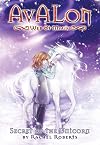
I wish I liked Emily's books more. She seems to be the sanest member of the team, but her books have issues. It's odd because I connect most with Emily in a lot of ways and her story thus appeals more to me, since I am also a child of divorcees, although I never got to live with my parents while they were married to each other.
A lot of this book made me ask "why is Emily such an idiot". I get that she's 12 or 13, but I find it hard to believe that someone that age with as much purported show more experience with animals as she has doesn't know what trauma is and what it can do to animals. Why is Lorelei reacting so horribly? Gee, it might be because something TRAUMATIZED her. Kind of like when abused animals shrink when people walk towards them because the animal is afraid of getting him. I also don't know what she thought to accomplish by lifting a bag of dog food in the air. Like... when it kept going did she not realize something was wrong? Why didn't someone familiar with animals not finish putting food in it, seal it and THEN put it away? I do appreciate the connection between Emily and the unicorn. I guess this foreshadows stuff in book 12, but anyway. Emily gets the best magical animal (not Ozzie, bleh). And that makes me happy.
I also think that Ghyll is meant to be funny and some sort of parody of the "Frog Prince" story. But he's just creepy and irritating. No means no. End of story. Stop persisting in ignoring the woman you are talking to. I don't think that the story improved for his presence. If he was gone... we wouldn't have lost out on anything, really.
Maybe what bothers me is the very shallow nature of the villains. They're evil because... just because? Are they all just sadists? What do they get out of doing all this? We never really learn the secret behind the Sorceress until books 6 and 12. Which is on purpose, obviously, but the one-off villains are kind of... boring. And lacking and suspense.
I don't know. Otherwise it was kind of an unremarkable book in a lot of ways. Although it has some secrets if you've finished the series already, so it's worth a reread. BIG foreshadowing for the end of the series. show less
A lot of this book made me ask "why is Emily such an idiot". I get that she's 12 or 13, but I find it hard to believe that someone that age with as much purported show more experience with animals as she has doesn't know what trauma is and what it can do to animals. Why is Lorelei reacting so horribly? Gee, it might be because something TRAUMATIZED her. Kind of like when abused animals shrink when people walk towards them because the animal is afraid of getting him. I also don't know what she thought to accomplish by lifting a bag of dog food in the air. Like... when it kept going did she not realize something was wrong? Why didn't someone familiar with animals not finish putting food in it, seal it and THEN put it away? I do appreciate the connection between Emily and the unicorn. I guess this foreshadows stuff in book 12, but anyway. Emily gets the best magical animal (not Ozzie, bleh). And that makes me happy.
I also think that Ghyll is meant to be funny and some sort of parody of the "Frog Prince" story. But he's just creepy and irritating. No means no. End of story. Stop persisting in ignoring the woman you are talking to. I don't think that the story improved for his presence. If he was gone... we wouldn't have lost out on anything, really.
Maybe what bothers me is the very shallow nature of the villains. They're evil because... just because? Are they all just sadists? What do they get out of doing all this? We never really learn the secret behind the Sorceress until books 6 and 12. Which is on purpose, obviously, but the one-off villains are kind of... boring. And lacking and suspense.
I don't know. Otherwise it was kind of an unremarkable book in a lot of ways. Although it has some secrets if you've finished the series already, so it's worth a reread. BIG foreshadowing for the end of the series. show less
Lists
You May Also Like


Statistics
- Works
- 24
- Members
- 1,770
- Popularity
- #14,548
- Rating
- 3.9
- Reviews
- 19
- ISBNs
- 111
- Languages
- 1