
Yeonmi Park
Author of In Order to Live: A North Korean Girl's Journey to Freedom
About the Author
Image credit: The Guardian (website)
Works by Yeonmi Park
In Order to Live: A North Korean Girl's Journey to Freedom (2015) — Author — 1,280 copies, 46 reviews
While Time Remains: A North Korean Defector's Search for Freedom in America (2023) 128 copies, 3 reviews
CAT MAI ESTE TIMP 1 copy
Associated Works
Speeches of Note: An Eclectic Collection of Orations Deserving of a Wider Audience (2018) — Narrator, some editions — 74 copies, 1 review
Tagged
Common Knowledge
- Birthdate
- 1993-10-04
- Gender
- female
- Nationality
- North Korea (birth)
- Places of residence
- South Korea
USA - Map Location
- North Korea
Members
Reviews
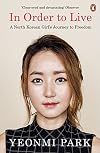
This is a memoir by a North Korean defector and now human rights activist. Following precarious years of hardship and malnutrition, Yeonmi at the age of only 13 escaped from her country with her mother in March 2007. Living in the northern border city of Hyesan, China was just across the frozen Yalu river and beckoned with its relative economic prosperity and comparative freedom. But Yeonmi's struggles were only just beginning as her mother was almost immediately raped and then they were show more bought and sold, and abused by successive waves of human traffickers. After two years in China, and searching for Yeonmi's sister who had defected separately at around the same time, they eventually made their way (counterintuitively from a geographical point of view) via Mongolia, to South Korea. She had been forced to grow up very quickly, having to make life-changing and potentially life-ending decisions, all before she was even 16 years old. But despite that enforced growing up, the very limited confines of her (and of course nearly all her fellow country people's) growing up and education in North Korea meant that she has no concept of freedom or democracy, or even, really tragically, of human love:
"I wasn’t dreaming of freedom when I escaped from North Korea. I didn’t even know what it meant to be free. All I knew was that if my family stayed behind, we would probably die—from starvation, from disease, from the inhuman conditions of a prison labor camp. The hunger had become unbearable; I was willing to risk my life for the promise of a bowl of rice."
As the bartering began for Yeonmi and her mother, she was "caught between fear and hope. We were numb, and our purpose was reduced to our immediate needs: Get away from the dangerous border. Get away from this terrible bald broker and his frightening wife. Get something to eat and figure out the rest of it later."
But later on she was separated from her mother and "was beginning to realize that all the food in the world, and all the running shoes, could not make me happy. The material things were worthless. I had lost my family. I wasn’t loved, I wasn’t free, and I wasn’t safe. I was alive, but everything that made life worth living was gone."
Even after Yeonmi and her mother escaped to South Korea, the process of getting used to life in a freer and much more prosperous society was very hard. The utterly alien mindset caused by a very limited mental horizon is perhaps one of the hardest aspects for the Western reader to get his or her head round - for example when asked what her hobbies were: "I had no idea what a “hobby” was. When it was explained that it was something I did that made me happy, I couldn’t conceive of such a thing. My only goal was supposed to be making the regime happy. And why would anyone care about what “I” wanted to be when I grew up? There was no “I” in North Korea—only we". She could not even name her favourite colour and until a teacher told her her own, which she then parroted: "It took me a long time to start thinking for myself and to understand why my own opinions mattered. But after five years of practicing being free, I know now that my favorite color is spring green and my hobby is reading books and watching documentaries." Until that time, Yeonmi "had always thought that being free meant being able to wear jeans and watch whatever movies I wanted without worrying about being arrested. Now I realized that I had to think all the time—and it was exhausting. There were times when I wondered whether, if it wasn’t for the constant hunger, I would be better off in North Korea, where all my thinking and all my choices were taken care of for me". Her journey to freedom and success has been a difficult one. She has been an activist speaking out against North Korea and in favour of freedom for nearly a decade and it is amazing to think she is still not yet 30. A remarkable journey by a remarkable individual. show less
"I wasn’t dreaming of freedom when I escaped from North Korea. I didn’t even know what it meant to be free. All I knew was that if my family stayed behind, we would probably die—from starvation, from disease, from the inhuman conditions of a prison labor camp. The hunger had become unbearable; I was willing to risk my life for the promise of a bowl of rice."
As the bartering began for Yeonmi and her mother, she was "caught between fear and hope. We were numb, and our purpose was reduced to our immediate needs: Get away from the dangerous border. Get away from this terrible bald broker and his frightening wife. Get something to eat and figure out the rest of it later."
But later on she was separated from her mother and "was beginning to realize that all the food in the world, and all the running shoes, could not make me happy. The material things were worthless. I had lost my family. I wasn’t loved, I wasn’t free, and I wasn’t safe. I was alive, but everything that made life worth living was gone."
Even after Yeonmi and her mother escaped to South Korea, the process of getting used to life in a freer and much more prosperous society was very hard. The utterly alien mindset caused by a very limited mental horizon is perhaps one of the hardest aspects for the Western reader to get his or her head round - for example when asked what her hobbies were: "I had no idea what a “hobby” was. When it was explained that it was something I did that made me happy, I couldn’t conceive of such a thing. My only goal was supposed to be making the regime happy. And why would anyone care about what “I” wanted to be when I grew up? There was no “I” in North Korea—only we". She could not even name her favourite colour and until a teacher told her her own, which she then parroted: "It took me a long time to start thinking for myself and to understand why my own opinions mattered. But after five years of practicing being free, I know now that my favorite color is spring green and my hobby is reading books and watching documentaries." Until that time, Yeonmi "had always thought that being free meant being able to wear jeans and watch whatever movies I wanted without worrying about being arrested. Now I realized that I had to think all the time—and it was exhausting. There were times when I wondered whether, if it wasn’t for the constant hunger, I would be better off in North Korea, where all my thinking and all my choices were taken care of for me". Her journey to freedom and success has been a difficult one. She has been an activist speaking out against North Korea and in favour of freedom for nearly a decade and it is amazing to think she is still not yet 30. A remarkable journey by a remarkable individual. show less

I feel the true measure of a good documentary, or non-fiction book, is how angry I get. The angrier I am, the better it is; I was shaking within a few pages of In Order to Live. This is a terrific, horrifying and courageous read.
It is unfathomable how awful the conditions were for Yeonmi Park in North Korea. How unfair it is that an entire civilization has to deal with being brutalized, humiliated, tortured and murdered by a regime that is filled with cowardly dictators. The lengths they go show more to brainwash their population would be hilarious, their obvious insecurities ripe for parody, if it wasn't true and they didn't kill and starve their own people on a daily basis.
I was on the verge of tears many, many times reading this.
Her courage throughout this journey is insane, and really puts my own problems into perspective.
There were more than a few lines that hit me like a ton of bricks. I'm so glad Park survived her ordeal, and decided to write this book. Highly, highly recommended. show less
It is unfathomable how awful the conditions were for Yeonmi Park in North Korea. How unfair it is that an entire civilization has to deal with being brutalized, humiliated, tortured and murdered by a regime that is filled with cowardly dictators. The lengths they go show more to brainwash their population would be hilarious, their obvious insecurities ripe for parody, if it wasn't true and they didn't kill and starve their own people on a daily basis.
I was on the verge of tears many, many times reading this.
Her courage throughout this journey is insane, and really puts my own problems into perspective.
There were more than a few lines that hit me like a ton of bricks. I'm so glad Park survived her ordeal, and decided to write this book. Highly, highly recommended. show less
Yeonmi Park realizes that, despite everything she's been through, she is a very lucky person. Born to a relatively privileged family in North Korea, she nonetheless experiences the hunger and other hardships endemic to that country when her beloved father is sent to a prison camp. Searching for a better life, or at least a more reliable food supply, she and her mother risk everything to escape to China, where they unwittingly fall into the hands of human traffickers. They do whatever they show more need to do in order to survive, including trafficking other women. Finally, with the help of Christian missionaries, the join a group making a daring trek across the freezing Gobi Desert to Mongolia and freedom. Later they arrive in South Korea, where in a stunning reversal of fortune, Yeonmi becomes a featured celebrity on a reality TV show and dubbed "the Paris Hilton of North Korea."
Eventually, Yeonmi immigrates to the United States and finds her calling as an activist and advocate for refugees from her native land. In North Korea, she has been denounced as a "human rights propaganda puppet." Yeonmi’s narrative doesn’t mention that the right-wing views she has adopted since her immigration, along with alleged inconsistencies in her story, have made her a controversial figure in her new homeland as well.
This book is fast-paced and very readable. I appreciate Yeonmi's sharing of her story, even though I can't help but wonder about its authenticity. show less
Eventually, Yeonmi immigrates to the United States and finds her calling as an activist and advocate for refugees from her native land. In North Korea, she has been denounced as a "human rights propaganda puppet." Yeonmi’s narrative doesn’t mention that the right-wing views she has adopted since her immigration, along with alleged inconsistencies in her story, have made her a controversial figure in her new homeland as well.
This book is fast-paced and very readable. I appreciate Yeonmi's sharing of her story, even though I can't help but wonder about its authenticity. show less
This is a powerful book.
It has echoes of Tara Westover's "Educated" -- a young woman, confronted with a series of brutal life circumstances, neglect and outright malice, nevertheless finds sufficient strength in herself and those around her to escape and to triumph. In both books, the struggle for education is amazing, and pays off hugely.
But there are stark differences, as well. Park is describing not a single family or small cult in a corner of the US. The North Korean government show more absolutely controls the lives of 24 million people, the vast majority of whom are impoverished. All are forbidden freedom of thought, freedom of association, freedom of movement. Much more compellingly, the abuse and rape to which Park was subjected by human traffickers in her flight from North Korea are literally terrible -- terror is the rational response. That these are frequent conditions for women in flight is certain.
I'm very glad that Yeonmi Park chose to tell this story. show less
It has echoes of Tara Westover's "Educated" -- a young woman, confronted with a series of brutal life circumstances, neglect and outright malice, nevertheless finds sufficient strength in herself and those around her to escape and to triumph. In both books, the struggle for education is amazing, and pays off hugely.
But there are stark differences, as well. Park is describing not a single family or small cult in a corner of the US. The North Korean government show more absolutely controls the lives of 24 million people, the vast majority of whom are impoverished. All are forbidden freedom of thought, freedom of association, freedom of movement. Much more compellingly, the abuse and rape to which Park was subjected by human traffickers in her flight from North Korea are literally terrible -- terror is the rational response. That these are frequent conditions for women in flight is certain.
I'm very glad that Yeonmi Park chose to tell this story. show less
Lists
Awards

You May Also Like


Associated Authors
Statistics
- Works
- 4
- Also by
- 1
- Members
- 1,410
- Popularity
- #18,225
- Rating
- 4.3
- Reviews
- 49
- ISBNs
- 43
- Languages
- 12
