
Jacqueline Briggs Martin
Author of Snowflake Bentley
About the Author
Works by Jacqueline Briggs Martin
The Finest Horse in Town 1 copy
Associated Works
The Man Who Walked Between the Towers --and More Inspiring Tales [2005 animated short] (2005) — Contributor — 6 copies
Tagged
Common Knowledge
Members
Reviews
This was adorable! It was about a boy who wanted to build a boat and found out the hardships of building one and relying on family and neighbors to help him build the boat. Wonderful illustrations.

In this lovely picture-book biography of Wilson Bentley, a Vermont farmer who dedicated his life to documenting the beauty and diversity of the snowflake in his photography, author Jacqueline Briggs Martin and illustrator Mary Azarian have created a textually engaging and visually arresting work. Opening in the mid-19th century, when Bentley was a young boy who loved the snow, the narrative follows him through the years, as his desire to share his passion with others leads him to adopt and show more adapt the practice of micro-photography in order to capture the crystalline beauty of the snowflake. Of immense value to both scientists and artists, Bentley's work reached its fruition in 1931, when he published a monograph entitled Snow Crystals, which contained 2500 of his photographs.
It's not difficult to see why Snowflake Bentley was the Caldecott Medal winner in 1999, as Mary Azarian's woodblock illustrations, colored in with watercolor, are absolutely beautiful, perfectly capturing the rural charm of Wilson Bentley's world, and the appeal of the snowflakes he adored. I particularly like the two-page spreads featuring cool blue panels on the sides, with snowflakes falling, as these contrast nicely with the warmer hues in the central panels. The story itself is interesting, highlighting the life of a simple, self-educated man who followed his passion, and thereby increased the store of knowledge and scientific understanding available to others. Recommended to anyone who loves winter, snow, and snowy vistas, as well as to anyone looking for engaging picture-book biographies. show less
It's not difficult to see why Snowflake Bentley was the Caldecott Medal winner in 1999, as Mary Azarian's woodblock illustrations, colored in with watercolor, are absolutely beautiful, perfectly capturing the rural charm of Wilson Bentley's world, and the appeal of the snowflakes he adored. I particularly like the two-page spreads featuring cool blue panels on the sides, with snowflakes falling, as these contrast nicely with the warmer hues in the central panels. The story itself is interesting, highlighting the life of a simple, self-educated man who followed his passion, and thereby increased the store of knowledge and scientific understanding available to others. Recommended to anyone who loves winter, snow, and snowy vistas, as well as to anyone looking for engaging picture-book biographies. show less
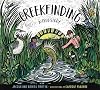
This is a true story for kids that explains how a lost ecosystem in Iowa was brought back to life.
At the start of the book we get introduced to Mike, who wanted to grow a prairie in an old cornfield he bought. A neighbor told him there used to be a creek there. Mike wanted to find it and got excavators to scrape the ground to where the creek bottom used to be. Before long, water seeped in and filled it up. Then he had a new problem:
“ . . . a creek isn’t just water. It’s plants, rocks, show more bugs, fish, and birds.”
Somehow, he had to add those elements to his creek as well, and this book tells how he accomplished this.
It took over five years, but the creek became a whole world of nature with brook trout, herons, bluebirds, frogs, and insects of all kinds. If you go there today, the author writes:
“You’d hear the water ripple and burble - maybe a chuckle - maybe a thanks - to Mike and the big machines that found the creek."
At the end of the book, there are notes by both the author and the illustrator, and more information about Michael Osterholm, who restored the creek.
The illustrator, Claudia McGehee, visited Mike’s farm to gather images and impressions for her beautiful artwork which was made on scratchboard and then painted with watercolors and dyes. She says in her note: “I wanted to re-create the textures and colors I saw, so readers could ‘walk’ alongside Brook Creek as they learned about its restoration.”
There is an accompanying guide to further exploration, studying ecosystems, water conservation, community action, fish, and more here.
Evaluation: This book has interesting lessons to teach kids about ecosystems without being too didactic, and shows how people can and do make a difference. show less
At the start of the book we get introduced to Mike, who wanted to grow a prairie in an old cornfield he bought. A neighbor told him there used to be a creek there. Mike wanted to find it and got excavators to scrape the ground to where the creek bottom used to be. Before long, water seeped in and filled it up. Then he had a new problem:
“ . . . a creek isn’t just water. It’s plants, rocks, show more bugs, fish, and birds.”
Somehow, he had to add those elements to his creek as well, and this book tells how he accomplished this.
It took over five years, but the creek became a whole world of nature with brook trout, herons, bluebirds, frogs, and insects of all kinds. If you go there today, the author writes:
“You’d hear the water ripple and burble - maybe a chuckle - maybe a thanks - to Mike and the big machines that found the creek."
At the end of the book, there are notes by both the author and the illustrator, and more information about Michael Osterholm, who restored the creek.
The illustrator, Claudia McGehee, visited Mike’s farm to gather images and impressions for her beautiful artwork which was made on scratchboard and then painted with watercolors and dyes. She says in her note: “I wanted to re-create the textures and colors I saw, so readers could ‘walk’ alongside Brook Creek as they learned about its restoration.”
There is an accompanying guide to further exploration, studying ecosystems, water conservation, community action, fish, and more here.
Evaluation: This book has interesting lessons to teach kids about ecosystems without being too didactic, and shows how people can and do make a difference. show less
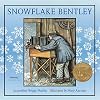
I loved reading this book for three reasons. First, I enjoyed how on each page there was a side bar that had actual facts about Wilson Bentley. Each side bar connected to the story that was being told about his life and what it took to capture the perfect evidence of a snowflake that he could share with everyone. I liked how the side bar was decorated with snowflakes which corresponded well with the whole theme of the book. These facts on the side made the story personal. Wilson believed show more that, “snowflakes were masterpieces of design…No one design was repeated. When a snowflake melted…just that much beauty was gone, without leaving any record behind.” This is why he worked so hard to capture images of snowflakes. Second, the illustrations were beautifully made and corresponded well with the written text. Throughout the book the illustrator would use bright colors to express that it is nice and sunny out and then dark colors when he was representing the snowy days. Third, I liked how at the end of the book it talked about his accomplishments and how he died. It also explained how there is a monument to recognize Wilson. The last sentence of the book was a perfect ending to sum up his accomplishments. “Neighbors and strangers have come to know of the icy wonders that land on their own mittens—thanks to Snowflake Bentley.” On the final page it has a real picture of Bentley and a quote from him. The main message of this book is to teach kids to never give up on something they want even if there are people who may doubt you. show less
Lists
Five in a Row (3)
Five in a Row (3)
Awards


You May Also Like


Associated Authors
Statistics
- Works
- 27
- Also by
- 1
- Members
- 5,429
- Popularity
- #4,586
- Rating
- 4.1
- Reviews
- 231
- ISBNs
- 136
- Languages
- 3
- Favorited
- 1