
Letty M. Russell (1929–2007)
Author of Feminist Interpretation of the Bible
About the Author
Letty M. Russell was one of the world's foremost feminist theologians and a longtime member of the Yale Divinity School faculty. She wrote numerous influential books, including Church in the Round: Feminist Interpretation of the Church, and served as coeditor of Hagar, Sarah, and Their Children; show more Dictionary of Feminist Theologies; and Inheriting Our Mothers' Gardens: Feminist Theology in Third World Perspective. J. Shannon Clarkson directs the International Feminist Doctor of Ministry program of San Francisco Theological Seminary. Kate M. Ott is Associate Director of the Religious Institute on Sexual Morality, Justice, and Healing and a lecturer at Union Theological Seminary in New York. show less
Works by Letty M. Russell
Inheriting Our Mothers' Gardens: Feminist Theology in Third World Perspective (1988) — Editor; Contributor — 137 copies
Hagar, Sarah, and Their Children: Jewish, Christian, and Muslim Perspectives (2006) — Editor — 97 copies, 2 reviews
Household of Freedom: Authority in Feminist Theology (1986 Annie Kinkead Warfield Lectures) (1987) 77 copies, 1 review
Associated Works
Love: The Foundation of Hope : The Theology of Jurgen Moltmann and Elizabeth Moltmann-Wendel (1988) — Contributor — 26 copies
African Women, Religion, And Health: Essays in Honor of Mercy Amba Ewudzi Oduyoye (Women from the Margins) (2006) — Contributor — 14 copies
Tagged
Common Knowledge
- Legal name
- Russell, Letty Mandeville
- Other names
- 蕾提.盧瑟
- Birthdate
- 1929
- Date of death
- 2007-07-12
- Gender
- female
- Education
- Wellesley College (BA|1951)
Harvard Divinity School (STB|1958)
Union Theological Seminary (STM|1967)
Union Theological Seminary (ThD|1969) - Cause of death
- cancer
- Nationality
- USA
- Birthplace
- Westfield, New Jersey, USa
- Place of death
- Guilford, Connecticut, USA
- Associated Place (for map)
- USA
Members
Reviews
Household of Freedom: Authority in Feminist Theology: 1986 (1986 Annie Kinkead Warfield Lectures) by Letty M. Russell

The author addresses concerns important to all those struggling with issues of authority and equality in the church. It is an excellent development of Biblically grounded feminist theology.
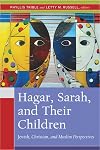
In different ways, Judaism, Christianity, and Islam all trace their beginnings to Abraham. His wives Hagar and Sarah, though also pivotal in the story, have received far less attention. In this book, however, noted Jewish, Christian, and Muslim scholars focus on Hagar, Sarah, and their children, from Ishmael and Isaac to their many descendents through the centuries.
Moving from ancient and medieval sources to contemporary appropriations of the Sarah and Hagar story, the authors begin, in show more part 1, with an overview of the three religions—from their scriptural beginnings to their contemporary questions. Part 2, "Hagar and Sarah in Jewish, Christian, and Muslim Traditions," explores how the story was developed after its canonization, in rabbinic interpretations, in the stories of Islam, and in the teachings of the early church fathers. And part 3, "Continuing the Conversation with Hagar and Sarah," presents contemporary womanist and feminist perspectives. Timely, relevant, and provocative, Hagar, Sarah, and Their Children offers a reliable and insightful look into a scriptural text foundational to these three great religions, and more important, it provides an entrée into interreligious discussion and understanding.
In addition to Phyllis Trible and Letty Russell, contributors are Elizabeth A. Clark, Riffat Hassan, Adele Reinhartz, Miriam-Simma Walfish, and Delores Williams.
About the Author
Phyllis Trible is University Professor of Biblical Studies at Wake Forest University Divinity School and Baldwin Professor Emerita of Sacred Literature, Union Theological Seminary, New York. She is the author of Texts of Terror: Literary-Feminist Readings of Biblical Narrative and God and the Rhetoric of Sexuality.
Letty M. Russell is Professor Emerita of Theology, Yale Divinity School. She is the author of Church in the Round: Feminist Interpretation of the Church and coeditor of Dictionary of Feminist Theologies and Inheriting Our Mothers’ Gardens: Feminist Theology in Third World Perspective. show less
Moving from ancient and medieval sources to contemporary appropriations of the Sarah and Hagar story, the authors begin, in show more part 1, with an overview of the three religions—from their scriptural beginnings to their contemporary questions. Part 2, "Hagar and Sarah in Jewish, Christian, and Muslim Traditions," explores how the story was developed after its canonization, in rabbinic interpretations, in the stories of Islam, and in the teachings of the early church fathers. And part 3, "Continuing the Conversation with Hagar and Sarah," presents contemporary womanist and feminist perspectives. Timely, relevant, and provocative, Hagar, Sarah, and Their Children offers a reliable and insightful look into a scriptural text foundational to these three great religions, and more important, it provides an entrée into interreligious discussion and understanding.
In addition to Phyllis Trible and Letty Russell, contributors are Elizabeth A. Clark, Riffat Hassan, Adele Reinhartz, Miriam-Simma Walfish, and Delores Williams.
About the Author
Phyllis Trible is University Professor of Biblical Studies at Wake Forest University Divinity School and Baldwin Professor Emerita of Sacred Literature, Union Theological Seminary, New York. She is the author of Texts of Terror: Literary-Feminist Readings of Biblical Narrative and God and the Rhetoric of Sexuality.
Letty M. Russell is Professor Emerita of Theology, Yale Divinity School. She is the author of Church in the Round: Feminist Interpretation of the Church and coeditor of Dictionary of Feminist Theologies and Inheriting Our Mothers’ Gardens: Feminist Theology in Third World Perspective. show less
In different ways, Judaism, Christianity, and Islam all trace their beginnings to Abraham. His wives, Hagar and Sarah, though also pivotal in the story, have received far less attention. In this book, however, noted Jewish, Christian, and Muslim scholars focus on Hagar, Sarah, and their children, from Ishmael and Isaac to their many descendents through the centuries. ~Amazon
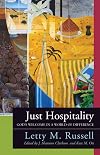
Contents From many parts, a whole -- In honor of Letty Mandeville Russell -- Following the clues -- Why hospitality? -- On being a misfit : embracing hospitality -- In but still out -- Making sense of myself -- Living on the margins -- Becoming a feminist -- The gift of not fitting -- Church inside out -- Church in the round -- One call, many ministries -- Ministry of hospitality -- Hospitality -- Difference -- The new hospitality -- Postcolonial interpretation -- Postcolonial subjects -- show more Postcolonial theological perspectives -- Doctrine of election in postcolonial interpretation -- When election is a problem -- The ambiguity of chosenness -- Feminism and hospitality in postcolonial interpretation -- A feminist hermeneutic of hospitality -- Postcolonial subjects practicing hospitality -- Riotous difference as God's gift to the church -- Biblical views of difference -- Babel's gift of difference -- Pentecost's gift of understanding -- A different kind of unity -- Unity-in-tension -- Unity in hospitality -- Community of Christ -- The source of unity -- Liberating difference -- Reframing a theology of hospitality -- Framing and reframing -- Making a change -- Steps to reframing -- God's hospitality : reframing safety in biblical tradition -- The meaning of safe space -- Searching the scriptures for safe space -- Reframing a text : Ruth's story -- Attending to context -- Developing a spirituality of listening -- Just hospitality -- Unequally yoked -- Justice in "just" hospitality -- Amos's message -- Justice as hospitality in worship -- Hospitality in just hospitality -- Welcome as a metaphor for action -- Transforming God's welcome -- Recognizing just hospitality -- Limits -- Essential characteristics. show less
You May Also Like


Associated Authors
Statistics
- Works
- 24
- Also by
- 4
- Members
- 1,176
- Popularity
- #21,864
- Rating
- 3.2
- Reviews
- 4
- ISBNs
- 27
- Languages
- 2
- Favorited
- 3