
Robert McAfee Brown (1920–2001)
Author of Unexpected News: Reading the Bible with Third World Eyes
About the Author
Robert McAfee Brown was professor emeritus of theology and ethics at the Pacific School of Theology. Berkeley, is author of numerous books and articles including Unexpected News Reading the Bible with Third World Eyes and Spirituality of Liberation.
Works by Robert McAfee Brown
The Hereticus papers: (being Volume II of "The collect'd writings of St. Hereticus") (1979) 20 copies
Theological crossings 4 copies
Over the Long Haul 1 copy
Layman's Theological Library 1 copy
Associated Works
Dialogue: A Journal of Mormon Thought - Volume 1, Number 1 (Spring 1966) (1966) — Contributor — 1 copy
Tagged
Common Knowledge
- Other names
- BROWN, Robert McAfee
- Birthdate
- 1920-05-28
- Date of death
- 2001-09-04
- Gender
- male
- Education
- Amherst College
- Occupations
- theologian
activist
chaplain
professor - Organizations
- Stanford University
- Relationships
- McAfee, Cleland Boyd (grandfather)
- Nationality
- USA
- Associated Place (for map)
- USA
Members
Reviews

Brown’s “Spirit of Protestantism” is an engaging presentation of a religious movement that, for many, simply defies easy description (e.g., the common argument that one can only discuss “Protestantisms”). Surely, Luther’s initial break with the medieval Roman Catholic Church has spawned a wild assortment of further divisions and break-aways, yet Brown has largely succeeded in identifying a stable core that grants these innumerable children a “family resemblance.”
This is so, show more it seems, because, instead of attempting to simply identify a series of theological propositions that are common to Lutheran, Reformed, Anabaptist, Anglican/Episcopalian, Presbyterian (et. al) groups—an exercise that is unavoidably reductive and ultimately unhelpful—he really focuses instead on what I suppose would best be described as a cluster of “affections” that define Protestantism’s fundamental orientation.
Here, we do not find the fundamental identity of Protestantism in a doctrine such as “justification by faith alone” or even in a reprioritization of sources of theological authority but instead in “an openness to the judging and renewing activity of the living God made known in Jesus Christ.” Most importantly, then, for Brown, the Reformation is not some past historical era but a work of the Spirit that has been unleashed on the global Church and still is at work. (In fact, if one is looking for a history of the Reformation, this book will largely disappoint.)
For Brown, the “spirit” of Protestantism is wrapped up in the Latin phrase, “Ecclesia reformata sed semper reformanda.” Therefore, the central section of the book that sets out to describe the pillars of Protestantism does not content itself with a simply historical description but focuses on how each element opens up Protestantism to further growth and development.
For example, Brown’s explanation of the cardinal Protestant claim of the “priesthood of all believers” begins by disclaiming the popular understanding of this phrase as “every man is his own priest” (the definition given in Webster’s dictionary); instead, the phrase should be understood to mean, Brown says, “every man is priest to every other man.” Therefore, instead of promoting the power of modern individualism, the phrase instead promotes the power of community. We are responsible to each other not just to God alone. Brown does a lot here to develop an otherwise-deficient Protestant ecclesiology and to provide a way for the voice of tradition to have a genuine contribution (as the voice of the priestly “community”) to future development.
The final section turns toward what Brown sees as the contemporary concerns facing the Protestant family. I found here his chapters on Protestantism’s relationship to culture and “holy worldliness” to be most engaging (probably owing to the fact that my tradition springs from the American Holiness movement of the late 19th century). He well expresses the profound tensions that animate this relationship and should, if understood correctly, serve to make the Church a vital corrective and contributor to the broader culture. And, again, he has much to contribute to a rounded-out Protestant understanding of the role of the Church.
As I hope I made clear, there was much worthwhile here. Brown does the almost-impossible of at once “surveying” the field and contributing to it, of summarizing the contributions of others while make a substantial one himself. Just for that, the book deserves its reputation. However, there were several points where I took issue with Brown’s analysis or, perhaps, more forthrightly, simply felt uncomfortable with it.
The first point, to put it bluntly, was his commitment to a Schleiermachian understanding of theological doctrine as a kind of disposable “husk” that covers an inexpressible “seed” of religious experience. (Since the doctrine is not identical with the experience it articulates, doctrine can—even should!—be altered to better fit with the shifting worldviews and core assumptions of contemporary society.) As I intimated above, Brown’s commitment to a church that is “always reforming” is wholesale; nothing, as near as I could tell—the inspiration of Scripture, the identity of Jesus Christ, the meaning of the Cross—stands beyond the need for “reform(ul)ation.” At several points, he clearly tips his hand that he is presenting here the “spirit” of LIBERAL mainline Protestantism and is content to essentially write off Fundamentalists, Evangelicals, and Pentecostals as mere “sectarians.”
The second point of discomfort was his commitment to ecumenism. I must be clear on what I mean here. First, I am not opposed to ecumenical dialogue per se, especially when it is understood as a tool for better self-definition. Secondly, this book was written in the 1960s, in the sort of “hey day” of the World Council of Churches; it is pretty clear in Brown’s writing that ecumenism is “all the rage,” so he really cannot be faulted, I suppose, for addressing ecumenism’s concerns. However, my problem really is Brown’s subtle insinuation that such thinking is somehow part of the “original” essence of Protestantism, an inheritance we share with Luther and Zwingli and Calvin. However, knowing the bit I do about Luther’s treatment of Andreas Karlstadt or Calvin’s treatment of Michael Servetus, I dare say “ecumenical” is not the word to describe their theological views! And Brown really does seem to imagine a day when these petty doctrinal differences can be erased and the church can, both physically and spiritually, reunite.
However, even with those caveats, Brown’s work here is admirable for its comprehensiveness and its simplicity. His attempts to write in a way appealing to lay readers were sometimes contrived and bit “cutesy” for an otherwise-unabashedly theological work, but, on the whole, he achieved an enviable clarity of communication. This book is an important landmark in Protestant theological reflection and, even as the religious complexion of the movement changes, will continue to be an important resource for future generations of Protestant theologians. show less
This is so, show more it seems, because, instead of attempting to simply identify a series of theological propositions that are common to Lutheran, Reformed, Anabaptist, Anglican/Episcopalian, Presbyterian (et. al) groups—an exercise that is unavoidably reductive and ultimately unhelpful—he really focuses instead on what I suppose would best be described as a cluster of “affections” that define Protestantism’s fundamental orientation.
Here, we do not find the fundamental identity of Protestantism in a doctrine such as “justification by faith alone” or even in a reprioritization of sources of theological authority but instead in “an openness to the judging and renewing activity of the living God made known in Jesus Christ.” Most importantly, then, for Brown, the Reformation is not some past historical era but a work of the Spirit that has been unleashed on the global Church and still is at work. (In fact, if one is looking for a history of the Reformation, this book will largely disappoint.)
For Brown, the “spirit” of Protestantism is wrapped up in the Latin phrase, “Ecclesia reformata sed semper reformanda.” Therefore, the central section of the book that sets out to describe the pillars of Protestantism does not content itself with a simply historical description but focuses on how each element opens up Protestantism to further growth and development.
For example, Brown’s explanation of the cardinal Protestant claim of the “priesthood of all believers” begins by disclaiming the popular understanding of this phrase as “every man is his own priest” (the definition given in Webster’s dictionary); instead, the phrase should be understood to mean, Brown says, “every man is priest to every other man.” Therefore, instead of promoting the power of modern individualism, the phrase instead promotes the power of community. We are responsible to each other not just to God alone. Brown does a lot here to develop an otherwise-deficient Protestant ecclesiology and to provide a way for the voice of tradition to have a genuine contribution (as the voice of the priestly “community”) to future development.
The final section turns toward what Brown sees as the contemporary concerns facing the Protestant family. I found here his chapters on Protestantism’s relationship to culture and “holy worldliness” to be most engaging (probably owing to the fact that my tradition springs from the American Holiness movement of the late 19th century). He well expresses the profound tensions that animate this relationship and should, if understood correctly, serve to make the Church a vital corrective and contributor to the broader culture. And, again, he has much to contribute to a rounded-out Protestant understanding of the role of the Church.
As I hope I made clear, there was much worthwhile here. Brown does the almost-impossible of at once “surveying” the field and contributing to it, of summarizing the contributions of others while make a substantial one himself. Just for that, the book deserves its reputation. However, there were several points where I took issue with Brown’s analysis or, perhaps, more forthrightly, simply felt uncomfortable with it.
The first point, to put it bluntly, was his commitment to a Schleiermachian understanding of theological doctrine as a kind of disposable “husk” that covers an inexpressible “seed” of religious experience. (Since the doctrine is not identical with the experience it articulates, doctrine can—even should!—be altered to better fit with the shifting worldviews and core assumptions of contemporary society.) As I intimated above, Brown’s commitment to a church that is “always reforming” is wholesale; nothing, as near as I could tell—the inspiration of Scripture, the identity of Jesus Christ, the meaning of the Cross—stands beyond the need for “reform(ul)ation.” At several points, he clearly tips his hand that he is presenting here the “spirit” of LIBERAL mainline Protestantism and is content to essentially write off Fundamentalists, Evangelicals, and Pentecostals as mere “sectarians.”
The second point of discomfort was his commitment to ecumenism. I must be clear on what I mean here. First, I am not opposed to ecumenical dialogue per se, especially when it is understood as a tool for better self-definition. Secondly, this book was written in the 1960s, in the sort of “hey day” of the World Council of Churches; it is pretty clear in Brown’s writing that ecumenism is “all the rage,” so he really cannot be faulted, I suppose, for addressing ecumenism’s concerns. However, my problem really is Brown’s subtle insinuation that such thinking is somehow part of the “original” essence of Protestantism, an inheritance we share with Luther and Zwingli and Calvin. However, knowing the bit I do about Luther’s treatment of Andreas Karlstadt or Calvin’s treatment of Michael Servetus, I dare say “ecumenical” is not the word to describe their theological views! And Brown really does seem to imagine a day when these petty doctrinal differences can be erased and the church can, both physically and spiritually, reunite.
However, even with those caveats, Brown’s work here is admirable for its comprehensiveness and its simplicity. His attempts to write in a way appealing to lay readers were sometimes contrived and bit “cutesy” for an otherwise-unabashedly theological work, but, on the whole, he achieved an enviable clarity of communication. This book is an important landmark in Protestant theological reflection and, even as the religious complexion of the movement changes, will continue to be an important resource for future generations of Protestant theologians. show less
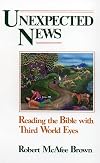
n Unexpected News, Robert McAfee Brown looks at ten biblical texts through a new lens. Brown's analysis is concerned with how our reading of the Bible is dependent on our experiences and worldview. Brown sets out to understand how "third world Christians," that is, Christians who live in poverty and powerlessness, interpret the Bible. Brown argues that by reading the Bible in new ways, we can learn more about other cultures as well as gain a new understanding of the biblical message.
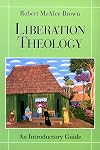
While Jesus was certainly more than a prophet, he was also nothing less than one. That means that social justice is central to, not ancillary, to the Gospel. Such is the clear message of liberation theology and no one interprets it more clearly than Robert McAfee Brown.

With grace, and often disarming humor, Robert Mcafee Brown reflects on his creative dislocations -- the physical, mental, emotional, and political upheavals that have shaped his life.
Awards

You May Also Like


Associated Authors
Statistics
- Works
- 39
- Also by
- 7
- Members
- 2,657
- Popularity
- #9,658
- Rating
- 4.3
- Reviews
- 14
- ISBNs
- 51
- Languages
- 2
- Favorited
- 1