
Mike Gray (1) (1935–2013)
Author of Angle of Attack: Harrison Storms and the Race to the Moon
For other authors named Mike Gray, see the disambiguation page.
Works by Mike Gray
The Warning: Accident at Three Mile Island: A Nuclear Omen for the Age of Terror (1982) 29 copies, 1 review
Tagged
Common Knowledge
- Legal name
- Gray, Harold Michael
- Other names
- Gray, Mike
- Birthdate
- 1935-10-26
- Date of death
- 2013-05-01
- Gender
- male
- Education
- Purdue University
- Occupations
- screenwriter
film director
producer
author
editor
cinematographer - Nationality
- USA
- Places of residence
- Los Angeles, California, USA
Darlington, Indiana, USA - Place of death
- Los Angeles, California, USA
- Associated Place (for map)
- California, USA
Members
Reviews
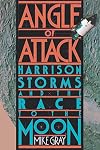
This was a heavily biased account of North American Aviation's building of the Saturn V second stage and Apollo command and service module. Don't get me wrong, it was quite interesting, but the bias was pretty apparent. I was particularly interested in the account of the Apollo 1 fire, which was is what eventually led to Storm's reassignment away from Apollo. The book seems to indicate that the astronaut's use of Velcro in the capsule was more responsible for the fire than any number of the show more design and manufacturing defects. And the use of the inward opening hatch? Grissom and NASA demanded it. The book goes to great lengths to paint Storms and NAA in the best light possible.
On a side note, I am very annoyed that the author misspells the name of the SM-64 Navaho missile every single time it appears. Also, why would you misquote Grissom from the night of the fire? I understand this was written in 1992, but I hate that this book doesn't even give us an accurate quote during a pivotal event. show less
On a side note, I am very annoyed that the author misspells the name of the SM-64 Navaho missile every single time it appears. Also, why would you misquote Grissom from the night of the fire? I understand this was written in 1992, but I hate that this book doesn't even give us an accurate quote during a pivotal event. show less
Angles of Attack is a gripping engineering thriller, a tale the of meteoric rise and even faster fall of Harrison "Stormy" Storms, a key figure in the Apollo program. It stands next to The Soul of New Machine as a story of men, machines, and the cost of innovation.
In the early 1960s, North American Aviation was hot as it got. NAA had contributed the P-51 to WW2 and the F-86 to Korea. Harrison Storms was pushing the boundaries of speed and air with the X-15 program and the XB-70 Mach 3 show more strategic bomber. When Kennedy announced the moon landing as the goal of the space program, an effort to mark a technical triumph America might beat the Russians at, Storms went over the heads of his bosses to put in bids, winning both the second stage of the Saturn V and the over-all program itself.
The chapters are about hard-working, hard-drinking "tin benders", pragmatic engineers putting in 80+ hour weeks for years on end to meet the unimaginable technical challenges of the lunar mission. The Apollo program required strength, lightness, durability, and unimaginable precision and scale. One key component, the dome tank wall that separated liquid oxygen and liquid hydrogen, had to be built out of precisely fitted honeycomb panels, with the hydrogen side just above absolute zero and the oxygen side merely freezing cold at −183 Celsius.
The engineering challenges required a human effort to match. The North American plant in Downey, south of Los Angeles, was a hive of activity with thousands of craftsmen refining the design and the prototype items. NAA was the lead contractor, but Apollo had subcontractors and pieces spread all over the country, all of which had to be coordinated in a constantly changing dance to hit the end of the decade target. It was engineers screaming at each other, engineers having heart attacks on the shop floor, kids growing up without seeing dad, and marriages falling apart. Apollo was a hurricane, with Storms at its heart.
All of this came to a head with the Apollo 1 disaster, which killed Gus Grissom, Ed White, and Roger B. Chaffee. The three astronauts were conducting a ground test when the capsule was engulfed in flames. They were dead in seconds, likely suffocated by toxic fumes, and then burned alive. NAA and Storms had argued against the circumstances that lead to the disaster. They wanted a conventional air atmosphere and an outwards-opening hatch equipped with explosive bolts, two design proposals overruled by NASA. The rest was the holes in the Swiss cheese lining up. Astronauts loved velcro, which kept things from floating around the cabin. Velcro's flammability had been tested in 5 PSI of Oxygen, which was what the mission would be at. But the test was run at 16.7 PSI of Oxygen to simulate the pressure difference between the capsule and space. At 5 PSI Velcro burned actively; at 16.7 PSI, it exploded. A patch of velcro wasn't considered important enough to go on the engineering drawings, so the sheer amount of velcro in the cockpit slipped past the safety review.
Even so, NAA took the blame, the ordinary friction of aerospace R&D being blown up into programmatic incompetence and fraud against the government. Storms was the scapegoat, and he was unceremoniously removed from his key role. Other men would take Apollo to the moon. North American Aviation would merge with Rockwell, becoming just one more division in a conglomerate and losing its engineering identity.
Angles of Attack has flaws. It's very much Storms' view of Apollo, and the program was bigger than any one person. Gray has an ear for action and thrills, and perhaps overlooks the mundanity of the work. But for all that, this is still a fantastic book. show less
In the early 1960s, North American Aviation was hot as it got. NAA had contributed the P-51 to WW2 and the F-86 to Korea. Harrison Storms was pushing the boundaries of speed and air with the X-15 program and the XB-70 Mach 3 show more strategic bomber. When Kennedy announced the moon landing as the goal of the space program, an effort to mark a technical triumph America might beat the Russians at, Storms went over the heads of his bosses to put in bids, winning both the second stage of the Saturn V and the over-all program itself.
The chapters are about hard-working, hard-drinking "tin benders", pragmatic engineers putting in 80+ hour weeks for years on end to meet the unimaginable technical challenges of the lunar mission. The Apollo program required strength, lightness, durability, and unimaginable precision and scale. One key component, the dome tank wall that separated liquid oxygen and liquid hydrogen, had to be built out of precisely fitted honeycomb panels, with the hydrogen side just above absolute zero and the oxygen side merely freezing cold at −183 Celsius.
The engineering challenges required a human effort to match. The North American plant in Downey, south of Los Angeles, was a hive of activity with thousands of craftsmen refining the design and the prototype items. NAA was the lead contractor, but Apollo had subcontractors and pieces spread all over the country, all of which had to be coordinated in a constantly changing dance to hit the end of the decade target. It was engineers screaming at each other, engineers having heart attacks on the shop floor, kids growing up without seeing dad, and marriages falling apart. Apollo was a hurricane, with Storms at its heart.
All of this came to a head with the Apollo 1 disaster, which killed Gus Grissom, Ed White, and Roger B. Chaffee. The three astronauts were conducting a ground test when the capsule was engulfed in flames. They were dead in seconds, likely suffocated by toxic fumes, and then burned alive. NAA and Storms had argued against the circumstances that lead to the disaster. They wanted a conventional air atmosphere and an outwards-opening hatch equipped with explosive bolts, two design proposals overruled by NASA. The rest was the holes in the Swiss cheese lining up. Astronauts loved velcro, which kept things from floating around the cabin. Velcro's flammability had been tested in 5 PSI of Oxygen, which was what the mission would be at. But the test was run at 16.7 PSI of Oxygen to simulate the pressure difference between the capsule and space. At 5 PSI Velcro burned actively; at 16.7 PSI, it exploded. A patch of velcro wasn't considered important enough to go on the engineering drawings, so the sheer amount of velcro in the cockpit slipped past the safety review.
Even so, NAA took the blame, the ordinary friction of aerospace R&D being blown up into programmatic incompetence and fraud against the government. Storms was the scapegoat, and he was unceremoniously removed from his key role. Other men would take Apollo to the moon. North American Aviation would merge with Rockwell, becoming just one more division in a conglomerate and losing its engineering identity.
Angles of Attack has flaws. It's very much Storms' view of Apollo, and the program was bigger than any one person. Gray has an ear for action and thrills, and perhaps overlooks the mundanity of the work. But for all that, this is still a fantastic book. show less
I picked up this book because it was listed as one of the bases for the HBO Series, From the Earth to the Moon about the Apollo program. I'm a space junkie, and loved that series, and I loved this book. It's the story of Harrison Storms, who as an aeronautical engineer for North American Aviation, had a key part in designing and construction the Apollo Command Module. But it's not just a tale of triumph and ingenuity, but the tragedy of Apollo One and how it effected Storms. I absolutely show more loved this book. Especially since it gave us a view on a perspective usually neglected--not that of the astronauts or even NASA, but those in American private enterprise that built the ships that sent Americans to the Moon and back--sometimes at heartbreaking personal cost. show less

A lot of technological disasters are have relatively simple cause-and-effect chains. The 1979 partial meltdown of Reactor #2 at the Three Mile Island nuclear powerplant isn't one of them. It's no small achievement, therefore, that Mike Gray and Ira Rosen's account of the disaster is so uniformly clear and easy to follow. If you want to read one book on the subject, this is an excellent choice.
Awards

You May Also Like


Associated Authors
Statistics
- Works
- 8
- Members
- 367
- Popularity
- #65,578
- Rating
- 4.1
- Reviews
- 7
- ISBNs
- 36
- Languages
- 1