
Eric Schlosser
Author of Fast Food Nation: The Dark Side of the All-American Meal
About the Author
Eric Schlosser, a contributing editor at the Atlantic Monthly, won a National Magazine Award for an article he wrote on strawberry picking for that magazine. His work has been nominated for several other National Magazine Awards and for the Loeb Award for business journalism. (Publisher Provided) show more Award-winning journalist Eric Schlosser is a correspondent for the Atlantic Monthly. His first book, Fast Food Nation, has been on the New York Times bestseller list for over a year (hardcover and paperback combined) and has appeared on the bestseller lists of the Los Angeles Times, the San Francisco Chronicle, the Boston Globe, the Washington Post, USA Today, and Publishers Weekly, among others. Schlosser has appeared on 60 Minutes, CNN, CBS Evening News, NBC Nightly News, FOX News, The O'Reilly Factor, and Extra!, and has been interviewed on NPR and for Entertainment Weekly, USA Today, and the New York Times. He is currently at work on a book about the American prison system. (Publisher Provided) Writer Eric Schlosser was born in Manhattan, New York on August 17, 1959. He received a bachelor's degree in American History from Princeton University and a graduate degree in British Imperial History from Oxford University. His work has appeared in The Atlantic Monthly, Rolling Stone, Vanity Fair, The Nation and The New Yorker. He has won numerous awards for his investigative journalism including the National Magazine Award and the Sidney Hillman Foundation award. His books include Fast Food Nation, which was adapted into a 2006 film; Reefer Madness; and the children's book Chew On This: Everything You Don't Want to Know About Fast Food. He also wrote the bestselling nonfiction book, Command and Control: Nuclear Weapons, the Damascus Accident, and the Illusion of Safety. (Bowker Author Biography) show less
Image credit: Photographed at BookPeople in Austin, Texas by Frank Arnold
Works by Eric Schlosser
Reefer Madness: Sex, Drugs, and Cheap Labor in the American Black Market (2003) 2,026 copies, 22 reviews
Command and Control: Nuclear Weapons, the Damascus Accident, and the Illusion of Safety (2013) 1,574 copies, 45 reviews
Probable Cause 1 copy
Associated Works
Food Inc.: A Participant Guide: How Industrial Food is Making Us Sicker, Fatter, and Poorer-And What You Can Do About It (2009) — Contributor — 542 copies, 3 reviews
Tagged
Common Knowledge
- Legal name
- Schlosser, Eric Matthew
- Birthdate
- 1959-08-17
- Gender
- male
- Education
- Princeton University (BA |1982| History)
University of Oxford (MA | history | Oriel College) - Occupations
- journalist
non-fiction writer - Organizations
- The Atlantic Monthly
- Awards and honors
- National Magazine Award
Sidney Hillman Foundation award - Agent
- Tina Bennett (Janklow & Nesbit Associates)
- Relationships
- Redford, Shauna (wife)
- Nationality
- USA
- Birthplace
- Manhattan, New York, USA
- Places of residence
- New York, USA
UK
California, USA - Associated Place (for map)
- New York, USA
Members
Reviews

Yes, this book has an agenda, but it’s not what you might have guessed. The main theme is not how fast food is so bad for you (although that is mentioned), but rather how the business practices of mega-corporations–as exemplified by the fast food industry–are bad for everybody: farmers, workers, consumers.
I think Schlosser makes quite a convincing argument, especially when he ties in the appalling workplace conditions at slaughterhouses to the safety of the meat you eat (believe me, show more I’m glad I decided long ago to give up beef). And he exhorts all of us to action, by demonstrating how consumer pressure on big corporations like McDonald’s can result in positive change that years of government regulation couldn’t bring about.
I’m happier when I don’t eat fast food. I like my food to taste like something, and I want it to be good for me too. In this book, Schlosser has just given me a myriad more reasons to avoid the stuff. show less
I think Schlosser makes quite a convincing argument, especially when he ties in the appalling workplace conditions at slaughterhouses to the safety of the meat you eat (believe me, show more I’m glad I decided long ago to give up beef). And he exhorts all of us to action, by demonstrating how consumer pressure on big corporations like McDonald’s can result in positive change that years of government regulation couldn’t bring about.
I’m happier when I don’t eat fast food. I like my food to taste like something, and I want it to be good for me too. In this book, Schlosser has just given me a myriad more reasons to avoid the stuff. show less
Command and Control: Nuclear Weapons, the Damascus Accident, and the Illusion of Safety (ALA Notable Books for Adults) by Eric Schlosser
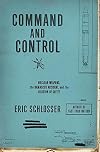
Nuclear war is defined by horrific paradoxes. Weapons that are fast and accurate are more likely to precipitate Wolrd War 3, with a scenario of a border skirmish leading to a "use it or lose" mentality that devolves to a general apocalypse. "Counter-value" weapons, the ones deemed least likely to actually be fired, are only useful for massacring millions of civilians in futile revenge. Nuclear weapons are so serious that they should be fired only with authorization from the highest of show more commands, but the President will be the first target of an attack. The basic paradox is encapsulated in "always/never", a stated design goal of the Atomic weapons complex. A bomb should always explode when it is needed, and never explode otherwise.
Schlosser traces the dangerous history of nuclear weapons, full of near-misses and lucky accident, in parallel with the 1980 Damascus Incident at a Titan II silo in Arkansas. At Damascus, during a routine refueling a dropped socket wrench penetrated the oxidizer tank of the massive ICBM, spilling thousands of gallons of nitrogen tetroxide. The crew of the silo and response teams from nearby airbases faced a rapidly evolving disaster. The Titan II was essentially an aluminum balloon, and when enough oxidizer vented the missile would collapse and explode. Or the oxidizer could explode due to a spark. The response was complicated by having to work in a cloud of toxic fumes wearing heavy and balky hazmat suits, and poor communication channels between the silo, the Airforce base at Little Rock, and SAC HQ, which tried to manage the response at long distance. Eventually, time ran out and the missile exploded. One crew member, David Livingston, eventually died of wounds and nitrogen tetroxide exposure. The official report scapegoated Livingston, the only casaulty of the accident, and exonerated SAC command, despite decades of ignoring complaints about hazards involved with the Titan II.
The drama of the Damascus incident is interleaved with the broader story of nuclear weapons. Schlosser traces the absurdity and obscenity of nuclear weapons throughout the Cold War. The bombs dropped on Nagasaki and Hiroshima were hand-built experimental devices. The arguments over control of America's nuclear stockpile between the Air Force, Navy, and civil Atomic Energy Commission, were done in ignorance that the 'stockpile' was as low as a single weapon, which would have to undergo weeks of assembly before it could be mated to a B-29 and dropped. As the Cold War spun up, second generation weapons were dispatched to airborne and forward alerts, which exposed them to the vagaries of aviation and overseas security that was nominal at best. It is a miracle that a bomb did not accidentally explode, or was not stolen by terrorists or coup-oriented NATO officers. Finally, the realities of nuclear war were universes apart from the theories of defense planners like McNamara and Kissinger. If the ball went up, America would deploy the SIOP (single integrated operations plan), which on a "go code" would unleash 10 hours of thermonuclear devastation on the USSR, China, and Eastern Europe. Thousands of bombs would drop, millions of people would die. The SIOP could not be altered or stopped. Theories of nuclear strategy which involved pauses to negotiate before the absolute end of the world, or limited destruction, had no physical means by which they could be implemented. The communication networks simply didn't exist to actually control a nuclear war in progress, even if the President were somehow still alive. The survivors would probably envy the dead.
Though the 21st century has reduced the risk of a nuclear war between superpowers, the bombs are still very much real, and proliferation increases the risks that a second sun will light on Earth, whether as part of clash between India and Pakistan or Israel and Iran, or simply by accident. We have been very very lucky, but eventually those snake-eyes will come up.
I'll confess to having strange attitudes towards nuclear war. I don't remember the Cold War at all, and I've probably learned to stop worrying and love the bomb a little too much, through atomic kitsch media like the video games Fallout and DEFCON, or even deserved classics like Dr. Strangelove. Command and Control is absolutely my jam. If you react with revulsion to nuclear weapons, like a normal person, this may not be. Still, an amazing book, and I'm somewhat amazed that I waited this long to read it.
Now Rhodes' The Making of the Atomic Bomb is staring at me from the shelf... show less
Schlosser traces the dangerous history of nuclear weapons, full of near-misses and lucky accident, in parallel with the 1980 Damascus Incident at a Titan II silo in Arkansas. At Damascus, during a routine refueling a dropped socket wrench penetrated the oxidizer tank of the massive ICBM, spilling thousands of gallons of nitrogen tetroxide. The crew of the silo and response teams from nearby airbases faced a rapidly evolving disaster. The Titan II was essentially an aluminum balloon, and when enough oxidizer vented the missile would collapse and explode. Or the oxidizer could explode due to a spark. The response was complicated by having to work in a cloud of toxic fumes wearing heavy and balky hazmat suits, and poor communication channels between the silo, the Airforce base at Little Rock, and SAC HQ, which tried to manage the response at long distance. Eventually, time ran out and the missile exploded. One crew member, David Livingston, eventually died of wounds and nitrogen tetroxide exposure. The official report scapegoated Livingston, the only casaulty of the accident, and exonerated SAC command, despite decades of ignoring complaints about hazards involved with the Titan II.
The drama of the Damascus incident is interleaved with the broader story of nuclear weapons. Schlosser traces the absurdity and obscenity of nuclear weapons throughout the Cold War. The bombs dropped on Nagasaki and Hiroshima were hand-built experimental devices. The arguments over control of America's nuclear stockpile between the Air Force, Navy, and civil Atomic Energy Commission, were done in ignorance that the 'stockpile' was as low as a single weapon, which would have to undergo weeks of assembly before it could be mated to a B-29 and dropped. As the Cold War spun up, second generation weapons were dispatched to airborne and forward alerts, which exposed them to the vagaries of aviation and overseas security that was nominal at best. It is a miracle that a bomb did not accidentally explode, or was not stolen by terrorists or coup-oriented NATO officers. Finally, the realities of nuclear war were universes apart from the theories of defense planners like McNamara and Kissinger. If the ball went up, America would deploy the SIOP (single integrated operations plan), which on a "go code" would unleash 10 hours of thermonuclear devastation on the USSR, China, and Eastern Europe. Thousands of bombs would drop, millions of people would die. The SIOP could not be altered or stopped. Theories of nuclear strategy which involved pauses to negotiate before the absolute end of the world, or limited destruction, had no physical means by which they could be implemented. The communication networks simply didn't exist to actually control a nuclear war in progress, even if the President were somehow still alive. The survivors would probably envy the dead.
Though the 21st century has reduced the risk of a nuclear war between superpowers, the bombs are still very much real, and proliferation increases the risks that a second sun will light on Earth, whether as part of clash between India and Pakistan or Israel and Iran, or simply by accident. We have been very very lucky, but eventually those snake-eyes will come up.
I'll confess to having strange attitudes towards nuclear war. I don't remember the Cold War at all, and I've probably learned to stop worrying and love the bomb a little too much, through atomic kitsch media like the video games Fallout and DEFCON, or even deserved classics like Dr. Strangelove. Command and Control is absolutely my jam. If you react with revulsion to nuclear weapons, like a normal person, this may not be. Still, an amazing book, and I'm somewhat amazed that I waited this long to read it.
Now Rhodes' The Making of the Atomic Bomb is staring at me from the shelf... show less
This review is based on the Blinkist version of the book...thus a summary and my review needs to be qualified as such. Presumably the original full text has much more details and research.....but it also takes much longer to read. If I like the Blinkist version, I might seek out and read the full book. Meantime here are a few nuggets that particularly struck me:
This is a rather scary book. After years of intense research, scientists had eventually discovered that there were two materials show more that could cause a fission kind of explosion: uranium-235 and plutonium-239. Nuclear bombs rely on fission–when atoms split and release energy.....When fission happens under strictly controlled circumstances, such as in a nuclear power plant, the produced energy can be used to fuel electrical generators. However, on July 17, 1945, during the first bomb test, no one was exactly sure what was going to happen. A scientist Donald Horning came up with the X-Unit. This was an electronic triggering device that would simultaneously set off all 32 explosives in the bomb......completely surrounded the core in the shape of 12 pentagons and 20 hexagons; it looked like a big soccer ball.
Horning’s triggering device worked perfectly. With the massive explosion and mushroom cloud. The US military, along with the president, decided to deliver an unannounced bombing on Hiroshima. This occurred on August 6, 1945. The bomb was called “Little Boy,” and it was ten feet tall and weighed ten thousand pounds. Its core contained 0.7 grams of uranium-235, an amount that weighed less than a dollar bill but would unleash an explosion equivalent to 12 to 18 kilotons of TNT......Despite the massive death and destruction caused by the bomb, the Japanese Emperor refused to surrender. So a second bomb, this one with a plutonium core and the code name “Fat Man,” was dropped on Nagasaki just three days later. Remarkably enough, while the bomb was being loaded onto a plane, a technician noticed that it had been incorrectly wired. So a quick and dangerous rewiring was done on the spot, using a soldering iron right next to five thousand pounds of high explosives.
It is believed that only one-fifth of Fat Man’s plutonium actually fissioned, but it was still a bigger explosion than Hiroshima, equivalent in yield to 21 kilotons of TNT.
US Air Force General, Henry H. Arnold called for the bomb to be immediately outlawed. [A sensible individual ...though banning something like this seems to be impossible for humans]. Eventually, the Atomic Energy Act of 1946 was issued, giving America’s nuclear program civilian oversight through the Joint Committee on Atomic Energy, which was made up of politicians.
There were two events in particular that put the United States and the Soviet Union at loggerheads. In 1948, the Soviets staged a violent takeover of Czechoslovakia’s democratic government; and in 1949, the Soviets successfully tested their first nuclear bomb, the RDS-1......So the big question facing Congress in 1949 was how the United States should respond to such an invasion. One side argued for conventional warfare; the other, for an “atomic blitz,” which relied on nuclear weapons and minimal ground forces.....The atomic blitz side won, and the Air Force’s Strategic Air Command (SAC) was formed to prepare for a potential nuclear strike.
Both sides started out with the implosion bombs–also known as Mark 3 bombs
But in 1949, the United States began working on the Mark 4, which stored its nuclear core separately from the rest of the bomb. It also featured a safer detonation device that could detect a change in altitude and therefore remain unarmed until it was released from the plane.....But the Mark 4 was soon replaced by the Mark 6, which was ten times as powerful. And then the Mark 6 was supplanted by the Mark 7, which was smaller and lighter but no less powerful......For the United States, the first full-scale experimental test of a liquid-fuelled H-bomb was on November 1, 1952. The explosion was equivalent to roughly 10.4 megatons of TNT–five hundred times more than the Nagasaki bomb.....This was followed on March 1, 1954, by the famous Bikini Atoll test of a solid-fuelled H-bomb that yielded 15 megatons.
And the Soviets weren’t far behind; their own thermonuclear test of the RDS-6 occurred in August of 1953.
The Strategic Air Command (SAC) took preparedness very seriously. There were countless checklists and endless drills.......But this meant that nuclear weapons were constantly being loaded and unloaded from planes that were routinely flying over populated areas.
And after the Soviets launched the Sputnik satellite in 1957, the stockpile increased considerably.....One primary concern was over “one-point safety,” which is how vulnerable the bombs were to having just one of the explosive detonators accidentally go off. There are a number of theoretical scenarios where this might happen, such as a fire causing a short circuit in the wiring or a bullet puncturing the bomb’s shell and striking or sparking the explosive. If just one detonator around the bomb’s core goes off, it wouldn’t result in a 15-megaton explosion–but it would likely release the core’s poisonous radioactive material into the air. And even small traces of plutonium dust can be deadly.
Two of the most vocal proponents for trying to get more safety features built into the bombs were scientists Robert Peurifoy and Carl Carlson, both of whom worked for Sandia...a civil contractor working on the bomb. Many in the government and military were opposed to more safety features. They saw them as increasing the likelihood that the bombs might fail to go off when needed, and retrofitting old bombs was just too costly. [Which is one good reason why we should not entrust the decisions about usage to the Defence establishment].
Accidents weren’t at all uncommon. One of the most dangerous accidents is known as “the Moroccan incident.”...In January of 1958, a plane loaded with a Mark 36 hydrogen bomb, capable of a 10-megaton yield, blew a tire and caught fire at an American airfield in Morocco. US Air Force personnel tried to put out the flames that were feeding off a full tank of jet fuel–but couldn’t. The base was evacuated. Luckily, the melted 8,000-pound bomb was recovered two hours later and the radioactive material was buried.
A month later, a Mark 6 atomic bomb was accidentally jettisoned from a plane flying over South Carolina. Thankfully, the fissile core was not inside the bomb, which detonated upon impact, leaving a 50-foot crater in the yard of a home,
When the first detailed safety report on nuclear weapons was issued, it revealed that an average of seven bombs were being accidentally dropped every year. On top of that, there were twelve crashes or accidents that involved a plane carrying a nuclear bomb...There was also a genuine threat that someone drunk, high or in the throes of a psychotic episode could accidentally or purposely detonate a nuclear device.
Amazingly, there were hardly any security measures in place to stop a pilot in Germany from taking off in a plane and launching a nuclear missile; or for a soldier in Italy to knock a guard unconscious, take the key from around his neck and launch a rocket......in 1957, an atomic bomb or a hydrogen bomb was accidentally jettisoned once every 320 flights.....In 1961, a malfunction caused a B-52 to crash into a barley field in northern California after the crew safely evacuated. It was carrying two Mark 39 hydrogen bombs that luckily shattered without incident.....Just weeks later, a B-52 was flying over the Appalachian Mountains when turbulence caused its tail to break apart. The plane was carrying two Mark 53 H-bombs. It crashed into the side of a mountain, and only two of the five crew members survived. The bombs were recovered from the wreckage, undetonated and intact.....And in 1966, a mid-air collision occurred when a B-52 was attempting to refuel over the coast of southern Spain.
the United States denied there was any threat. Yet one bomb had partially detonated, excavating a 20-foot crater near a cemetery and releasing a cloud of plutonium onto a nearby farm.
In the 1970s a different kind of threat emerged as military servicemen began to take part in the growing drug culture. Even the ones who handled nuclear bomb storage weren’t immune to the cultural changes.
In the 1950s, NORAD became the first computer network, its purpose being to link the radar systems of Air Force bases across the United States to detect a Soviet first strike.
The Single Integrated Operational Plan (SIOP) dates back to the late 1950s
On December 2, 1960, SIOP called for 3,423 nuclear weapons to be directed at 1,000 different ground zeroes. The plan would eliminate 3,729 targets and along with an estimated 220 million lives, with far more dying from the subsequent fallout and aftereffects.....Another disturbing thing about SIOP is that once it starts, there’s no stopping it. [Great....who were the genius thinkers who dreamed this up]....What’s also disturbing is that, on more than one occasion, SIOP came close to going into effect......In 1962, during the Cuban Missile Crisis, the SAC was ordered to be at DEFCON 2, the level of readiness just below imminent nuclear war. Sixty-five bombers were in the air, and multiple nuclear submarines were in striking position. Fortunately, the Soviet Union agreed to remove their weapons from Cuba, and the crisis was averted.
On multiple occasions, NORAD mistakenly identified incoming Soviet missiles. Once, this was due to the accidental running of a test program that was believed (By the Russians) to be a real scenario. But thankfully, cool heads prevailed. GPS was originally invented in the 1980s as part of the nuclear defence program.
According to a report in 1968, there were an average of 130 significant accidents per year that involved nuclear weapons. That’s 1,200 incidents between 1950 and 1968, with 13 of those incidents getting labelled as “broken arrows”–when a weapon gets accidentally fired or detonated and releases radioactive materials.
The Titan II rocket comes with other inbuilt dangers. Its fuel tank is especially dangerous, containing highly toxic liquid propellants and an oxidizer that releases an even deadlier explosive vapor. On the evening of September 18th, the maintenance crew was doing a routine fill-up of the oxidizer tank, when a metal socket was accidentally dropped; it fell 70 feet before striking the side of the rocket, and immediately, a nasty looking cloud of vapor began to fill the underground silo. Alarms and warning lights went off, but the staff were confused and started to panic because, even though they had checklists to follow for every procedure, there wasn’t one for this scenario....In total, it took nearly eight hours for a plan to be approved, and it started off with a bad choice. Technicians were ordered to enter the silo using the main access door instead of the escape hatch, which would’ve been a whole lot quicker, easier and safer.....Then the final bad decision of the night was made. An order came to turn on the ventilation fan to clear the vapor from the silo. Kennedy knew that it would only take a tiny spark to instantly turn the silo into a roaring fireball, but Livingston agreed to turn the switch and activate the fan. And sure enough, just after Kennedy stepped outside, the place exploded........The official report of the incident blamed the low-ranking officers involved and decided that the Titan II was still “basically safe.” It was clear that very little would change during the 1980s. [How can one trust official reports like this that are clearly sanitised and censored].
The Pershing II, a missile with a mere 1,000-mile range that was scheduled to arrive in West German bases in November of 1983. With a range that small, it was clear to the Soviets that these missiles had only one purpose–to annihilate Moscow in under ten minutes.
Making tensions worse, the Soviet Union invaded Afghanistan, and the United States began a campaign of psychological warfare by routinely sending SAC bombers into Soviet airspace and conducting Navy exercises close to Soviet bases. [This doesn’t sound particularly intelligent to me...and the Americans and others are doing the same sort of thing in the South China Sea].
But the most dangerous incident occurred a week later when NATO conducted a drill called Able Archer 83, which was designed to simulate the authorization of nuclear warfare.
With the delivery of the Pershing II only weeks away, the timing for this simulation couldn’t have been worse. When the KGB overheard communications from the drill, they thought they were hearing the real thing, bringing the Soviet Union perilously close to launching a pre-emptive attack. Luckily, the drill ended soon, alleviating the worst fears of the Soviets.
On November 20, 1983, Ronald Reagan and millions of other Americans watched a made-for-TV film called The Day After. It was a realistic portrayal of how average people would cope with the outbreak of nuclear war, and Reagan was among those extremely shaken by what they had seen...When the president appeared on TV shortly after seeing the film, his rhetoric had dramatically changed. He announced that a “nuclear war cannot be won and must not be fought.” [I find it especially scary that it takes a film star president to watch a fictional movie to decide that a nuclear war cannot be won...what happened to SIOP and the system that once launched couldn’t be stopped. That is really dumb. And who is doing the real thinking about nuclear policy if this is how decisions are made?].
The military finally heard Robert Peurifoy and agreed to spend money on retrofitting some of its stockpile with improved safety devices. It was clear how needed these improvements were when the House Foreign Affairs Committee graded the safety of every type of weapon in the US arsenal. On a scale from A to D, only three got an A, and 12 received a D.
More recent safety additions include a barcode system that was introduced to prevent the accidental transport of armed weapons on training missions. This is exactly what happened in 2009 when six nuclear missiles sat in an unguarded plane for two days.
While Russia possesses around 3,740 nuclear weapons, France around 300, China 240 and the United Kingdom 160, it’s the nations of India and Pakistan that could pose the biggest threat. [Where are the figures for the USA?...why are these omitted?]...Pakistan recently doubled its arsenal to around 100 weapons.....But the added threat here comes from the number of Islamic radicals in the area who have already made multiple attempts to steal a nuclear weapon
The key message in this book: Nuclear weapons are not something that can be safely controlled with strict bureaucratic checklists and procedures. As long as computers and humans are involved, something is bound to go wrong. Humans will make mistakes and computers will malfunction, and the more secretive nations are about those mistakes and the technology behind their weapons, the harder it will become to improve safety and design, making all of us more vulnerable to a catastrophic accident.
My take on the book. Yes seriously scary. And one really has to question the MAD strategy. (Mutually Assured Destruction). I recall someone asking about this of the US military:
Q: What should the president do if he detects a Russian nuclear missile approaching the USA?
A: He should trigger the automatic (MAD) response.
Q: What happens then?
A: The Russians will respond with all their (MAD) missiles.
Q: what happens then?
A: Well Russia will be a pile of radioactive smoking rubble and so will the USA.
Q: So why did the President trigger the response?
A: ...no answer....just some nervous shuffling of feet.
It seems clear that the quality of thinking around nuclear weapons is not of the highest calibre. And maybe, it should not be left mainly to the military. Maybe we should get the housewives associations of the USA and Russia to be working together on setting some guidelines. It might lead to some clearer thinking.
And really scary that Ronald Reagan made critical decisions about nuclear war after watching a fictional movie. Surely, this is no way for nuclear policy to be formulated? Four stars from me. show less
This is a rather scary book. After years of intense research, scientists had eventually discovered that there were two materials show more that could cause a fission kind of explosion: uranium-235 and plutonium-239. Nuclear bombs rely on fission–when atoms split and release energy.....When fission happens under strictly controlled circumstances, such as in a nuclear power plant, the produced energy can be used to fuel electrical generators. However, on July 17, 1945, during the first bomb test, no one was exactly sure what was going to happen. A scientist Donald Horning came up with the X-Unit. This was an electronic triggering device that would simultaneously set off all 32 explosives in the bomb......completely surrounded the core in the shape of 12 pentagons and 20 hexagons; it looked like a big soccer ball.
Horning’s triggering device worked perfectly. With the massive explosion and mushroom cloud. The US military, along with the president, decided to deliver an unannounced bombing on Hiroshima. This occurred on August 6, 1945. The bomb was called “Little Boy,” and it was ten feet tall and weighed ten thousand pounds. Its core contained 0.7 grams of uranium-235, an amount that weighed less than a dollar bill but would unleash an explosion equivalent to 12 to 18 kilotons of TNT......Despite the massive death and destruction caused by the bomb, the Japanese Emperor refused to surrender. So a second bomb, this one with a plutonium core and the code name “Fat Man,” was dropped on Nagasaki just three days later. Remarkably enough, while the bomb was being loaded onto a plane, a technician noticed that it had been incorrectly wired. So a quick and dangerous rewiring was done on the spot, using a soldering iron right next to five thousand pounds of high explosives.
It is believed that only one-fifth of Fat Man’s plutonium actually fissioned, but it was still a bigger explosion than Hiroshima, equivalent in yield to 21 kilotons of TNT.
US Air Force General, Henry H. Arnold called for the bomb to be immediately outlawed. [A sensible individual ...though banning something like this seems to be impossible for humans]. Eventually, the Atomic Energy Act of 1946 was issued, giving America’s nuclear program civilian oversight through the Joint Committee on Atomic Energy, which was made up of politicians.
There were two events in particular that put the United States and the Soviet Union at loggerheads. In 1948, the Soviets staged a violent takeover of Czechoslovakia’s democratic government; and in 1949, the Soviets successfully tested their first nuclear bomb, the RDS-1......So the big question facing Congress in 1949 was how the United States should respond to such an invasion. One side argued for conventional warfare; the other, for an “atomic blitz,” which relied on nuclear weapons and minimal ground forces.....The atomic blitz side won, and the Air Force’s Strategic Air Command (SAC) was formed to prepare for a potential nuclear strike.
Both sides started out with the implosion bombs–also known as Mark 3 bombs
But in 1949, the United States began working on the Mark 4, which stored its nuclear core separately from the rest of the bomb. It also featured a safer detonation device that could detect a change in altitude and therefore remain unarmed until it was released from the plane.....But the Mark 4 was soon replaced by the Mark 6, which was ten times as powerful. And then the Mark 6 was supplanted by the Mark 7, which was smaller and lighter but no less powerful......For the United States, the first full-scale experimental test of a liquid-fuelled H-bomb was on November 1, 1952. The explosion was equivalent to roughly 10.4 megatons of TNT–five hundred times more than the Nagasaki bomb.....This was followed on March 1, 1954, by the famous Bikini Atoll test of a solid-fuelled H-bomb that yielded 15 megatons.
And the Soviets weren’t far behind; their own thermonuclear test of the RDS-6 occurred in August of 1953.
The Strategic Air Command (SAC) took preparedness very seriously. There were countless checklists and endless drills.......But this meant that nuclear weapons were constantly being loaded and unloaded from planes that were routinely flying over populated areas.
And after the Soviets launched the Sputnik satellite in 1957, the stockpile increased considerably.....One primary concern was over “one-point safety,” which is how vulnerable the bombs were to having just one of the explosive detonators accidentally go off. There are a number of theoretical scenarios where this might happen, such as a fire causing a short circuit in the wiring or a bullet puncturing the bomb’s shell and striking or sparking the explosive. If just one detonator around the bomb’s core goes off, it wouldn’t result in a 15-megaton explosion–but it would likely release the core’s poisonous radioactive material into the air. And even small traces of plutonium dust can be deadly.
Two of the most vocal proponents for trying to get more safety features built into the bombs were scientists Robert Peurifoy and Carl Carlson, both of whom worked for Sandia...a civil contractor working on the bomb. Many in the government and military were opposed to more safety features. They saw them as increasing the likelihood that the bombs might fail to go off when needed, and retrofitting old bombs was just too costly. [Which is one good reason why we should not entrust the decisions about usage to the Defence establishment].
Accidents weren’t at all uncommon. One of the most dangerous accidents is known as “the Moroccan incident.”...In January of 1958, a plane loaded with a Mark 36 hydrogen bomb, capable of a 10-megaton yield, blew a tire and caught fire at an American airfield in Morocco. US Air Force personnel tried to put out the flames that were feeding off a full tank of jet fuel–but couldn’t. The base was evacuated. Luckily, the melted 8,000-pound bomb was recovered two hours later and the radioactive material was buried.
A month later, a Mark 6 atomic bomb was accidentally jettisoned from a plane flying over South Carolina. Thankfully, the fissile core was not inside the bomb, which detonated upon impact, leaving a 50-foot crater in the yard of a home,
When the first detailed safety report on nuclear weapons was issued, it revealed that an average of seven bombs were being accidentally dropped every year. On top of that, there were twelve crashes or accidents that involved a plane carrying a nuclear bomb...There was also a genuine threat that someone drunk, high or in the throes of a psychotic episode could accidentally or purposely detonate a nuclear device.
Amazingly, there were hardly any security measures in place to stop a pilot in Germany from taking off in a plane and launching a nuclear missile; or for a soldier in Italy to knock a guard unconscious, take the key from around his neck and launch a rocket......in 1957, an atomic bomb or a hydrogen bomb was accidentally jettisoned once every 320 flights.....In 1961, a malfunction caused a B-52 to crash into a barley field in northern California after the crew safely evacuated. It was carrying two Mark 39 hydrogen bombs that luckily shattered without incident.....Just weeks later, a B-52 was flying over the Appalachian Mountains when turbulence caused its tail to break apart. The plane was carrying two Mark 53 H-bombs. It crashed into the side of a mountain, and only two of the five crew members survived. The bombs were recovered from the wreckage, undetonated and intact.....And in 1966, a mid-air collision occurred when a B-52 was attempting to refuel over the coast of southern Spain.
the United States denied there was any threat. Yet one bomb had partially detonated, excavating a 20-foot crater near a cemetery and releasing a cloud of plutonium onto a nearby farm.
In the 1970s a different kind of threat emerged as military servicemen began to take part in the growing drug culture. Even the ones who handled nuclear bomb storage weren’t immune to the cultural changes.
In the 1950s, NORAD became the first computer network, its purpose being to link the radar systems of Air Force bases across the United States to detect a Soviet first strike.
The Single Integrated Operational Plan (SIOP) dates back to the late 1950s
On December 2, 1960, SIOP called for 3,423 nuclear weapons to be directed at 1,000 different ground zeroes. The plan would eliminate 3,729 targets and along with an estimated 220 million lives, with far more dying from the subsequent fallout and aftereffects.....Another disturbing thing about SIOP is that once it starts, there’s no stopping it. [Great....who were the genius thinkers who dreamed this up]....What’s also disturbing is that, on more than one occasion, SIOP came close to going into effect......In 1962, during the Cuban Missile Crisis, the SAC was ordered to be at DEFCON 2, the level of readiness just below imminent nuclear war. Sixty-five bombers were in the air, and multiple nuclear submarines were in striking position. Fortunately, the Soviet Union agreed to remove their weapons from Cuba, and the crisis was averted.
On multiple occasions, NORAD mistakenly identified incoming Soviet missiles. Once, this was due to the accidental running of a test program that was believed (By the Russians) to be a real scenario. But thankfully, cool heads prevailed. GPS was originally invented in the 1980s as part of the nuclear defence program.
According to a report in 1968, there were an average of 130 significant accidents per year that involved nuclear weapons. That’s 1,200 incidents between 1950 and 1968, with 13 of those incidents getting labelled as “broken arrows”–when a weapon gets accidentally fired or detonated and releases radioactive materials.
The Titan II rocket comes with other inbuilt dangers. Its fuel tank is especially dangerous, containing highly toxic liquid propellants and an oxidizer that releases an even deadlier explosive vapor. On the evening of September 18th, the maintenance crew was doing a routine fill-up of the oxidizer tank, when a metal socket was accidentally dropped; it fell 70 feet before striking the side of the rocket, and immediately, a nasty looking cloud of vapor began to fill the underground silo. Alarms and warning lights went off, but the staff were confused and started to panic because, even though they had checklists to follow for every procedure, there wasn’t one for this scenario....In total, it took nearly eight hours for a plan to be approved, and it started off with a bad choice. Technicians were ordered to enter the silo using the main access door instead of the escape hatch, which would’ve been a whole lot quicker, easier and safer.....Then the final bad decision of the night was made. An order came to turn on the ventilation fan to clear the vapor from the silo. Kennedy knew that it would only take a tiny spark to instantly turn the silo into a roaring fireball, but Livingston agreed to turn the switch and activate the fan. And sure enough, just after Kennedy stepped outside, the place exploded........The official report of the incident blamed the low-ranking officers involved and decided that the Titan II was still “basically safe.” It was clear that very little would change during the 1980s. [How can one trust official reports like this that are clearly sanitised and censored].
The Pershing II, a missile with a mere 1,000-mile range that was scheduled to arrive in West German bases in November of 1983. With a range that small, it was clear to the Soviets that these missiles had only one purpose–to annihilate Moscow in under ten minutes.
Making tensions worse, the Soviet Union invaded Afghanistan, and the United States began a campaign of psychological warfare by routinely sending SAC bombers into Soviet airspace and conducting Navy exercises close to Soviet bases. [This doesn’t sound particularly intelligent to me...and the Americans and others are doing the same sort of thing in the South China Sea].
But the most dangerous incident occurred a week later when NATO conducted a drill called Able Archer 83, which was designed to simulate the authorization of nuclear warfare.
With the delivery of the Pershing II only weeks away, the timing for this simulation couldn’t have been worse. When the KGB overheard communications from the drill, they thought they were hearing the real thing, bringing the Soviet Union perilously close to launching a pre-emptive attack. Luckily, the drill ended soon, alleviating the worst fears of the Soviets.
On November 20, 1983, Ronald Reagan and millions of other Americans watched a made-for-TV film called The Day After. It was a realistic portrayal of how average people would cope with the outbreak of nuclear war, and Reagan was among those extremely shaken by what they had seen...When the president appeared on TV shortly after seeing the film, his rhetoric had dramatically changed. He announced that a “nuclear war cannot be won and must not be fought.” [I find it especially scary that it takes a film star president to watch a fictional movie to decide that a nuclear war cannot be won...what happened to SIOP and the system that once launched couldn’t be stopped. That is really dumb. And who is doing the real thinking about nuclear policy if this is how decisions are made?].
The military finally heard Robert Peurifoy and agreed to spend money on retrofitting some of its stockpile with improved safety devices. It was clear how needed these improvements were when the House Foreign Affairs Committee graded the safety of every type of weapon in the US arsenal. On a scale from A to D, only three got an A, and 12 received a D.
More recent safety additions include a barcode system that was introduced to prevent the accidental transport of armed weapons on training missions. This is exactly what happened in 2009 when six nuclear missiles sat in an unguarded plane for two days.
While Russia possesses around 3,740 nuclear weapons, France around 300, China 240 and the United Kingdom 160, it’s the nations of India and Pakistan that could pose the biggest threat. [Where are the figures for the USA?...why are these omitted?]...Pakistan recently doubled its arsenal to around 100 weapons.....But the added threat here comes from the number of Islamic radicals in the area who have already made multiple attempts to steal a nuclear weapon
The key message in this book: Nuclear weapons are not something that can be safely controlled with strict bureaucratic checklists and procedures. As long as computers and humans are involved, something is bound to go wrong. Humans will make mistakes and computers will malfunction, and the more secretive nations are about those mistakes and the technology behind their weapons, the harder it will become to improve safety and design, making all of us more vulnerable to a catastrophic accident.
My take on the book. Yes seriously scary. And one really has to question the MAD strategy. (Mutually Assured Destruction). I recall someone asking about this of the US military:
Q: What should the president do if he detects a Russian nuclear missile approaching the USA?
A: He should trigger the automatic (MAD) response.
Q: What happens then?
A: The Russians will respond with all their (MAD) missiles.
Q: what happens then?
A: Well Russia will be a pile of radioactive smoking rubble and so will the USA.
Q: So why did the President trigger the response?
A: ...no answer....just some nervous shuffling of feet.
It seems clear that the quality of thinking around nuclear weapons is not of the highest calibre. And maybe, it should not be left mainly to the military. Maybe we should get the housewives associations of the USA and Russia to be working together on setting some guidelines. It might lead to some clearer thinking.
And really scary that Ronald Reagan made critical decisions about nuclear war after watching a fictional movie. Surely, this is no way for nuclear policy to be formulated? Four stars from me. show less
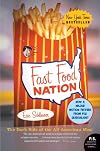
Oh, America. When will you wise up?
In 1998, the seed of Fast Food Nation appeared in Rolling Stone Magazine. Schlosser's expose has since been expanded to a book and then a movie, and still international love affair with fast food continues. The latest edition also contains an afterword addressing 'mad cow disease,' or bovine spongiform encephalopathy. In it, Schlosser accomplishes the almost Herculean task of weaving together the birth of the fast food industry, the growing connection with show more car and highway culture, the growth of kid-targeted marketing (McDonalds and Disney were early leaders), the developing connection between the industrialization of our food and family farmers (particularly chicken, potato and beef), the anti-union connection and the development of the engineered food product. I liked it more than I thought it would; expecting a didactic cardboard entree, I was provided with a seven-course meal.
He shows true journalistic roots by beginning sections with a human-interest angle, from the beginning with Carl Karcher (Carl's Jr.) and Richard McDonald, to the potato kingpin J.R. Simplot, to a Colorado rancher fighting to protect his ranch against enroaching suburbs, to a union representative fighting for safer conditions in slaughterhouses. If there was any weakness in the book, it would be the challenge in bridging the stories from the individual to the larger philosophical and systemic issue. I understand the human face helps a reader create meaning, but for me it occasionally felt contrived, particularly in the international settings.
For me, there was an especially powerful moment of revelation when Schlosser points out the drawback of dealing with corporations, not local owners:
"The nation's meatpacking firms, on the other hand, have proven themselves to be far less committed to remaining in a particular community. They have successfully pitted one economically depressed region against another, using the threat of plant closures and the promise of future investment to obtain lucrative government subsidies. No longer locally owned, they feel no allegiance to any one place."
Doesn't that just about sums up the state of industry in the U.S.? The only times a corporation can't cut and run is when it depends on a highly skilled workforce. It's one reason the "create jobs" political platforms make me a little crazy.
I found myself wishing this was required reading. It's not that I'm opposed to fast food; I'm opposed to a lack of informed choice. Full disclosure should include understanding some important points from Fast Food Nation:
1) Flavor experts are utilized to create the optimal taste combination that hits our salty-fat-sweet spot. Thus chicken pieces contain an average of 30 different ingredients, of which salt has been added in at least three different steps and an artificial strawberry shake contains over 28 ingredients (http://nutrition.mcdonalds.com/getnutrition/ingredientslist.pdf)
2) the industry has been key in fighting against food regulation and testing, even when known outbreaks of E.coli in school lunches have killed children
3) the burger is sourced from cattle feedlots, where 75% of the pre-cooked meat contained microbes normally found in fecal material
4) companies specifically target children so that they can manipulate their parents into taking them against parents' better judgement
5) potatoes and chicken come from marginalized farmers who are basically one step up from indentured workers, buying raw ingredients from the company and selling the 'grown' product back to them, and insulating the company against risks such as weather, crop failure or disease
6) companies target teens and non-English speakers as workers because they are less liable to demand 'rights' or 'living wages,' and still the company gets a tax break for 'training'
7) absolutely, positively, there is no way to eat healthily at McDonald's with the exception of: a side salad (no dressing), fruit and yogurt parfait (5.2 oz), grilled premium chicken classic sandwich, apple slices and egg whites. (http://nutrition.mcdonalds.com/getnutrition/nutritionfacts.pdf)
You may be healthy in spite of the food, but not because of the food.
Again, not saying I condone the choice--I have my once-a-year Shamrock shake, and an intermittent fry craving, proving just how great childhood marketing is and the lure of salty-sweet carb goodness. Less than 5 stars is because for me, the journalistic style over-reached, especially on the section on the German McDonald's, both in Eastern Germany and the one near Dachau as well as Gorbechev speaking at a Las Vegas convention of franchise owners. But overall, it was an excellent book, entertaining and insightful. Reading it gave voice to my intuitive feeling that there is something rotten in the system.
Cross posted at http://clsiewert.wordpress.com/2013/07/25/fast-food-nation-the-dark-side-of-the-... show less
In 1998, the seed of Fast Food Nation appeared in Rolling Stone Magazine. Schlosser's expose has since been expanded to a book and then a movie, and still international love affair with fast food continues. The latest edition also contains an afterword addressing 'mad cow disease,' or bovine spongiform encephalopathy. In it, Schlosser accomplishes the almost Herculean task of weaving together the birth of the fast food industry, the growing connection with show more car and highway culture, the growth of kid-targeted marketing (McDonalds and Disney were early leaders), the developing connection between the industrialization of our food and family farmers (particularly chicken, potato and beef), the anti-union connection and the development of the engineered food product. I liked it more than I thought it would; expecting a didactic cardboard entree, I was provided with a seven-course meal.
He shows true journalistic roots by beginning sections with a human-interest angle, from the beginning with Carl Karcher (Carl's Jr.) and Richard McDonald, to the potato kingpin J.R. Simplot, to a Colorado rancher fighting to protect his ranch against enroaching suburbs, to a union representative fighting for safer conditions in slaughterhouses. If there was any weakness in the book, it would be the challenge in bridging the stories from the individual to the larger philosophical and systemic issue. I understand the human face helps a reader create meaning, but for me it occasionally felt contrived, particularly in the international settings.
For me, there was an especially powerful moment of revelation when Schlosser points out the drawback of dealing with corporations, not local owners:
"The nation's meatpacking firms, on the other hand, have proven themselves to be far less committed to remaining in a particular community. They have successfully pitted one economically depressed region against another, using the threat of plant closures and the promise of future investment to obtain lucrative government subsidies. No longer locally owned, they feel no allegiance to any one place."
Doesn't that just about sums up the state of industry in the U.S.? The only times a corporation can't cut and run is when it depends on a highly skilled workforce. It's one reason the "create jobs" political platforms make me a little crazy.
I found myself wishing this was required reading. It's not that I'm opposed to fast food; I'm opposed to a lack of informed choice. Full disclosure should include understanding some important points from Fast Food Nation:
1) Flavor experts are utilized to create the optimal taste combination that hits our salty-fat-sweet spot. Thus chicken pieces contain an average of 30 different ingredients, of which salt has been added in at least three different steps and an artificial strawberry shake contains over 28 ingredients (http://nutrition.mcdonalds.com/getnutrition/ingredientslist.pdf)
2) the industry has been key in fighting against food regulation and testing, even when known outbreaks of E.coli in school lunches have killed children
3) the burger is sourced from cattle feedlots, where 75% of the pre-cooked meat contained microbes normally found in fecal material
4) companies specifically target children so that they can manipulate their parents into taking them against parents' better judgement
5) potatoes and chicken come from marginalized farmers who are basically one step up from indentured workers, buying raw ingredients from the company and selling the 'grown' product back to them, and insulating the company against risks such as weather, crop failure or disease
6) companies target teens and non-English speakers as workers because they are less liable to demand 'rights' or 'living wages,' and still the company gets a tax break for 'training'
7) absolutely, positively, there is no way to eat healthily at McDonald's with the exception of: a side salad (no dressing), fruit and yogurt parfait (5.2 oz), grilled premium chicken classic sandwich, apple slices and egg whites. (http://nutrition.mcdonalds.com/getnutrition/nutritionfacts.pdf)
You may be healthy in spite of the food, but not because of the food.
Again, not saying I condone the choice--I have my once-a-year Shamrock shake, and an intermittent fry craving, proving just how great childhood marketing is and the lure of salty-sweet carb goodness. Less than 5 stars is because for me, the journalistic style over-reached, especially on the section on the German McDonald's, both in Eastern Germany and the one near Dachau as well as Gorbechev speaking at a Las Vegas convention of franchise owners. But overall, it was an excellent book, entertaining and insightful. Reading it gave voice to my intuitive feeling that there is something rotten in the system.
Cross posted at http://clsiewert.wordpress.com/2013/07/25/fast-food-nation-the-dark-side-of-the-... show less
Lists
100 New Classics (1)
Unread books (1)
Awards


You May Also Like


Associated Authors
Statistics
- Works
- 15
- Also by
- 7
- Members
- 18,017
- Popularity
- #1,220
- Rating
- 3.9
- Reviews
- 282
- ISBNs
- 124
- Languages
- 15
- Favorited
- 10
