
Dan Baum (1956–2020)
Author of Nine Lives: Death and Life in New Orleans
About the Author
Dan Baum is a former reporter with the Wall Street Journal, Washington Post, Los Angeles Times, and The Nation. His book Smoke and Mirrors: The War on Drugs and the Politics of Failure is a well written, carefully documented, shocking expose of the U.S. government's ineffective, 30-year drug show more policy. Baum uses his journalism background to document with statistics on drug use and abuse the failure of anti-drug efforts since 1967. He believes that the switch from viewing drug abuse as a health problem to drug abuse as a moral problem has ultimately resulted in injustices, especially the loss of Fourth Amendment and Fifth Amendment constitutional protections. In tracing policies through the administrations of Nixon, Carter, Reagan, and Bush, Baum gives examples of how drug busts not only disenfranchise minorities but also provide police department funding. He is also the author of Citizen Coors: An American Dynasty and Nine Lives: Death and Life in New Orleans. (Bowker Author Biography) show less
Image credit: http://www.danbaum.com
Works by Dan Baum
Associated Works
Tagged
Common Knowledge
- Birthdate
- 1956-02-18
- Date of death
- 2020-10-08
- Gender
- male
- Occupations
- journalist
- Cause of death
- glioblastoma
- Nationality
- USA
- Places of residence
- Boulder, Colorado, USA
- Associated Place (for map)
- Colorado, USA
Members
Reviews
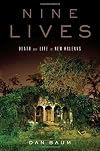
I was surprised how much I enjoyed this book. I read it simply because I wanted to read something about New Orleans, and frankly, my bar wasn’t set very high. It did look promising, but I wasn’t prepared for what a captivating narrative of New Orleans it turned out to be. The author’s approach—following multiple lives across a period of the city’s history (in this case, the four decades from Hurricane Betsy through Hurricane Katrina)—might easily have been gimmicky, and it show more certainly wasn’t. It might also have been pretty disjointed and ineffective, if the author didn’t have the skill and determination to be sure each of these lives was fully realized in the text. Fortunately, he did have those things. There are nine fleshed out lives on display here, but more than that, they work together to fill out an image of the city itself. The culture of New Orleans is portrayed with a depth I haven’t seen in many other depictions. The multiple threads converge as the city braces for, experiences, and then recovers from Katrina, and you can’t come away from it without a real sense of the devastation—cultural and social, as much as physical—wrought by the storm.
It’s quite an achievement. I had expected to enjoy it lightly and then move on. But honestly, I can’t tell you how tempted I am to go back to the beginning and read it again. show less
It’s quite an achievement. I had expected to enjoy it lightly and then move on. But honestly, I can’t tell you how tempted I am to go back to the beginning and read it again. show less
This is the best overview of New Orleans’s culture I’ve read. Following the lives of nine people makes it accessible without feeling forced. While I didn’t always like the subjects (in fact, two I downright hated), they were all extremely interesting. Starting with Hurricane Betsy is a key element that most New Orleans stories have been missing.
“What tripped me out, man, was every place we’d go, no matter how far, everybody knew me…I was connected, you feel me?” “Always been show more fucked-up here, man, but it’s home. Till you been someplace else, you don’t know.” – Anthony Wells show less
“What tripped me out, man, was every place we’d go, no matter how far, everybody knew me…I was connected, you feel me?” “Always been show more fucked-up here, man, but it’s home. Till you been someplace else, you don’t know.” – Anthony Wells show less
This nonfiction book about New Orleans and Katrina explores the subject through the view points of nine New Orleanians. It depicts their lives from Hurricane Betsy in 1965 through Katrina. Among the individuals with whom we become intimate: a streetcar track repairman, the transvestite owner of a bar and his ex-wife, a former Rex, King of Carnival, the wife of the most well-known Mardi Gras Indian, a cop, the New Orleans coronor, the bandmaster of one of New Orleans public schools famous show more marching bands, a criminal, a 9th ward woman seeking to better herself. Nine Lives does what City of Refuge did not do: it conveys what life was like in New Orleans pre-Katrina--how unique and varied it was, and why so many people would not live anywhere else in the world. For this it is well-worth the read.
I was particularly taken with some of the events disclosed by Frank Minyard the New Orleans coronor. He details the days of waiting in the makeshift morgue for the bodies of victims to be delivered. First the 82nd airborne volunteered to retrieve the bodies, but was denied authorization to do so by higher-ups. Then the National Guard volunteered. Same thing. Then the Louisiana State Patrol. Same story. When a representative of SCI, the largest funeral home operation in America, showed up, Minyard finally got it: 'Let me see if I've got this straight. Dead people rot on the streets of New Orleans for a week and a half so the feds can sign a private contract?' Minyard also refused to let officials take the easy way out and list the cause of death as 'drowning,' as the deaths were initially classified. 'A lot of these people died from heat exhaustion, dehydration, stress, from being without their medications--from neglect basically. They were abandoned out there.'
Nine Lives is skillfully written--no long lists here. While, as in the case of Minyard, each of the individuals discusses their Katrina experiences, Katrina and its aftermath is not the focus of this book. It is a deft exploration of why New Orleans matters. show less
I was particularly taken with some of the events disclosed by Frank Minyard the New Orleans coronor. He details the days of waiting in the makeshift morgue for the bodies of victims to be delivered. First the 82nd airborne volunteered to retrieve the bodies, but was denied authorization to do so by higher-ups. Then the National Guard volunteered. Same thing. Then the Louisiana State Patrol. Same story. When a representative of SCI, the largest funeral home operation in America, showed up, Minyard finally got it: 'Let me see if I've got this straight. Dead people rot on the streets of New Orleans for a week and a half so the feds can sign a private contract?' Minyard also refused to let officials take the easy way out and list the cause of death as 'drowning,' as the deaths were initially classified. 'A lot of these people died from heat exhaustion, dehydration, stress, from being without their medications--from neglect basically. They were abandoned out there.'
Nine Lives is skillfully written--no long lists here. While, as in the case of Minyard, each of the individuals discusses their Katrina experiences, Katrina and its aftermath is not the focus of this book. It is a deft exploration of why New Orleans matters. show less

New Orleans. There's no other city like it in the United States. It's southern, it's French, it's Spanish, it's African-American. It's the filé in the gumbo, the lait in the café, the feathers of the Mardi Gras Indians and the improvisation of a jazz ensemble.
And we nearly lost it. We nearly lost it all.
A lot of books have been written about Hurricane Katrina. I've read a bunch of them. This is one of the best, mostly because it's not merely about Katrina. After I came back from the Jazz show more and Heritage Festival in 2006, I wrote in my Live Journal: I picked up a book while I was there, Chris Rose's 1 Dead in Attic, a collection of his articles in the Times-Picayune. And in the eponymous article he writes about some homes in the Eighth Ward, where many of the Mardi Gras Indians live, and where they have "retrieved their tattered and muddy Indian suits and sequins and feathers and they have nailed them to the fronts of their houses." New Orleans has nailed its colors to its houses; it's not going without a fight.
This is Baum's effort to understand and explain, through the lives of nine New Orleanians, just what it is that makes people so devoted to this city, as poor and violent and corrupt as it was, just why they struggled (and still struggle) so hard to return and rebuild. He interviewed these folks (as well as friends, relatives and co-workers) for days, you feel that he knows them as well as he knows himself.
His interviewees are as varied as you'd expect: a high school band leader, a transsexual bar owner, the coroner of Orleans Parish, a single mom from the 'hood determined to have a better life, a millionaire king of carnival, the wife (later widow) of Big Chief Tootie Montana. Their lives are so different, and yet they intersect. Each in his or her own way has tried in their lives to make their city a better place. It hasn't always been easy. Wilbert Rawlins, Jr.'s devotion to his band kids, knowing that for many he's the only father, for some the only parent, that they know, nearly loses him the woman he loves. Billy Grace, Rex, King of Carnival, risks losing status to open up the krewes (those social organizations that drive Mardi Gras). Ronald Lewis fights for equal rights on the job, and starts a second-line club to "bring a little pride back" to the Lower Ninth. Setbacks don't stop them, so why should Katrina?
Rather than tell one person's story and then the next, Baum has told the stories in bits and pieces, chronologically, beginning in 1965, with Hurricane Betsy (described by Lewis as "a force of nature more powerful than his mom") and ending two years after Katrina. This structure gives the book such great force and drive that I finished it at about 1:00 in the morning, unwilling (unable, really) to stop reading. There's an incredible tension in reading the dates under each section, as we move closer and closer to that weekend in 2005.
When jazz great Irvin Mayfield was interviewed by NPR shortly after Katrina, he said "jazz is about taking what you have and making the best of it, and doing it with style". That's what these folks did with their lives, and are still doing to make New Orleans come alive again. show less
And we nearly lost it. We nearly lost it all.
A lot of books have been written about Hurricane Katrina. I've read a bunch of them. This is one of the best, mostly because it's not merely about Katrina. After I came back from the Jazz show more and Heritage Festival in 2006, I wrote in my Live Journal: I picked up a book while I was there, Chris Rose's 1 Dead in Attic, a collection of his articles in the Times-Picayune. And in the eponymous article he writes about some homes in the Eighth Ward, where many of the Mardi Gras Indians live, and where they have "retrieved their tattered and muddy Indian suits and sequins and feathers and they have nailed them to the fronts of their houses." New Orleans has nailed its colors to its houses; it's not going without a fight.
This is Baum's effort to understand and explain, through the lives of nine New Orleanians, just what it is that makes people so devoted to this city, as poor and violent and corrupt as it was, just why they struggled (and still struggle) so hard to return and rebuild. He interviewed these folks (as well as friends, relatives and co-workers) for days, you feel that he knows them as well as he knows himself.
His interviewees are as varied as you'd expect: a high school band leader, a transsexual bar owner, the coroner of Orleans Parish, a single mom from the 'hood determined to have a better life, a millionaire king of carnival, the wife (later widow) of Big Chief Tootie Montana. Their lives are so different, and yet they intersect. Each in his or her own way has tried in their lives to make their city a better place. It hasn't always been easy. Wilbert Rawlins, Jr.'s devotion to his band kids, knowing that for many he's the only father, for some the only parent, that they know, nearly loses him the woman he loves. Billy Grace, Rex, King of Carnival, risks losing status to open up the krewes (those social organizations that drive Mardi Gras). Ronald Lewis fights for equal rights on the job, and starts a second-line club to "bring a little pride back" to the Lower Ninth. Setbacks don't stop them, so why should Katrina?
Rather than tell one person's story and then the next, Baum has told the stories in bits and pieces, chronologically, beginning in 1965, with Hurricane Betsy (described by Lewis as "a force of nature more powerful than his mom") and ending two years after Katrina. This structure gives the book such great force and drive that I finished it at about 1:00 in the morning, unwilling (unable, really) to stop reading. There's an incredible tension in reading the dates under each section, as we move closer and closer to that weekend in 2005.
When jazz great Irvin Mayfield was interviewed by NPR shortly after Katrina, he said "jazz is about taking what you have and making the best of it, and doing it with style". That's what these folks did with their lives, and are still doing to make New Orleans come alive again. show less
Lists
Awards


You May Also Like


Associated Authors
Statistics
- Works
- 7
- Also by
- 1
- Members
- 831
- Popularity
- #30,723
- Rating
- 4.0
- Reviews
- 38
- ISBNs
- 20
- Languages
- 1