
Bryan Burrough
Author of Barbarians at the Gate: The Fall of RJR Nabisco
About the Author
Bryan Burrough was born in 1961 in Temple, Texas. Burrough is a New York Times best-selling author, special correspondent at Vanity Fair, and former Wall Street Journal reporter. Burrough graduated from the University of Missouri's School of Journalism in 1983. While in college, he was a reporter show more for the Columbia Missourian and interned at the Waco Tribune-Herald and the Wall Street Journal's Dallas Bureau. Burrough's bestselling book, Public Enemies: America's Greatest Crime Wave and the Birth of the F.B.I., 1933-34, is scheduled to be released as a movie in 2009. Burrough is a three-time winner of the prestigious Gerald Loeb Award for Excellence in Financial Journalism. He lives in Summit, New Jersey with his wife and their two sons. show less
Works by Bryan Burrough
Public Enemies: America's Greatest Crime Wave and the Birth of the FBI, 1933-34 (2004) 1,175 copies, 18 reviews
Days of Rage: America's Radical Underground, the FBI, and the Forgotten Age of Revolutionary Violence (2015) 525 copies, 10 reviews
The Miranda Obsession 2 copies
Associated Works
Tagged
Common Knowledge
- Canonical name
- Burrough, Bryan
- Birthdate
- 1961-08-13
- Gender
- male
- Education
- University of Missouri (BA|1983|Journalism)
- Occupations
- journalist
editor
author - Organizations
- The Wall Street Journal
Vanity Fair - Awards and honors
- Gerald Loeb Award for Distinguished Business and Financial Journalism (1989, 1991, 1994)
John Hancock Award for Excellence in Business and Financial Journalism (1987) - Nationality
- USA
- Birthplace
- Memphis, Tennessee, USA
- Places of residence
- Chatham, New Jersey, USA
Austin, Texas, USA
Summit, New Jersey, USA
Dallas, Texas, USA
Temple, Texas, USA - Associated Place (for map)
- USA
Members
Reviews
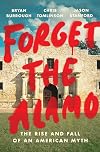
When Texas state leadership bans a book from being sold at the Bullock history museum, well, I figured it was worth checking out.
Did you know that only one country in history has written slavery into its constitution, along with explicit prohibitions against any kind of emancipation? That was the constitution of the Republic of Texas.
At the time, the TX economy was based on cotton. For cotton to be profitable, you needed slaves. Yet the Mexican constitution enshrined the liberties of all men show more regardless of skin color. Forget the Alamo starts from that premise, and then explains how the battle at the Alamo itself was a total military disaster. Bowie, Travis and Crockett knew Santa Ana was coming, but held out for too long hoping for reinforcements.
What’s more interesting is the book’s description of the cultural gaslighting that has turned the Alamo story into the Heroic Anglo Narrative, and how figures such as Walt Disney, John Wayne, and LBJ played a role in that. A fascinating read, at least if you don’t hold that narrative too close to your heart. show less
Did you know that only one country in history has written slavery into its constitution, along with explicit prohibitions against any kind of emancipation? That was the constitution of the Republic of Texas.
At the time, the TX economy was based on cotton. For cotton to be profitable, you needed slaves. Yet the Mexican constitution enshrined the liberties of all men show more regardless of skin color. Forget the Alamo starts from that premise, and then explains how the battle at the Alamo itself was a total military disaster. Bowie, Travis and Crockett knew Santa Ana was coming, but held out for too long hoping for reinforcements.
What’s more interesting is the book’s description of the cultural gaslighting that has turned the Alamo story into the Heroic Anglo Narrative, and how figures such as Walt Disney, John Wayne, and LBJ played a role in that. A fascinating read, at least if you don’t hold that narrative too close to your heart. show less
Although I have just read Forget the Alamo from cover to cover, the book is going back into my “to be read” stack because I intend to re-read it, notwithstanding all the other new books that are continuously calling. I usually rate a book on the extent to which it warrants the expenditure of the hours remaining in one's finite lifespan that have been devoted to it. Forget the Alamo warrants not only the hours spent during the first reading; it is worth the time required for a second show more reading as well.
Only the fact that the book had a triumvirate of authors initially gave me pause. Others by even two co-authors have proven uneven in writing quality and plagued with an unpredictable “voice.” Not so this one! The text is uniformly smooth and engaging. In matters of vocabulary, syntax, and grammatical construction, Forget the Alamo is flawless. The reader also finds a smattering of humor artfully hidden within the pages, a bit of tongue-in-cheek here, a touch of intentional hyperbole there, maybe even some flirtatious litotes peeking from its linguistic hiding place. No, this is not a book of humor—it is a serious historiography—but the authors' skills at wordcraft make the factual content entertaining and a delight to read.
Okay, so the book is extraordinarily well written, but what of its content? First of all, it goes well beyond what is suggested by the title. I just finished an atrocious excuse of a book entitled The Mexican-American War, part of a “Captivating History” series, and I learned far more about the prelude to that conflict in Forget the Alamo. More significantly, the book goes a long way in correcting popular misapprehensions of Texians' revolt against Mexico, of the nature of General Antonio Lόpez de Santa Anna, and of the characters of Davy Crockett, Jim Bowie, and William Barrett Travis. Far too many people not only in Texas and the rest of the United States but also, indeed, in the rest of the English-speaking world know about these historical events and people from television and movie actors Fess Parker and John Wayne, not to mention the theme songs that accompanied their antics on both the small and the big screens. Were they entertaining? Yes. Were they memorable? Unfortunately, yes. Were they essentially accurate? By no means.
Forget the Alamo will help those of us who went through the Texas public school system correct a host of misapprehensions, but we are not the only ones who can profit from the book. Anyone anywhere in the world who can hum the theme song of the “Davy Crockett” television show or the music from John Wayne's Alamo movie remains in real danger of confusing or, worse, conflating, fiction and reality. Burrough's, Tomlinson's, and Stanford's book may be an unprecedented opportunity to correct one's misunderstanding of a rather significant event not just in Texas history but in that of the entire United States and of Mexico. This is a chance to amend the Heroic Anglo Narrative propaganda that we were all fed not only by the entertainment industry but also by the indoctrination machine of the Texas state government, a well-oiled machine that continues to spew the traditional narrative even in the year 2022.
Be sure not to miss the delightful history and internal power struggles of the DRT (Daughters of the Republic of Texas) as you read the book. That topic alone is worth the purchase price. Then there is the history of Juan Seguin (of whom I had not known before), the participation of many Tejanos (for reasons other than those of the Texians—and no, that word is not misspelled), the causative influence of cotton and slavery and Anglo American land grabs on the Texians' revolt, and the long-standing and yet on-going insult to the Tāp Pīlam Coahuiltecan Nation, whose ancestors' bones lie under and around the Alamo and are trodden daily by tourists' feet and driven over by countless vehicles. By the way, did you know that the building popularly called the “Alamo” is only the church portion of the original Mission San Antonio de Valero, and, John Wayne's movie notwithstanding, the fighting actually occurred at the Long Barrack, a separate building? This little list is only a taste of the historical realities tantalizingly inhabiting this book. I haven't even bothered to mention Travis's sexual conquests and syphilis or Bowie's and Fannin's illegal slave trade.
The only part of the book that may be misleading is its title. Never do the authors encourage their readers to “forget the Alamo.” They want only for us to forget the ridiculous mythology and the “Heroic Anglo Narrative” perpetrated by the entertainment industry, by poorly researched history books (including public school textbooks), and by politicians pandering to ill-informed voters. To replace that, they offer us an accurate, yet still fascinating, history of illegal aliens (i.e., Anglos from the United States) infiltrating the territory of another nation, of flaunting that nation's laws against slavery, and of trying that nation's patience until armed conflict becomes the result. After that, they tell us of the bungled attempts—still on-going—of both government and private organizations to use a battle site for propaganda and for profit. It's all an intriguing slice of history not to be missed. show less
Only the fact that the book had a triumvirate of authors initially gave me pause. Others by even two co-authors have proven uneven in writing quality and plagued with an unpredictable “voice.” Not so this one! The text is uniformly smooth and engaging. In matters of vocabulary, syntax, and grammatical construction, Forget the Alamo is flawless. The reader also finds a smattering of humor artfully hidden within the pages, a bit of tongue-in-cheek here, a touch of intentional hyperbole there, maybe even some flirtatious litotes peeking from its linguistic hiding place. No, this is not a book of humor—it is a serious historiography—but the authors' skills at wordcraft make the factual content entertaining and a delight to read.
Okay, so the book is extraordinarily well written, but what of its content? First of all, it goes well beyond what is suggested by the title. I just finished an atrocious excuse of a book entitled The Mexican-American War, part of a “Captivating History” series, and I learned far more about the prelude to that conflict in Forget the Alamo. More significantly, the book goes a long way in correcting popular misapprehensions of Texians' revolt against Mexico, of the nature of General Antonio Lόpez de Santa Anna, and of the characters of Davy Crockett, Jim Bowie, and William Barrett Travis. Far too many people not only in Texas and the rest of the United States but also, indeed, in the rest of the English-speaking world know about these historical events and people from television and movie actors Fess Parker and John Wayne, not to mention the theme songs that accompanied their antics on both the small and the big screens. Were they entertaining? Yes. Were they memorable? Unfortunately, yes. Were they essentially accurate? By no means.
Forget the Alamo will help those of us who went through the Texas public school system correct a host of misapprehensions, but we are not the only ones who can profit from the book. Anyone anywhere in the world who can hum the theme song of the “Davy Crockett” television show or the music from John Wayne's Alamo movie remains in real danger of confusing or, worse, conflating, fiction and reality. Burrough's, Tomlinson's, and Stanford's book may be an unprecedented opportunity to correct one's misunderstanding of a rather significant event not just in Texas history but in that of the entire United States and of Mexico. This is a chance to amend the Heroic Anglo Narrative propaganda that we were all fed not only by the entertainment industry but also by the indoctrination machine of the Texas state government, a well-oiled machine that continues to spew the traditional narrative even in the year 2022.
Be sure not to miss the delightful history and internal power struggles of the DRT (Daughters of the Republic of Texas) as you read the book. That topic alone is worth the purchase price. Then there is the history of Juan Seguin (of whom I had not known before), the participation of many Tejanos (for reasons other than those of the Texians—and no, that word is not misspelled), the causative influence of cotton and slavery and Anglo American land grabs on the Texians' revolt, and the long-standing and yet on-going insult to the Tāp Pīlam Coahuiltecan Nation, whose ancestors' bones lie under and around the Alamo and are trodden daily by tourists' feet and driven over by countless vehicles. By the way, did you know that the building popularly called the “Alamo” is only the church portion of the original Mission San Antonio de Valero, and, John Wayne's movie notwithstanding, the fighting actually occurred at the Long Barrack, a separate building? This little list is only a taste of the historical realities tantalizingly inhabiting this book. I haven't even bothered to mention Travis's sexual conquests and syphilis or Bowie's and Fannin's illegal slave trade.
The only part of the book that may be misleading is its title. Never do the authors encourage their readers to “forget the Alamo.” They want only for us to forget the ridiculous mythology and the “Heroic Anglo Narrative” perpetrated by the entertainment industry, by poorly researched history books (including public school textbooks), and by politicians pandering to ill-informed voters. To replace that, they offer us an accurate, yet still fascinating, history of illegal aliens (i.e., Anglos from the United States) infiltrating the territory of another nation, of flaunting that nation's laws against slavery, and of trying that nation's patience until armed conflict becomes the result. After that, they tell us of the bungled attempts—still on-going—of both government and private organizations to use a battle site for propaganda and for profit. It's all an intriguing slice of history not to be missed. show less
My Texan / Mexico credentials: (1) fourth-generation Texan, (2) third-generation Houstonian, (3) first boyfriend, Mexican, (4) long-time resident of Austin, (5) short-time resident of Galveston, and Laredo at the border, (6) two years in Mexico, and (7) last but not least, rode a mule past the Alamo in a trail ride parade.
Oh, and on the way to our cousins, we kids would gauge the time by watching the San Jacinto monument move slowly by in the distance.
So this story was all over my stomping show more grounds.
My seventh-grade Texas history class was in the ancient past and long-forgotten, so I started this book fresh and eager to learn. And it was amazing! The hero myth is so stilted compared to the larger, all-encompassing story about real people, which is always more interesting. Heroes can be such one-dimensional, cardboard characters. But these "heroes" became more interesting as their flaws were revealed -- and they had some major flaws!
Thank you to these authors who brought Texas history alive, and to Dan Patrick, the Texas Lieutenant Governor, who canceled the book presentation in Austin, causing a spike in book sales which included my purchase. show less
Oh, and on the way to our cousins, we kids would gauge the time by watching the San Jacinto monument move slowly by in the distance.
So this story was all over my stomping show more grounds.
My seventh-grade Texas history class was in the ancient past and long-forgotten, so I started this book fresh and eager to learn. And it was amazing! The hero myth is so stilted compared to the larger, all-encompassing story about real people, which is always more interesting. Heroes can be such one-dimensional, cardboard characters. But these "heroes" became more interesting as their flaws were revealed -- and they had some major flaws!
Thank you to these authors who brought Texas history alive, and to Dan Patrick, the Texas Lieutenant Governor, who canceled the book presentation in Austin, causing a spike in book sales which included my purchase. show less
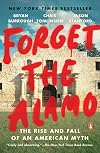
The Battle of the Alamo, taking place in 1836 during the Texan Revolution, has long been portrayed as “brave Texans fighting for their freedom against an oppressive Mexican government.” In this historiography, three Texan authors seek to separate fact from legend. The first part of the book examines the events that led to the revolt, clearly showing slavery, and not freedom, as the revolt’s true cause. Put simply, the Mexican government wanted to outlaw the practice, while the American show more settlers in the territory, with cotton being the region’s primary cash crop, needed slaves if they were to remain profitable.
The myth that made Jim Bowie, William Travis, and Davy Crockett heroes to generations of American schoolchildren is also exposed as fraudulent. Their life histories suggest individuals none of us would want our daughters to marry. The second half of the book, and the most interesting, deals with how later historians, government officials, and prominent individuals used the Alamo’s battle to support their own political agendas. A number of names stand out, including John Wayne, numerous presidential candidates, and Phil Collins, a collector who thought he was accumulating objects from the battle despite little evidence to support their providence.
Forget the Alamo, using wry humor, presents a wealth of evidence to upset the apple cart of the heroic Anglo narrative surrounding the battle and the Texans’ rebellion. Unfortunately, in today’s contentious times, the authors’ conclusions, though supported by a wealth of evidence, are still being dismissed by the far Right, in support of American Exceptionalism. This historiography provides facts that are hard to deny, but unfortunately in today’s political landscape, the battle of the Alamo remains a narrative still being mythologized centuries on. show less
The myth that made Jim Bowie, William Travis, and Davy Crockett heroes to generations of American schoolchildren is also exposed as fraudulent. Their life histories suggest individuals none of us would want our daughters to marry. The second half of the book, and the most interesting, deals with how later historians, government officials, and prominent individuals used the Alamo’s battle to support their own political agendas. A number of names stand out, including John Wayne, numerous presidential candidates, and Phil Collins, a collector who thought he was accumulating objects from the battle despite little evidence to support their providence.
Forget the Alamo, using wry humor, presents a wealth of evidence to upset the apple cart of the heroic Anglo narrative surrounding the battle and the Texans’ rebellion. Unfortunately, in today’s contentious times, the authors’ conclusions, though supported by a wealth of evidence, are still being dismissed by the far Right, in support of American Exceptionalism. This historiography provides facts that are hard to deny, but unfortunately in today’s political landscape, the battle of the Alamo remains a narrative still being mythologized centuries on. show less
Lists
Awards


You May Also Like


Associated Authors
Statistics
- Works
- 14
- Also by
- 3
- Members
- 5,632
- Popularity
- #4,401
- Rating
- 3.9
- Reviews
- 103
- ISBNs
- 97
- Languages
- 6
- Favorited
- 2