
Daniel Yergin
Author of The Prize: The Epic Quest for Oil, Money, and Power [1992 TV miniseries]
About the Author
Daniel Yergin was born in Los Angeles on February 6, 1947. He received a B. A. from Yale University in 1968 and an M. A. and Ph. D. from Cambridge University. Yergin is the chairman of Cambridge Energy Research Associates, the vice chairman of the Global Decisions Group and has chaired the U. S. show more Department of Energy Task Force on the future of energy research. He is the author of The Prize: The Epic Quest for Oil, Money and Power, which won the 1992 Pulitzer Prize for General Nonfiction and was made into a PBS/BBC series. His other published works include Shattered Peace: The Origins of the Cold War and the National Security State, The U.S. Strategic Petroleum Reserve, and The Quest: Energy, Security, and the Remaking of the Modern World. (Bowker Author Biography) show less
Series
Works by Daniel Yergin
The Prize: The Epic Quest for Oil, Money, and Power [1992 TV miniseries] (1991) — Original book — 2,561 copies, 28 reviews
Shattered Peace: The Origins of the Cold War and the National Security State (1099) — Author — 88 copies
Нова карта світу 1 copy
Petrol — Author — 1 copy
La historia del petróleo 1 copy
Tagged
Common Knowledge
- Birthdate
- 1946-02-07
- Gender
- male
- Education
- University of Cambridge (PhD|International Relations|1974)
Yale College (AB|1968) - Organizations
- Cambridge Energy Research Associates
- Agent
- Suzanne Gluck
- Nationality
- USA
- Birthplace
- Los Angeles, California, USA
- Places of residence
- Los Angeles, California, USA
New Haven, Connecticut, USA
Cambridge, England, UK - Map Location
- USA
Members
Reviews
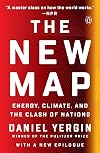
I've read two of Daniel Yergin's previous books about oil and the global energy system: [b:The Prize: The Epic Quest for Oil, Money, and Power|169354|The Prize The Epic Quest for Oil, Money, and Power|Daniel Yergin|https://i.gr-assets.com/images/S/compressed.photo.goodreads.com/books/1403025725l/169354._SY75_.jpg|163531] and [b:The Quest: Energy, Security, and the Remaking of the Modern World|11447065|The Quest Energy, Security, and the Remaking of the Modern World|Daniel show more Yergin|https://i.gr-assets.com/images/S/compressed.photo.goodreads.com/books/1311282459l/11447065._SY75_.jpg|16380870]. When I saw [b:The New Map: Energy, Climate, and the Clash of Nations|51122895|The New Map Energy, Climate, and the Clash of Nations|Daniel Yergin|https://i.gr-assets.com/images/S/compressed.photo.goodreads.com/books/1599570352l/51122895._SY75_.jpg|75916740] among the library's recent acquisitions, I naturally wanted to read the most recent instalment. Yergin has a highly readable journalistic writing style that creates exciting narratives out of what could be dry geological and/or geopolitical analysis. He is very good at clear explanation and straightforward synthesis. However, this journalistic style also frequently involves personalising technological changes and political trends into a single Pioneering Man, which can get wearing. When that man was Elon Musk I became downright annoyed.
While I've found all three books in Yergin's energy trilogy compelling and learned a great deal from them, the latter two have notable limitations. [b:The Prize: The Epic Quest for Oil, Money, and Power|169354|The Prize The Epic Quest for Oil, Money, and Power|Daniel Yergin|https://i.gr-assets.com/images/S/compressed.photo.goodreads.com/books/1403025725l/169354._SY75_.jpg|163531] is a narrative history of the oil industry and works really well as such. [b:The Quest: Energy, Security, and the Remaking of the Modern World|11447065|The Quest Energy, Security, and the Remaking of the Modern World|Daniel Yergin|https://i.gr-assets.com/images/S/compressed.photo.goodreads.com/books/1311282459l/11447065._SY75_.jpg|16380870] and [b:The New Map: Energy, Climate, and the Clash of Nations|51122895|The New Map Energy, Climate, and the Clash of Nations|Daniel Yergin|https://i.gr-assets.com/images/S/compressed.photo.goodreads.com/books/1599570352l/51122895._SY75_.jpg|75916740] analyse contemporary energy policy and the geopolitics of oil thoroughly, but from a distinctly American perspective. I find Yergin's areas of emphasis interesting, revealing, and frustrating in about equal measure. I didn't really comment on this in my brief 2014 review of [b:The Quest: Energy, Security, and the Remaking of the Modern World|11447065|The Quest Energy, Security, and the Remaking of the Modern World|Daniel Yergin|https://i.gr-assets.com/images/S/compressed.photo.goodreads.com/books/1311282459l/11447065._SY75_.jpg|16380870], but can see it in retrospect. This doesn't detract from the value of all three books; they should be read with other commentary so I will offer some recommendations.
[b:The New Map: Energy, Climate, and the Clash of Nations|51122895|The New Map Energy, Climate, and the Clash of Nations|Daniel Yergin|https://i.gr-assets.com/images/S/compressed.photo.goodreads.com/books/1599570352l/51122895._SY75_.jpg|75916740] is structured around geographical and thematic maps: of Russia, China, the US, the Middle East, mobility, and decarbonisation. It was published recently enough to comment upon the pandemic, which threw energy markets into chaos just as it did everything else. The initial chapters taught me much more about the technical and economic sides of fracking than I previously knew. I hadn't realised the extent to which it transformed the US energy mix. Yergin is dismissive both of the environmental impact of fracking (he briefly states it is less polluting than it used to be) and opposition to it. The former is interesting from a UK perspective - fracking completely failed to take off here, despite Tory governments loving the idea in principle. The latter dismissiveness is focused on pipeline protests, which he frames as pointless because there is already an extensive pipeline network. Yet he inadvertently explains their purpose elsewhere, by explaining infrastructural path dependency. Oil and gas pipelines last for many decades; they cannot readily be repurposed to carry hydrogen. Why build more of them when we need to reduce our fossil fuel consumption as fast as possible? Investing in one more oil or gas pipeline is a refusal to accept the urgent need for decarbonisation.
The geographical sections on China, Russia, and the Middle East are thought-provoking. The chapters on Russia provided some useful context for the Ukraine conflict currently in the news, which is being largely blamed for spiking European energy prices. In the UK, successive government's shameful abrogation of responsibility for energy policy has combined with regional gas shortages to create a rise of more than 50% in average energy bills in two months time. Vulnerable people will undoubtedly die as a result of this. Learning more of the geopolitical context certainly doesn't make the national situation any less enraging. The accounts of recent developments in the Middle East are helpfully wide-ranging. Yergin's commentary on China struck me as more speculative. It provides a helpful insight into how America views China's energy policy and military priorities, though.
The final two thematic sections weren't as directly enlightening for me, as they covered topics I've already read quite a bit about. Their inclusion and tone are both striking nonetheless. The first covers mobility and acknowledges two important things: first, that the system of automobility is extremely energy-intensive and that needs to change if we are to decarbonise. Second, that transport systems predicated upon private car ownership are facing potentially destabilising forces for the first time in fifty years. Neither of these points have been readily acknowledged in energy policy until the last decade, so that's encouraging. Yergin structures his mobility section around technologies: electric cars (featuring the inevitable Elon Musk), autonomous vehicles, ride hailing apps, and (briefly) mobility as a service. I have a lot of my own opinions about these, many of which went into my PhD thesis. Rather than recapitulating that, I will add some further reading suggestions.
New mobility technologies cannot readily be analysed without consideration of behavioural change (which Yergin does acknowledge) or surveillance capitalism (which he doesn't). On the former, I recommend [b:Peak Car: The Future of Travel|22522002|Peak Car The Future of Travel|David Metz|https://i.gr-assets.com/images/S/compressed.photo.goodreads.com/books/1403040308l/22522002._SX50_.jpg|41969212] and on the latter, [b:The Age of Surveillance Capitalism: The Fight for a Human Future at the New Frontier of Power|26195941|The Age of Surveillance Capitalism The Fight for a Human Future at the New Frontier of Power|Shoshana Zuboff|https://i.gr-assets.com/images/S/compressed.photo.goodreads.com/books/1521733914l/26195941._SY75_.jpg|46170685]. For a wider critique of automobility as a system, [b:Mobility Justice: The Politics of Movement in an Age of Extremes|42401539|Mobility Justice The Politics of Movement in an Age of Extremes|Mimi Sheller|https://i.gr-assets.com/images/S/compressed.photo.goodreads.com/books/1540061522l/42401539._SY75_.jpg|66086573] (2018) is really good and builds upon [b:Mobilities|4260885|Mobilities|John Urry|https://i.gr-assets.com/images/S/compressed.photo.goodreads.com/books/1388808082l/4260885._SX50_.jpg|4308347] (2007).
Given its brevity, there are some important areas that Yergin's mobility section can't go into. These include the implications for infrastructure of a transition to electric vehicles (although I liked his comments on limited availability of minerals needed for batteries). Also Uber's bonkers business plan of somehow bankrupting all public transport and then replacing it with their app before investors notice that they've never made any profit. And that autonomous cars would not solve an extant transport problem so much as extend the realm of surveillance capitalism. Anyway, for a long while the transport sector was assumed to be locked into oil dependent individual automobility and thus largely ignored in energy transition literature. At least there is a lot more discussion now, albeit still very much centred upon technological determinism.
The book concludes with a section on the route to zero carbon. The tone and presentation of this are fascinating and I'm honestly torn about how to react. Yergin treats the Paris Agreement and requirement to radically reduce carbon emissions as a fait accompli, something that must simply be assumed. On the one hand, that is a fantastic advance on vague and mealy-mouthed talk of sustainability, clean coal, incrementally reducing energy intensity, etc that amounted to denial and changed nothing. If we take Yergin at face value, oil companies and oil-exporting countries have accepted that fossil fuels are on their way out and are investing in a transition to renewables and hydrogen. He presents decarbonisation as very challenging, yet inevitable.
On the other hand, there is not the slightest acknowledgement of WHY we might want to avert 2 degrees of global warming. Sure it's expensive, but this is the survival of the human species we're talking about! Plenty of other books cover this, to be fair, but neither does Yergin mention the many decades that oil companies spent actively preventing policy action to address climate change. Here are two books about this which I haven't read yet because they'll make me so angry that I won't be able to function: [b:Losing Earth: A Recent History|41940347|Losing Earth A Recent History|Nathaniel Rich|https://i.gr-assets.com/images/S/compressed.photo.goodreads.com/books/1555104282l/41940347._SY75_.jpg|65424935] and [b:The Discovery of Global Warming|78687|The Discovery of Global Warming|Spencer R. Weart|https://i.gr-assets.com/images/S/compressed.photo.goodreads.com/books/1388356090l/78687._SY75_.jpg|75979]. For more general climate change reading I recommend: [b:This Is Not A Drill: An Extinction Rebellion Handbook|45308227|This Is Not A Drill An Extinction Rebellion Handbook|Extinction Rebellion|https://i.gr-assets.com/images/S/compressed.photo.goodreads.com/books/1559314992l/45308227._SY75_.jpg|70036425], [b:The Memory We Could Be: Overcoming Fear to Create Our Ecological Future|39027959|The Memory We Could Be Overcoming Fear to Create Our Ecological Future|Daniel Macmillen Voskoboynik|https://i.gr-assets.com/images/S/compressed.photo.goodreads.com/books/1529524242l/39027959._SX50_.jpg|60591961], [b:The Shock of the Anthropocene: The Earth, History and Us|25387295|The Shock of the Anthropocene The Earth, History and Us|Christophe Bonneuil|https://i.gr-assets.com/images/S/compressed.photo.goodreads.com/books/1443545959l/25387295._SY75_.jpg|45137920], [b:The Great Derangement: Climate Change and the Unthinkable|29362082|The Great Derangement Climate Change and the Unthinkable|Amitav Ghosh|https://i.gr-assets.com/images/S/compressed.photo.goodreads.com/books/1625688572l/29362082._SY75_.jpg|49607520], and [b:Fossil Capital: The Rise of Steam Power and the Roots of Global Warming|25614450|Fossil Capital The Rise of Steam Power and the Roots of Global Warming|Andreas Malm|https://i.gr-assets.com/images/S/compressed.photo.goodreads.com/books/1449996772l/25614450._SY75_.jpg|44301257].
Discussing the route to zero carbon in this partial, ahistorical manner struck me as naive to the point of delusional. As I understand it, petrochemical companies' whole business model is based on letting climate change rip. They have made trillions digging up hydrocarbons and selling them. How can we possibly see them as the solution rather than the problem? And that's without getting into neoliberal capitalism's growth imperatives more generally. It could be cautiously encouraging that an oil expert and well-known energy commentator like Yergin takes decarbonisation for granted and doesn't think it worth mentioning why climate change is bad because everyone already knows. Yet this section discussed the economic costs and employment challenges of moving away from fossil fuels without balancing this with the existential cost of continuing to burn them. Neither did it consider whether a looming catastrophe caused by economic growth and technological change in a capitalist system could be fixed by more economic growth and more technology in the same system. This is sometimes indirectly touched upon, though, in comments like this:
Note the use of 'conventional' there. Notwithstanding all my critique, Yergin is an astute analyst of global energy economics and policy and I gained a better understanding of current energy markets and energy geopolitics from [b:The New Map: Energy, Climate, and the Clash of Nations|51122895|The New Map Energy, Climate, and the Clash of Nations|Daniel Yergin|https://i.gr-assets.com/images/S/compressed.photo.goodreads.com/books/1599570352l/51122895._SY75_.jpg|75916740]. He isn't writing from an environmentalist perspective because, fundamentally, the energy sector has had a reckless disregard for the environment from its very inception. For me, the final section of the book was less interesting for what it said than how it said it. Perhaps there is no mention of climate catastrophe because this would create jarring cognitive dissonance with the earlier chapters? I still felt that dissonance between where we are and where we need to be, and it was alarming. show less
While I've found all three books in Yergin's energy trilogy compelling and learned a great deal from them, the latter two have notable limitations. [b:The Prize: The Epic Quest for Oil, Money, and Power|169354|The Prize The Epic Quest for Oil, Money, and Power|Daniel Yergin|https://i.gr-assets.com/images/S/compressed.photo.goodreads.com/books/1403025725l/169354._SY75_.jpg|163531] is a narrative history of the oil industry and works really well as such. [b:The Quest: Energy, Security, and the Remaking of the Modern World|11447065|The Quest Energy, Security, and the Remaking of the Modern World|Daniel Yergin|https://i.gr-assets.com/images/S/compressed.photo.goodreads.com/books/1311282459l/11447065._SY75_.jpg|16380870] and [b:The New Map: Energy, Climate, and the Clash of Nations|51122895|The New Map Energy, Climate, and the Clash of Nations|Daniel Yergin|https://i.gr-assets.com/images/S/compressed.photo.goodreads.com/books/1599570352l/51122895._SY75_.jpg|75916740] analyse contemporary energy policy and the geopolitics of oil thoroughly, but from a distinctly American perspective. I find Yergin's areas of emphasis interesting, revealing, and frustrating in about equal measure. I didn't really comment on this in my brief 2014 review of [b:The Quest: Energy, Security, and the Remaking of the Modern World|11447065|The Quest Energy, Security, and the Remaking of the Modern World|Daniel Yergin|https://i.gr-assets.com/images/S/compressed.photo.goodreads.com/books/1311282459l/11447065._SY75_.jpg|16380870], but can see it in retrospect. This doesn't detract from the value of all three books; they should be read with other commentary so I will offer some recommendations.
[b:The New Map: Energy, Climate, and the Clash of Nations|51122895|The New Map Energy, Climate, and the Clash of Nations|Daniel Yergin|https://i.gr-assets.com/images/S/compressed.photo.goodreads.com/books/1599570352l/51122895._SY75_.jpg|75916740] is structured around geographical and thematic maps: of Russia, China, the US, the Middle East, mobility, and decarbonisation. It was published recently enough to comment upon the pandemic, which threw energy markets into chaos just as it did everything else. The initial chapters taught me much more about the technical and economic sides of fracking than I previously knew. I hadn't realised the extent to which it transformed the US energy mix. Yergin is dismissive both of the environmental impact of fracking (he briefly states it is less polluting than it used to be) and opposition to it. The former is interesting from a UK perspective - fracking completely failed to take off here, despite Tory governments loving the idea in principle. The latter dismissiveness is focused on pipeline protests, which he frames as pointless because there is already an extensive pipeline network. Yet he inadvertently explains their purpose elsewhere, by explaining infrastructural path dependency. Oil and gas pipelines last for many decades; they cannot readily be repurposed to carry hydrogen. Why build more of them when we need to reduce our fossil fuel consumption as fast as possible? Investing in one more oil or gas pipeline is a refusal to accept the urgent need for decarbonisation.
The geographical sections on China, Russia, and the Middle East are thought-provoking. The chapters on Russia provided some useful context for the Ukraine conflict currently in the news, which is being largely blamed for spiking European energy prices. In the UK, successive government's shameful abrogation of responsibility for energy policy has combined with regional gas shortages to create a rise of more than 50% in average energy bills in two months time. Vulnerable people will undoubtedly die as a result of this. Learning more of the geopolitical context certainly doesn't make the national situation any less enraging. The accounts of recent developments in the Middle East are helpfully wide-ranging. Yergin's commentary on China struck me as more speculative. It provides a helpful insight into how America views China's energy policy and military priorities, though.
The final two thematic sections weren't as directly enlightening for me, as they covered topics I've already read quite a bit about. Their inclusion and tone are both striking nonetheless. The first covers mobility and acknowledges two important things: first, that the system of automobility is extremely energy-intensive and that needs to change if we are to decarbonise. Second, that transport systems predicated upon private car ownership are facing potentially destabilising forces for the first time in fifty years. Neither of these points have been readily acknowledged in energy policy until the last decade, so that's encouraging. Yergin structures his mobility section around technologies: electric cars (featuring the inevitable Elon Musk), autonomous vehicles, ride hailing apps, and (briefly) mobility as a service. I have a lot of my own opinions about these, many of which went into my PhD thesis. Rather than recapitulating that, I will add some further reading suggestions.
New mobility technologies cannot readily be analysed without consideration of behavioural change (which Yergin does acknowledge) or surveillance capitalism (which he doesn't). On the former, I recommend [b:Peak Car: The Future of Travel|22522002|Peak Car The Future of Travel|David Metz|https://i.gr-assets.com/images/S/compressed.photo.goodreads.com/books/1403040308l/22522002._SX50_.jpg|41969212] and on the latter, [b:The Age of Surveillance Capitalism: The Fight for a Human Future at the New Frontier of Power|26195941|The Age of Surveillance Capitalism The Fight for a Human Future at the New Frontier of Power|Shoshana Zuboff|https://i.gr-assets.com/images/S/compressed.photo.goodreads.com/books/1521733914l/26195941._SY75_.jpg|46170685]. For a wider critique of automobility as a system, [b:Mobility Justice: The Politics of Movement in an Age of Extremes|42401539|Mobility Justice The Politics of Movement in an Age of Extremes|Mimi Sheller|https://i.gr-assets.com/images/S/compressed.photo.goodreads.com/books/1540061522l/42401539._SY75_.jpg|66086573] (2018) is really good and builds upon [b:Mobilities|4260885|Mobilities|John Urry|https://i.gr-assets.com/images/S/compressed.photo.goodreads.com/books/1388808082l/4260885._SX50_.jpg|4308347] (2007).
Given its brevity, there are some important areas that Yergin's mobility section can't go into. These include the implications for infrastructure of a transition to electric vehicles (although I liked his comments on limited availability of minerals needed for batteries). Also Uber's bonkers business plan of somehow bankrupting all public transport and then replacing it with their app before investors notice that they've never made any profit. And that autonomous cars would not solve an extant transport problem so much as extend the realm of surveillance capitalism. Anyway, for a long while the transport sector was assumed to be locked into oil dependent individual automobility and thus largely ignored in energy transition literature. At least there is a lot more discussion now, albeit still very much centred upon technological determinism.
The book concludes with a section on the route to zero carbon. The tone and presentation of this are fascinating and I'm honestly torn about how to react. Yergin treats the Paris Agreement and requirement to radically reduce carbon emissions as a fait accompli, something that must simply be assumed. On the one hand, that is a fantastic advance on vague and mealy-mouthed talk of sustainability, clean coal, incrementally reducing energy intensity, etc that amounted to denial and changed nothing. If we take Yergin at face value, oil companies and oil-exporting countries have accepted that fossil fuels are on their way out and are investing in a transition to renewables and hydrogen. He presents decarbonisation as very challenging, yet inevitable.
On the other hand, there is not the slightest acknowledgement of WHY we might want to avert 2 degrees of global warming. Sure it's expensive, but this is the survival of the human species we're talking about! Plenty of other books cover this, to be fair, but neither does Yergin mention the many decades that oil companies spent actively preventing policy action to address climate change. Here are two books about this which I haven't read yet because they'll make me so angry that I won't be able to function: [b:Losing Earth: A Recent History|41940347|Losing Earth A Recent History|Nathaniel Rich|https://i.gr-assets.com/images/S/compressed.photo.goodreads.com/books/1555104282l/41940347._SY75_.jpg|65424935] and [b:The Discovery of Global Warming|78687|The Discovery of Global Warming|Spencer R. Weart|https://i.gr-assets.com/images/S/compressed.photo.goodreads.com/books/1388356090l/78687._SY75_.jpg|75979]. For more general climate change reading I recommend: [b:This Is Not A Drill: An Extinction Rebellion Handbook|45308227|This Is Not A Drill An Extinction Rebellion Handbook|Extinction Rebellion|https://i.gr-assets.com/images/S/compressed.photo.goodreads.com/books/1559314992l/45308227._SY75_.jpg|70036425], [b:The Memory We Could Be: Overcoming Fear to Create Our Ecological Future|39027959|The Memory We Could Be Overcoming Fear to Create Our Ecological Future|Daniel Macmillen Voskoboynik|https://i.gr-assets.com/images/S/compressed.photo.goodreads.com/books/1529524242l/39027959._SX50_.jpg|60591961], [b:The Shock of the Anthropocene: The Earth, History and Us|25387295|The Shock of the Anthropocene The Earth, History and Us|Christophe Bonneuil|https://i.gr-assets.com/images/S/compressed.photo.goodreads.com/books/1443545959l/25387295._SY75_.jpg|45137920], [b:The Great Derangement: Climate Change and the Unthinkable|29362082|The Great Derangement Climate Change and the Unthinkable|Amitav Ghosh|https://i.gr-assets.com/images/S/compressed.photo.goodreads.com/books/1625688572l/29362082._SY75_.jpg|49607520], and [b:Fossil Capital: The Rise of Steam Power and the Roots of Global Warming|25614450|Fossil Capital The Rise of Steam Power and the Roots of Global Warming|Andreas Malm|https://i.gr-assets.com/images/S/compressed.photo.goodreads.com/books/1449996772l/25614450._SY75_.jpg|44301257].
Discussing the route to zero carbon in this partial, ahistorical manner struck me as naive to the point of delusional. As I understand it, petrochemical companies' whole business model is based on letting climate change rip. They have made trillions digging up hydrocarbons and selling them. How can we possibly see them as the solution rather than the problem? And that's without getting into neoliberal capitalism's growth imperatives more generally. It could be cautiously encouraging that an oil expert and well-known energy commentator like Yergin takes decarbonisation for granted and doesn't think it worth mentioning why climate change is bad because everyone already knows. Yet this section discussed the economic costs and employment challenges of moving away from fossil fuels without balancing this with the existential cost of continuing to burn them. Neither did it consider whether a looming catastrophe caused by economic growth and technological change in a capitalist system could be fixed by more economic growth and more technology in the same system. This is sometimes indirectly touched upon, though, in comments like this:
The scale of this system is enormous and cannot change overnight. So far, the energy transition has actually been, in the words of energy strategist Atul Arya, 'the phase of energy addition'. Wind and solar have been increasing, but they were doing so atop conventional energy, which was also growing.
Note the use of 'conventional' there. Notwithstanding all my critique, Yergin is an astute analyst of global energy economics and policy and I gained a better understanding of current energy markets and energy geopolitics from [b:The New Map: Energy, Climate, and the Clash of Nations|51122895|The New Map Energy, Climate, and the Clash of Nations|Daniel Yergin|https://i.gr-assets.com/images/S/compressed.photo.goodreads.com/books/1599570352l/51122895._SY75_.jpg|75916740]. He isn't writing from an environmentalist perspective because, fundamentally, the energy sector has had a reckless disregard for the environment from its very inception. For me, the final section of the book was less interesting for what it said than how it said it. Perhaps there is no mention of climate catastrophe because this would create jarring cognitive dissonance with the earlier chapters? I still felt that dissonance between where we are and where we need to be, and it was alarming. show less
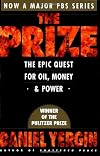
Neither of the novels I’m currently reading is really going anywhere, so I started reading a history of the oil industry instead. As I’d expected, it was totally riveting. I find the role of oil in economic, political, and environmental development fascinating, so clearly was predisposed to like it. The book sustained my interest, even when recounting the technicalities of oil company mergers, through the use of a high quality journalistic approach. Each chapter began with a character show more vignette of some key figure, before explaining the bigger strategic picture. Whenever this wider picture started to pall, a new personality was introduced and their important role explained with the help of amusing anecdotes. Such a structure worked beautifully to convey a complicated and lengthy history entertainingly, without sacrificing density and rigour.
The whole book was compelling, but I would single out for particular praise the chapters on the two World Wars and how the role of oil differed in each. Oil utterly transformed the nature of war and its availability did much to determine who won and who lost. I hadn’t previously realised, for instance, that Japan’s defeat in the Second World War was precipitated by total oil deprivation. Nor that in the Pearl Harbour attack the fuel stores of the US fleet were not destroyed - which would have placed America in a much more fragile position in the Pacific. Oil came to be equated with mobility in society generally, but the shift was more striking and sudden in conditions of war. The First World War was largely static and began at least with the expectation that movement of troops would be by horse or train. By contrast, the Second World War involved near-constant and massive movements of troops, materiel, and battle lines, all powered by oil.
The genesis and fractious history of OPEC was also very well-told and informative. I’d wanted to know more about the extent to which OPEC has, at various times, been able to set world oil prices. Yergin demonstrates that its power has waxed and waned, whilst the structure of the world oil industry has altered considerably in the second half of the twentieth century. In fact, the only quibble I really have with this book is that the edition I read was published in 1993 and there have been massive oil-related changes since then. For a start, prices. When this was published, the record peak price for a barrel of crude was around $40; in 2008 it exceeded $100. According to Bloomberg, today a barrel of Brent crude would cost you $113. I’d love to read Yergin’s analysis of the twenty-first century price increases, so will try and get hold of his later book [b:The Quest: Energy, Security, and the Remaking of the Modern World|11447065|The Quest Energy, Security, and the Remaking of the Modern World|Daniel Yergin|https://images.gr-assets.com/books/1311282459s/11447065.jpg|16380870]. That should also include more detail on the environmental aspects of oil dependence, which this book only touches on briefly. Really, you have to be impressed with a densely printed 800 page non-fiction book that not only holds your attention but leaves you wanting more. show less
The whole book was compelling, but I would single out for particular praise the chapters on the two World Wars and how the role of oil differed in each. Oil utterly transformed the nature of war and its availability did much to determine who won and who lost. I hadn’t previously realised, for instance, that Japan’s defeat in the Second World War was precipitated by total oil deprivation. Nor that in the Pearl Harbour attack the fuel stores of the US fleet were not destroyed - which would have placed America in a much more fragile position in the Pacific. Oil came to be equated with mobility in society generally, but the shift was more striking and sudden in conditions of war. The First World War was largely static and began at least with the expectation that movement of troops would be by horse or train. By contrast, the Second World War involved near-constant and massive movements of troops, materiel, and battle lines, all powered by oil.
The genesis and fractious history of OPEC was also very well-told and informative. I’d wanted to know more about the extent to which OPEC has, at various times, been able to set world oil prices. Yergin demonstrates that its power has waxed and waned, whilst the structure of the world oil industry has altered considerably in the second half of the twentieth century. In fact, the only quibble I really have with this book is that the edition I read was published in 1993 and there have been massive oil-related changes since then. For a start, prices. When this was published, the record peak price for a barrel of crude was around $40; in 2008 it exceeded $100. According to Bloomberg, today a barrel of Brent crude would cost you $113. I’d love to read Yergin’s analysis of the twenty-first century price increases, so will try and get hold of his later book [b:The Quest: Energy, Security, and the Remaking of the Modern World|11447065|The Quest Energy, Security, and the Remaking of the Modern World|Daniel Yergin|https://images.gr-assets.com/books/1311282459s/11447065.jpg|16380870]. That should also include more detail on the environmental aspects of oil dependence, which this book only touches on briefly. Really, you have to be impressed with a densely printed 800 page non-fiction book that not only holds your attention but leaves you wanting more. show less
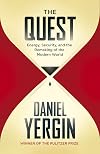
I didn’t enjoy ‘The Quest’ quite as much as [b:The Prize: The Epic Quest for Oil, Money, and Power|169354|The Prize The Epic Quest for Oil, Money, and Power|Daniel Yergin|https://images.gr-assets.com/books/1403025725s/169354.jpg|163531], but it is an equally well-written and compelling read. The earlier book has a simple chronological structure, whereas this one has a wider scope and darts about in time. As a result, the discussion of renewables appears slightly fragmented. show more Nonetheless, this is a very solid, thorough, and interesting account of recent and current energy issues. It provides a useful contextual synthesis for those studying climate change policy, as I happen to be. The chapters on climate change cover the ground quite thoroughly, thus depressingly. The only important point I felt should have been added is the huge gap between known fossil fuel reserves and the amount of them that can be burned without pushing the atmospheric concentration of carbon dioxide above 400, 450, or even 550 ppm. Hell, it’s above 400 ppm right now (see http://co2now.org/). This issue of stranded assets that cannot be used without triggering catastrophic climate change is an incredibly difficult one.
A particular message throughout was the waxing and waning of technologies, policies, and political interest in energy and/or climate issues. Before any of the above become salient, they seem to go through phases of interest followed by abandonment. This is especially so in the case of renewable energy sources, it seems. I found the historical background for renewables and the analysis of oil markets from 1993-2011 the most appealing parts of the book. Yergin’s reporting appears impressively apolitical throughout, although if you have strong opinions on energy issues this may irritate in places. My only significant criticism, though, is Yergin’s spelling of ‘fracking’ as ‘fraccing’, which seems weird in the extreme. Is this an American thing? Or was it a typo replicated throughout? show less
A particular message throughout was the waxing and waning of technologies, policies, and political interest in energy and/or climate issues. Before any of the above become salient, they seem to go through phases of interest followed by abandonment. This is especially so in the case of renewable energy sources, it seems. I found the historical background for renewables and the analysis of oil markets from 1993-2011 the most appealing parts of the book. Yergin’s reporting appears impressively apolitical throughout, although if you have strong opinions on energy issues this may irritate in places. My only significant criticism, though, is Yergin’s spelling of ‘fracking’ as ‘fraccing’, which seems weird in the extreme. Is this an American thing? Or was it a typo replicated throughout? show less
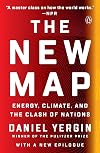
Daniel Yergin's latest book brings his classic history of the oil industry up to date. He begins with the story of the development of the US shale oil and natural gas industries during the past few decades which allowed the US to move from being a net importer to being a significant exporter of oil and gas. He then talks about the changes in oil demand resulting from the competition with gas, alternate energy sources, and the corona virus. All of this had major geopolitical implications. show more Yergin evaluates the implications for Russia, China, Europe and the Middle East, with a particularly useful summary of the what is at stake in the South China Sea. His book concludes with a look at the changes occurring in the auto industry and as a result of climate changes. In summary, the book is a useful summary of current trends in the oil industry and geopolitics written in the style of a consultant presenting to an international oil conference. show less
Lists
Awards


The Prize: The Epic Quest for Oil, Money, and Power [1992 TV miniseries] (Thematic Reading Lists – Global Relevance – 2025)
The New Map: Energy, Climate, and the Clash of Nations (Thematic Reading Lists – Climate Change and Energy – 2023)
You May Also Like


Associated Authors
Statistics
- Works
- 24
- Members
- 4,537
- Popularity
- #5,534
- Rating
- 4.1
- Reviews
- 56
- ISBNs
- 102
- Languages
- 14
- Favorited
- 1
