
Tom Piazza
Author of City of Refuge
About the Author
Tom Piazza is the author of The Guide to Classic Recorded Jazz, for which he won the ASCAP-Deems Taylor Award. His writing about American music has appeared in The New York Times Magazine, The Village Voice, The Atlantic Monthly, The Oxford American, and elsewhere. A noted fiction writer as well, show more Piazza won a James Michener Award for his short-story collection, Blues And Trouble. He lives in New Orleans and is at work on a novel. show less
Image credit: John Burlinson, 8/24/08
Works by Tom Piazza
Associated Works
The Workshop: Seven Decades of the Iowa Writers Workshop - 43 Stories, Recollections, & Essays on Iowa's Place in Twentieth-Century American Literature (1999) — Contributor — 197 copies, 1 review
Best of The Oxford American: Ten Years from the Southern Magazine of Good Writing {anthology} (2002) — Contributor — 45 copies
Tagged
Common Knowledge
- Birthdate
- 1955-07-08
- Gender
- male
- Education
- Iowa Writers' Workshop
Williams College - Awards and honors
- Grammy Award (2004)
- Nationality
- USA
- Places of residence
- New Orleans, Louisiana, USA
- Associated Place (for map)
- Louisiana, USA
Members
Reviews

Tom Piazza riffs like a jazz musician in his novel City of Refuge, mixing angry and discordant phrases with smooth and harmonious ones. Underneath the ebb and flow of these melodies, his themes of home and identity pulse like a heartbeat.
The book examines the lives of two New Orleans families in the days before and after Hurricane Katrina. SJ Williams lives in the doomed Lower Ninth Ward with his sister and nephew; Craig Donaldson and his family live in a middle class enclave across town. show more With the deadly storm bearing down, the Donaldson’s decamp the city while SJ and his relatives hunker down. Everything changes when the levees break and baptize the city in grimy, unholy water. SJ’s family is torn apart, packed and shipped to opposite ends of the country, while Craig’s family escapes to Chicago, together. Emptiness and confusion plague Craig and SJ as they try to patch together a life separate from New Orleans, each worried that their identities will disintegrate like the city they long for.
With stark and brutal language, Piazza filters the tragedy of Katrina through the prism of Craig and SJ’s struggles to define their lives. The characters are so familiar that the reader must ponder the same questions of home and identity. True to the jazz feel of the book, though, Piazza creates a wide range of experiences in his characters. They strike out in every direction like solo improvisations on a theme. In the end, there is room for everyone, refuge for all in this tune.
4 bones!!!! show less
The book examines the lives of two New Orleans families in the days before and after Hurricane Katrina. SJ Williams lives in the doomed Lower Ninth Ward with his sister and nephew; Craig Donaldson and his family live in a middle class enclave across town. show more With the deadly storm bearing down, the Donaldson’s decamp the city while SJ and his relatives hunker down. Everything changes when the levees break and baptize the city in grimy, unholy water. SJ’s family is torn apart, packed and shipped to opposite ends of the country, while Craig’s family escapes to Chicago, together. Emptiness and confusion plague Craig and SJ as they try to patch together a life separate from New Orleans, each worried that their identities will disintegrate like the city they long for.
With stark and brutal language, Piazza filters the tragedy of Katrina through the prism of Craig and SJ’s struggles to define their lives. The characters are so familiar that the reader must ponder the same questions of home and identity. True to the jazz feel of the book, though, Piazza creates a wide range of experiences in his characters. They strike out in every direction like solo improvisations on a theme. In the end, there is room for everyone, refuge for all in this tune.
4 bones!!!! show less

The story of two different families before, during, and after the Katrina landfall in New Orleans in 2005. The whole meshugene mess of this hurricane is inherently tragic, so it shouldn't be hard to write a moving story about it, but more difficult to make it sound "real." Piazza manages to do so, at least in part. I absolutely loved some parts of this novel, but other parts were close to humdrum. The story leading up to and through the hurricane are strong and heartfelt and, on more than show more one occasion, I had to put the book down to wipe away my tears. The latter part is not as engaging, unfortunately, and the punch had been bigger had the editor been somewhat more aggressive with his redline pen. Also, Piazza is strangely removed from his characters and some of them fall much too close to caricature than is comfortable. Still, I think this qualifies as a "should-read" for anyone who wants to know what happened on the ground during that horrific week in NOLA history (and beyond). show less

This book grew on me and by the end I was in tears. I lived in New Orleans for 16 years (prior to Katrina) and some very dear friends lost all possessions in the floods, so the impact of the story line was very heavy for me. I grew to love the 2 families and soon became immersed.
It was like reading of friends and family and places that are so familiar that I couldn't stop reading.
I continue to think about these characters and their lives. Yes, the book was not perfect, but it sent me to a show more place of deep emotion and will be remembered along with Zeitoun and Nine Lives and 5 Days at Memorial as the best of post Katrina reading for me. show less
It was like reading of friends and family and places that are so familiar that I couldn't stop reading.
I continue to think about these characters and their lives. Yes, the book was not perfect, but it sent me to a show more place of deep emotion and will be remembered along with Zeitoun and Nine Lives and 5 Days at Memorial as the best of post Katrina reading for me. show less
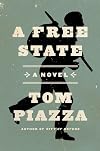
Sometime in the late 1850’s Henry Sims, a run away slave from Virginia arrives in Philadelphia. With the assistance of a secret network he has escaped from the Stephens plantation where the master, we are told, is his father. Henry was not a field worker; he was favored with lighter duty around the house and carpentry shop. Henry is a virtuoso banjo player and performer who is called often to perform for his master and guest at balls and social gatherings. Despite circumstances far less show more oppressive than the field hands, Henry is acutely sensitive to the degradation permeating his status as a slave.
Henry plays his banjo on the streets of Philadelphia for small change. He is heard by James Douglass. Douglass is a performer in, and the manager of, a successful minstrel troupe that has a regular venue in a Philadelphia theater. Douglass is a sort of run away also, having left the harsh life on a small farmer run by his older brothers. He ran off with a circus eventually learning the minstrel routine very popular at the time.
Douglass is astounded by Sims’s artistry. He has been looking to perk up his company’s act, it having become flat and seen a decline in attendance and ticket revenue. There’s one major problem, though. The laws at the time would not permit a Negro to perform on stage. Douglass concocts a scheme to get around this. Sims, the son of a white man and black woman, is light-complexioned with green eyes. Douglass suspects that Sims might be a run away slave. The laws on fugitive slaves will put him and his company in legal jeopardy if he is discovered to be harboring Sims. Nonetheless, Douglass thinks he can convince his fellow minstrels that Sims is Mexican (Sims can speak a pigeon-type nonsense Spanish he picked up on the plantation.) By using the burnt cork black face employed by the performers, Douglass thinks he can fool his fellow performers and the audience. Though aware of the deeply demeaning portrayal of blacks Sims is driven to perform his musical talent, as well as being destitute of money. When he appears on stage he is a sensation and his performance draws full houses again to the shows.
Douglass is infatuated with Rose, a seamstress who makes the troupe's costumes. Rose has spurned Douglass in favor of a fellow cast member, but in vague ways she seems to have developed a relationship with Henry.
Master Stephens contracts with Tull, a notorious slave hunter to find Sims and return him. Tull is a vicious character who would as soon return escaped slaves dead as alive. He tracks Sims to Philadelphia where he soon discovers him performing in the show. Tull subdues Sims and binds him for the trip back to Virginia, but Douglass assaults Tull enabling Sims to get free. The entire episode undermines the performing company and they break up. Douglass has realized that minstrelsy is an utterly degrading depiction of Negros and their conditions of servitude and abandons this as a profession.
In an interesting twist, the story shifts to the Auburn, NY home of Senator William Seward. Seward is an abolitionist at heart although politically cautious about how he expresses this. The time must be around 1859 because Seward reveals his ambition to get the presidential nomination (that went to Lincoln the next year). Seward’s wife Addie is an active supporter of the Underground Railroad and has made their home’s basement a way station for slaves looking to make their way to Canada. Sims arrives and the Seward’s soon discover Sim’s remarkable talent and discern that he is highly intelligent (a devotee of the works of Dickens). Seward entertains the idea that he will get Sims to Rochester where he can fall in with Frederick Douglass. But, a stranger loitering around Seward’s house turns out to be Tull, still in pursuit of Sims. Seward chases Tull off, but when he looks for Sims to tell him of his narrow escape from capture, he finds that he has vanished. We are not told where Sims has gone, perhaps on to Canada or just further on the Freedom Trail.
This short but powerful novel uses biting irony to examine concepts of racial identity extant in antebellum America. For the amusement of white audiences, white men posed as blacks in theatrical performances; performances that were abominably degrading to Negros. Black-face minstrelsy was popular until well into the 20th century and even after the minstrel motif faded motion pictures of the 1930’s and 40’s gave us humiliating caricatures of black men and women. Today we find such portrayals repulsive. Sims who had stellar musical talent and a keen intellect disguised his racial identity by posing as a Mexican who used black face to convert his false identity to an even falser one – a black man who convinced the audience he was white by portraying his stage persona as black. Americans of that era held deep-seated misapprehensions about race in our society, damaging notions that lie at the root of our racism. Nineteenth century (white) society made rules for demarcating racial lines, often based on absurd linkages to distant relatives who were non-white. Hence, such nonsensical but hurtful distinctions such as mulatto, octoroon, etc. Obsession with race lingered, of course, in powerful ways long after the 19th century. Consider that only recently on official census forms have we abandoned strict racial categories, suggesting (finally) that racial identity can be murky and, we can only hope, more and more meaningless. Nonetheless, in the long history of our racism, race mixing was held overtly to be a horrible thing by white society, except where, of course, (or perhaps because) white males exploited Negro women. The need to sublimate white hypocrisy led, as we know, to despicable violence toward blacks. Piazza intrigues us by hinting that the child Rose is carrying is the result of a liaison between her and Henry, that the child will be of mixed race.
In addition to its powerful and provocative themes about race, Piazza describes mid-19th century Philadelphia with color and vividness that helps the story succeed so well. show less
Henry plays his banjo on the streets of Philadelphia for small change. He is heard by James Douglass. Douglass is a performer in, and the manager of, a successful minstrel troupe that has a regular venue in a Philadelphia theater. Douglass is a sort of run away also, having left the harsh life on a small farmer run by his older brothers. He ran off with a circus eventually learning the minstrel routine very popular at the time.
Douglass is astounded by Sims’s artistry. He has been looking to perk up his company’s act, it having become flat and seen a decline in attendance and ticket revenue. There’s one major problem, though. The laws at the time would not permit a Negro to perform on stage. Douglass concocts a scheme to get around this. Sims, the son of a white man and black woman, is light-complexioned with green eyes. Douglass suspects that Sims might be a run away slave. The laws on fugitive slaves will put him and his company in legal jeopardy if he is discovered to be harboring Sims. Nonetheless, Douglass thinks he can convince his fellow minstrels that Sims is Mexican (Sims can speak a pigeon-type nonsense Spanish he picked up on the plantation.) By using the burnt cork black face employed by the performers, Douglass thinks he can fool his fellow performers and the audience. Though aware of the deeply demeaning portrayal of blacks Sims is driven to perform his musical talent, as well as being destitute of money. When he appears on stage he is a sensation and his performance draws full houses again to the shows.
Douglass is infatuated with Rose, a seamstress who makes the troupe's costumes. Rose has spurned Douglass in favor of a fellow cast member, but in vague ways she seems to have developed a relationship with Henry.
Master Stephens contracts with Tull, a notorious slave hunter to find Sims and return him. Tull is a vicious character who would as soon return escaped slaves dead as alive. He tracks Sims to Philadelphia where he soon discovers him performing in the show. Tull subdues Sims and binds him for the trip back to Virginia, but Douglass assaults Tull enabling Sims to get free. The entire episode undermines the performing company and they break up. Douglass has realized that minstrelsy is an utterly degrading depiction of Negros and their conditions of servitude and abandons this as a profession.
In an interesting twist, the story shifts to the Auburn, NY home of Senator William Seward. Seward is an abolitionist at heart although politically cautious about how he expresses this. The time must be around 1859 because Seward reveals his ambition to get the presidential nomination (that went to Lincoln the next year). Seward’s wife Addie is an active supporter of the Underground Railroad and has made their home’s basement a way station for slaves looking to make their way to Canada. Sims arrives and the Seward’s soon discover Sim’s remarkable talent and discern that he is highly intelligent (a devotee of the works of Dickens). Seward entertains the idea that he will get Sims to Rochester where he can fall in with Frederick Douglass. But, a stranger loitering around Seward’s house turns out to be Tull, still in pursuit of Sims. Seward chases Tull off, but when he looks for Sims to tell him of his narrow escape from capture, he finds that he has vanished. We are not told where Sims has gone, perhaps on to Canada or just further on the Freedom Trail.
This short but powerful novel uses biting irony to examine concepts of racial identity extant in antebellum America. For the amusement of white audiences, white men posed as blacks in theatrical performances; performances that were abominably degrading to Negros. Black-face minstrelsy was popular until well into the 20th century and even after the minstrel motif faded motion pictures of the 1930’s and 40’s gave us humiliating caricatures of black men and women. Today we find such portrayals repulsive. Sims who had stellar musical talent and a keen intellect disguised his racial identity by posing as a Mexican who used black face to convert his false identity to an even falser one – a black man who convinced the audience he was white by portraying his stage persona as black. Americans of that era held deep-seated misapprehensions about race in our society, damaging notions that lie at the root of our racism. Nineteenth century (white) society made rules for demarcating racial lines, often based on absurd linkages to distant relatives who were non-white. Hence, such nonsensical but hurtful distinctions such as mulatto, octoroon, etc. Obsession with race lingered, of course, in powerful ways long after the 19th century. Consider that only recently on official census forms have we abandoned strict racial categories, suggesting (finally) that racial identity can be murky and, we can only hope, more and more meaningless. Nonetheless, in the long history of our racism, race mixing was held overtly to be a horrible thing by white society, except where, of course, (or perhaps because) white males exploited Negro women. The need to sublimate white hypocrisy led, as we know, to despicable violence toward blacks. Piazza intrigues us by hinting that the child Rose is carrying is the result of a liaison between her and Henry, that the child will be of mixed race.
In addition to its powerful and provocative themes about race, Piazza describes mid-19th century Philadelphia with color and vividness that helps the story succeed so well. show less
Lists
Awards


You May Also Like


Associated Authors
Statistics
- Works
- 13
- Also by
- 7
- Members
- 906
- Popularity
- #28,310
- Rating
- 3.9
- Reviews
- 37
- ISBNs
- 47
- Languages
- 1
- Favorited
- 4