
Jayne Anne Phillips
Author of Lark and Termite
About the Author
Jayne Anne Phillips lives in Massachusetts. (Publisher Provided) Jayne Anne Phillips was born on July 19, 1952 in Buckhannon, West Virginia. She graduated from West Virginia University (1974) and earned her M. F. A. at the University of Iowa (1978). She has taught at the University of Iowa, Humbolt show more State University, Radcliffe College, Boston University and Harvard. She was named writer-in-residence at Brandeis University in 1996. Her works, including two short story collections and several novels, have been translated into 14 languages. One novel, Machine Dreams, was nominated for the Nation Book Critics Award. She has also received the Sue Kaufman Award from the America Adademy and Institute of Arts and Letters. (Bowker Author Biography) show less
Image credit: www.jayneannephillips.com/
Works by Jayne Anne Phillips
Associated Works
The Vintage Book of Contemporary American Short Stories (1994) — Contributor — 548 copies, 2 reviews
Points of View: An Anthology of Short Stories, Revised & Updated Edition (1995) — Contributor — 443 copies, 7 reviews
The Workshop: Seven Decades of the Iowa Writers Workshop - 43 Stories, Recollections, & Essays on Iowa's Place in Twentieth-Century American Literature (1999) — Contributor — 197 copies, 1 review
Bloodroot: Reflections on Place by Appalachian Women Writers (1998) — Contributor — 53 copies, 2 reviews
The Collected Breece D'J Pancake: Stories, Fragments, Letters (2020) — Introduction, some editions — 52 copies, 1 review
Thalia Book Club: Harper Lee's To Kill a Mockingbird 50th Anniversary Celebration — Narrator — 3 copies
Fiction, Volume 6, Number 1 — Contributor — 1 copy
Tagged
Common Knowledge
- Canonical name
- Phillips, Jayne Anne
- Birthdate
- 1952-07
- Gender
- female
- Education
- West Virginia University (BA, 1974)
University of Iowa (MFA, 1978) - Occupations
- novelist
short story writer
creative writing teacher - Organizations
- Rutgers University, Newark
Fellowship of Southern Writers - Awards and honors
- American Academy of Arts and Letters Academy Award (Literature ∙ 1997)
Guggenheim Fellowship - Agent
- Lynn Nesbit (Janklow and Nesbit)
- Nationality
- USA
- Birthplace
- Buckhannon, West Virginia, USA
- Places of residence
- Buckhannon, West Virginia, USA
- Associated Place (for map)
- Buckhannon, West Virginia, USA
Members
Reviews
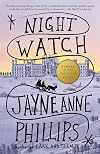
This novel is set during and after the American Civil War and focuses on the lasting damage inflicted by war.
A man volunteers and becomes a sharpshooter fighting for the Union in 1861, leaving his pregnant wife in a cabin high in a mountain ridge in West Virginia. His wife, alone except for Dearbhla, their “granny neighbour” who lives in a nearby cabin, gives birth to a daughter whom she names ConaLee. After 1864, there is no news of the husband. A man, known only as Papa, comes by the show more isolated dwelling and basically enslaves ConaLee and her mother. The latter becomes so traumatized that she suffers mental and physical collapse. In 1874, after stealing everything from them, Papa abandons 12-year-old ConaLee and her mother at the Trans-Allegheny Lunatic Asylum. The two are admitted as Miss Janet, a gentlelady, and Eliza, her nursemaid.
The novel shows Miss Janet’s slow recovery at the asylum. While in residence, they become acquainted with various residents and staff, including Dr. Story, the physician superintendent, and John O’Shea, the night watchman. The reader also learns what happened to ConaLee’s father during the war. In addition, the background of ConaLee’s parents, their connection to Dearbhla, and the reason for their sheltering in the remote mountains are revealed.
The book explores the lasting ravages of war: “The fighting has ceased, but not the grief.” There is only one battle scene; instead, the focus is on the consequences and long-term physical, emotional, and mental effects of war: “War scars last. . . . Generations . . .” because the consequences of war continue to unspool “like malignant thread.” John O’Shea fought in the war and, besides suffering permanent physical injuries, loses virtually everything important to him. ConaLee is deprived of a father and her childhood and becomes a victim of the lawlessness that came with and after the war. ConaLee’s mother loses her husband and is so terrorized by Papa that she becomes catatonic, leaving young ConaLee in charge of the household. Dearbhla’s family is torn apart.
What I found most interesting is the treatment of the patients in the asylum which follows an approach known as “moral treatment” based on the theory of real-life Dr. Thomas Story Kirkbride whose directive and organization of institutions for the insane were the gold-standard of clinical care in psychiatry throughout the 19th century. Quotations from Dr. Kirkbride are included throughout. I was certainly surprised by the humane and empathetic approach. The list of “Reasons for Admission, 1864 to 1889” mentions “novel reading” so avid readers could have been seen as being in need of psychiatric care!
What I did not like is the novel’s reliance on coincidence. The book’s six most important characters are brought together in a contrived way to create a climax. One of those has escaped custody and reappears at just that moment?! Magic realism elements are included and this blending of fantasy and reality seems unnecessary, used only to arouse more pathos. The ending too is contrived, just too redemptive and melodramatic.
The novel was a 2023 National Book Award Nominee for Fiction. I was surprised to learn this because of the book’s uneven quality. An interesting story is told, but the reader must suspend disbelief several times in order to enjoy it.
Note: Please check out my reader's blog (https://schatjesshelves.blogspot.com/) and follow me on Twitter (https://twitter.com/DCYakabuski). show less
A man volunteers and becomes a sharpshooter fighting for the Union in 1861, leaving his pregnant wife in a cabin high in a mountain ridge in West Virginia. His wife, alone except for Dearbhla, their “granny neighbour” who lives in a nearby cabin, gives birth to a daughter whom she names ConaLee. After 1864, there is no news of the husband. A man, known only as Papa, comes by the show more isolated dwelling and basically enslaves ConaLee and her mother. The latter becomes so traumatized that she suffers mental and physical collapse. In 1874, after stealing everything from them, Papa abandons 12-year-old ConaLee and her mother at the Trans-Allegheny Lunatic Asylum. The two are admitted as Miss Janet, a gentlelady, and Eliza, her nursemaid.
The novel shows Miss Janet’s slow recovery at the asylum. While in residence, they become acquainted with various residents and staff, including Dr. Story, the physician superintendent, and John O’Shea, the night watchman. The reader also learns what happened to ConaLee’s father during the war. In addition, the background of ConaLee’s parents, their connection to Dearbhla, and the reason for their sheltering in the remote mountains are revealed.
The book explores the lasting ravages of war: “The fighting has ceased, but not the grief.” There is only one battle scene; instead, the focus is on the consequences and long-term physical, emotional, and mental effects of war: “War scars last. . . . Generations . . .” because the consequences of war continue to unspool “like malignant thread.” John O’Shea fought in the war and, besides suffering permanent physical injuries, loses virtually everything important to him. ConaLee is deprived of a father and her childhood and becomes a victim of the lawlessness that came with and after the war. ConaLee’s mother loses her husband and is so terrorized by Papa that she becomes catatonic, leaving young ConaLee in charge of the household. Dearbhla’s family is torn apart.
What I found most interesting is the treatment of the patients in the asylum which follows an approach known as “moral treatment” based on the theory of real-life Dr. Thomas Story Kirkbride whose directive and organization of institutions for the insane were the gold-standard of clinical care in psychiatry throughout the 19th century. Quotations from Dr. Kirkbride are included throughout. I was certainly surprised by the humane and empathetic approach. The list of “Reasons for Admission, 1864 to 1889” mentions “novel reading” so avid readers could have been seen as being in need of psychiatric care!
What I did not like is the novel’s reliance on coincidence. The book’s six most important characters are brought together in a contrived way to create a climax. One of those has escaped custody and reappears at just that moment?! Magic realism elements are included and this blending of fantasy and reality seems unnecessary, used only to arouse more pathos. The ending too is contrived, just too redemptive and melodramatic.
The novel was a 2023 National Book Award Nominee for Fiction. I was surprised to learn this because of the book’s uneven quality. An interesting story is told, but the reader must suspend disbelief several times in order to enjoy it.
Note: Please check out my reader's blog (https://schatjesshelves.blogspot.com/) and follow me on Twitter (https://twitter.com/DCYakabuski). show less
In West Virginia in 1874, 12-year-old ConaLee brings her mother Eliza to the Trans-Allegheny Lunatic Asylum because she has not spoken in a year. A man who is only named Papa, a Confederate veteran who forced himself into their live and admits to not even being ConaLee's father, makes ConaLee and Eliza take on assumed identities. ConaLee pretends to be her mother's nurse and stays to care for her.
At the institution they become acquainted with the night watch, an enigmatic man who goes by show more the name John O'Shea. He was a Union sharpshooter during the war but an explosion caused him to lose an eye and all his memories. Flashbacks to before and during the war show how the lives of these characters, and ConaLee's kind elderly neighbor Dearbhla, are all interconnected. Through these characters' stories the themes of finding identity and surviving trauma (from both the war and sexual abuse) are starkly explored. While the climax of the book hinges on a tragedy, this is also a book of hope and healing that is realized in the epilogue. show less
At the institution they become acquainted with the night watch, an enigmatic man who goes by show more the name John O'Shea. He was a Union sharpshooter during the war but an explosion caused him to lose an eye and all his memories. Flashbacks to before and during the war show how the lives of these characters, and ConaLee's kind elderly neighbor Dearbhla, are all interconnected. Through these characters' stories the themes of finding identity and surviving trauma (from both the war and sexual abuse) are starkly explored. While the climax of the book hinges on a tragedy, this is also a book of hope and healing that is realized in the epilogue. show less
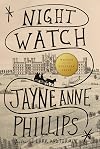
Winner of the Pulitzer Prize for Fiction 2024
"Reasons for Admission (to the Trans Allegheny Lunatic Asylum) 1864 to 1889: Intemperance & Business Trouble Kicked in the Head by a Horse Hereditary Predisposition Ill-Treatment by Husband Imaginary Female Trouble Hysteria Immoral Life Imprisonment Jealousy and Religion Laziness Marriage of Son Masturbation & Syphilis Masturbation for 30 Years Medicine to Prevent Conception Menstrual Deranged Mental Excitement Novel Reading Nymphomania Opium show more Habit Over Action Of The Mind" Jane Anne Phillips
I would have liked Night Watch more if it hadn't won the Pulitzer Prize.I know this sounds strange but when a book wins the Pulitzer, I unconsciously expect (hope) it will be great. Night Watch is a good book, but I didn't find it great. The novel's strength is in its characters and its unique historical setting.
Night Watch begins nine years after the end of the Civil War. Twelve-year-old Conalee, the novel's primary narrator, and her mother, Eliza, are en route to the Trans Allegheny Lunatic Asylum in Weston, West Virginia. Eliza stopped speaking a year earlier after being repeatedly raped and impregnated by a former Confederate soldier who refers to himself as Pappa. After depositing Eliza's other three children with neighbors, Pappa leaves Eliza and Conalee at the Asylum's gates.
Jane Anne Phillips grew up in West Virginia, 20 minutes from The Trans-Allegheny Lunatic Asylum, and was familiar with the state's history and institution. (West Virginia succeeded from Virginia to fight for the Union.) In an interview on Lit Hub (2023), she described her research for the novel. She visited the Asylum numerous times and photographed locations she intended to include in the novel. Philips also read extensively about the Asylum's unique treatment plan based on Quaker physician Dr. Thomas Story Kirkbride's Theory of the Moral Treatment of the Insane. Kirkbride believed the institutional facilities could have a curative effect and claimed they should include sunlight, a natural setting, comfortable living quarters, and various " outlets for stimulating mental and physical activities." https://trans-alleghenylunaticasylum.com/the-kirkbride-plan/.
Against this unique backdrop, Philips moves back and forth in time, slowly revealing Eliza and Conalee's backstory and the ravages of the Civil War on one family. While I found the historical elements in Night Watch outstanding, aspects of the story arc were predictable and a tad melodramatic, making it a 4-star rather than a 5-star read for me. However, I still highly recommend it. show less
"Reasons for Admission (to the Trans Allegheny Lunatic Asylum) 1864 to 1889: Intemperance & Business Trouble Kicked in the Head by a Horse Hereditary Predisposition Ill-Treatment by Husband Imaginary Female Trouble Hysteria Immoral Life Imprisonment Jealousy and Religion Laziness Marriage of Son Masturbation & Syphilis Masturbation for 30 Years Medicine to Prevent Conception Menstrual Deranged Mental Excitement Novel Reading Nymphomania Opium show more Habit Over Action Of The Mind" Jane Anne Phillips
I would have liked Night Watch more if it hadn't won the Pulitzer Prize.I know this sounds strange but when a book wins the Pulitzer, I unconsciously expect (hope) it will be great. Night Watch is a good book, but I didn't find it great. The novel's strength is in its characters and its unique historical setting.
Night Watch begins nine years after the end of the Civil War. Twelve-year-old Conalee, the novel's primary narrator, and her mother, Eliza, are en route to the Trans Allegheny Lunatic Asylum in Weston, West Virginia. Eliza stopped speaking a year earlier after being repeatedly raped and impregnated by a former Confederate soldier who refers to himself as Pappa. After depositing Eliza's other three children with neighbors, Pappa leaves Eliza and Conalee at the Asylum's gates.
Jane Anne Phillips grew up in West Virginia, 20 minutes from The Trans-Allegheny Lunatic Asylum, and was familiar with the state's history and institution. (West Virginia succeeded from Virginia to fight for the Union.) In an interview on Lit Hub (2023), she described her research for the novel. She visited the Asylum numerous times and photographed locations she intended to include in the novel. Philips also read extensively about the Asylum's unique treatment plan based on Quaker physician Dr. Thomas Story Kirkbride's Theory of the Moral Treatment of the Insane. Kirkbride believed the institutional facilities could have a curative effect and claimed they should include sunlight, a natural setting, comfortable living quarters, and various " outlets for stimulating mental and physical activities." https://trans-alleghenylunaticasylum.com/the-kirkbride-plan/.
Against this unique backdrop, Philips moves back and forth in time, slowly revealing Eliza and Conalee's backstory and the ravages of the Civil War on one family. While I found the historical elements in Night Watch outstanding, aspects of the story arc were predictable and a tad melodramatic, making it a 4-star rather than a 5-star read for me. However, I still highly recommend it. show less

I found my old copy of this book while packing up for a move. I meant only to glace at a few of these mini-stories (each less than a full page), but I soon found I'd re-read the whole thing. It's easily read at a single sitting.
The best stories are really more prose poems of encapsulated moments, stripped down to their barest essence. Some are extraordinary. "Snowcloud" for instance gives me chills - this brief, enticing glimpse of a bike accident and the intercession of an eccentric show more stranger. Its three tiny paragraphs have an extraordinary pull, and the final image of the woman's hair is just gorgeous: "She stands gazing down and releases her ragged gold."
The stories "Shaping" and "Pretty" have similar effects, a final image that radiates with power over an otherwise ordinary monent. I liked these three stories especially.
The second half of the book is darker, abberant even, a series of glimpsed people that are confused or enslaved by their own impulses. Some of this half pulls with power too, but for me none of it has the surprising freshness of the best stories in the first half.
The book isn't perfect - in some of the stories I can feel a reaching for effect that isn't quite natural. For me though, the best stories make the whole book worth it. Some stories I'd only give 2 stars, but the best deserve 4 stars, if not more. Overall, I'm giving the book 3 stars to split the difference.
Side Note: Jayne Anne Phillips later expanded some of the stories in Sweethearts to make stories of a more standard length in Black Tickets: Stories. My favorite stories weren't expanded though, probably because they were already perfectly contained in their miniature form as they were. Black Tickets: Stories has a much darker flavor, closer to the second half of Sweethearts in spirit. show less
The best stories are really more prose poems of encapsulated moments, stripped down to their barest essence. Some are extraordinary. "Snowcloud" for instance gives me chills - this brief, enticing glimpse of a bike accident and the intercession of an eccentric show more stranger. Its three tiny paragraphs have an extraordinary pull, and the final image of the woman's hair is just gorgeous: "She stands gazing down and releases her ragged gold."
The stories "Shaping" and "Pretty" have similar effects, a final image that radiates with power over an otherwise ordinary monent. I liked these three stories especially.
The second half of the book is darker, abberant even, a series of glimpsed people that are confused or enslaved by their own impulses. Some of this half pulls with power too, but for me none of it has the surprising freshness of the best stories in the first half.
The book isn't perfect - in some of the stories I can feel a reaching for effect that isn't quite natural. For me though, the best stories make the whole book worth it. Some stories I'd only give 2 stars, but the best deserve 4 stars, if not more. Overall, I'm giving the book 3 stars to split the difference.
Side Note: Jayne Anne Phillips later expanded some of the stories in Sweethearts to make stories of a more standard length in Black Tickets: Stories. My favorite stories weren't expanded though, probably because they were already perfectly contained in their miniature form as they were. Black Tickets: Stories has a much darker flavor, closer to the second half of Sweethearts in spirit. show less
Lists
Awards


You May Also Like


Associated Authors
Statistics
- Works
- 20
- Also by
- 34
- Members
- 3,852
- Popularity
- #6,579
- Rating
- 3.7
- Reviews
- 128
- ISBNs
- 162
- Languages
- 11
- Favorited
- 4